
What Is the DASH Score Calculator?
The DASH Score Calculator (Disabilities of the Arm, Shoulder, and Hand) is a standardized assessment tool designed to measure how much a person’s upper limb problem affects their daily life and physical function.
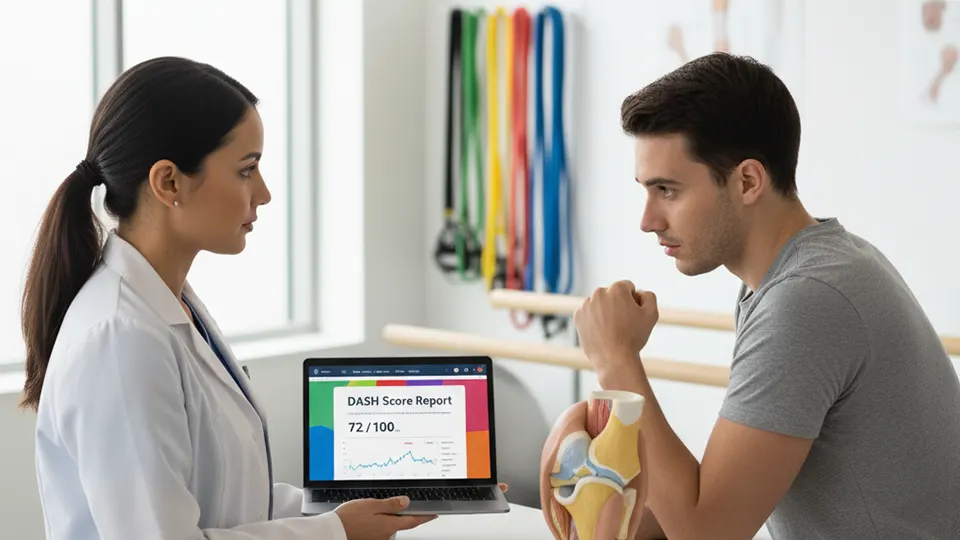
It helps both patients and healthcare professionals quantify the level of disability caused by injuries, fractures, arthritis, or other musculoskeletal conditions involving the shoulder, arm, elbow, wrist, or hand.
This calculator transforms the traditional DASH questionnaire into a digital tool, so you can easily input your answers online and instantly get your score without manual calculations.
How the DASH Score Works
The original DASH questionnaire includes 30 questions related to daily activities and symptoms such as pain, weakness, and stiffness.
Each item is rated on a 5-point Likert scale (1 to 5):
- 1 = No difficulty
- 5 = Unable to perform
Your responses are then averaged and converted into a score between 0 and 100, where:
- 0 = No disability
- 100 = Severe disability
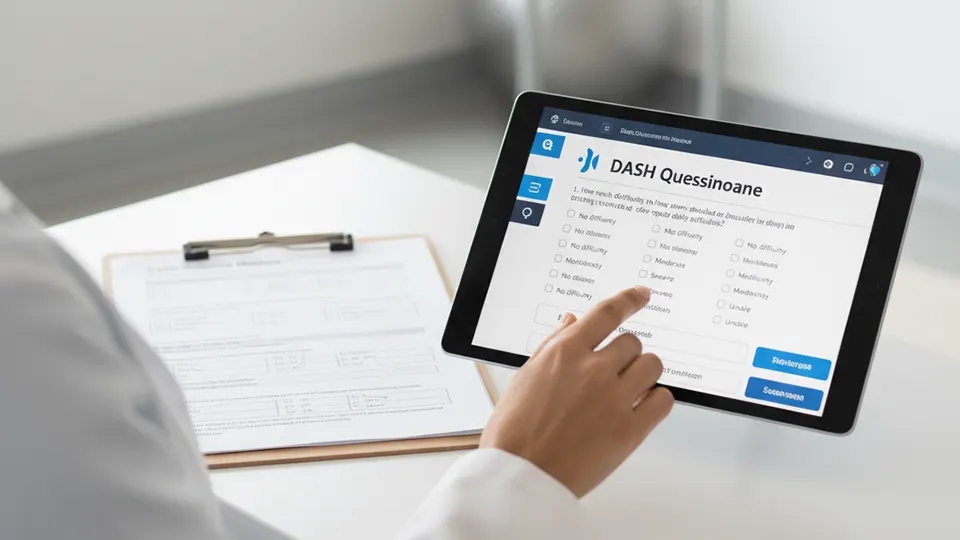
👉 Use the DASH calculator at the top of this page to get your result instantly.
Why Physiotherapists Use the DASH Score
The DASH Score is one of the most widely used outcome measures in physiotherapy and rehabilitation clinics worldwide.
Physiotherapists use it to:
- Assess baseline disability before starting treatment
- Track progress during recovery
- Compare outcomes across patients or interventions
- Support clinical decisions with measurable data
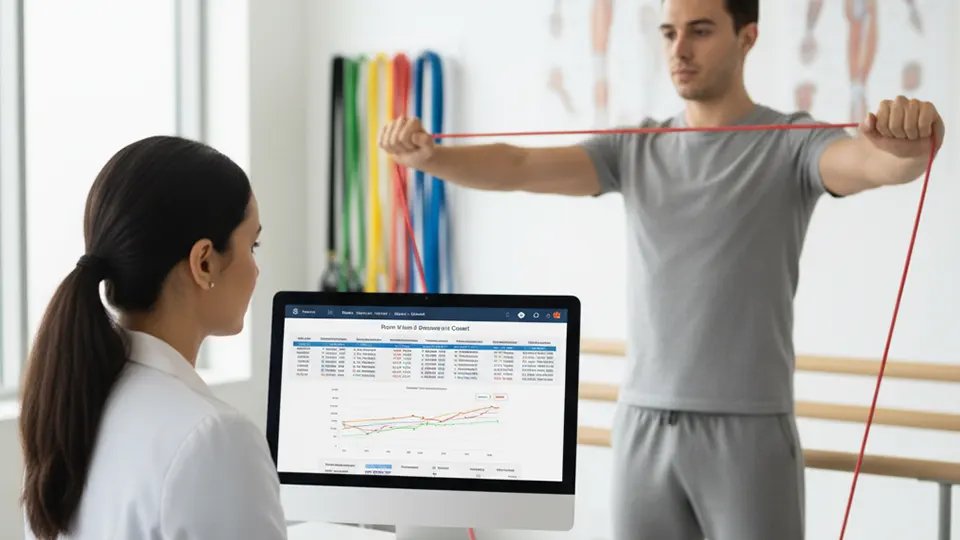
By integrating this digital tool into your clinical routine, you can monitor patient improvement with accuracy and consistency.
Benefits of Using the Online DASH Score Calculator
Our interactive calculator offers several advantages over paper forms:
- ✅ Instant score calculation (no manual math needed)
- ✅ Saves time for clinicians and patients
- ✅ Reduces errors and misinterpretation
- ✅ Easy to use on desktop or mobile devices
- ✅ Generates shareable reports for clinical records
Whether you’re a physiotherapist, occupational therapist, or patient recovering from injury, this tool streamlines the assessment process.
Interpreting Your DASH Score
Here’s how to understand your DASH score result:
- 0–20: Minimal disability
- 21–40: Mild to moderate difficulty
- 41–60: Moderate to severe difficulty
- 61–100: Severe disability or loss of function
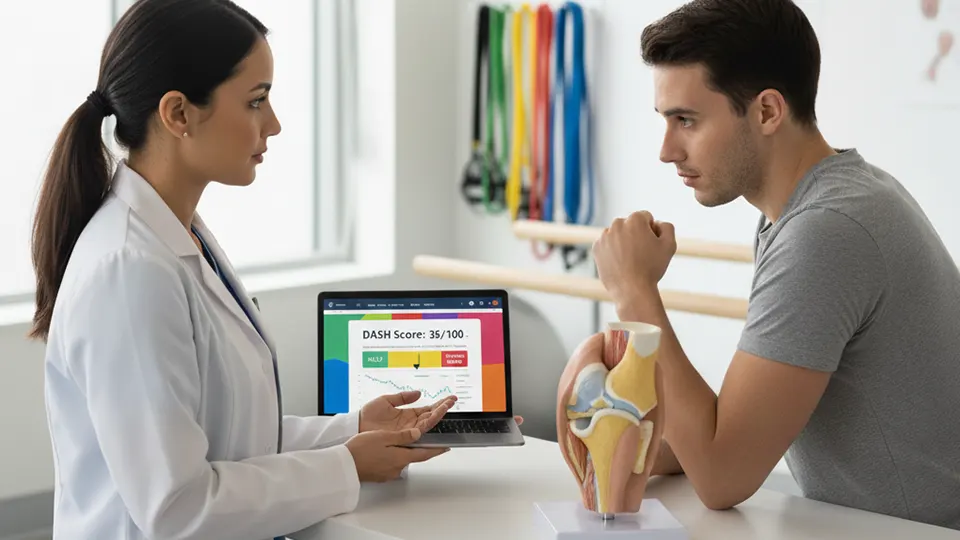
⚠️ Note: The DASH Score is not a diagnosis. It simply reflects how your upper limb condition affects your ability to perform daily activities. Always consult a physiotherapist for professional guidance.
Who Can Use the DASH Score Calculator?
The DASH Score Calculator is suitable for:
- Patients with shoulder impingement, rotator cuff injury, or tendinopathy
- People recovering from fractures, sprains, or post-surgical rehabilitation
- Individuals with arthritis, nerve injuries, or chronic pain
- Physiotherapists and occupational therapists monitoring treatment progress

This makes it a universal tool across clinics, hospitals, and home-based rehab programs.
DASH vs QuickDASH
The QuickDASH is a shortened version with 11 questions instead of 30. It offers faster scoring while maintaining similar accuracy.
If your clinic handles high patient volumes, integrating a QuickDASH Calculator alongside the full version can improve efficiency.
How to Use Our DASH Score Calculator
- Scroll to the DASH Score Calculator at the top of this page.
- Answer all 30 questions honestly based on your current ability.
- Click “Calculate” to get your score instantly.
- Review the results and note your functional level.
- Repeat the test periodically to track your recovery progress.
This easy-to-use interface is designed for both professionals and patients seeking objective, evidence-based insights.
Why You Should Add This Tool to Your Clinic Website
If you’re a physiotherapy professional, embedding this calculator on your website can:
- Improve patient engagement
- Boost SEO rankings for “DASH Score Calculator” keywords
- Showcase digital innovation in your practice
- Attract patients searching for self-assessment tools
You can link directly to this page in patient education materials or post-session follow-ups.
Physiotherapy for arm, shoulder and hand problems
A high DASH score tells you a problem is affecting daily life, but not what is causing it. At Physio Rehab Solution in Afshan Colony, Rawalpindi, Dr. Iqra Kiran, DPT assesses shoulders, elbows, wrists and hands and uses the DASH score to set a baseline and track your progress at each review.
Common reasons people start treatment include frozen shoulder, rotator cuff and tennis elbow pain, wrist and hand stiffness after a fracture, and recovery after shoulder or hand surgery. Treatment is covered under our orthopedic rehabilitation, post-op rehabilitation and sports injury rehabilitation programmes. You can also start with an online consultation or book an assessment.
Final Thoughts About DASH Score Calculator
The DASH Score Calculator bridges the gap between clinical accuracy and patient convenience. By transforming a complex form into a smart, automated online tool, it empowers both therapists and patients to understand recovery progress in real time.

Whether you’re tracking post-surgery recovery, managing chronic shoulder pain, or monitoring athletic rehabilitation—this calculator gives you the insight you need to make data-driven physiotherapy decisions.