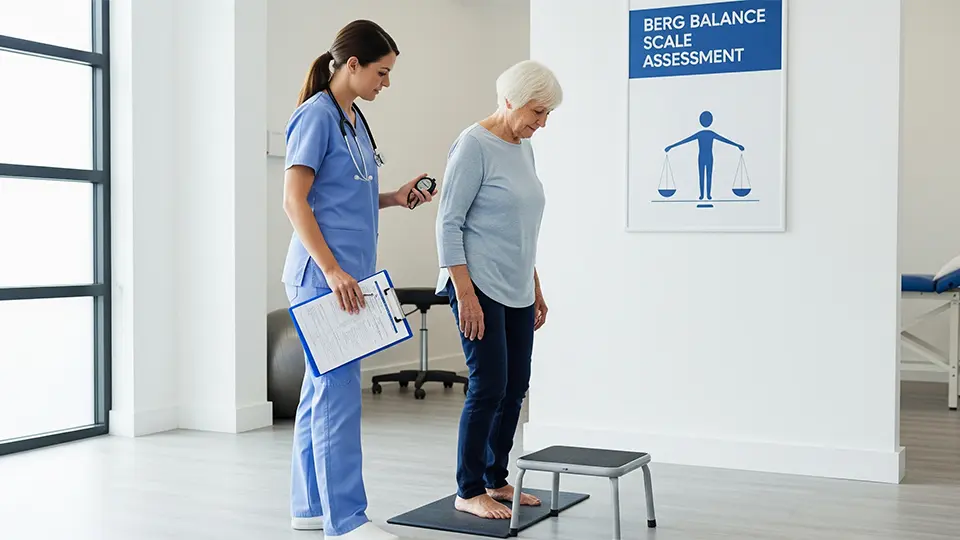
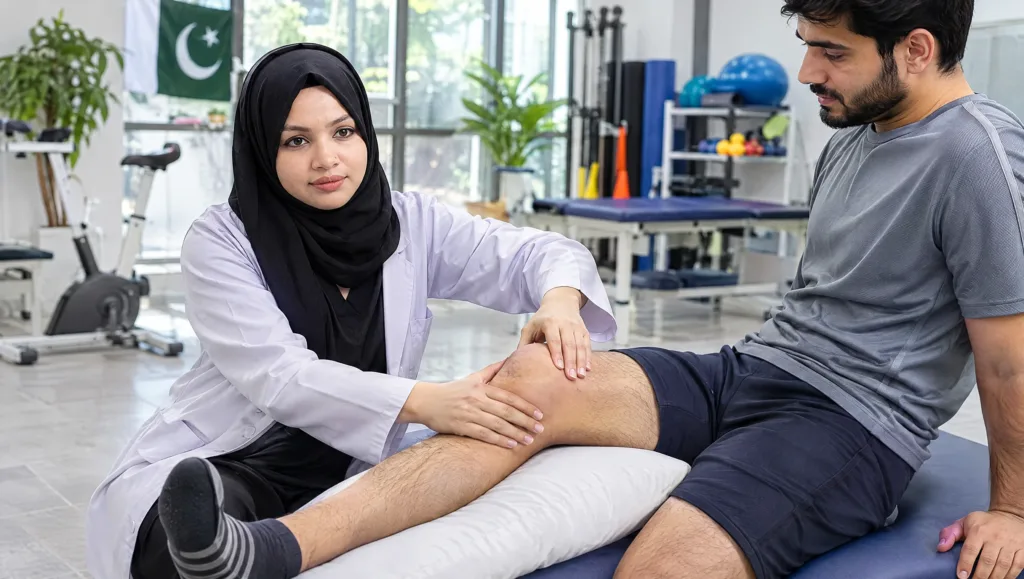
If you’re preparing for or recovering from a total knee replacement, the knee replacement surgery physiotherapy recovery timeline you follow in the first twelve weeks will shape how well your new joint ultimately performs. At Physio Rehab Solution in Rawalpindi, we guide patients through every stage of this journey, from the first assisted steps on the hospital ward to confidently climbing stairs without a second thought. This guide walks you through what physiotherapy looks like week by week after knee replacement surgery, what milestones to expect, and the warning signs that mean you should call your physiotherapist sooner rather than later. Recovery looks different for every patient, so treat this as a map rather than a strict schedule — your own physiotherapist will adjust timing based on how your knee responds.
Table of Contents
- Why the Knee Replacement Surgery Physiotherapy Recovery Timeline Matters
- Week 1: The First Days After Surgery (Hospital to Home)
- Week 2: Reducing Swelling and Building Range of Motion
- Weeks 3-4: Regaining Strength and a Normal Walking Pattern
- Weeks 5-8: Returning to Daily Activities
- Months 3-6: Advanced Strengthening and Return to Normal Life
- Common Setbacks and How Physiotherapy Helps You Avoid Them
- Tips to Get the Most Out of Your Recovery
- Frequently Asked Questions
Why the Knee Replacement Surgery Physiotherapy Recovery Timeline Matters
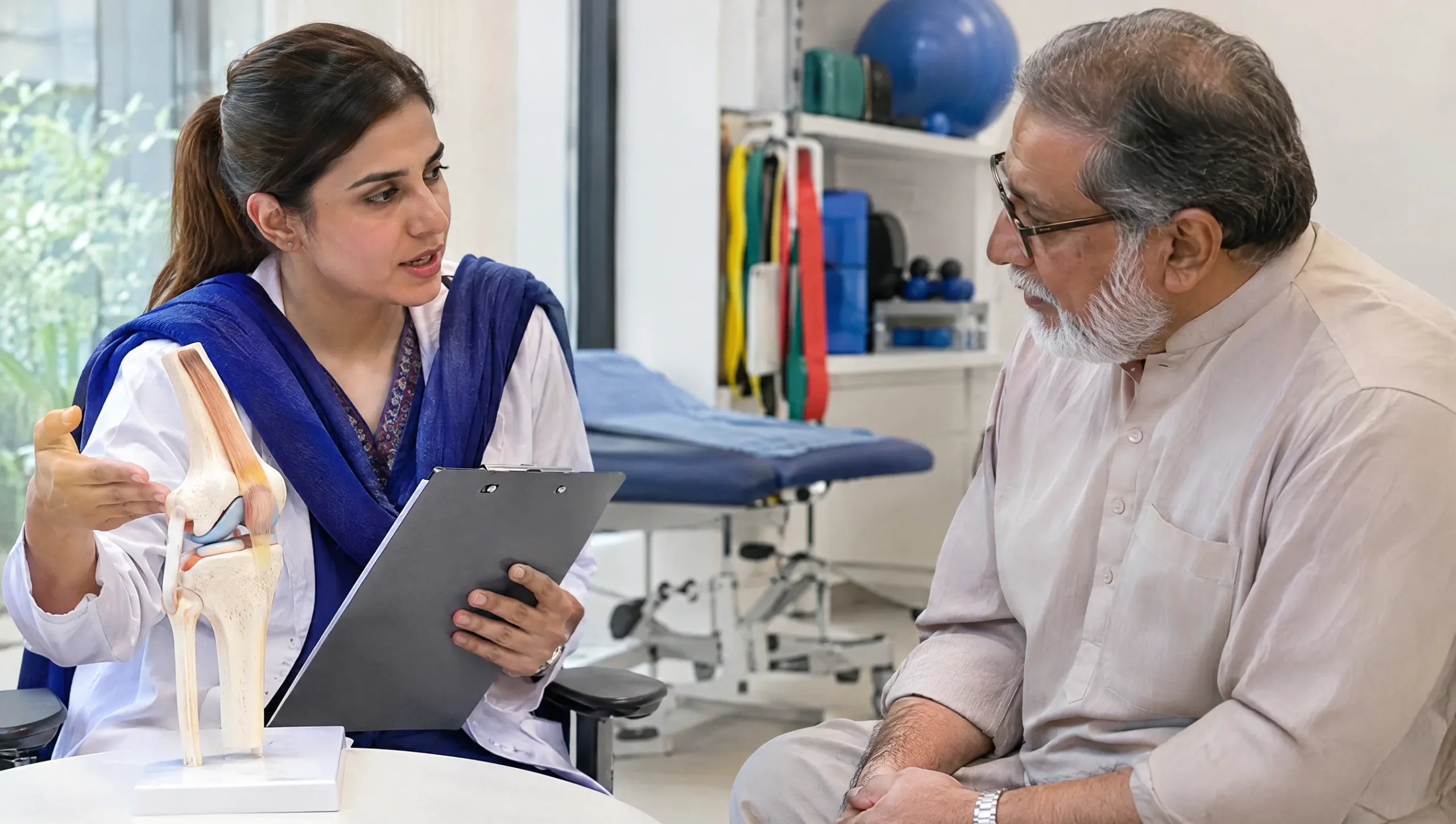
A total knee replacement swaps out damaged bone and cartilage for a smooth artificial joint, but the surgery itself only solves half the problem. The surgeon gives you a new knee; physiotherapy is what teaches your muscles, nerves, and balance system to actually use it. Without structured rehabilitation, scar tissue tightens the joint, the quadriceps muscle weakens from disuse, and patients often end up with a knee that looks fine on an X-ray but still feels stiff and unreliable a year later.
Patients who begin movement within 24 hours of surgery and follow a consistent physiotherapy program typically regain functional range of motion faster, have shorter hospital stays, and report less long-term stiffness than those who rest and wait for the knee to “settle” on its own. Early, guided movement under a physiotherapist’s supervision is safe and is, in fact, the single biggest factor in how well your recovery goes. That is why every stage below pairs a time frame with specific physiotherapy goals rather than just rest.
For patients in Rawalpindi and Islamabad, access to consistent, in-person physiotherapy after a knee replacement is one of the biggest predictors of a smooth recovery, simply because small problems like uneven gait or incomplete bending can be caught and corrected in a session rather than left to become habits. If you travelled for your surgery and are returning home to recover, arranging local physiotherapy support before you leave the hospital is one of the most useful things you can do.
Week 1: The First Days After Surgery (Hospital to Home)
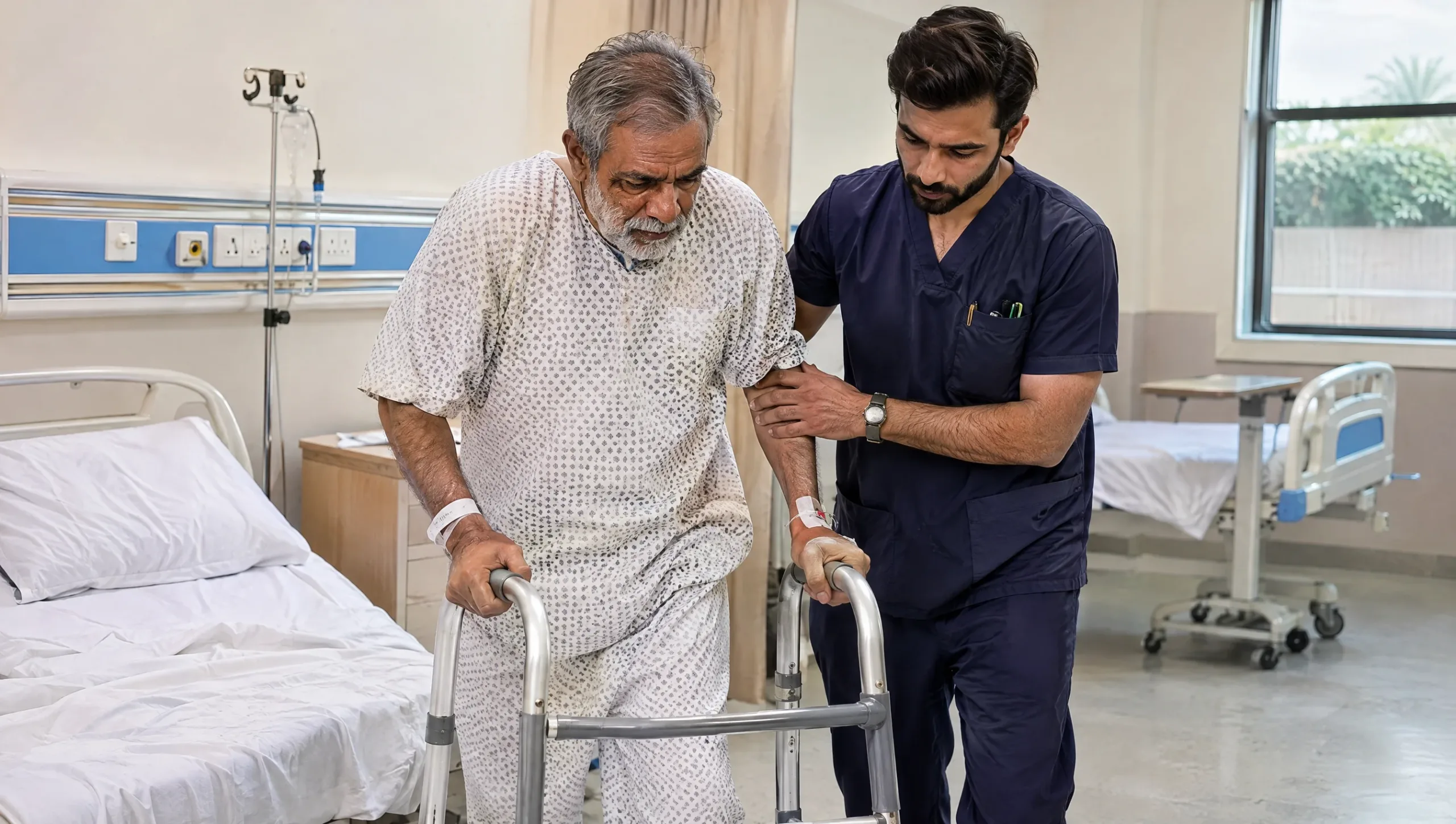
Most patients are helped out of bed and taking a few assisted steps with a walker within 24 hours of surgery, often on the same day. In the hospital, your physiotherapist focuses on ankle pumps to prevent blood clots, quadriceps setting exercises (tightening the thigh muscle without bending the knee), and short, supervised walks to the bathroom or down the ward corridor.
Once home, the first week is about consistency, not intensity. You will typically do gentle bending and straightening exercises, straight leg raises, and heel slides several times a day, alongside icing and elevating the leg above heart level to control swelling. Pain medication is used proactively, not just when pain becomes severe, because comfortable patients move more and move better. By the end of week one, a realistic goal is bending the new knee to roughly 80-90 degrees and being able to walk short distances around the house with a walker.
Week 2: Reducing Swelling and Building Range of Motion
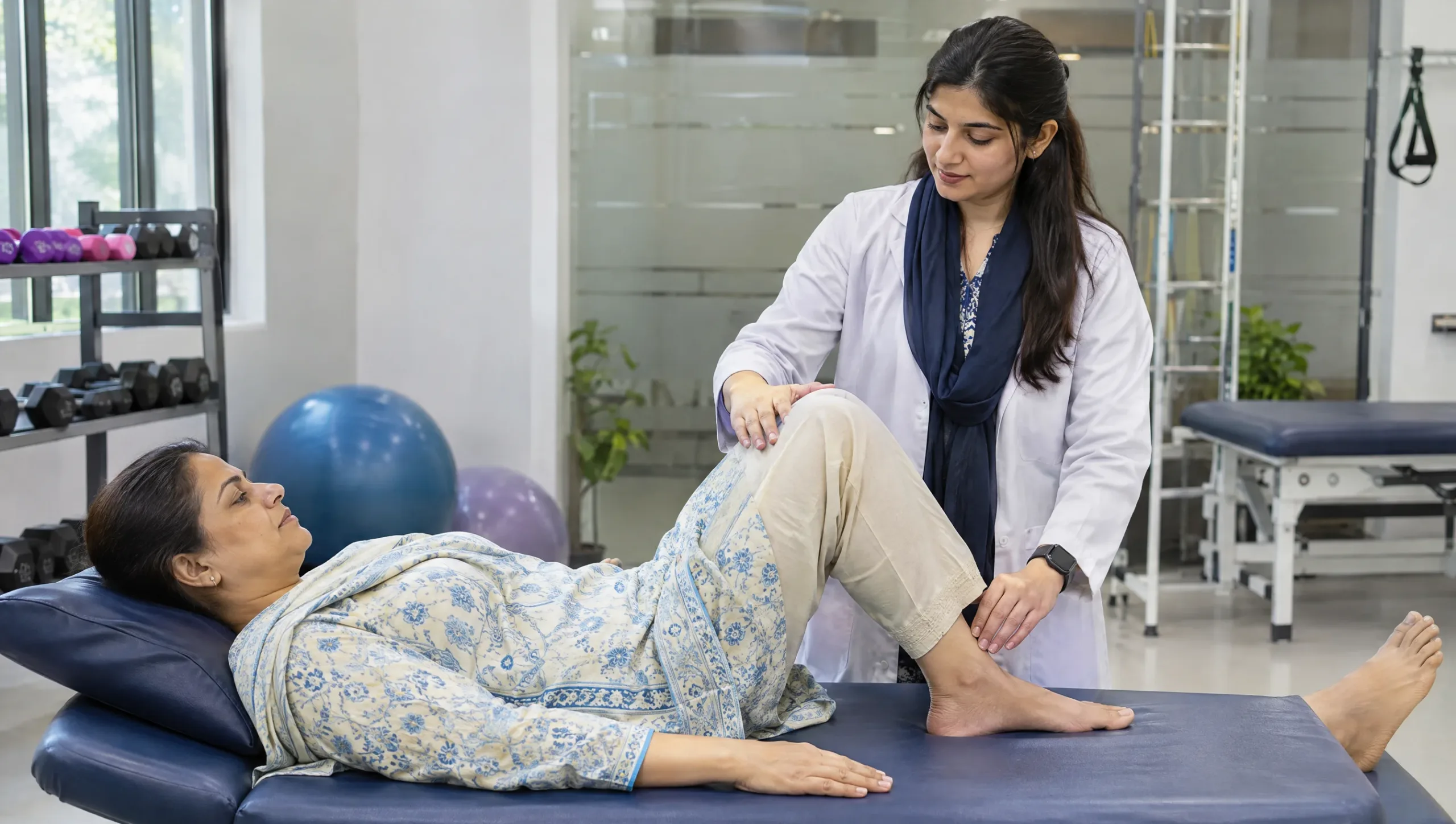
Swelling is usually at its peak around days 10-14, which can feel discouraging, but it does not mean something is wrong. Your physiotherapist will check the incision, begin gentle scar mobilization once it has closed, and progress your exercises to include standing mini-squats and marching in place while holding onto a stable surface.
This week is also when many patients transition from a walker to a cane, though the pace varies and should be guided by your physiotherapist rather than a fixed calendar. Range-of-motion goals typically climb toward 100-110 degrees of bending by the end of week two. Watch for warning signs that need a prompt call to your clinic: a fever, redness or warmth spreading from the incision, calf pain or swelling that could indicate a blood clot, or a sudden increase in pain that is not controlled by your usual medication.
Weeks 3-4: Regaining Strength and a Normal Walking Pattern
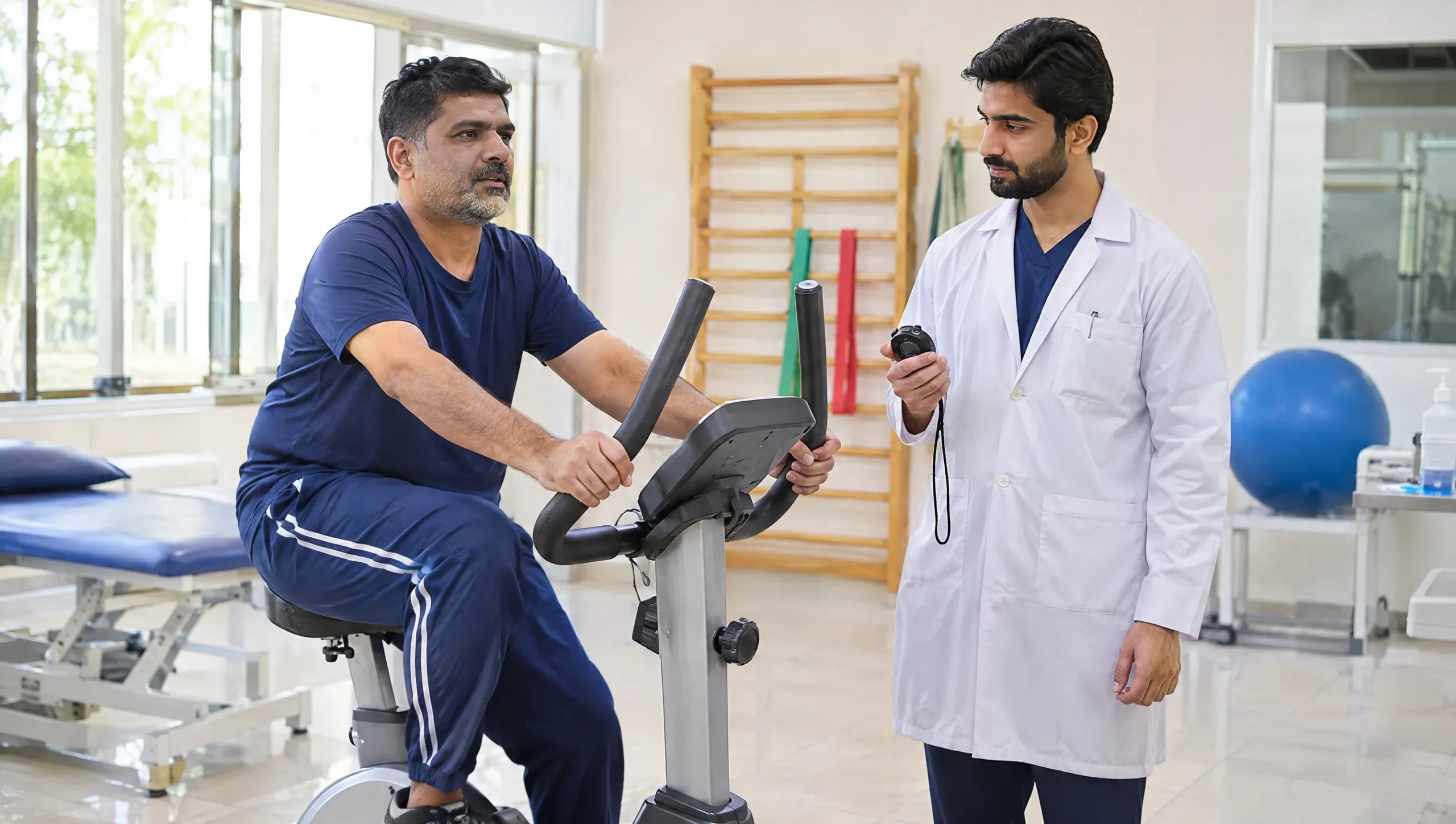
With the acute swelling settling, the focus shifts from protecting the joint to actively strengthening it. Stationary cycling with the seat raised high (so the knee barely bends at the bottom of the pedal stroke) is a favourite tool here, along with step-ups on a low block, sit-to-stand practice from a firm chair, and resistance band work for the hip and thigh muscles that support the knee.
Gait training becomes a priority too. After weeks of favouring the operated leg, many patients walk with a limp out of habit even once pain allows a normal stride. Your physiotherapist will cue you to land evenly on both feet and lengthen your stride on the surgical side, and most patients are able to leave the cane behind sometime during this window, with range of motion approaching 110-120 degrees.
Weeks 5-8: Returning to Daily Activities
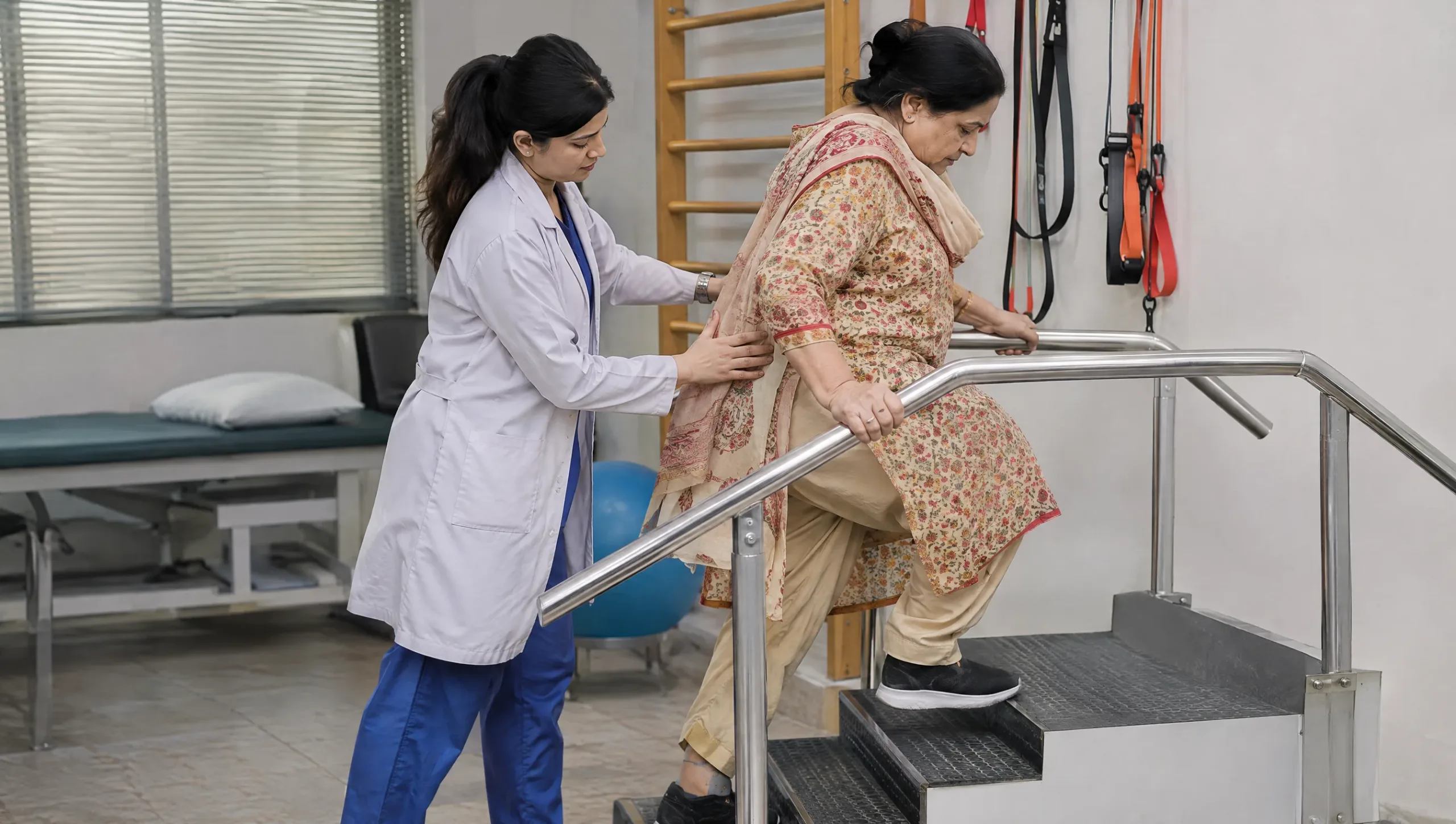
This stage is where recovery starts to feel like real life again. Most patients can climb and descend stairs reciprocally (one foot per step) rather than leading with the stronger leg, get in and out of a car independently, and return to light desk work, often with surgeon clearance to drive somewhere between weeks 4 and 6.
Physiotherapy sessions now add balance and proprioception drills, single-leg stance practice, and functional tasks like rising from low chairs or a car seat, since these movements demand more control than simply walking on a flat surface. If you had a physically demanding job, this is also when your physiotherapist starts planning a graded return-to-work schedule rather than an all-at-once comeback.
There is also a psychological shift during this stage that is easy to underestimate. After weeks of being cautious, many patients feel nervous trusting the new joint with ordinary movements like stepping off a curb or navigating uneven ground. Physiotherapy sessions that deliberately introduce these real-world challenges in a controlled setting help rebuild confidence just as much as they rebuild strength, which is part of why guided rehabilitation tends to outperform a generic home program alone.
Months 3-6: Advanced Strengthening and Return to Normal Life

Between three and six months, most patients reach 120-130 degrees of knee flexion and can walk longer distances without needing a rest. Physiotherapy at this stage looks less like rehabilitation and more like structured fitness: longer walks or treadmill sessions, swimming once the incision is fully healed, stationary cycling at higher resistance, and progressive strength training for the quadriceps, hamstrings, and glutes.
Many patients return to activities like gardening, light hiking, doubles tennis, or golf during this window, depending on their surgeon’s clearance and how their knee is responding. Strength, not just range of motion, is usually the limiting factor by month three, so the exercises your physiotherapist prescribes now focus heavily on building power back into the muscles around the joint.
Common Setbacks and How Physiotherapy Helps You Avoid Them
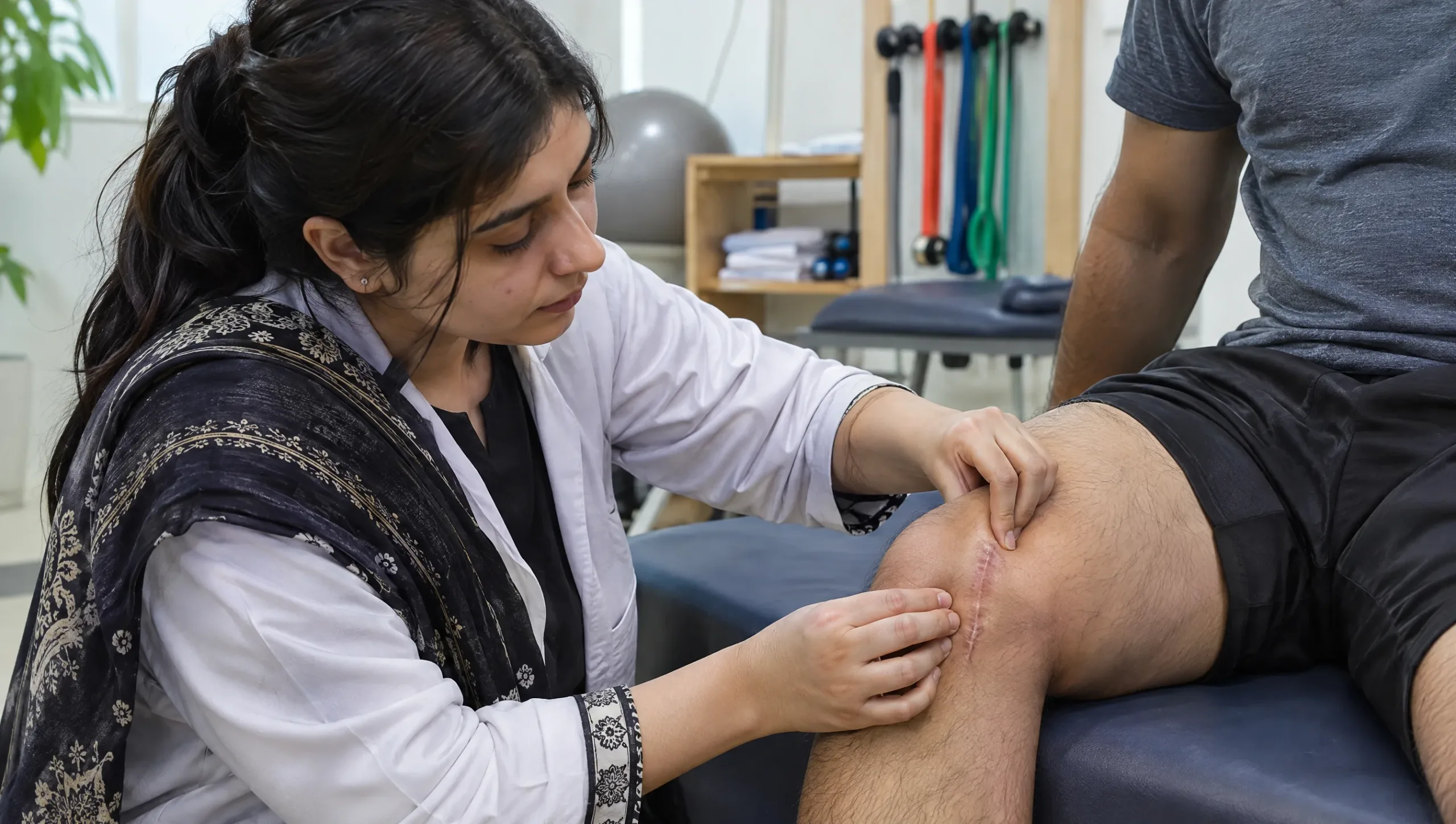
The most common setback is arthrofibrosis, excessive scar tissue that restricts bending or straightening the knee. It is far easier to prevent than to treat, which is why physiotherapists push for consistent range-of-motion work from the very first week rather than waiting for stiffness to develop. If flexion stalls below expected ranges, manual therapy techniques and, occasionally, a referral back to the surgeon can address it before it becomes permanent.
Other setbacks include swelling that lingers for months (usually managed with compression, elevation, and activity pacing), falls caused by poor balance before strength has fully returned, and flare-ups from doing too much too soon after a “good day” tempts patients to overdo it. A physiotherapist’s job through this whole timeline is as much about pacing you appropriately as it is about pushing you to progress.
Numbness or altered sensation around the outer part of the incision is also extremely common and is caused by small nerve endings in the skin being cut during surgery. It is usually permanent but harmless, and it is worth mentioning to your physiotherapist mainly so they can reassure you it is expected rather than a complication, and so it is not confused with a loss of deeper joint sensation that would be more concerning.
Tips to Get the Most Out of Your Recovery
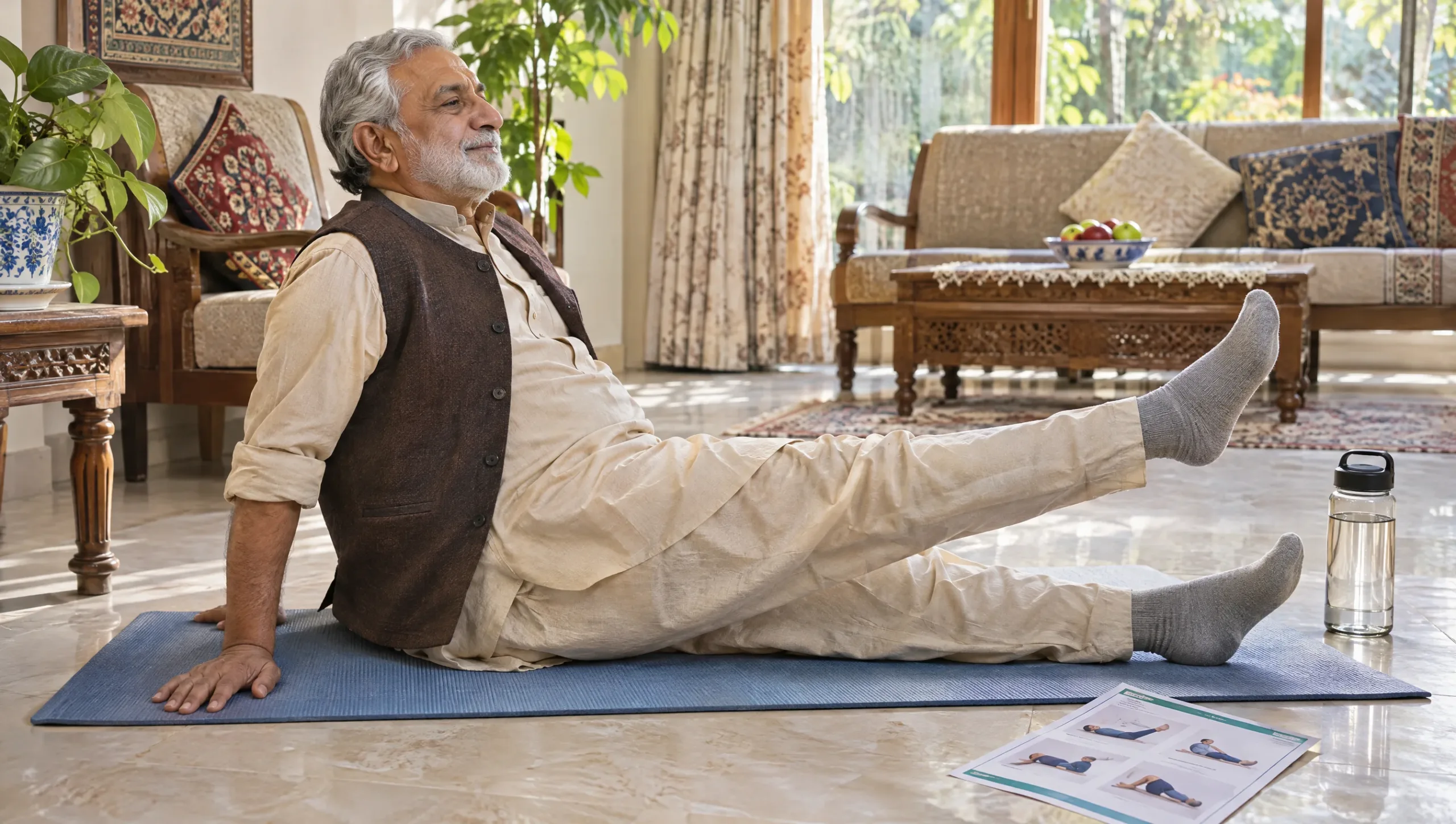
A few habits consistently separate patients who recover smoothly from those who struggle. Do your home exercise program exactly as prescribed, even on days the knee feels fine — consistency matters more than intensity. Ice and elevate after exercise sessions, not just when swelling is already uncomfortable. Be honest with your physiotherapist about pain levels; undertreated pain leads to guarded movement, which slows progress more than the pain itself.
Avoid high-impact activities like running or jumping until your physiotherapist clears you, prioritize sleep and protein intake to support tissue healing, and set milestone goals week by week rather than fixating on a single “back to normal” date. For general guidance on post-operative exercises, the American Academy of Orthopaedic Surgeons’ exercise guide is a useful reference to discuss with your physiotherapist, though your own program should always be individualized to your knee.
A few logistical details also matter more than patients expect. If your surgeon recommends compression stockings, wear them for the full prescribed period rather than stopping once swelling looks better, since they support circulation well after visible swelling improves. If you smoke, stopping before and after surgery measurably improves wound healing and reduces complication rates, and your physiotherapist or surgeon can point you to support resources if you want help quitting during recovery.
If you are also supporting a family member through a hip replacement, our guide on physiotherapy after hip replacement surgery follows a very similar week-by-week structure. Patients recovering from ligament surgery may also find our ACL surgery physiotherapy rehab timeline helpful for comparison.
Frequently Asked Questions
How long after knee replacement surgery can I walk without a walker or cane?
Most patients progress from a walker to a cane within the first two weeks and leave the cane behind sometime between weeks three and six, depending on strength, balance, and how swelling is responding. This is a guideline, not a deadline — your physiotherapist will tell you when it is safe based on your specific progress.
Is it normal for my knee to still be swollen three months after replacement?
Mild swelling, especially by the end of the day or after activity, can persist for six months to a year and is generally considered normal. However, swelling paired with increasing pain, redness, or warmth is not typical and should be checked by your surgeon or physiotherapist promptly.
When can I kneel on my replaced knee again?
Many patients are able to kneel with some discomfort by three to four months, though for some it takes longer or never feels completely natural due to numbness over the front of the knee from the surgical incision. This is a common and usually harmless after-effect of the surgery itself rather than a sign of a problem.
Can physiotherapy still help if my knee feels stiff months after surgery?
Yes. While the window for the fastest gains is typically the first twelve weeks, physiotherapists can still improve range of motion and function well beyond that point using targeted manual therapy and progressive strengthening, especially if stiffness is caught before it becomes long-standing. It is always worth an in-person assessment rather than assuming it is “too late” to improve.
This guide is intended for general education and does not replace a personalized assessment. If you are experiencing unexpected pain, swelling, or stiffness after knee replacement surgery, we recommend an in-person evaluation with a licensed physiotherapist before starting or changing any exercise program.
Ready to recover with confidence? Dr. Iqra Kiran and the team at Physio Rehab Solution in Rawalpindi provide personalized, hands-on physiotherapy for every stage of your knee replacement surgery physiotherapy recovery timeline. Book your assessment today or call us at +92 321 4287773 to get started on a recovery plan built around your knee.
For more answers to common physiotherapy questions, visit our physiotherapy FAQ page.