

If you woke up this morning unable to turn your head without a sharp pull of pain down one side of your neck, you are likely dealing with wry neck, medically known as acute torticollis. It is one of the most common reasons patients walk into our Rawalpindi clinic holding their head tilted to one side, afraid to move. The good news: acute torticollis is almost always a muscular, mechanical problem, and with the right physiotherapy treatment, most people recover full movement within days to a couple of weeks. This guide explains exactly what is happening in your neck, why it happens, what you should avoid doing, and how a physiotherapist diagnoses and treats wry neck safely.
Table of Contents
- What Is Wry Neck (Acute Torticollis)?
- Why It Happens: The Common Causes
- How to Tell If It’s Wry Neck or Something More Serious
- What NOT to Do When Your Neck Locks Up
- How Physiotherapy Treats Acute Torticollis
- Safe Self-Care Between Sessions
- How Long Does Recovery Take?
- Preventing Wry Neck From Coming Back
- Frequently Asked Questions
What Is Wry Neck (Acute Torticollis)?

Wry neck, or acute torticollis, describes a sudden, painful spasm of the muscles on one side of the neck that pulls your head into a tilted, twisted position and makes it very difficult to straighten or turn. The name “torticollis” comes from the Latin words for “twisted neck,” and the acute form appears within hours, often overnight, rather than developing gradually.
Unlike chronic neck stiffness that builds up over months of poor posture, acute torticollis typically involves one specific muscle, most often the levator scapulae or a section of the upper trapezius, going into a protective spasm. The muscle essentially locks down to guard an irritated joint or disc segment in the upper neck, and that guarding is what produces the characteristic tilted, “stuck” head position.
At Physio Rehab Solution in Rawalpindi, we see this condition year-round, but it spikes during extreme weather swings, exam season (from students hunched over desks for hours), and after long drives or awkward sleeping positions. It affects people of every age, though it is especially common in people in their 20s to 40s who spend long hours at a screen.
Why It Happens: The Common Causes

Acute torticollis rarely has one single dramatic cause. Instead, it is usually the final straw after a combination of smaller stresses on the neck. The most common triggers we see in clinic include:
Sleeping in an awkward position. An unsupportive pillow, sleeping on your stomach with your head rotated, or falling asleep on a sofa or during a car ride can leave the neck muscles on one side shortened and irritated for hours. Waking up with wry neck after a long nap or an overnight bus journey is extremely common.
Sudden movement or minor strain. A quick turn of the head to check traffic, reaching awkwardly for something behind you, or even a hard sneeze can trigger a protective spasm if the neck muscles were already fatigued.
Prolonged poor posture. Hours spent looking down at a phone, working on a laptop without proper screen height, or driving long distances with the head tilted creates sustained tension on one side of the neck, priming the muscles for spasm.
Cold exposure or draughts. Many patients in Rawalpindi and Islamabad report waking up with wry neck after sleeping under a fan or air conditioning directed at the neck, or during sudden cold-weather exposure. While cold air alone does not cause the spasm, it can lower the threshold for muscle irritability in an already stressed neck.
Stress and muscle tension. Emotional stress increases baseline tension in the upper trapezius and levator scapulae, two of the main muscles involved in acute torticollis, making a spasm more likely during an otherwise normal movement.
Underlying joint irritation. Sometimes a small facet joint in the upper cervical spine becomes slightly irritated or stuck, and the muscle spasm is the body’s way of protecting that joint from further movement until it settles.
How to Tell If It’s Wry Neck or Something More Serious

Most wry neck cases are straightforward and respond well to conservative physiotherapy treatment, but it is important to recognize when neck symptoms need urgent medical attention rather than physiotherapy alone.
Typical, uncomplicated acute torticollis presents as: pain and stiffness on one side of the neck that came on suddenly, a visibly tilted or rotated head posture, muscle spasm that you can often feel as a hard, tender band under your fingers, pain that worsens with attempting to turn toward the tight side, and no numbness, weakness, or symptoms spreading down the arm.
You should seek urgent medical assessment rather than starting physiotherapy if your neck pain is accompanied by any of the following: a high fever, a severe headache unlike any you have had before, numbness, tingling, or weakness spreading into the arm or hand, difficulty swallowing or breathing, visual disturbances, dizziness or loss of balance, neck pain following a significant trauma such as a fall or road accident, or a neck that is not just stiff but visibly swollen, hot, or associated with a lump. These can point to issues ranging from an infection to a cervical nerve root problem, and they deserve a same-day medical or hospital assessment before any manual treatment.
If your symptoms match the straightforward description above, physiotherapy is one of the most effective, well-evidenced ways to resolve acute torticollis quickly and safely. If you are at all unsure, a quick in-person assessment with a physiotherapist or physician is always the safer first step, and we would always recommend getting your neck properly assessed before relying on self-treatment alone.
What NOT to Do When Your Neck Locks Up
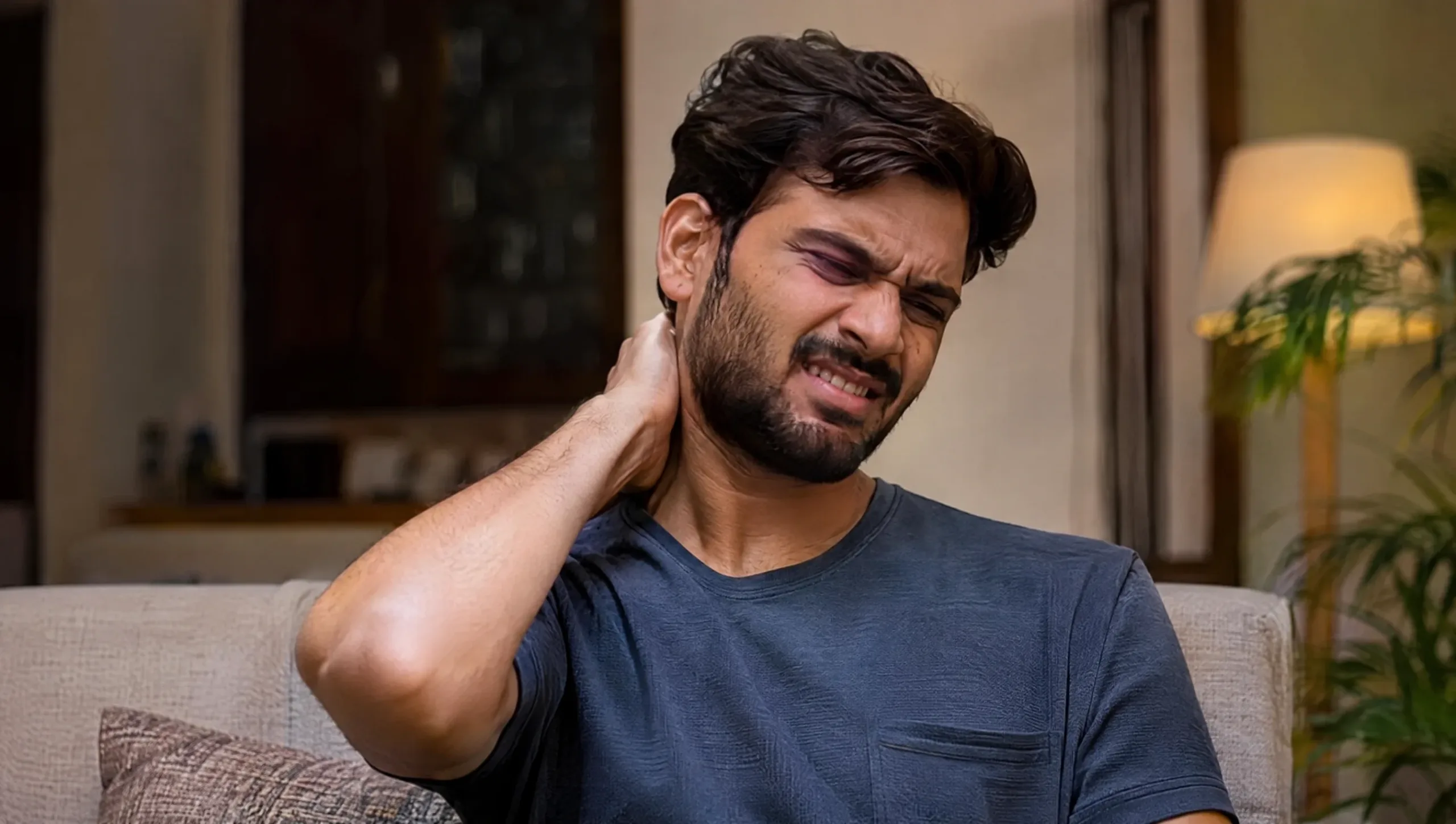
When a muscle is in acute spasm, the instinct is often to “crack” it, stretch it hard, or ask a friend to forcefully turn your head back into place. These are exactly the wrong responses, and they can make the spasm worse or irritate the joint underneath further.
Avoid aggressively self-stretching the tight side. Forcing a stiff, spasming muscle into a stretch triggers a protective reflex that tightens it further rather than releasing it.
Avoid forceful self-manipulation or having someone “crack” your neck. Without a proper assessment, this can aggravate an irritated joint and, in rare cases, cause injury to structures around the cervical spine. If you are unsure whether to see a chiropractor or a physiotherapist for a locked neck, our comparison of physical therapist vs chiropractor explains the difference.
Avoid staying completely still for days. Total immobilization slows recovery; gentle, pain-free movement within your available range is more effective than rigid stillness.
Avoid ignoring it and pushing through a full workday hunched at a screen. Continuing the same postural stress that contributed to the spasm will usually prolong it.
Avoid relying only on hot water baths or random home remedies for more than a day or two without professional input, especially if there is no improvement, since a short course of guided physiotherapy will typically resolve things far faster and more completely.
How Physiotherapy Treats Acute Torticollis

At Physio Rehab Solution, Dr. Iqra Kiran, DPT, assesses every wry neck case individually before starting treatment, because the right approach depends on whether the primary issue is the muscle spasm, the underlying joint, or both. If you are looking for an experienced physiotherapist in Rawalpindi for a stiff or locked neck, this is exactly the kind of case we see every week.
A typical assessment includes checking your available range of motion in every direction, gently palpating the neck and shoulder muscles to identify the specific spasming muscle, screening for any red-flag signs described above, and assessing your posture and daily habits that may have contributed to the episode.
Treatment for acute torticollis commonly combines several evidence-based techniques: gentle manual therapy to release the spasming muscle without forcing the joint, soft tissue and trigger point release to reduce the hard, tender band of muscle, graded, pain-free mobility exercises that restore movement gradually rather than all at once, postural correction and ergonomic advice specific to your work or study setup, and modalities such as heat or therapeutic ultrasound where appropriate to support muscle relaxation.
Most patients notice a meaningful reduction in pain and an improvement in how far they can turn their head after the very first session, because releasing the guarded muscle and calming the irritated joint allows the nervous system to stop protecting the area so aggressively. Full, pain-free rotation typically returns over the following few sessions, along with a plan to prevent recurrence.
Safe Self-Care Between Sessions

Alongside hands-on physiotherapy, there is a lot you can safely do at home to support your recovery between sessions.
Apply gentle heat, not ice, to the spasming side for 10-15 minutes at a time. Heat helps the muscle relax, whereas ice is generally better suited to acute joint swelling rather than muscle spasm.
Keep moving gently within your pain-free range. Small, slow head turns and tilts, stopping well before sharp pain, help maintain circulation and prevent the muscle from stiffening further.
Support your neck while sleeping. A supportive, not-too-high pillow that keeps your neck roughly level with your spine reduces overnight strain on the affected side.
Take short, frequent screen breaks. Every 30-40 minutes, look away from your phone or laptop and gently roll your shoulders and turn your head side to side within comfort.
Avoid carrying heavy bags on the affected shoulder, since the added load increases tension through the same muscles that are already in spasm.
Stay hydrated and prioritize sleep, since both directly affect how quickly irritated muscle tissue recovers.
How Long Does Recovery Take?

Most uncomplicated cases of acute torticollis improve significantly within three to seven days, and resolve fully within one to two weeks, especially when physiotherapy is started early rather than left to “see if it goes away on its own.” Waiting too long often allows the body to compensate with poor posture on the opposite side, which can create a second area of strain.
Recovery timelines vary depending on a few factors: how quickly treatment is started after the spasm begins, whether there is an underlying joint component in addition to the muscle spasm, how much your daily posture and work setup continue to stress the neck during recovery, and whether this is a first episode or a recurrence, since repeat episodes can sometimes take slightly longer if the surrounding muscles have become protectively tight over time.
If your neck has not shown clear improvement after a week of appropriate care, or if symptoms are worsening rather than easing, it is worth a reassessment to rule out a more involved joint or disc issue that may need a more targeted treatment plan.
Preventing Wry Neck From Coming Back

Because acute torticollis is usually the result of accumulated strain rather than a single random event, a few consistent habits make a real difference in preventing repeat episodes.
Set up your workstation properly. Your screen should be at eye level and your neck should stay in a neutral, upright position for the majority of the day, rather than tilted down or to one side.
Invest in a supportive pillow suited to your sleep position, and avoid falling asleep in chairs, cars, or on sofas with your head unsupported and rotated.
Build regular mobility into your week. Simple neck and upper back mobility exercises two to three times a week keep the muscles around your cervical spine adaptable rather than chronically tight.
Manage stress where you can, since chronically tense shoulders and neck muscles are more prone to spasm under even minor provocation.
Address recurring stiffness early. If you notice your neck feeling persistently tight or restricted even without a full-blown episode, a physiotherapy assessment at that stage can often prevent the next acute flare-up altogether.
For a deeper look at posture-related neck strain specifically from phone and laptop use, see our detailed guide on text neck syndrome, and if you experience frequent headaches alongside neck tightness, our article on cervicogenic headaches may also be relevant. If your neck pain is a more general, ongoing issue rather than a sudden lock-up, our guide on getting fast relief from neck pain covers a broader treatment approach.
According to the Mayo Clinic, most cases of torticollis, including the acute muscular form seen in adults, respond well to conservative treatment such as gentle stretching, physical therapy, and addressing the underlying muscle spasm, with surgery rarely needed outside of complex or long-standing structural cases.
Frequently Asked Questions

Can wry neck go away on its own without treatment?
Many mild cases do ease up within a few days on their own, but moving into physiotherapy early almost always speeds up recovery and reduces the chance of the same muscle re-spasming a few weeks later, because the underlying postural or joint trigger is actually addressed rather than just waiting out the pain.
Is it safe to exercise or go to the gym with acute torticollis?
Light, pain-free movement is encouraged, but heavy lifting, overhead pressing, or any exercise that loads the neck and shoulders should be paused until the spasm has settled, since those movements can re-trigger the guarding response. A physiotherapist can tell you exactly which movements are safe at each stage.
Why does my wry neck keep coming back every few months?
Recurring episodes usually point to an unaddressed contributing factor, most often sustained poor posture at a desk, an unsupportive sleep setup, or residual tightness from a previous episode that was never fully rehabilitated. A physiotherapy assessment focused on the root cause, not just the current flare-up, is the most effective way to break that cycle.
Should I use a soft neck collar for wry neck?
We generally advise against wearing a neck collar for more than very short periods, if at all, since prolonged immobilization can weaken the supporting muscles and slow recovery. Guided, gentle movement is usually more effective than full immobilization for this condition.
Wry neck can feel alarming when it strikes, especially when you cannot turn your head in either direction, but the vast majority of cases are a straightforward muscular problem that responds quickly to the right physiotherapy care. If you are dealing with a locked, painful neck right now, do not wait it out in discomfort. Book an appointment for an in-person assessment with Dr. Iqra Kiran at Physio Rehab Solution in Rawalpindi, and let us get your neck moving freely again. Call or WhatsApp us at +92 321 4287773 to schedule your appointment, or visit our homepage to learn more about our clinic. You can also browse our frequently asked questions or our expert physiotherapy FAQ page for more answers on common conditions we treat.