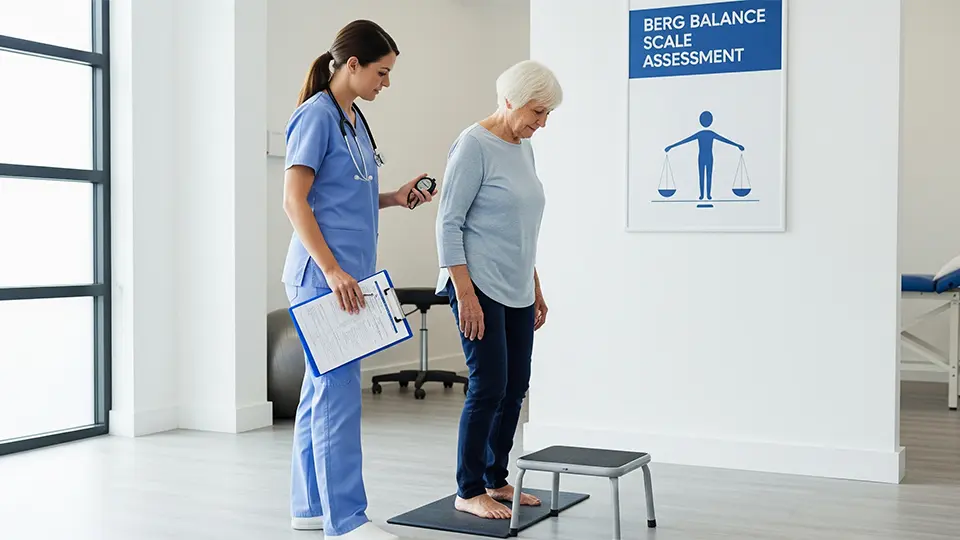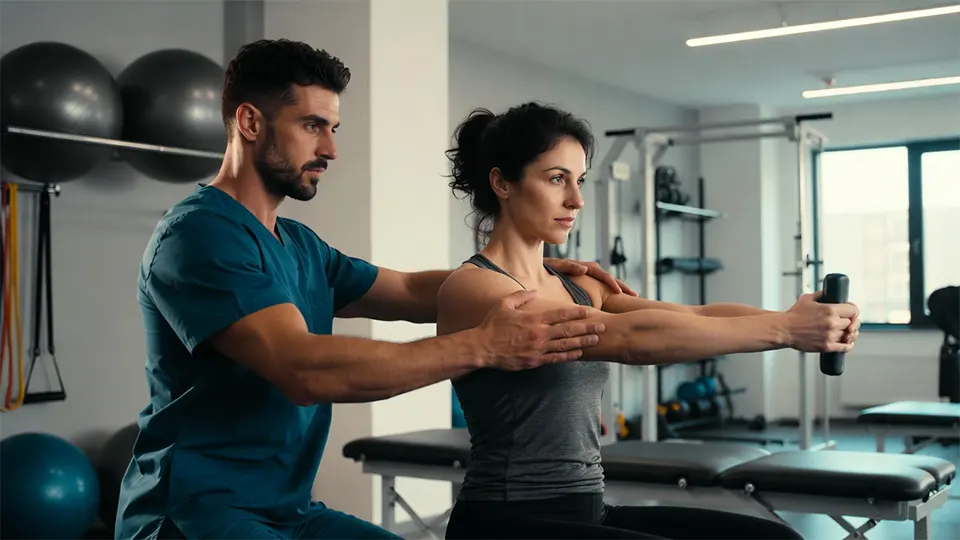

If you get a dull, one-sided headache that seems to start at the back of your skull and crawl up over your head after a long day at a desk or a bumpy commute through Rawalpindi traffic, the real problem may not be in your head at all — it may be in your neck. This is exactly what a cervicogenic headache physiotherapy treatment plan is built to find and fix: a headache that originates from the joints, muscles, and nerves of the upper cervical spine rather than from the brain itself. Unlike a migraine or a stress headache, a cervicogenic headache usually responds poorly to painkillers alone and very well to targeted, hands-on physiotherapy.
In this guide, Dr. Iqra Kiran, DPT, explains what cervicogenic headaches actually are, how they differ from migraines and tension headaches, why they are becoming so common among desk workers and commuters in Rawalpindi and Islamabad, and exactly what a structured cervicogenic headache physiotherapy treatment plan looks like from the first assessment to long-term prevention.
Table of Contents
- What Is a Cervicogenic Headache?
- Cervicogenic Headache vs Migraine vs Tension-Type Headache
- What Causes Cervicogenic Headaches in Desk Workers and Commuters
- How Physiotherapists Diagnose a Cervicogenic Headache
- Cervicogenic Headache Physiotherapy Treatment: What Actually Works
- Posture Fixes and Home Exercises That Reduce Flare-Ups
- What to Expect: Physiotherapy Timeline and Realistic Results
- When to See a Doctor Alongside Physiotherapy
- Frequently Asked Questions
What Is a Cervicogenic Headache?

A cervicogenic headache is a secondary headache, meaning it is a symptom caused by a problem somewhere else in the body — in this case, the upper three joints of the neck (the C1-C2-C3 segments), the suboccipital muscles at the base of the skull, or the nerves that run between them. These structures share nerve pathways with the trigeminal nerve, which also supplies sensation to the face and forehead. Because of this shared wiring, pain that actually starts in a stiff or irritated neck joint is “referred” upward and felt as a headache, usually starting at the base of the skull and spreading toward one side of the forehead, temple, or behind the eye.
Patients often describe it as a constant, dull ache rather than a throbbing one, and it is almost always one-sided, though it can switch sides. Turning the head, holding a static neck posture, or pressing on specific tender points at the back of the neck frequently reproduces or worsens the pain — a strong clue that the neck, not the brain, is driving the headache.
Cervicogenic Headache vs Migraine vs Tension-Type Headache

One reason cervicogenic headaches go untreated for years is that they are so easily mistaken for migraines or tension headaches. All three can cause one-sided head pain, but the details differ in ways a trained physiotherapist or physician can pick apart.
Migraine tends to be throbbing or pulsing, often comes with nausea, light sensitivity, or visual aura, and is not typically reproduced by moving or pressing on the neck. Tension-type headache usually feels like a tight band squeezing both sides of the head and is linked to stress and muscle tension rather than a specific joint restriction. A cervicogenic headache, by contrast, is one-sided, starts at the back of the head or neck, worsens with sustained postures or neck movement, and often comes with a visibly restricted range of neck motion on the painful side.
Getting this distinction right matters because the treatment is different. Migraine management often centers on medication and trigger avoidance, while a cervicogenic headache responds specifically to physiotherapy aimed at the neck — which is why a correct diagnosis before starting cervicogenic headache physiotherapy treatment is so important.
What Causes Cervicogenic Headaches in Desk Workers and Commuters

We see a sharp rise in cervicogenic headache cases among office workers, students, and anyone who spends long hours commuting across Rawalpindi and Islamabad. A few patterns show up again and again in clinic:
Forward head posture. Hours spent looking down at a phone or leaning toward a monitor shift the head forward of the shoulders. For every inch the head moves forward, the muscles at the base of the skull have to work several times harder just to hold it up, which eventually irritates the upper cervical joints.
Prolonged static sitting. Desk jobs with little movement allow the deep neck stabilizing muscles to weaken while the larger, more superficial neck and shoulder muscles become overworked and tight — a combination that stresses the same upper cervical joints responsible for referred headache pain.
Bumpy commutes and whiplash-type strain. Rawalpindi’s traffic and road conditions mean frequent sudden stops and jolts, which place repetitive small strain on the neck, similar in mechanism (though smaller in scale) to whiplash injuries that are a well-known cause of cervicogenic headache.
Sleeping position and pillow height. An overly high or flat pillow can keep the neck in a rotated or extended position for hours overnight, often explaining why these headaches are frequently worst first thing in the morning.
How Physiotherapists Diagnose a Cervicogenic Headache

Diagnosis starts with a detailed history: where exactly the pain starts, what side it is on, what makes it worse, and whether there is any history of neck injury, long hours at a screen, or a recent increase in stress or sleep disturbance. We also screen carefully for warning signs that would point to something other than a musculoskeletal cause (more on this in the section on when to see a doctor).
The physical examination focuses almost entirely on the neck rather than the head. We assess active and passive range of motion in all directions, feel for stiffness in the C1-C3 segments using manual joint testing, and palpate the suboccipital muscles and upper trapezius for tender, pain-reproducing points. A key diagnostic sign is that pressing on a specific point at the base of the skull reproduces the patient’s exact headache pattern — this single finding is often more useful than any imaging. In most straightforward cases, X-rays or MRI are not required; they are reserved for patients with red-flag symptoms or a history of trauma.
Cervicogenic Headache Physiotherapy Treatment: What Actually Works

An effective cervicogenic headache physiotherapy treatment plan is rarely just one technique — it combines several evidence-based approaches, tailored to how irritable the neck is on a given day.
Manual therapy and joint mobilization. Gentle, graded mobilization of the stiff upper cervical joints (C1-C2, C2-C3) is one of the most consistently effective interventions for cervicogenic headache. This restores normal joint glide and reduces the mechanical irritation that triggers referred pain.
Soft tissue release. Targeted release of the suboccipital muscles, upper trapezius, and levator scapulae reduces the muscular tension that compresses nearby nerves and joints.
Deep neck flexor strengthening. The muscles at the very front of the neck are often weak in people with forward head posture. Specific, low-load strengthening of these deep stabilizers (rather than the larger superficial muscles) is one of the best-studied ways to reduce recurrence.
Postural re-education. Correcting how the head, neck, and shoulders are positioned throughout the day, not just during a workout, closes the loop between treatment in the clinic and what actually causes the problem in daily life.
Dry needling or trigger point therapy (where appropriate). For patients with persistent, well-defined trigger points, needling or sustained pressure release can speed up pain relief alongside manual therapy.
What makes this different from simply taking a painkiller is that each of these techniques is aimed at the actual mechanical cause of the headache rather than masking the pain — which is also why results, once achieved, tend to last.
Posture Fixes and Home Exercises That Reduce Flare-Ups

In-clinic treatment gets the neck moving again, but what you do between sessions determines whether the headaches stay away. A few home habits we give almost every cervicogenic headache patient:
Chin tucks. Gently draw the chin straight back (as if making a slight double chin) without tilting the head up or down, hold for five seconds, and repeat ten times, several times a day. This is the single most useful exercise for retraining the deep neck flexors.
The 20-20-20 screen break rule. Every 20 minutes, look at something 20 feet away for at least 20 seconds, and use the pause to reset your posture rather than just your eyes.
Monitor and phone height. Raise your screen so the top third sits at eye level, and avoid long phone sessions with the neck bent sharply downward.
Pillow check. A pillow that keeps the neck roughly level with the spine, rather than tilted up or sharply extended, reduces overnight strain considerably.
Scapular setting and shoulder blade squeezes. Gently drawing the shoulder blades down and back for a few seconds at a time counteracts the rounded, forward posture that feeds into neck strain.
None of these replace hands-on treatment when the joints are already irritated, but they are what keep a resolved headache from coming straight back.
What to Expect: Physiotherapy Timeline and Realistic Results

Most patients notice some reduction in headache frequency and intensity within two to three sessions, once the most irritated upper cervical joints have been mobilized and the worst muscle tension released. A typical course runs six to eight sessions over four to six weeks, combining in-clinic manual therapy with a progressively loaded home exercise program.
Full resolution — meaning headaches become rare or disappear entirely — is realistic for most patients whose headaches are genuinely cervicogenic in origin, though people with many years of untreated postural strain, or significant ongoing desk and commute demands, may need a longer maintenance phase of strengthening exercises to keep results stable. We track progress using simple, objective measures: headache frequency per week, neck range of motion, and how far pressure on the suboccipital region has to go before reproducing symptoms.
When to See a Doctor Alongside Physiotherapy

Cervicogenic headaches are a musculoskeletal problem, and physiotherapy is the right first step for the vast majority of cases. That said, certain features should prompt a medical evaluation before or alongside starting physiotherapy: a headache that came on suddenly and severely (“thunderclap” onset), a headache following significant head or neck trauma, new weakness, numbness, or difficulty speaking, visual disturbance that doesn’t resolve, fever with neck stiffness, or headaches that are steadily worsening despite treatment. None of this is meant to replace a proper in-person assessment — if anything here sounds like what you’re experiencing, please have it evaluated directly rather than self-diagnosing from an article.
In practice, most patients who come to us with a one-sided, neck-related headache and none of the warning signs above go straight into a cervicogenic headache physiotherapy treatment plan without needing imaging or a specialist referral first.
According to Cleveland Clinic, cervicogenic headaches are frequently misdiagnosed as migraines because of overlapping symptoms, which is why a neck-focused physical examination is central to getting the right diagnosis and treatment.
If you are also dealing with general neck pain alongside your headaches, our guide on booking a neck pain physiotherapy appointment walks through what a first visit looks like, and our 5-minute desk stretches for neck pain relief are a good companion to the chin tuck exercise above for anyone working long hours at a screen. You can also browse more common questions in our physiotherapy FAQ.
Frequently Asked Questions

Can a cervicogenic headache go away on its own without treatment?
Mild, occasional cervicogenic headaches linked to a one-off bad night’s sleep or a long drive can settle on their own. But when the underlying cause is daily forward head posture, prolonged sitting, or an old neck strain, the headaches typically keep returning until the actual joint stiffness and muscle imbalance are addressed with physiotherapy.
Is it safe to get neck X-rays or an MRI before starting physiotherapy?
Imaging is not routinely required for a typical cervicogenic headache and will often appear normal even when the joints are clearly contributing to the pain on physical examination. We reserve imaging for patients with red-flag symptoms, a history of significant trauma, or a headache that is not responding to a reasonable course of physiotherapy.
How many physiotherapy sessions are usually needed for a cervicogenic headache?
Most patients complete six to eight sessions across four to six weeks, though many notice less frequent and less intense headaches within the first two to three visits as the stiffest upper neck joints are mobilized.
Can poor posture at a desk really cause a headache that feels like it’s at the front of my head?
Yes. Because the upper neck joints and the trigeminal nerve that supplies the forehead and face share overlapping nerve pathways in the brainstem, pain that starts in the back of the neck is frequently felt at the front of the head, temple, or behind the eye, even though the neck is the actual source.
Dealing with headaches that keep coming back to the same spot at the base of your skull? Dr. Iqra Kiran and the team at Physio Rehab Solution in Rawalpindi can assess whether your neck is the real source of the problem and build a cervicogenic headache physiotherapy treatment plan around your specific findings. Book an in-person assessment at our Rawalpindi clinic, or call +92 321 4287773 to schedule your appointment today.
This article is for general education and is not a substitute for an in-person medical or physiotherapy assessment. If your headache pattern is new, severe, or comes with any of the warning signs described above, please have it evaluated by a qualified professional.