
If you’ve been dealing with a deep, nagging ache in one buttock that sometimes shoots down the back of your leg, you may be dealing with piriformis syndrome — a condition that mimics sciatica but starts in a small hip muscle rather than the spine. The good news: piriformis syndrome physiotherapy treatment resolves the vast majority of cases without injections or surgery, once it’s correctly identified. In this guide, Dr. Iqra Kiran, DPT, explains what piriformis syndrome actually is, how to tell it apart from a slipped disc, and the physiotherapy-led path to recovery we use with patients across Rawalpindi and Islamabad.
Table of Contents
- What Is Piriformis Syndrome?
- Piriformis Syndrome vs Sciatica: Key Differences
- Common Causes and Risk Factors
- Symptoms That Signal Piriformis Syndrome
- How We Diagnose Piriformis Syndrome
- Physiotherapy Treatment for Piriformis Syndrome
- Stretches and Exercises for Piriformis Syndrome Relief
- Frequently Asked Questions
What Is Piriformis Syndrome?
The piriformis is a small, flat muscle that sits deep in your buttock, running from the base of your spine to the top of your thigh bone. Its job is to help rotate the hip outward and stabilize the pelvis whenever you walk, climb stairs, or shift your weight from one leg to another.
Directly beneath, and in roughly one in six people partly through, the piriformis runs the sciatic nerve — the longest nerve in the body. When the piriformis becomes tight, inflamed, or goes into spasm, it can compress or irritate that nerve. The result is piriformis syndrome: a pattern of deep buttock pain, sometimes with tingling or numbness that travels down the back of the thigh.
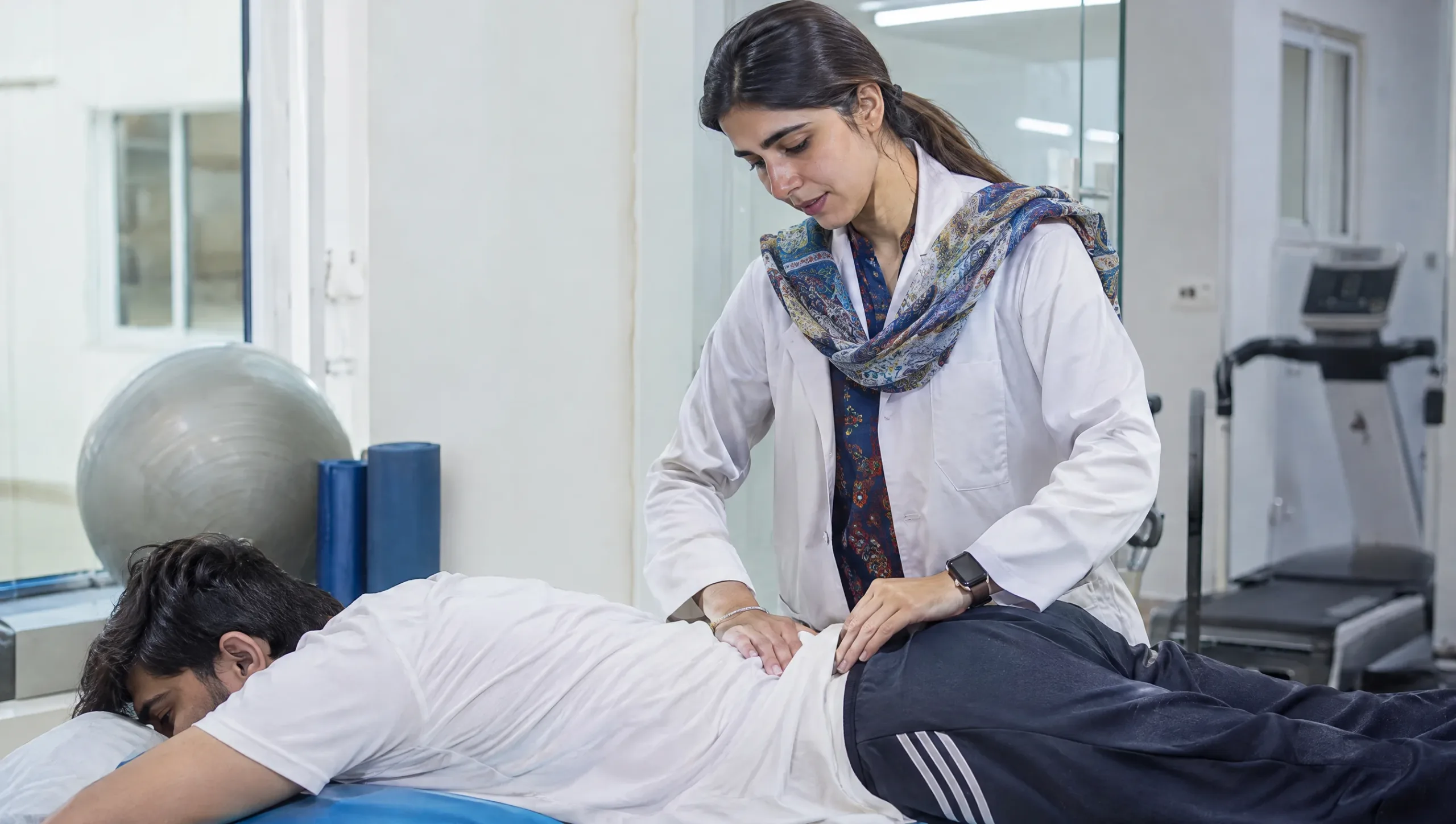
Piriformis syndrome is often under-recognized because it mimics other, more commonly diagnosed conditions. Many patients spend months treating what they believe is a lumbar disc problem before a proper hip and buttock assessment reveals the piriformis muscle is the true source of their pain.
It’s also worth knowing that piriformis syndrome is considered a soft-tissue, not a structural, problem — it doesn’t involve damage to a disc, bone, or joint. That’s genuinely good news, because soft-tissue and nerve-irritation problems like this one tend to respond well and predictably to the right physiotherapy program, without needing surgery or long-term medication.
Piriformis Syndrome vs Sciatica: Key Differences
“Sciatica” is a symptom — nerve pain traveling along the sciatic nerve — not a diagnosis. It can be caused by a herniated disc in the lower back, spinal stenosis, or, as in this case, by a tight piriformis muscle compressing the nerve outside the spine. That’s why piriformis syndrome is sometimes called “extraspinal sciatica.”
A few clues help tell them apart. Disc-related sciatica often worsens with forward bending, coughing, or sneezing, and may come with back pain as the primary complaint. Piriformis syndrome, on the other hand, tends to worsen with prolonged sitting, climbing stairs, or crossing your legs, and the pain is usually felt more in the buttock itself than in the lower back.

Numbness that stops above the knee is more typical of piriformis syndrome, while disc-related sciatica more often travels all the way to the foot. These are general patterns, not hard rules — which is exactly why a hands-on physiotherapy assessment matters more than guessing from symptoms alone. If you’re unsure which applies to you, our complete sciatica treatment guide covers the disc-related picture in more depth.
Common Causes and Risk Factors
Piriformis syndrome rarely appears out of nowhere. It usually develops from a combination of posture, habits, and muscle imbalance that build up over weeks or months. The most common contributors we see in our Rawalpindi clinic include:
Prolonged sitting is the single biggest driver — long commutes, desk jobs, and extended driving all keep the piriformis in a shortened, compressed position for hours at a time. Sitting on a thick wallet or phone in a back pocket adds direct, one-sided pressure on the muscle.

Overuse from running, cycling, or stair climbing can irritate the muscle, especially in people who suddenly increase training volume or run on uneven or inclined terrain. Weak gluteal muscles force the smaller piriformis to overcompensate for hip stability, making it prone to overload. A direct fall onto the buttock, or a car accident impact, can also trigger piriformis spasm. Finally, some people simply have an anatomical variant where the sciatic nerve pierces through the piriformis muscle rather than running beneath it, making them inherently more prone to compression.
Symptoms That Signal Piriformis Syndrome
The hallmark symptom is a deep, dull ache in the center of one buttock, sometimes described as feeling like a bruise that won’t go away. Many patients instinctively press a thumb into the area and say “it hurts right here.”

Other common signs include pain that worsens after sitting for more than 20-30 minutes, discomfort when climbing stairs or standing up from a low chair, and tingling, burning, or numbness that radiates down the back of the thigh, often stopping around or above the knee. Some patients also notice pain when crossing the affected leg over the other, or tenderness when pressure is applied directly over the buttock.
These symptoms can range from a mild nuisance to pain severe enough to disrupt sleep and daily activity. If you’re also experiencing loss of bladder or bowel control, progressive leg weakness, or numbness in the saddle area, seek urgent medical care immediately, as these can indicate a more serious spinal issue that needs same-day evaluation rather than a routine physiotherapy appointment.
How We Diagnose Piriformis Syndrome
Because piriformis syndrome shares symptoms with several other conditions, an accurate diagnosis starts with a detailed history — when the pain started, what makes it better or worse, your daily sitting and activity habits, and whether you’ve had any recent trauma.

From there, we use a set of orthopedic special tests, including the FAIR test (Flexion, Adduction, and Internal Rotation of the hip) and the seated piriformis stretch test, both of which reproduce buttock and leg symptoms when the piriformis is the culprit. We also assess your lumbar spine, hip joint, and sacroiliac joint to rule out other sources of referred pain, since these structures can produce a very similar pain pattern.
In most cases, a thorough clinical examination is enough to confirm piriformis syndrome without imaging. Imaging such as an MRI is occasionally recommended if symptoms are severe, not improving with conservative treatment, or if we suspect a disc or nerve root problem instead. We always recommend an in-person assessment before starting any treatment plan, since self-diagnosing nerve pain can delay treatment of a more serious underlying issue.
We also ask patients to walk us through a typical day — how long they sit, what their car seat or office chair looks like, whether they’ve recently started a new sport or increased their mileage. This context often explains why the problem developed in the first place, and it shapes the home-habit changes we build into the treatment plan alongside hands-on care.
Physiotherapy Treatment for Piriformis Syndrome
The core of effective piriformis syndrome physiotherapy treatment is addressing both the tight muscle and the underlying movement pattern that caused it to become overloaded in the first place. Treating only the symptom without correcting the cause is why piriformis pain often returns after temporary relief.

We typically combine several approaches: hands-on manual therapy and soft tissue release to reduce tightness and spasm in the piriformis and surrounding hip rotators; nerve mobilization (gliding) techniques to restore normal sciatic nerve movement without irritating it; targeted stretching to lengthen the piriformis and deep hip rotators safely; and dry needling, which can be particularly effective for releasing a stubborn trigger point deep in the muscle.
Once acute pain settles, we shift toward graded strengthening of the glutes and hip stabilizers, so the piriformis isn’t forced to overcompensate going forward. Activity and posture modification — such as adjusting your sitting setup, taking standing breaks, and correcting your running or cycling form — is woven in throughout, because physiotherapy that ignores daily habits tends to produce only short-lived results. Most patients notice a meaningful reduction in pain within 2 to 4 weeks of consistent treatment, though full resolution of deeper or long-standing cases can take 6 to 8 weeks.
We also educate patients on pain-flare management for the days between sessions — when heat helps more than ice, how to modify a commute or workout temporarily without stopping activity altogether, and which movements are safe to push through versus which ones mean it’s time to back off. This two-way approach, combining in-clinic treatment with informed self-management at home, is consistently what separates patients who recover fully from those who get stuck in a cycle of partial relief.
Stretches and Exercises for Piriformis Syndrome Relief
A few simple stretches can meaningfully ease piriformis tightness between sessions, though they work best alongside, not instead of, a supervised treatment plan. Start gently and never push into sharp pain.
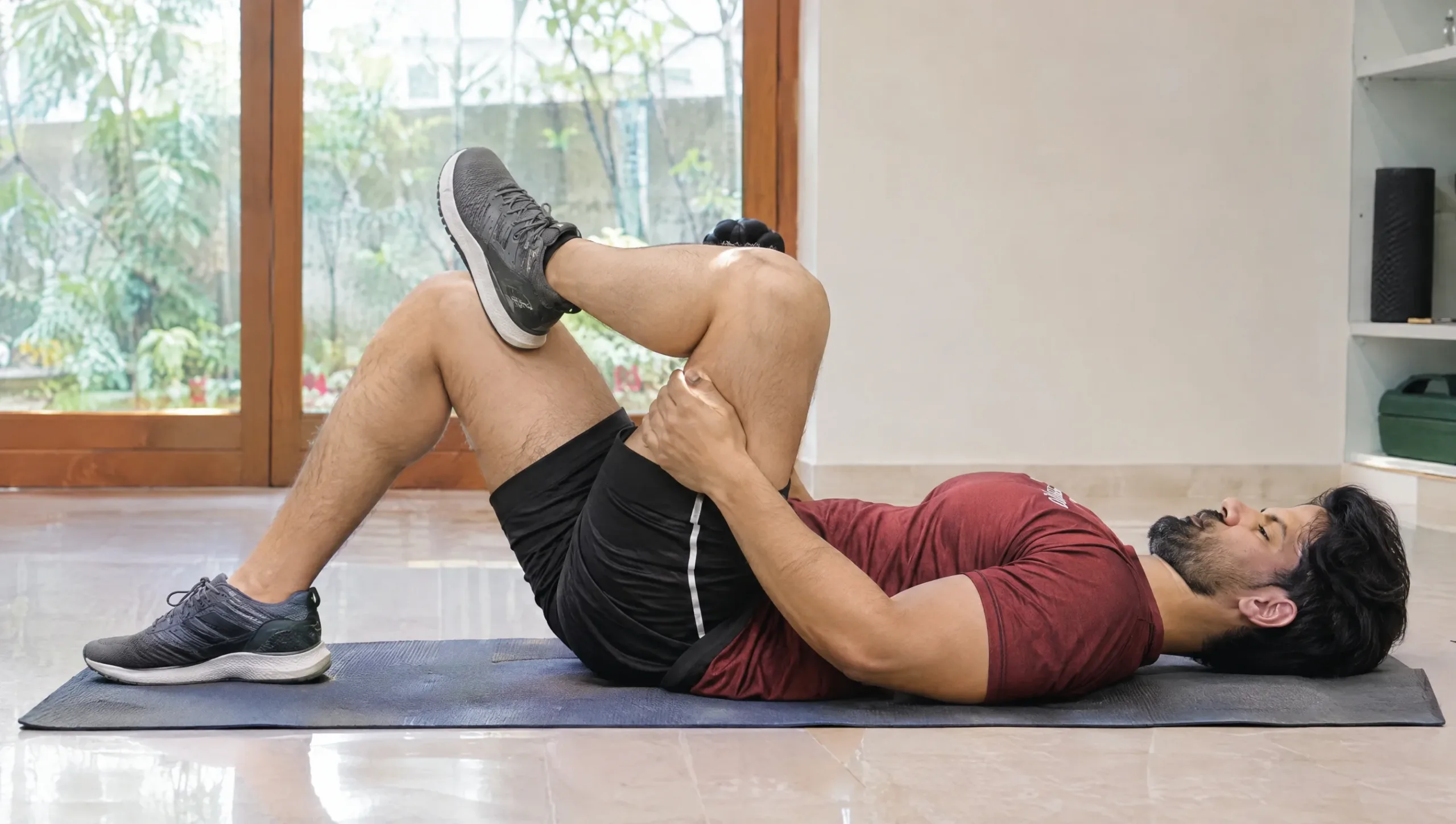
Figure-4 stretch: Lie on your back, cross the affected ankle over the opposite knee, and gently pull the uncrossed thigh toward your chest until you feel a stretch deep in the buttock. Hold for 20-30 seconds, repeat 2-3 times.
Seated piriformis stretch: Sit on a chair, cross the affected leg over the other knee, and lean your torso forward slightly while keeping your back straight. Hold for 20-30 seconds.
Supine rotation stretch: Lying on your back with knees bent, let both knees fall gently to one side while keeping your shoulders flat on the floor, then switch sides.
Glute bridge: Lying on your back with knees bent and feet flat, lift your hips toward the ceiling, squeezing your glutes at the top, then lower slowly. This builds the gluteal strength that takes pressure off an overworked piriformis. Start with 2 sets of 10, and stop if you feel any increase in nerve-type tingling rather than a normal muscular stretch or effort sensation.
Frequently Asked Questions

Can piriformis syndrome heal on its own without treatment?
Mild cases triggered by a short period of unusual activity sometimes settle with rest alone. However, if the underlying cause — prolonged sitting, weak glutes, or poor movement mechanics — isn’t addressed, the pain commonly returns, often more persistently. Most patients recover faster and more completely with a structured physiotherapy treatment plan.
How long does piriformis syndrome physiotherapy treatment usually take to work?
Many patients feel noticeably better within 2 to 4 weeks of consistent treatment and home exercise. Longstanding or more severe cases, especially where nerve irritation has been present for months, can take 6 to 8 weeks for symptoms to fully resolve.
Is piriformis syndrome the same thing as sciatica?
Not exactly. Sciatica describes nerve pain along the sciatic nerve’s path, which can have several different causes. Piriformis syndrome is one specific cause of sciatica-like symptoms, where the compression happens in the buttock rather than at the spine.
What is the best sleeping position if I have piriformis syndrome?
Most patients find relief sleeping on their back with a pillow under the knees, or on the unaffected side with a pillow between the knees to keep the pelvis level. Sleeping directly on the affected buttock tends to aggravate symptoms and is best avoided during a flare-up.
Medical Disclaimer
This article is for general educational purposes and is not a substitute for an individualized medical diagnosis. If your buttock or leg pain is severe, persistent, or accompanied by weakness or numbness, we recommend an in-person assessment with a licensed physiotherapist before starting any new exercise program.
For a deeper look at related nerve pain patterns, Cleveland Clinic’s overview of piriformis syndrome is a helpful, medically reviewed reference.
Still unsure whether your pain is coming from your piriformis, your spine, or something else? Our physiotherapy FAQ and general FAQ page answer more common questions about what to expect from treatment at Physio Rehab Solution.
Ready to get rid of that deep buttock pain for good? Dr. Iqra Kiran and the team at Physio Rehab Solution in Rawalpindi offer thorough, hands-on assessment and treatment for piriformis syndrome and other hip and nerve-related pain. Book your appointment today or call us directly at +92 321 4287773 to get started.