If every run leaves you with a dull, aching pain along the front of your shin that fades with rest but comes roaring back the next time you lace up, you are not imagining it, and you are not alone. Shin splints physiotherapy treatment is one of the most searched topics among runners and new walkers in Rawalpindi and Islamabad, and for good reason: this is one of the most common overuse injuries in sport, responsible for a significant share of lower-leg pain seen in runners every training season. This guide explains what is actually happening in your shin, why physiotherapy (not just rest) is the evidence-based path back to pain-free running, and what a realistic recovery timeline looks like.
By Dr. Iqra Kiran, DPT, Physio Rehab Solution, Rawalpindi.
Table of Contents
- What Are Shin Splints?
- What Causes Shin Splints in Runners and Walkers
- Signs and Symptoms: Is It Shin Splints or Something Else?
- How Physiotherapy Diagnoses Shin Splints
- Shin Splints Physiotherapy Treatment: What Actually Works
- Exercises and Stretches for Shin Splints Recovery
- How Long Does Shin Splints Recovery Take?
- Preventing Shin Splints: Footwear, Training Load & Running Form
- Frequently Asked Questions
What Are Shin Splints?
“Shin splints” is the common name for medial tibial stress syndrome (MTSS): repeated micro-stress on the shin bone (tibia) and the muscle and connective tissue that attach to it, usually along the inner, lower two-thirds of the bone. It is not a single injury so much as a spectrum. At the mild end, the tissue around the bone is irritated and inflamed. Left unmanaged, that same repetitive loading can progress toward a tibial stress reaction, and eventually a stress fracture, which is a genuinely different injury with a longer recovery.
The pain usually starts as a dull ache that shows up after a run and settles with rest. As the irritation builds, it can start earlier in the run, linger afterward, and eventually hurt even during ordinary walking. That progression is exactly why early physiotherapy input matters: catching MTSS in its first two to three weeks is a very different treatment journey than catching it after two months of “running through it.”
Shin splints are especially common in a few groups: runners returning after a break who ramp mileage up too fast, people starting a new running habit without a strength-training base, dancers and military recruits adapting to new repetitive-impact routines, and anyone with flat or overpronating feet. If you recognise yourself in more than one of these, it is worth being proactive about load management before pain ever starts, rather than waiting for it.
What Causes Shin Splints in Runners and Walkers
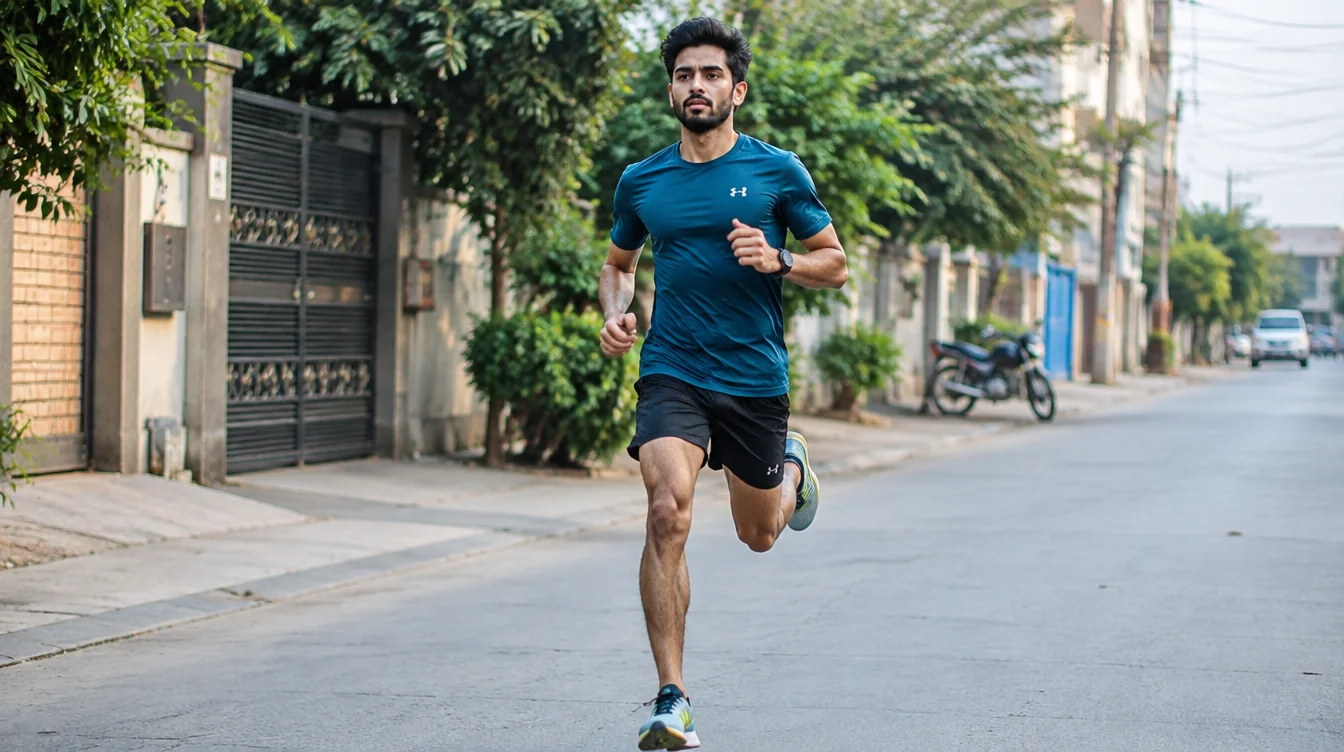
Shin splints are a classic overuse injury: the tissue is asked to absorb more load than it has adapted to handle. In our clinic, the pattern we see most often in Rawalpindi and Islamabad runners includes a mix of the following.
- A sudden jump in training load — increasing weekly distance, intensity, or hill work too quickly, especially after a break.
- Worn-out or unsuitable running shoes that have lost their shock absorption, or shoes that do not suit your foot type.
- Running on hard or cambered surfaces — concrete pavements and sloped roads common on Rawalpindi and Islamabad streets increase repetitive strain on one side of the shin.
- Flat feet or overpronation, which changes how force travels up the leg with every step.
- Weak calf, hip, and core muscles, which forces the shin and lower leg to absorb load that stronger muscles further up the chain should be sharing.
- Tight calf muscles that restrict ankle movement and increase stress at the shin with every stride.
According to the Mayo Clinic, shin splints are especially common in runners, dancers, and military recruits who suddenly intensify or change their training routines, which matches almost exactly what we see walking into our Rawalpindi clinic after wedding-season training pushes or a new gym program (Mayo Clinic: Shin Splints, Symptoms and Causes).
Signs and Symptoms: Is It Shin Splints or Something Else?
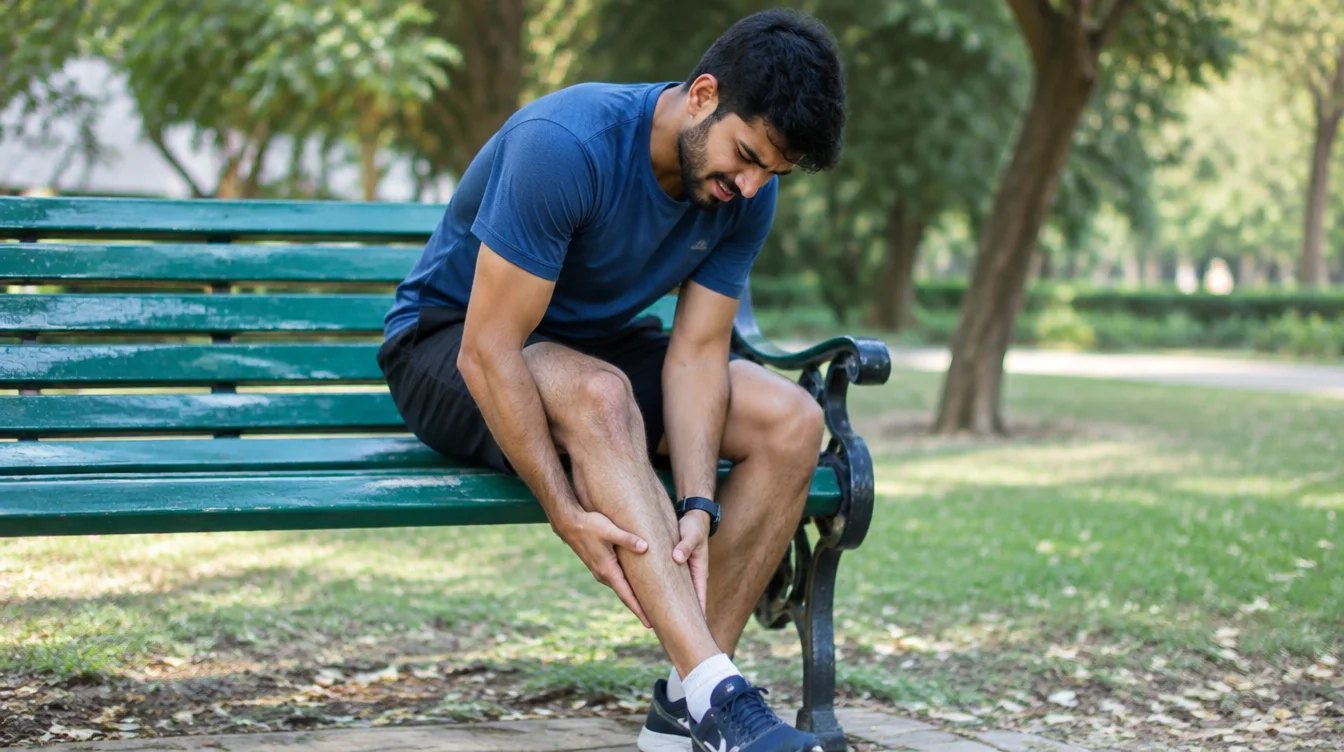
Typical shin splints cause pain along a broad stretch of the inner shin, usually tender over several centimetres rather than one exact spot, with mild swelling possible along the bone. It tends to ease with warm-up during easy activity and return afterward.
A few warning signs suggest something more serious and deserve a proper in-person assessment rather than home management:
- Pain concentrated at one small, pinpoint spot on the bone rather than spread along it (possible stress fracture).
- Pain that wakes you up at night or is present at rest, not just with activity.
- Noticeable swelling, warmth, or a visible lump over the shin.
- Numbness, tingling, or a tight, swollen feeling in the lower leg after exercise that does not settle (this can signal chronic exertional compartment syndrome, a different condition entirely).
If any of these apply to you, please book an in-person assessment rather than self-treating — a physiotherapist can tell the difference between MTSS, a stress fracture, and compartment syndrome far more reliably than guesswork, and each of those needs a different plan.
How Physiotherapy Diagnoses Shin Splints
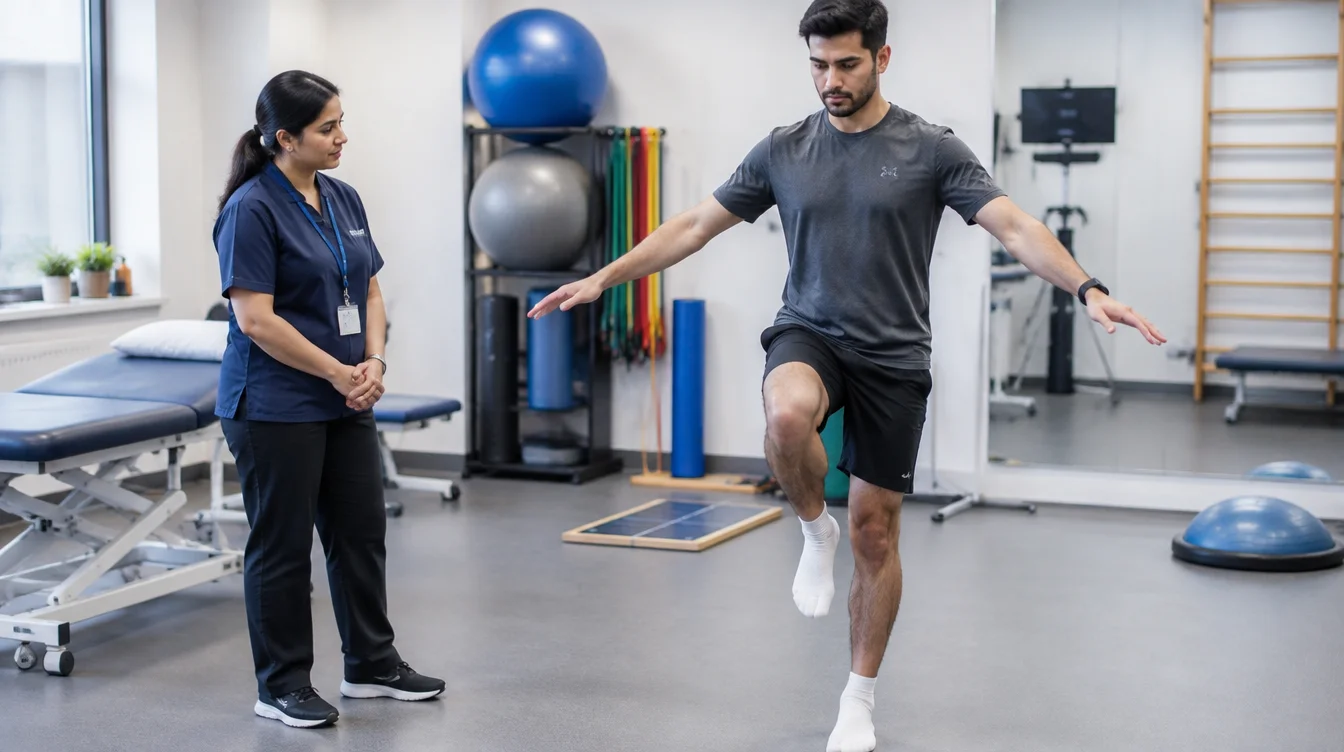
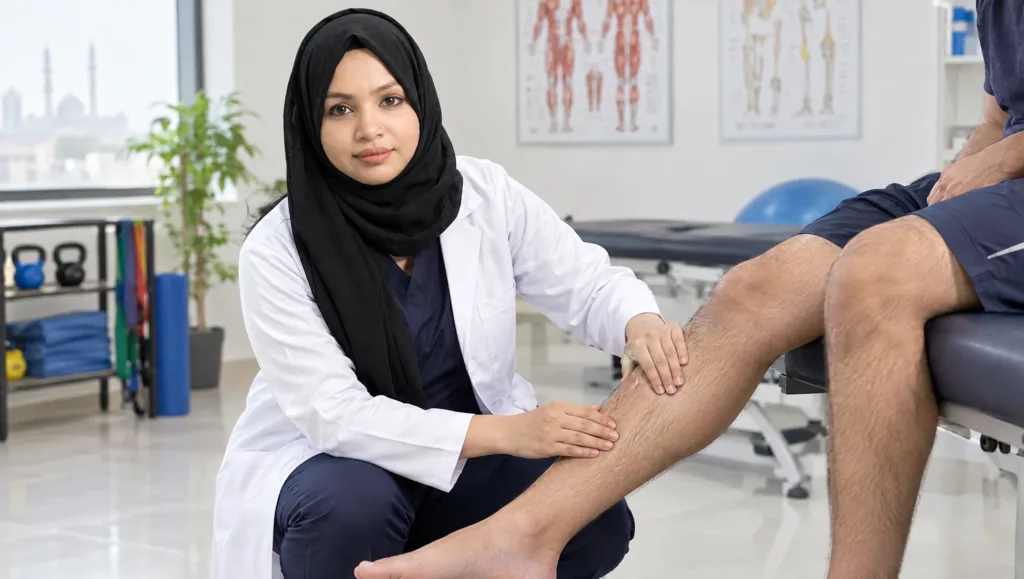
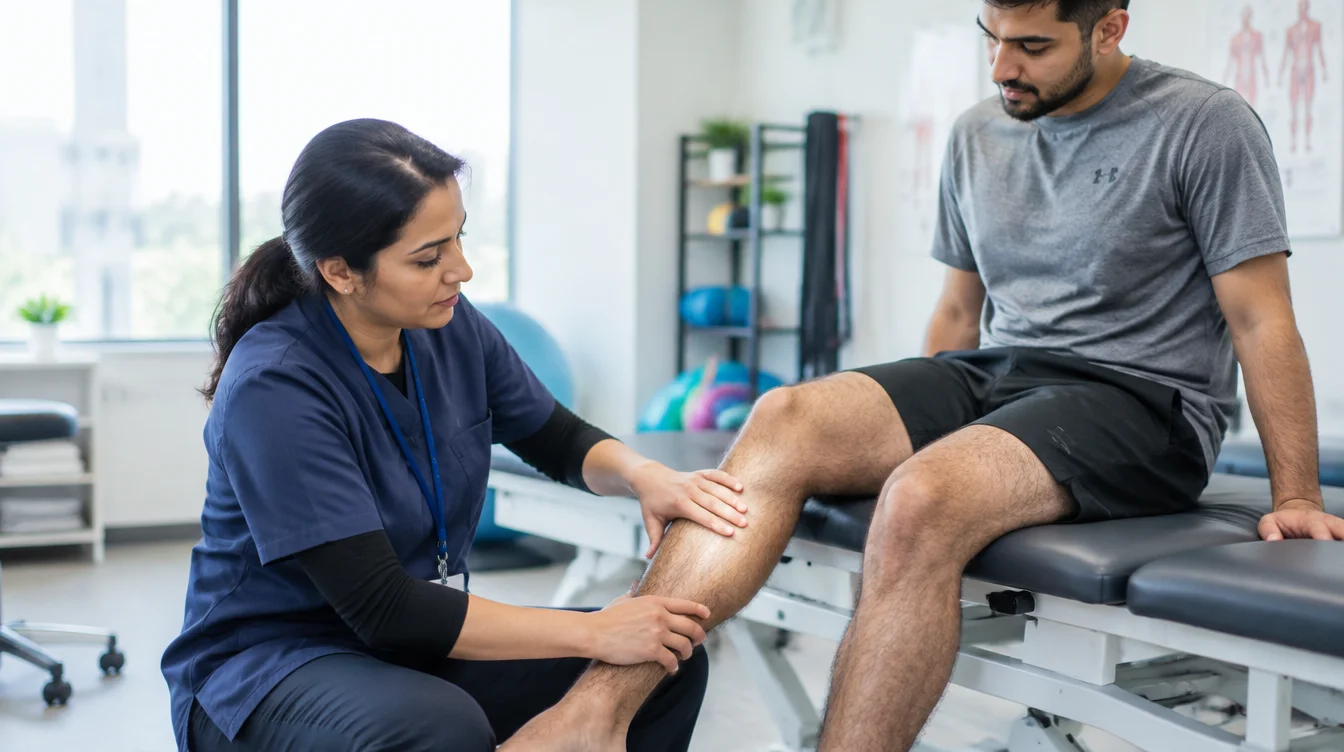
Diagnosis is mostly clinical. During your assessment, we typically review your training history (mileage, surfaces, recent changes), examine your footwear, and palpate the shin to map exactly where the pain is and how it is distributed. We also assess your running gait, ankle and hip mobility, calf flexibility, and single-leg strength and control — a single-leg calf raise or a short hop test often reproduces the pain and tells us a great deal about the underlying mechanics.
Imaging is not usually needed for straightforward MTSS. We reserve X-rays or an MRI for cases with pinpoint bony tenderness, symptoms that are not improving despite appropriate load management, or any red flag from the section above, since those point toward ruling out a stress fracture.
We also screen the hip and core, since poor control higher up the chain is one of the most common hidden contributors to shin pain — a runner with strong, stable hips places noticeably less rotational strain on the shin with every stride than one whose pelvis drops or rotates on landing. This is part of why two runners with an identical training load can have very different outcomes.
Shin Splints Physiotherapy Treatment: What Actually Works
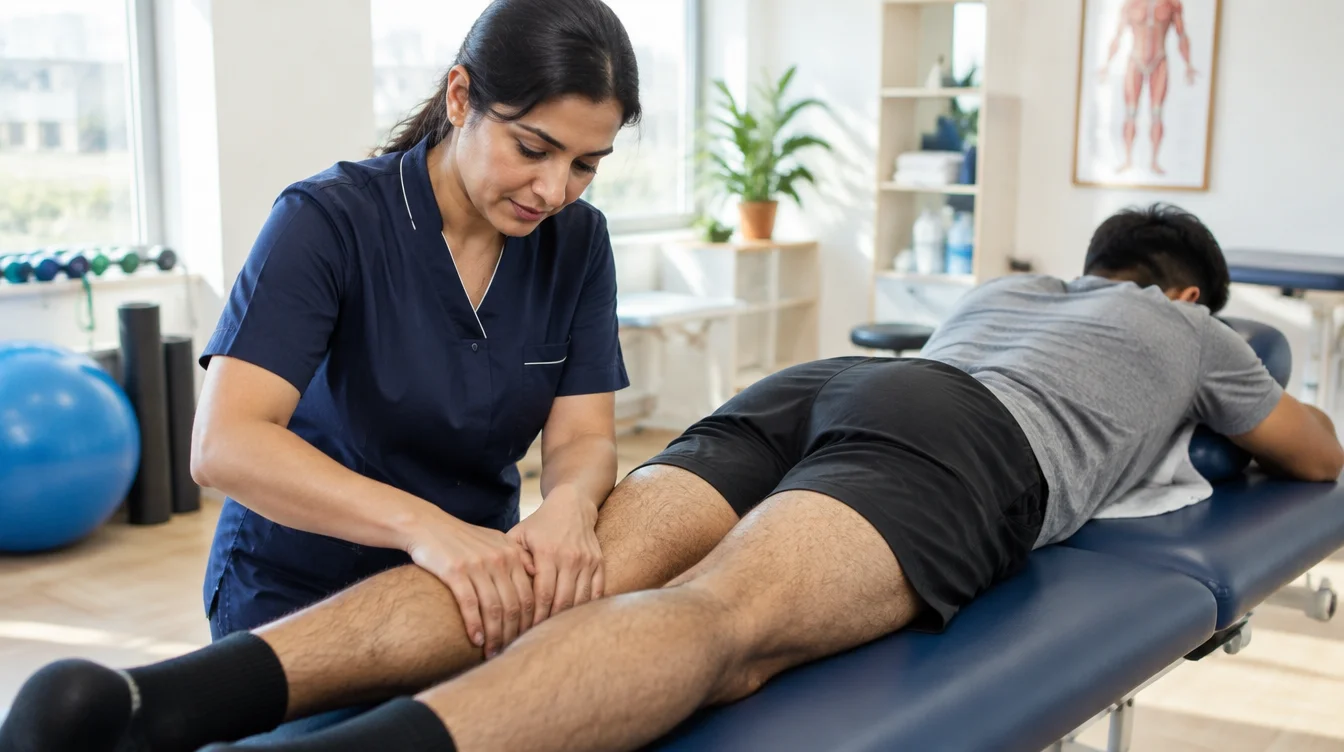
Complete rest alone tends to let the pain settle, then return the moment training resumes, because it never addresses why the tissue was overloaded in the first place. Effective shin splints physiotherapy treatment combines short-term relief with fixing the underlying load and mechanics problem. In our Rawalpindi clinic that usually includes:
- Relative rest, not total rest — swapping high-impact running for cycling, swimming, or an elliptical temporarily, so fitness is maintained while the shin recovers.
- Manual therapy and soft tissue release of the calf complex and tibialis posterior to reduce the pull these muscles place on the shin.
- Taping or bracing in the short term to offload irritated tissue during the earliest, most painful phase.
- Gait retraining — small changes to stride length and foot strike pattern can meaningfully reduce the load on the shin with every step.
- Correcting biomechanical contributors such as overpronation, often with footwear advice or orthotic referral where needed.
- A graded, criteria-based return-to-run program rather than a fixed calendar date, so you progress once you actually meet pain-free milestones, not just because two weeks have passed.
This same load-management and graded-return approach is also central to recovering well from other common running injuries we treat locally, including runner’s knee and ankle sprains — if you are managing more than one of these at once, it is worth having them assessed together, since they often share the same root cause in training load or biomechanics.
Exercises and Stretches for Shin Splints Recovery
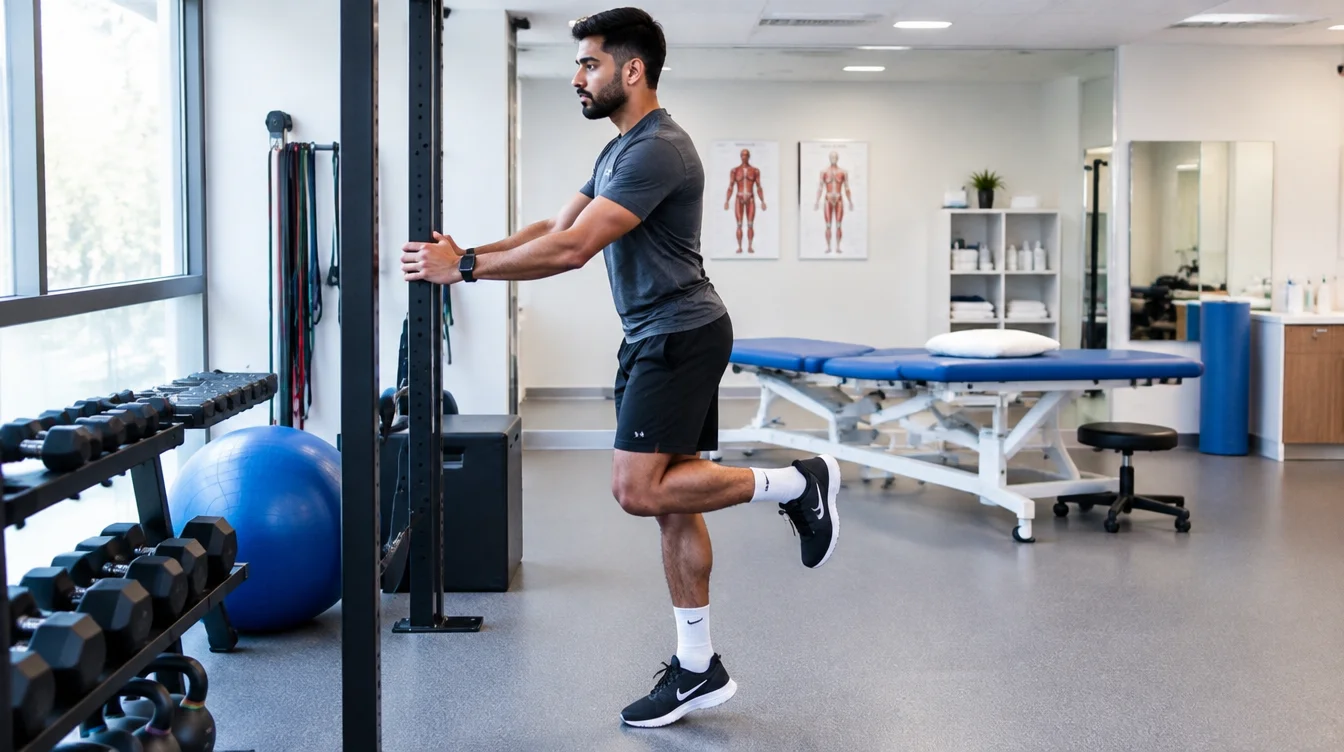
These are the exercises we most commonly build into a shin splints rehab plan. They are a starting point for education, not a substitute for a plan tailored to your assessment findings.
- Eccentric calf raises — rise onto both toes, then lower slowly on one leg over 3-4 seconds; builds the calf’s capacity to absorb load.
- Resisted toe raises (tibialis anterior strengthening) — lifting the front of the foot against light resistance, which directly strengthens the muscle that shares load with the shin bone.
- Ankle mobility drills — controlled ankle circles and wall-facing dorsiflexion stretches to restore full ankle range.
- Hip and glute strengthening — side-lying leg raises and glute bridges, since weak hips often force the lower leg to compensate.
- Calf stretching — standing gastrocnemius and soleus stretches held for 30 seconds, done gently and never into sharp pain.
Pain should guide intensity: mild discomfort during exercise that settles quickly is usually acceptable, but sharp or worsening pain means scaling back and checking in with your physiotherapist.
How Long Does Shin Splints Recovery Take?

For mild to moderate MTSS managed early with proper load reduction and physiotherapy, most runners see a meaningful improvement in two to four weeks and a full, confident return to running by six to eight weeks. Cases that have been pushed through for months before treatment begins typically take longer, sometimes two to three months, because the tissue has had longer to become sensitised and deconditioned.
The biggest factor we see affecting timeline is not the injury itself but how the return to running is paced afterward — runners who follow a graded, criteria-based program recover faster and have far lower recurrence rates than those who jump straight back to their old mileage the moment pain disappears.
Preventing Shin Splints: Footwear, Training Load & Running Form
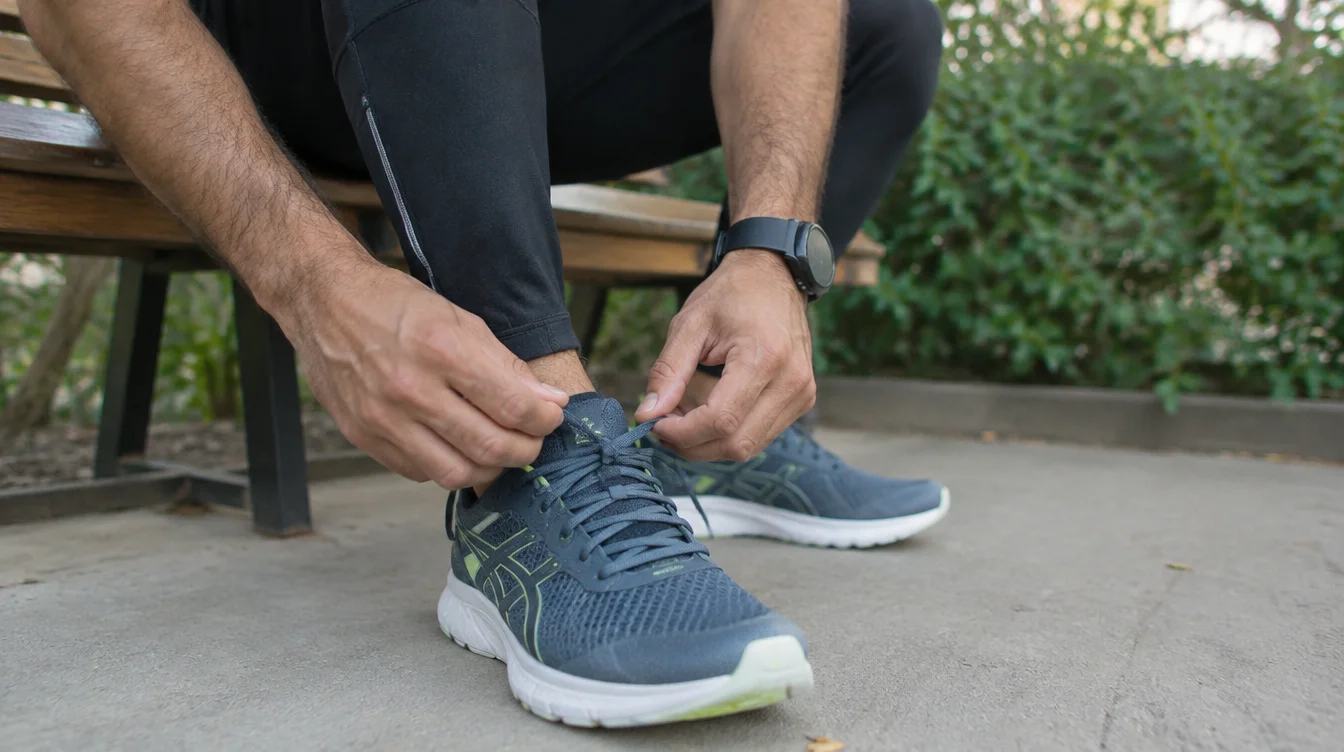
Most shin splints are preventable with a few consistent habits:
- Follow the 10% rule — avoid increasing weekly mileage or intensity by more than about 10% from one week to the next.
- Replace running shoes regularly — most lose adequate cushioning after roughly 500-800 km, sooner if you train on hard pavement.
- Vary your running surface where possible, mixing softer tracks or paths with road running instead of concrete every session.
- Keep up strength training for the calves, hips, and core year-round, not just when something already hurts.
- Warm up properly and address tight calves before they become a recurring limitation.
These same training-load principles apply broadly across overuse running injuries. If you have previously dealt with IT band syndrome or recurring outer-knee pain, the prevention strategy overlaps significantly with what helps protect the shins, which is why we build a full lower-limb training plan rather than treating each injury in isolation. You can read more about our approach to running injury care on our homepage.
Frequently Asked Questions

Can I keep running with shin splints?
Mild cases can sometimes continue with reduced volume and intensity under physiotherapy guidance, but running through sharp or worsening pain usually prolongs recovery and raises the risk of progressing toward a stress fracture. We generally recommend switching to low-impact cross-training until pain-free walking and single-leg hopping are comfortable again.
Are shin splints the same as a stress fracture?
No. Shin splints (medial tibial stress syndrome) involve irritation of the tissue and bone surface over a broader area, while a stress fracture is an actual crack in the bone, usually at one pinpoint spot, that needs a longer, more protected recovery. They sit on the same spectrum, which is exactly why unmanaged shin splints can progress into a stress fracture if ignored.
Do compression sleeves help shin splints?
Compression sleeves may offer some symptomatic comfort and a sense of support for some runners, but there is limited evidence that they address the underlying cause. They are reasonable as an adjunct, not a replacement for load management, strengthening, and addressing the biomechanical factors involved.
Should I use ice or heat for shin splints?
In the early, more irritated phase, ice after activity (15-20 minutes) can help calm pain and swelling. As the tissue settles and you move into the strengthening phase, some patients find heat before activity helpful for easing stiffness. Neither replaces addressing training load and mechanics, which is the real driver of recovery.
Dealing with shin pain that will not settle? Do not wait for it to progress into a stress fracture. Book an in-person physiotherapy assessment with our team at Physio Rehab Solution in Rawalpindi, and get a recovery plan built around your training, not a generic handout. Call +923214287773 to schedule your appointment, or visit our FAQ page for more answers before you come in.