

Written by Dr. Iqra Kiran, DPT — Physio Rehab Solution, Rawalpindi.
A sprained ankle is one of the most common injuries seen in physiotherapy clinics across Rawalpindi and Islamabad — whether it happens on a cricket pitch, going down a flight of stairs, or stepping awkwardly off an uneven curb. Yet many people make one of two mistakes: they rest for weeks out of fear of re-injury, or they return to walking and sport too soon and end up spraining the same ankle again within months. Understanding the real ankle sprain physiotherapy recovery timeline — what is actually happening inside your ankle at each stage, and which exercises help versus which ones can wait — is the difference between a complete recovery and years of recurring instability. This guide walks through exactly what a structured physiotherapy recovery program looks like, phase by phase, so you know what to expect and when to get help.
Understanding Ankle Sprains: Grades, Symptoms, and Why Recovery Time Varies
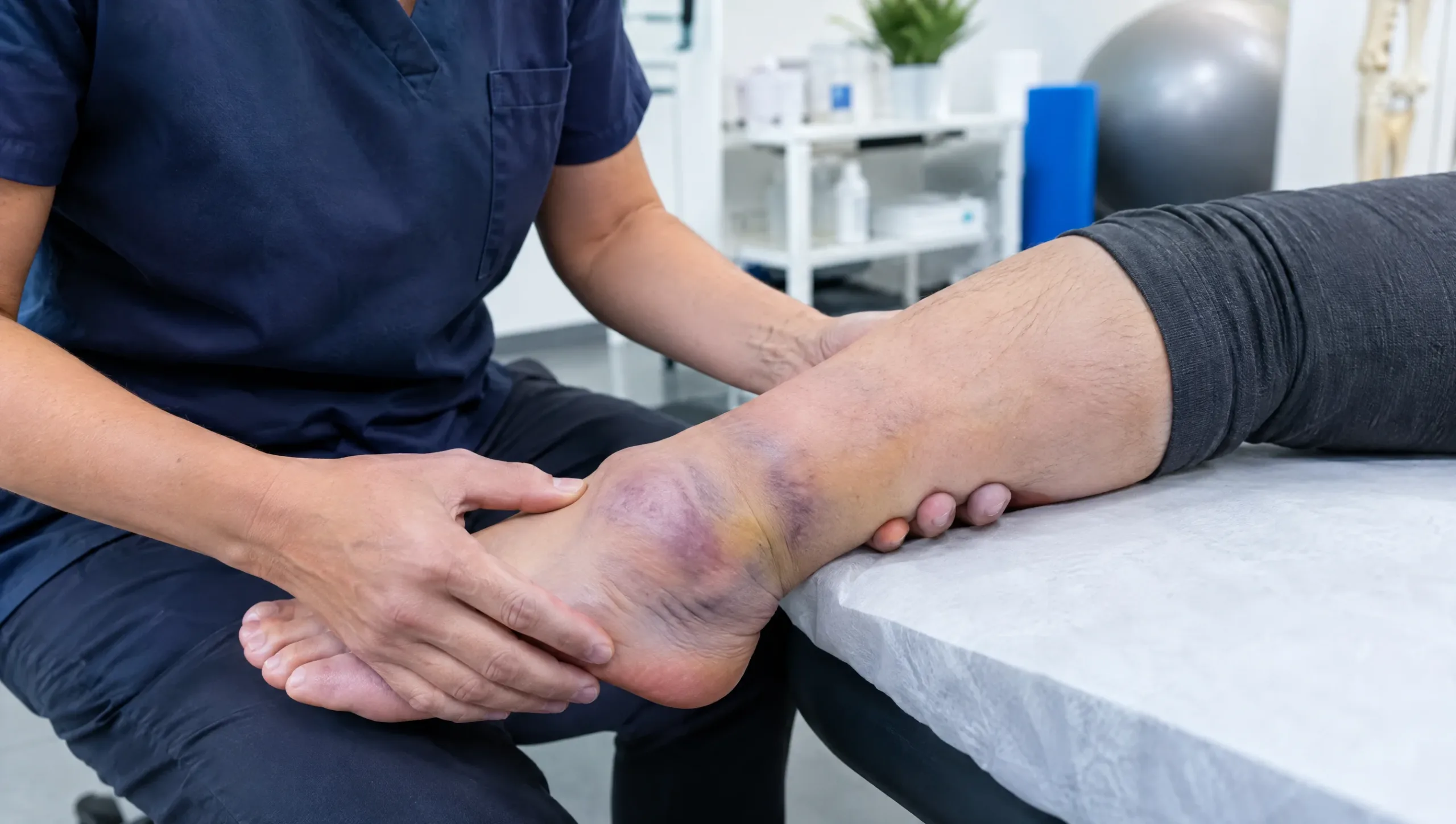
An ankle sprain happens when the ligaments that hold your ankle bones together are stretched or torn, almost always from a rolling or twisting movement. The most commonly injured ligament is the anterior talofibular ligament (ATFL) on the outer side of the ankle, which is why most sprains cause pain and swelling on the outside of the joint rather than the inside.
Physiotherapists grade ankle sprains by severity, and this grade is the single biggest factor in how long recovery takes:
- Grade I (mild): Ligament fibers are stretched with microscopic tearing. Mild swelling, minimal instability, usually able to bear weight. Typical recovery: 1–3 weeks.
- Grade II (moderate): Partial ligament tear with noticeable swelling, bruising, and some joint looseness. Walking is painful. Typical recovery: 3–6 weeks.
- Grade III (severe): Complete ligament rupture with significant instability, swelling, and difficulty bearing weight at all. Typical recovery: 6–12+ weeks, sometimes with a period of bracing or, rarely, surgical referral.
Age, general fitness, whether this is a repeat sprain, and how early physiotherapy starts all influence where you land within these ranges. This is general education, not a diagnosis — if you cannot bear any weight, heard or felt a pop at the time of injury, or your ankle looks visibly deformed, please get an in-person assessment before doing any of the exercises described below.
It’s worth noting that not all ankle “sprains” are the same injury. A high ankle sprain, which involves the ligaments above the ankle joint connecting the two lower leg bones, behaves differently from the far more common lateral sprain described above, often taking longer to heal and responding to a different exercise progression. If your pain sits higher up the shin near the ankle rather than on the outer ankle bone itself, mention this specifically during your assessment.
Why Physiotherapy Speeds Up Ankle Sprain Recovery (And Why Rest Alone Isn’t Enough)

The old advice to simply rest a sprained ankle until it stops hurting is one of the most common reasons people end up with long-term problems. Ligaments heal with scar tissue, and scar tissue that is never challenged with controlled movement tends to heal shorter, stiffer, and less organized than healthy ligament tissue. The ankle also loses proprioception — the nervous system’s sense of where the joint is in space — after a sprain, and proprioception does not simply return on its own with rest.
This combination of stiffness and lost proprioception is the main reason a meaningful number of people who skip structured rehab go on to develop chronic ankle instability: a pattern of the same ankle “giving way” repeatedly during ordinary walking, uneven ground, or sport, long after the original injury has technically healed.
A physiotherapy-led ankle sprain physiotherapy recovery plan addresses all three pillars that rest alone cannot: restoring full pain-free range of motion, rebuilding calf and ankle muscle strength, and retraining balance and proprioception so the ankle can react quickly to uneven surfaces. Starting this process early, under guidance, is consistently associated with a faster return to normal activity and a lower chance of re-spraining the same ankle.
In a clinical setting, this rebuilding process is usually paired with manual therapy — gentle joint mobilization and soft tissue work — to address any residual stiffness around the ankle and foot that exercises alone don’t fully resolve, especially in the first few weeks after a moderate or severe sprain.
The Ankle Sprain Physiotherapy Recovery Timeline: Phase by Phase
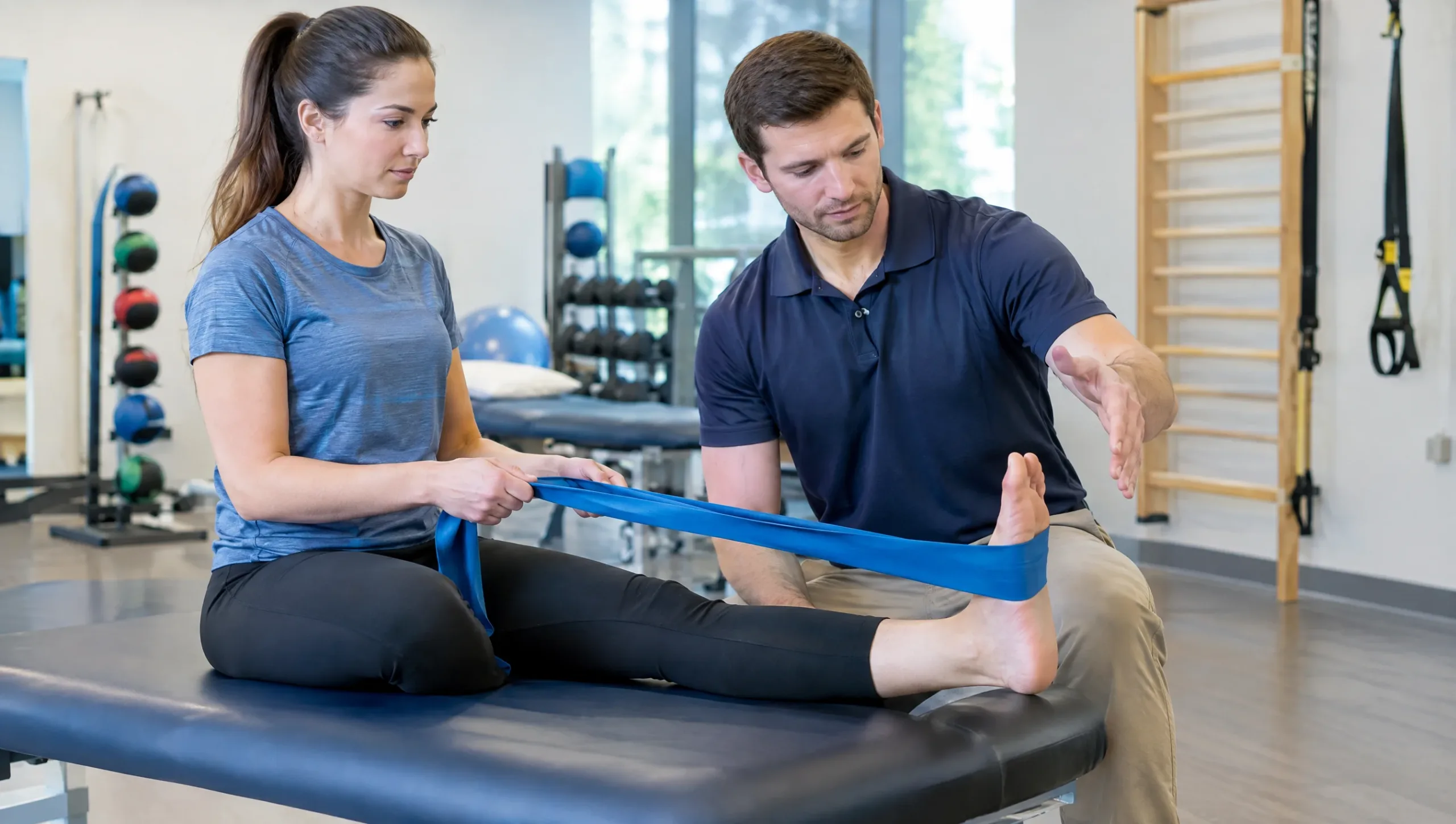
Every ankle is different, but a well-run physiotherapy recovery plan generally moves through four overlapping phases. Knowing what belongs in each phase helps you avoid doing too little (which stiffens the joint) or too much, too soon (which re-irritates the ligament).
Phase 1 (Days 0–3): Protect and Calm the Injury
The first 48–72 hours are about controlling swelling and protecting the healing ligament, not full rest. The updated approach physiotherapists use is PEACE & LOVE rather than the older RICE protocol alone: Protection, Elevation, Avoiding anti-inflammatories and ice overuse, Compression, and Education in the first days, followed by Load, Optimism, Vascularisation (gentle movement), and Exercise as pain allows. In practice this means gentle ankle pumps and circles within a pain-free range, light compression, elevation when resting, and avoiding prolonged, unsupervised icing or heavy anti-inflammatory use, which some research suggests may slow the body’s own repair signals if overused in this phase.
Phase 2 (Days 3–14): Restore Motion and Early Strength
Once acute swelling settles, the focus shifts to regaining full ankle range of motion and starting light strengthening. Ankle alphabet exercises, gentle calf stretches, and weight-bearing as tolerated (often with a brace or supportive taping) are introduced here. Most people can start partial weight-bearing walking during this window under physiotherapy guidance.
Phase 3 (Weeks 2–6): Rebuild Strength and Balance
This is the phase most home-recovery attempts skip entirely, and it is the single biggest reason ankles stay “weak” long after they stop hurting. Resistance band strengthening in all four directions, single-leg balance work, and progressive calf raises are introduced to rebuild both strength and the ankle’s reflexive stability.
Phase 4 (Week 6 Onward): Return to Sport and Full Activity
Before returning to running, sport, or physically demanding work, a physiotherapist checks that strength and balance on the injured side are close to equal with the uninjured side, and introduces hopping, cutting, and sport-specific drills under supervision. Returning to full sport before this phase is complete is one of the most common causes of repeat ankle sprains.
A frequent question in our clinic is why Phase 3 cannot simply be skipped once walking is pain-free. The honest answer is that pain tolerance returns long before the deep stabilizing muscles and reflexive balance reactions do, and it is precisely this gap — feeling fine but not yet being mechanically ready — that causes most second sprains. Physiotherapists use simple strength and balance tests to confirm you’re actually ready for Phase 4, rather than relying on how the ankle feels.
Best Physiotherapy Exercises for Ankle Sprain Recovery

These are the exercises physiotherapists commonly prescribe through the middle and later phases of recovery. Introduce them in order, and only progress once the previous exercise is pain-free.
- Ankle alphabet: Sitting with your leg lifted, trace each letter of the alphabet in the air with your big toe. Restores range of motion in every direction.
- Towel scrunches: Sitting with a towel under your bare foot, scrunch it toward you using only your toes. Rebuilds small foot and ankle muscles.
- Seated resistance band work: Loop a light resistance band around the forefoot and push against it outward, inward, up, and down. Targets the specific muscles that stabilize against rolling.
- Double-leg then single-leg calf raises: Start holding onto a wall or chair with both feet, then progress to the injured leg alone once pain-free.
- Single-leg balance: Stand on the injured leg for 30 seconds, progressing to standing on a cushion or wobble board, then with eyes closed, as tolerated.
- Controlled hopping drills: Only in the later phase — small hops forward, sideways, and on the spot, preparing the ankle for the sudden loads of sport and daily life.
If you play cricket, football, or badminton regularly, these same drills overlap heavily with the return-to-sport exercises we recommend for other lower-limb sports injuries, since ankle stability underpins almost every running and cutting movement.
Common Mistakes That Slow Down Ankle Sprain Healing

In our clinic in Rawalpindi, the same few mistakes come up again and again, often from people who waited months before seeking help:
- Resting far longer than the injury needs. Prolonged complete rest weakens the calf and ankle muscles and stiffens the joint, making the eventual return to activity harder, not easier.
- Returning to sport the moment pain disappears. Pain-free is not the same as strong and stable. Strength and balance often lag behind pain by several weeks.
- Skipping balance and proprioception training entirely. This is the step most people never do on their own, and it is the one most strongly linked to repeat sprains.
- Relying only on a brace or tape long-term instead of rebuilding the muscles that should be doing that job naturally.
- Ignoring swelling that persists for weeks rather than having it assessed, which can hide a more significant ligament injury or an associated issue that needs a different treatment plan.
If any of these sound familiar, it’s worth reading our broader physiotherapy FAQ, answered by our team, where we address several related recovery myths in more detail.
Preventing Future Ankle Sprains

Once you’ve recovered, a few habits make a real difference in whether the same ankle gets injured again, which matters even more on Rawalpindi and Islamabad’s uneven pavements, stairs, and mixed-surface markets:
- Keep doing balance work even after you feel “better.” A few minutes of single-leg standing, two or three times a week, maintains the proprioception gains from rehab.
- Choose supportive, properly fitted footwear for sport and for daily walking on uneven ground, rather than worn-out or overly flexible soles.
- Warm up before sport with dynamic ankle and calf movements rather than static stretching alone.
- Consider taping or a lace-up brace for the first few months back in high-risk sports like football, cricket fielding, or badminton.
- Don’t ignore a “minor” roll that recovers in a day or two — repeated small sprains are exactly how chronic instability develops over time.
If you’d like a personalized plan, our Physio Rehab Solution clinic in Rawalpindi builds individualized ankle rehab programs based on your specific grade of sprain, sport, and goals rather than a generic handout.
Frequently Asked Questions

How long does a sprained ankle really take to heal with physiotherapy?
It depends on the grade of the sprain. Mild (Grade I) sprains usually recover in 1–3 weeks with physiotherapy, moderate (Grade II) sprains in 3–6 weeks, and severe (Grade III) sprains can take 6–12 weeks or longer. Starting physiotherapy early, rather than waiting for pain to disappear on its own, generally keeps recovery closer to the shorter end of these ranges.
Can I walk on a sprained ankle while it’s healing?
Often yes, with guidance. Mild sprains usually allow some weight-bearing within days, sometimes with a brace or supportive tape. Moderate to severe sprains may need crutches or a boot for a short period first. A physiotherapist can tell you how much weight is safe to put through the ankle at each stage, which protects the ligament without letting the joint stiffen from total rest.
When should I see a physiotherapist after an ankle sprain instead of just resting?
Ideally within the first few days, even for a sprain that seems mild. Early assessment rules out a more serious injury, gets swelling management started correctly, and means the strength and balance phases of recovery begin on time instead of weeks later, which is when most chronic ankle problems take root.
What are the signs my ankle sprain isn’t healing properly?
Watch for swelling or bruising that isn’t gradually improving after the first week, ongoing instability or your ankle repeatedly ‘giving way,’ pain that doesn’t ease with appropriate activity, or an inability to bear any weight weeks after the injury. Any of these are good reasons for an in-person physiotherapy assessment rather than waiting it out further.
For more answers like these, visit our general clinic FAQ page.
If your ankle sprain isn’t improving the way it should, or you want a recovery plan built around your specific grade of injury and activity level, book an in-person assessment with Dr. Iqra Kiran at Physio Rehab Solution in Rawalpindi. Call or WhatsApp +92 321 4287773 to schedule your appointment.