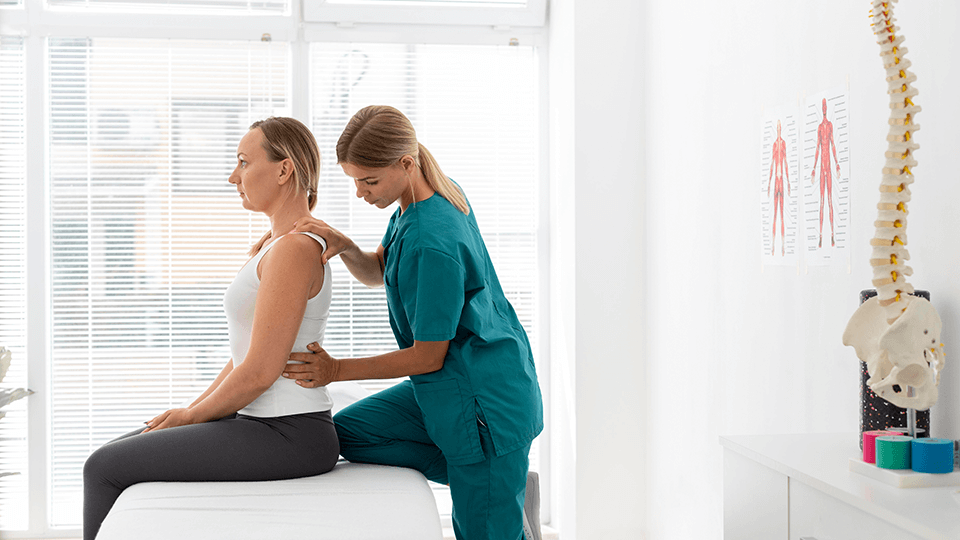
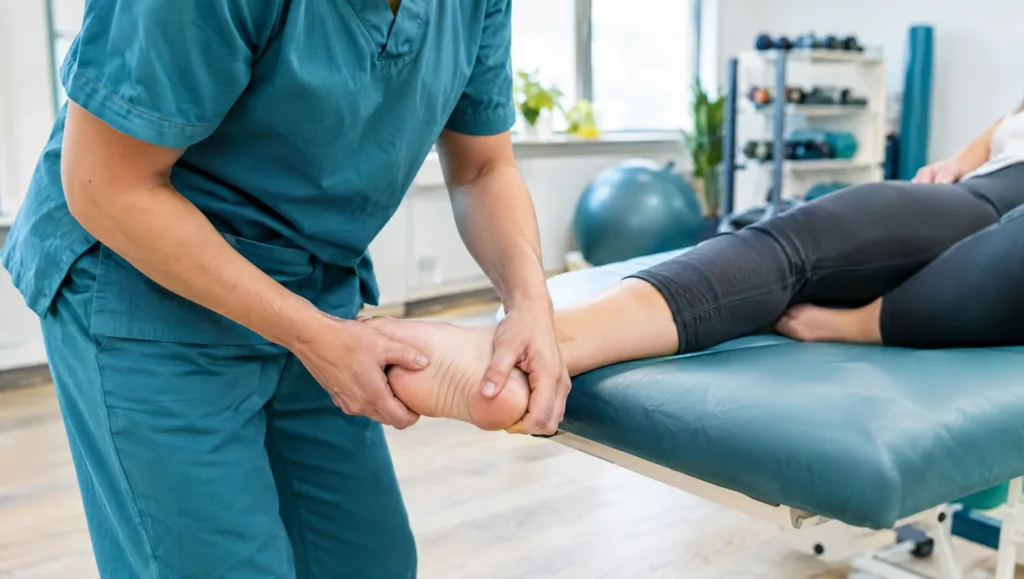
If you take your first steps every morning and feel a stabbing pain in your heel, you are not alone — and you are not stuck with it. Plantar fasciitis is one of the most common causes of heel pain we see in our Rawalpindi clinic, and the good news is that plantar fasciitis treatment physiotherapy has strong evidence behind it, often helping patients avoid injections or surgery altogether. In this guide, I’ll walk you through what plantar fasciitis actually is, why it happens, and the exact physiotherapy approach we use to get patients back to pain-free walking, running, and standing.
Table of Contents
- What Is Plantar Fasciitis?
- What Causes Plantar Fasciitis?
- Signs and Symptoms You Shouldn’t Ignore
- How We Diagnose Plantar Fasciitis
- Plantar Fasciitis Treatment Physiotherapy: What Actually Works
- At-Home Exercises and Stretches for Heel Pain Relief
- Footwear, Orthotics, and Lifestyle Changes That Support Recovery
- How Long Does Recovery Take? Realistic Timelines
- Frequently Asked Questions
What Is Plantar Fasciitis?
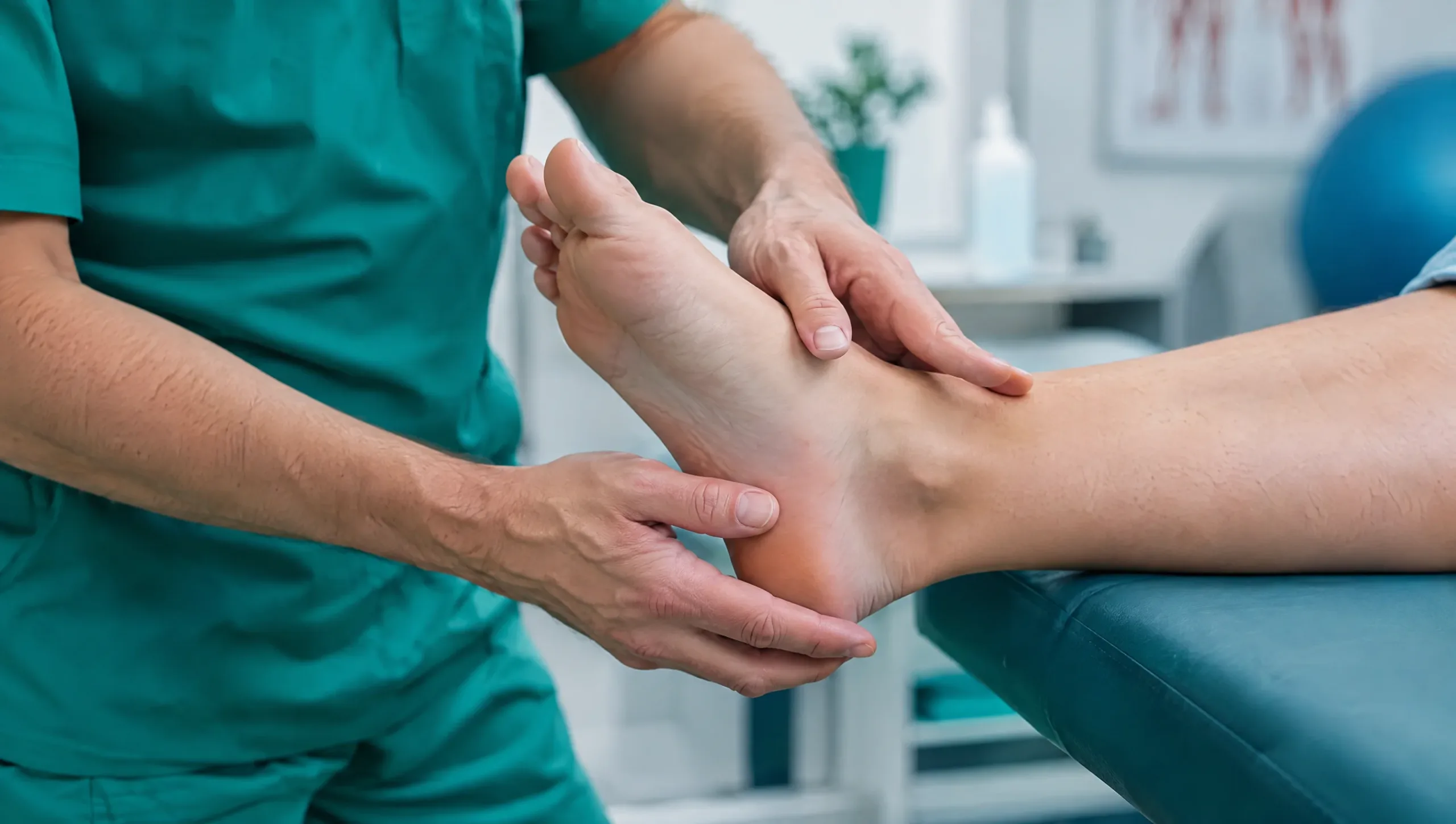
The plantar fascia is a thick, fibrous band of connective tissue that runs along the sole of your foot, connecting your heel bone (calcaneus) to your toes. It acts like a natural shock absorber and supports the arch of your foot every time you stand, walk, or run.
Plantar fasciitis occurs when this band becomes irritated and develops micro-tears from repetitive strain, most commonly at the point where it attaches to the heel bone. Despite the name ending in “-itis” (which usually implies inflammation), research over the last two decades has shown that most chronic cases involve degenerative changes in the tissue rather than active inflammation — which is exactly why the right kind of physiotherapy, not just rest, is so important for real recovery.
What Causes Plantar Fasciitis?
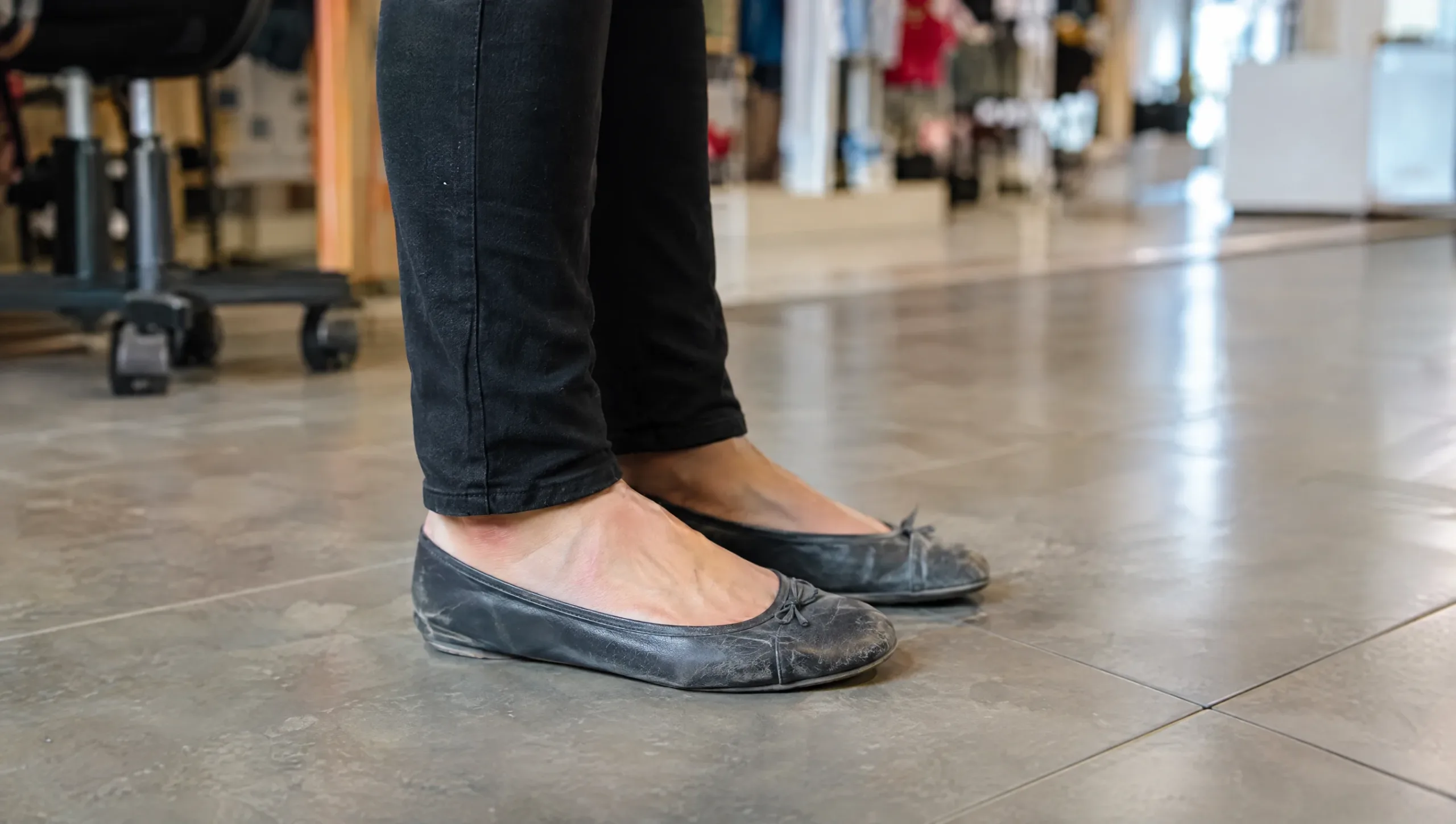
Plantar fasciitis rarely comes from a single injury. It usually develops gradually, from a combination of factors that overload the fascia beyond what it can comfortably handle. In our clinic, we commonly see it linked to:
- Sudden increases in activity — a new walking or running routine, or standing much longer than usual at work
- Tight calf muscles and Achilles tendon, which increase tension through the plantar fascia with every step
- Unsupportive footwear — thin-soled shoes, worn-out trainers, or flat sandals with no arch support (very common with everyday use of chappals)
- Biomechanical factors such as flat feet, high arches, or an altered walking pattern
- Excess body weight, which increases load through the heel and arch with every step
- Occupations that involve prolonged standing on hard floors — teachers, retail staff, factory workers, and healthcare workers are all at higher risk
Understanding which of these factors applies to you is a key part of physiotherapy assessment, because treating the symptom without addressing the underlying cause is a common reason heel pain keeps coming back.
Age is also a relevant factor — plantar fasciitis is most common between the ages of 40 and 60, likely because the fascia naturally loses some of its elasticity over time, making it more vulnerable to overload. That said, we regularly treat younger, highly active patients too, particularly runners and those who have recently started a new fitness routine without building up gradually.
Signs and Symptoms You Shouldn’t Ignore

The hallmark symptom of plantar fasciitis is a sharp, stabbing pain at the bottom of the heel that is worst with your very first steps in the morning or after sitting for a while. Other common signs include:
- Pain that eases after a few minutes of walking, but returns after long periods of standing or by the end of the day
- Tenderness when you press directly on the inside of the heel
- Increased pain when climbing stairs or standing on your toes
- Stiffness in the foot and ankle, especially after periods of rest
- In some cases, pain that gradually shifts from sharp and localized to a more general, dull ache across the arch
If your heel pain has lasted more than two weeks, is getting worse rather than better, or is accompanied by swelling, redness, numbness, or pain at night, it’s important to get a proper assessment rather than guessing at home remedies — some of these can point to a different diagnosis, such as a stress fracture, nerve entrapment, or Achilles tendinopathy, that needs a different treatment approach entirely.
How We Diagnose Plantar Fasciitis

A thorough physiotherapy assessment usually starts with your history — when the pain started, what makes it better or worse, your footwear, your activity levels, and your occupation. This is followed by a hands-on clinical examination that typically includes:
- Palpation of the heel and arch to pinpoint the exact site of tenderness
- Assessment of ankle and calf flexibility, since restricted dorsiflexion is strongly linked to plantar fasciitis
- A gait (walking pattern) analysis to identify compensations or abnormal loading
- A foot posture assessment to check for flat feet, high arches, or excessive pronation
- Strength testing of the muscles that support the arch, particularly the intrinsic foot muscles and the calf complex
In most straightforward cases, imaging such as ultrasound or X-ray is not required to begin treatment. We reserve imaging referrals for cases that don’t respond as expected, or where we suspect a different or additional diagnosis, such as a calcaneal stress fracture.
Plantar Fasciitis Treatment Physiotherapy: What Actually Works
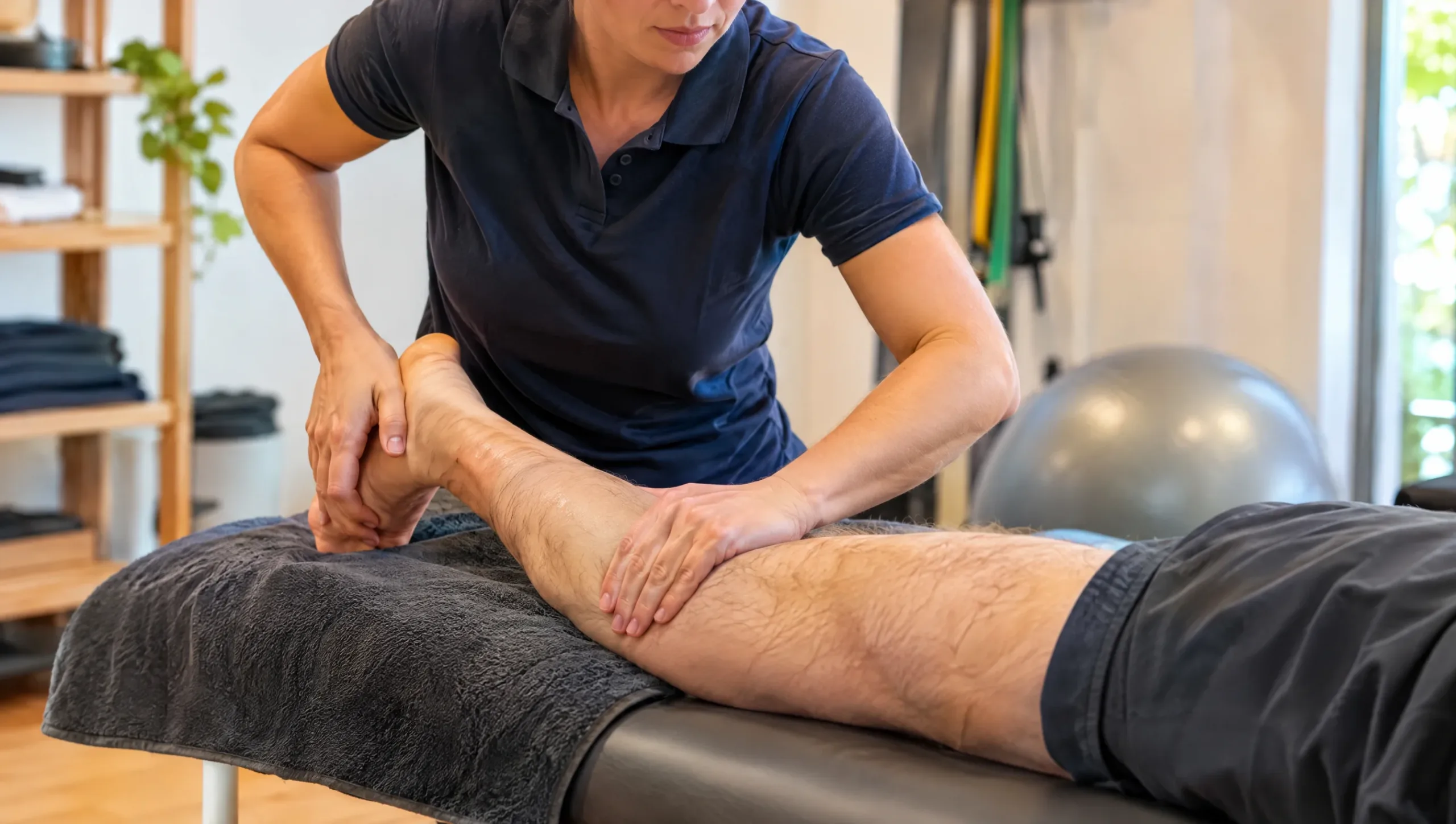
This is the part patients care about most, and it’s where evidence-based physiotherapy makes the biggest difference. A well-structured plantar fasciitis treatment physiotherapy programme typically combines several elements rather than relying on just one technique:
- Manual therapy — soft tissue release of the calf and plantar fascia, and joint mobilization of the ankle and midfoot to restore normal movement where it’s restricted
- Progressive loading exercises — research consistently shows that a structured, gradually increasing loading programme for the plantar fascia (particularly high-load strength training) outperforms passive rest for long-term outcomes
- Calf and Achilles stretching — targeted stretching to reduce tension transmitted through the fascia
- Taping techniques — low-dye taping or kinesiology taping can offload the fascia and provide short-term symptom relief while the deeper rehabilitation work takes effect
- Gait retraining — correcting walking or running patterns that are overloading the heel
- Shockwave therapy — for persistent cases (typically beyond 6-8 weeks of conservative treatment), extracorporeal shockwave therapy has good evidence for stimulating tissue healing when used alongside an exercise programme
- Dry needling — used selectively to reduce excessive tightness and trigger point activity in the calf muscles
The key principle we emphasize with every patient: passive treatments like taping, massage, and shockwave therapy calm the pain down, but active, progressive loading is what actually rebuilds the tissue’s capacity so the pain doesn’t return once you go back to your normal routine.
At-Home Exercises and Stretches for Heel Pain Relief

Alongside in-clinic treatment, a home exercise programme is essential. These are examples of exercises we commonly prescribe — but they should ideally be tailored to your specific presentation by a physiotherapist, since the wrong exercise at the wrong stage can aggravate symptoms:
- Calf stretch against a wall — hold for 30 seconds, 3 times, both with a straight and slightly bent knee, to target both major calf muscles
- Plantar fascia stretch — cross the affected foot over your knee and pull the toes back gently towards the shin until you feel a stretch in the arch; hold 30 seconds
- Towel scrunches — use your toes to scrunch a towel on the floor towards you, strengthening the small muscles that support the arch
- Frozen bottle roll — gently roll a cold water bottle under the arch of the foot for 5-10 minutes to ease acute pain and inflammation
- Single-leg calf raises — once acute pain has settled, progressive loading through calf raises (starting on flat ground, progressing to a step) builds the tissue capacity needed for lasting recovery
Consistency matters more than intensity here. Most patients see meaningful improvement doing these exercises daily for 6-8 weeks, though the timeline varies depending on how long the problem has been present before starting treatment.
Footwear, Orthotics, and Lifestyle Changes That Support Recovery
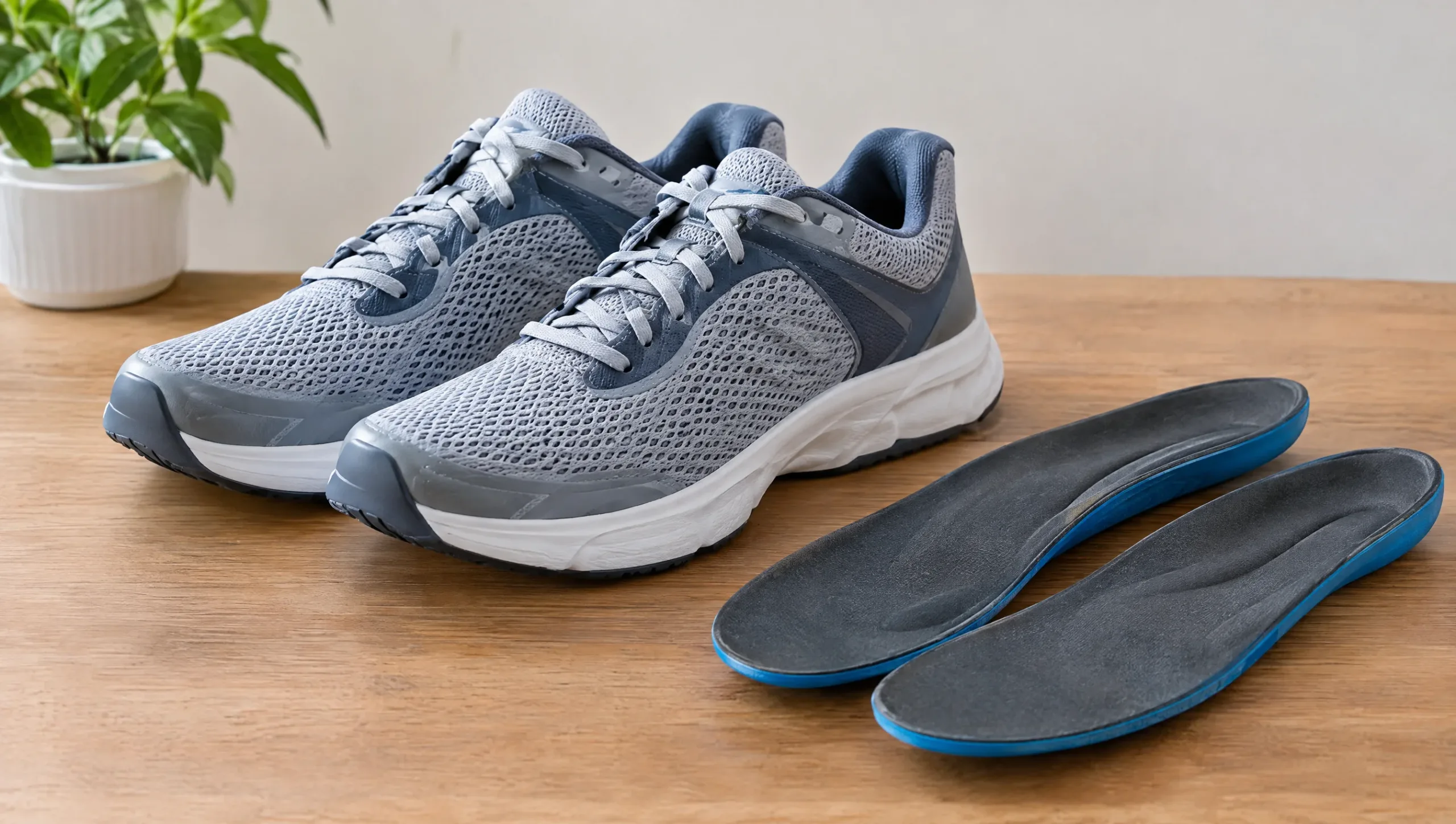
Treatment in the clinic only goes so far if daily habits keep re-aggravating the fascia. We generally advise patients to:
- Avoid walking barefoot on hard floors, especially first thing in the morning — this is one of the most overlooked triggers we see locally
- Choose supportive, cushioned footwear with a firm heel counter, even indoors; avoid flat chappals and worn-out shoes for extended standing or walking
- Consider off-the-shelf or custom orthotic insoles if you have flat feet or high arches contributing to the problem
- Gradually build up any new walking, running, or standing routine rather than increasing intensity suddenly
- Manage body weight where relevant, since even modest weight loss can meaningfully reduce load through the heel
- Take short breaks to sit or stretch if your job involves prolonged standing on hard surfaces
None of these replace a proper rehabilitation programme, but they remove the ongoing triggers that keep the fascia irritated, which is often the missing piece when heel pain “won’t go away” despite treatment.
How Long Does Recovery Take? Realistic Timelines

Most patients notice a meaningful reduction in morning pain within 3-4 weeks of starting a structured physiotherapy programme, with fuller recovery typically taking 2-4 months. Cases that have been present for many months before treatment starts, or that involve significant biomechanical contributing factors, can take longer and may need shockwave therapy alongside exercise.
It’s worth setting realistic expectations early: plantar fasciitis has a well-documented tendency to improve, then flare up again if the loading programme is stopped too soon or footwear habits slip back to old patterns. The goal of physiotherapy isn’t just to reduce today’s pain — it’s to build enough resilience in the tissue that it can handle your normal activity level without breaking down again.
We typically review progress every 2-3 weeks during active treatment, adjusting the exercise load, taping strategy, or footwear advice based on how the tissue is responding. Patients who follow through with the full programme, rather than stopping as soon as the sharp morning pain fades, tend to have significantly lower rates of recurrence over the following year.
As a general guideline, if your heel pain hasn’t improved noticeably after 4-6 weeks of consistent, guided treatment, or if it’s affecting your ability to walk, work, or exercise, it’s best to have an in-person assessment so your programme can be reviewed and adjusted rather than continuing with an approach that isn’t working for your specific case.
Frequently Asked Questions

Can plantar fasciitis go away on its own without treatment?
Mild, early-stage plantar fasciitis can sometimes settle with rest, better footwear, and basic stretching. However, once symptoms have been present for more than a few weeks, the tissue changes involved usually don’t resolve without a structured loading programme, and untreated cases commonly become chronic, taking far longer to resolve than if treated early.
Is walking bad for plantar fasciitis?
Not necessarily. Complete rest is not recommended and can actually weaken the tissue further. The key is managing the amount and type of walking — short, well-supported walks are generally fine, while long periods on hard, unsupportive surfaces or barefoot walking tend to aggravate symptoms. A physiotherapist can help you find the right balance for your stage of recovery.
Do I need an X-ray or MRI to diagnose plantar fasciitis?
In most cases, no. Plantar fasciitis is a clinical diagnosis, meaning it can usually be identified through your history and a physical examination alone. Imaging is generally reserved for cases that aren’t responding to treatment as expected, or when a physiotherapist suspects a different underlying issue, such as a stress fracture.
What’s the difference between plantar fasciitis and a heel spur?
A heel spur is a small, bony growth that can sometimes develop where the plantar fascia attaches to the heel bone, often as a result of long-standing traction from the fascia. Many people with heel spurs have no pain at all, and many people with significant plantar fasciitis pain have no visible spur on imaging — so the spur itself is rarely the actual cause of your symptoms, and treatment focuses on the fascia, not the bone.
Every case of heel pain is different, and the fastest path to lasting relief is a treatment plan built around your specific foot mechanics, activity level, and daily routine — not a generic exercise sheet. If heel pain is slowing you down, book an in-person assessment with our team at Physio Rehab Solution in Rawalpindi and let’s build a recovery plan that actually fits your life. Call or WhatsApp us at +923214287773 to schedule your appointment. You can also learn more about our full range of services on our homepage, or check our FAQ page and expert physiotherapy FAQ answers for more common questions we hear from patients.