If your elbow aches every time you shake hands, lift a kettle, swing a racquet, or grip your phone, you may be dealing with tennis elbow or golfer’s elbow. Despite the sporty names, most people who develop these conditions in Rawalpindi and Islamabad have never picked up a tennis racquet or golf club in their life.
The real culprits are usually repetitive typing, heavy lifting, manual labor, or hours spent gripping a steering wheel or cricket bat. The good news is that tennis elbow physiotherapy exercises, combined with the right hands-on treatment, resolve the vast majority of cases without surgery or long-term medication. This guide walks you through what these conditions actually are, how a physiotherapist diagnoses them, and a realistic week-by-week recovery timeline you can expect when you follow a structured rehab plan.
Table of Contents
What Are Tennis Elbow and Golfer’s Elbow?
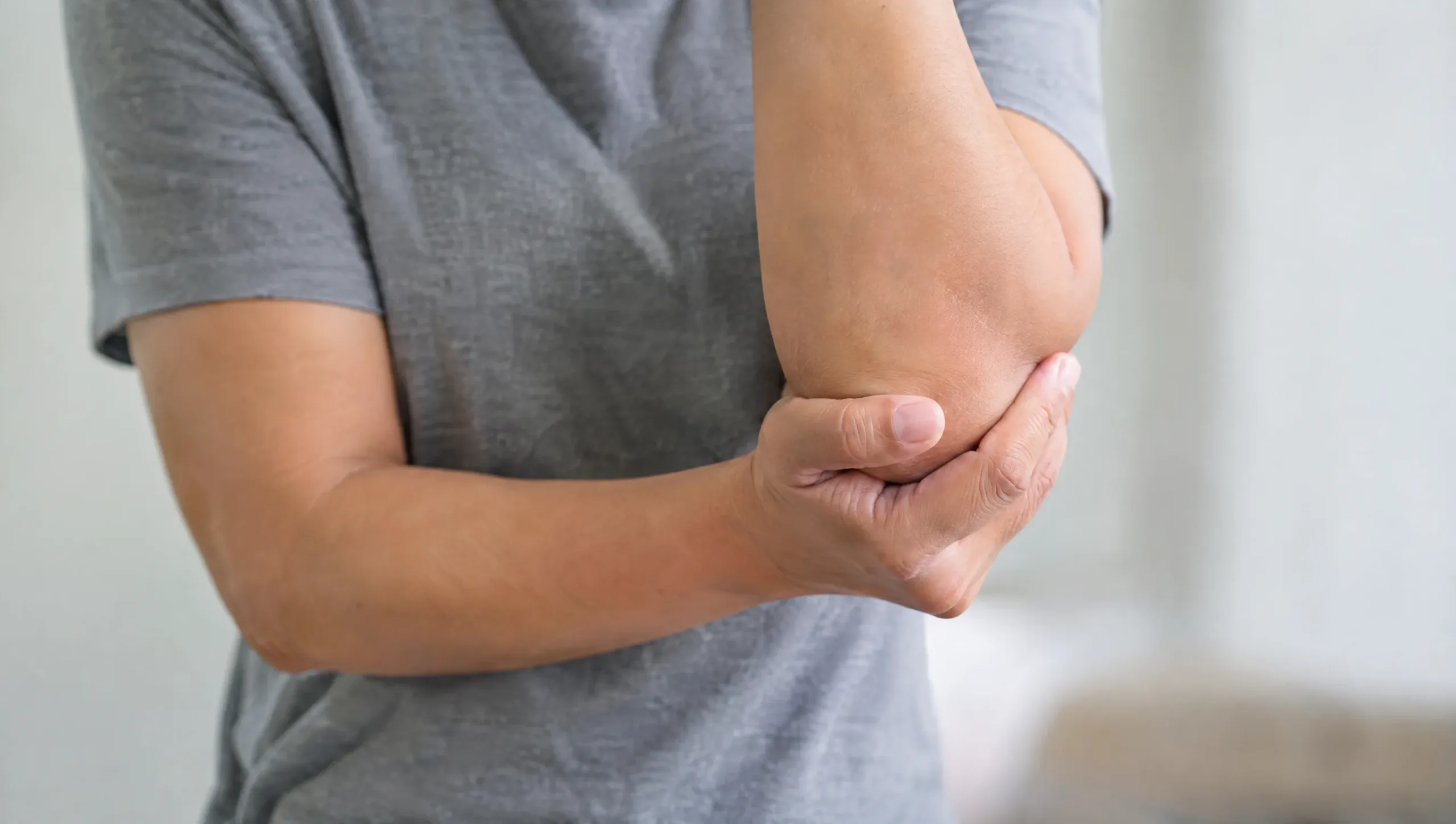
Tennis elbow, known medically as lateral epicondylitis, is irritation and micro-tearing of the tendons that attach to the bony bump on the outside of your elbow. These tendons connect to the muscles that extend your wrist and fingers backward — the same muscles you use every time you lift a grocery bag, turn a doorknob, or type on a keyboard.
Golfer’s elbow, or medial epicondylitis, is the mirror image: it affects the tendons on the inside of the elbow that control wrist flexion and gripping.
Both conditions fall under a broader category physiotherapists call “tendinopathy” rather than simple inflammation. Chronic cases involve degenerative changes in the tendon fibers themselves, not just swelling — which is exactly why rest alone rarely fixes the problem, and why starting tennis elbow physiotherapy exercises early, as part of a progressive loading program, gives you the best chance of a full recovery.
What Causes Tennis Elbow and Golfer’s Elbow?

Despite the names, fewer than 5% of people who develop these conditions got them from racquet sports. In our clinic in Rawalpindi, the most common cause we see is repetitive gripping and wrist motion at work. Tailors, electricians, mechanics, and tradespeople who use hand tools all day are at high risk.
Office workers and IT professionals who type for long hours or use a mouse with poor wrist positioning also develop these conditions frequently, often alongside neck and shoulder tightness from the same desk setup. Household tasks such as wringing clothes, kneading dough, or carrying heavy shopping bags by the handle place repeated strain on the same tendons.
Sports do play a role too — badminton, cricket (especially bowling and batting grips), and weightlifting are common local triggers. Age is a factor as well: tendons lose some of their elasticity and blood supply between the ages of 35 and 55, which is the peak age range we see for both conditions.
A single heavy lift or sudden twist can also trigger symptoms in a tendon that was already under chronic low-level stress, which is why patients often say “it just happened out of nowhere” when in reality the tendon had been overloaded for months. For a deeper look at how this overuse injury develops, the American Academy of Orthopaedic Surgeons has a detailed patient guide to tennis elbow (lateral epicondylitis) that covers the anatomy and risk factors in more depth.
Tennis Elbow vs Golfer’s Elbow: Spotting the Difference
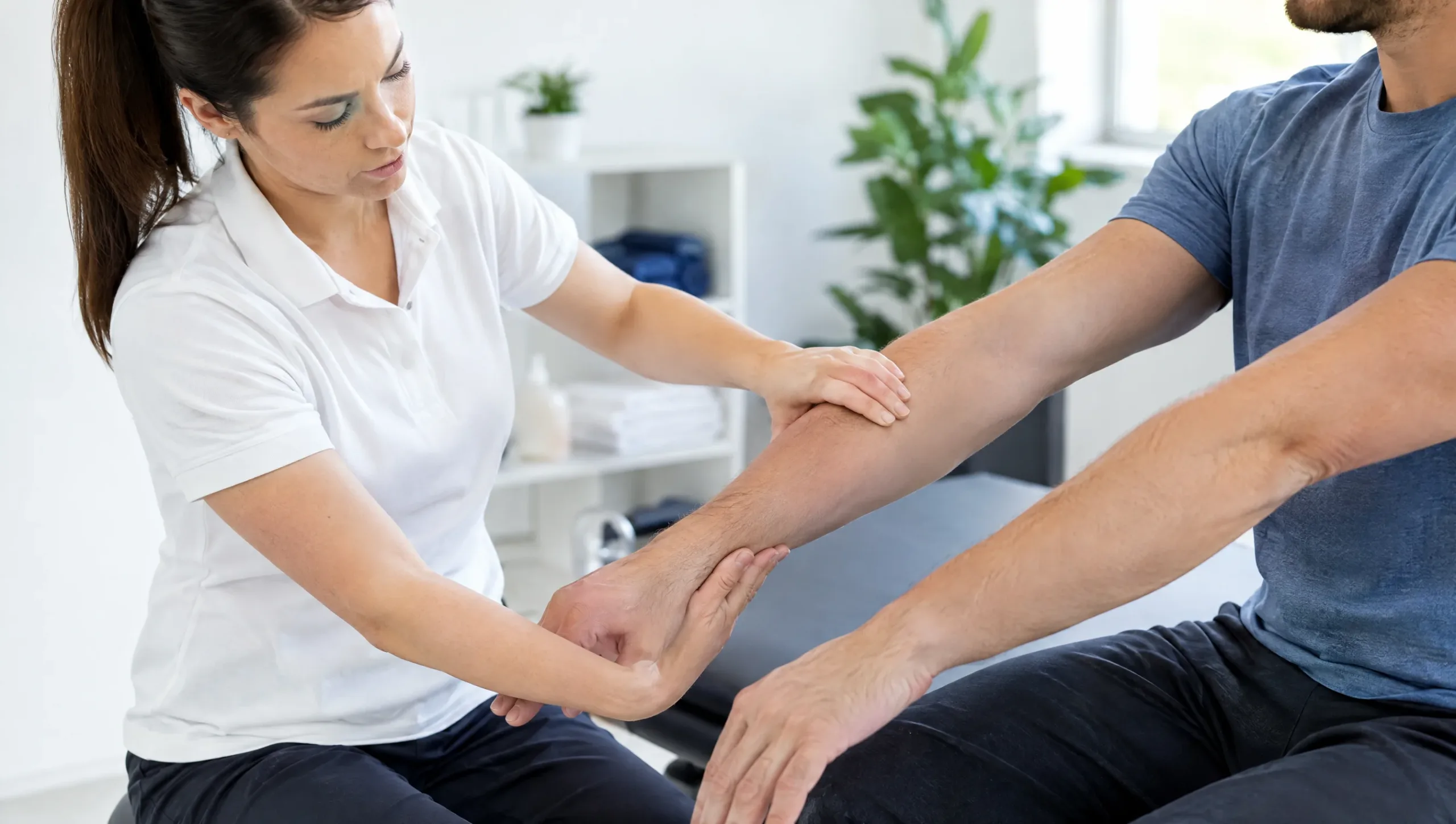
The two conditions feel similar but affect opposite sides of the elbow, and telling them apart matters because the tennis elbow physiotherapy exercises you need are different from the ones used for golfer’s elbow.
With tennis elbow, pain is felt on the outside (lateral) part of the elbow and often radiates down the forearm toward the wrist. It typically worsens when you grip something firmly, lift with your palm facing down, shake hands, or lift a teapot or kettle. Many patients describe a specific painful spot you can press directly over the bony bump on the outer elbow.
With golfer’s elbow, pain sits on the inside (medial) part of the elbow and can radiate into the forearm and sometimes into the ring and little fingers if a nearby nerve is irritated. It tends to flare with gripping combined with wrist flexion — think of the motion of swinging a golf club, bowling a cricket ball, or using a screwdriver.
Both conditions share one key feature: pain that builds gradually over weeks rather than appearing suddenly after a single injury, and both improve temporarily with rest only to return as soon as the aggravating activity resumes. That pattern alone is often enough for an experienced physiotherapist to suspect a tendinopathy before any special test is performed.
How a Physiotherapist Diagnoses Your Elbow Pain
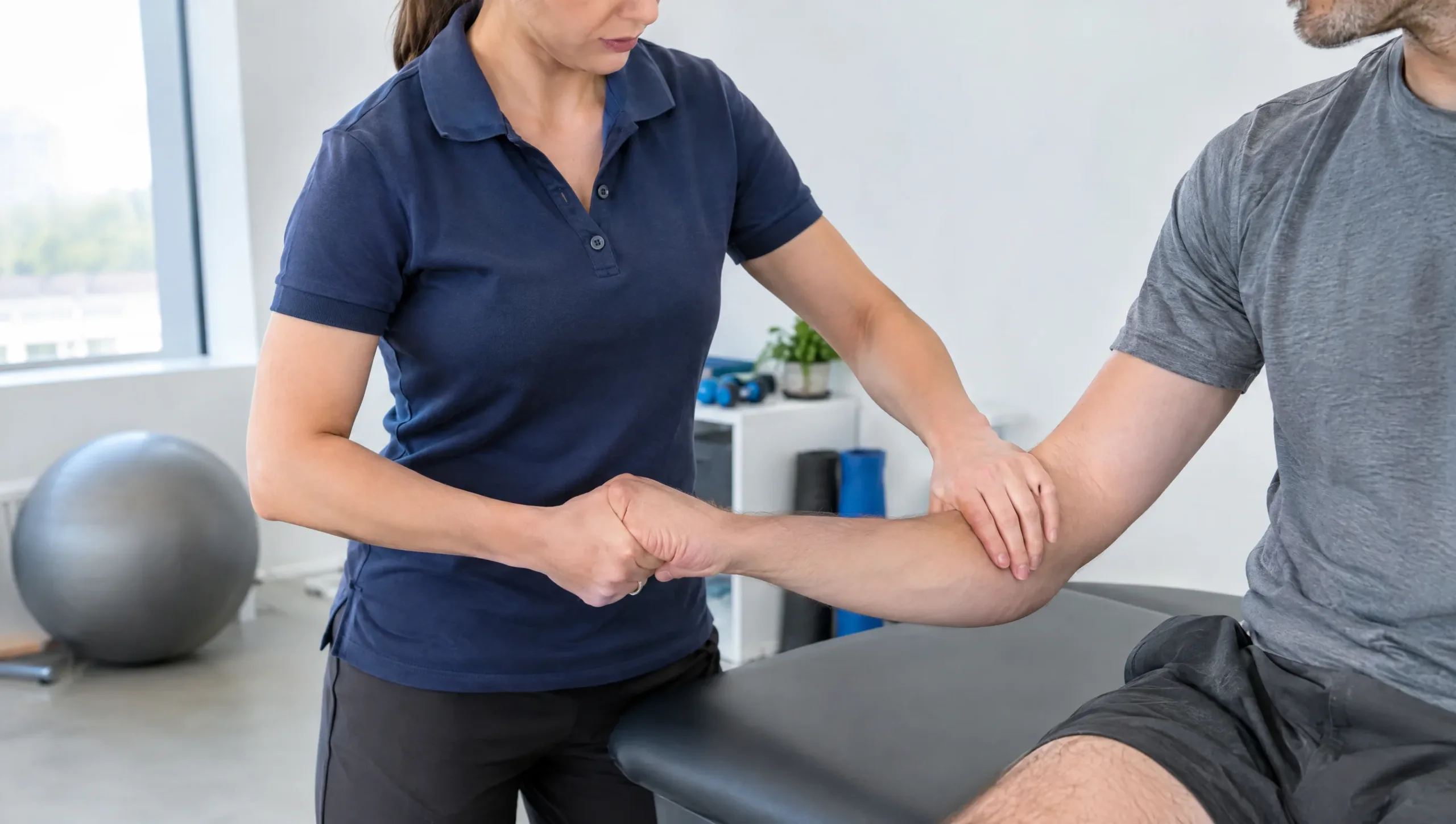
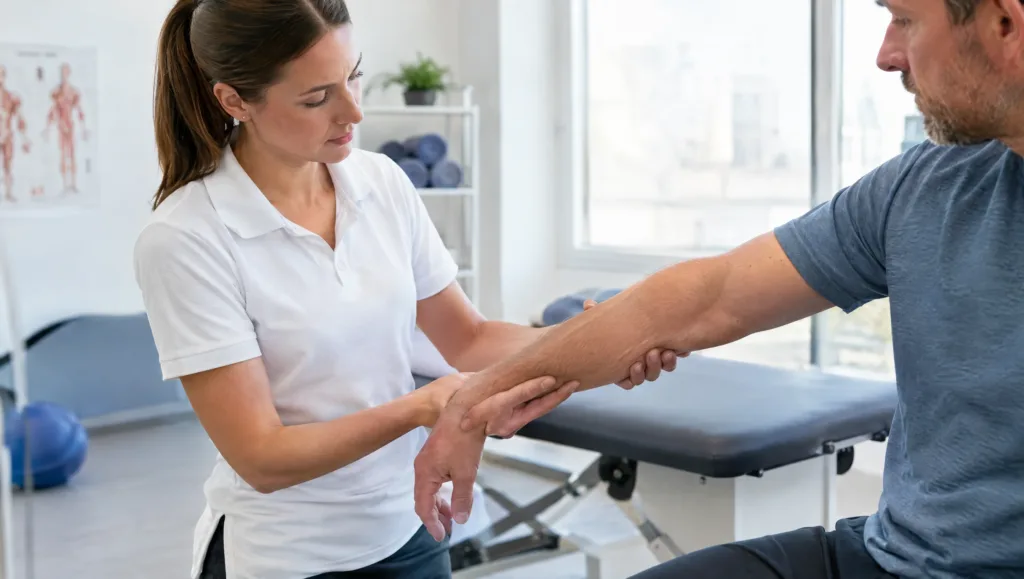
A thorough physiotherapy assessment usually confirms the diagnosis without needing an MRI. Your physiotherapist will take a detailed history of your work, sport, and daily activities to identify the repetitive movement responsible, then examine the elbow using a combination of palpation and provocative special tests.
Cozen’s test is the classic screening test for tennis elbow: you make a fist, extend your wrist against resistance, and pain over the outer elbow confirms irritation of the extensor tendons. The reverse version, where you flex your wrist against resistance, is used to screen for golfer’s elbow and reproduces pain on the inner elbow when positive.
Your physiotherapist will also check grip strength, which is almost always reduced on the affected side, and screen your neck and shoulder for contributing stiffness, since poor shoulder mechanics often force the forearm muscles to overwork and compensate. Imaging such as an ultrasound or MRI is only needed if symptoms don’t respond to several weeks of appropriate treatment, or if a nerve entrapment or ligament tear is suspected instead. This assessment is also what helps your physiotherapist decide which tennis elbow physiotherapy exercises to prioritize from day one.
The Physiotherapy Recovery Timeline for Tennis Elbow and Golfer’s Elbow

One of the most common questions we get at our Rawalpindi clinic is simply: “how long will this take to heal?” Tendons heal more slowly than muscles because they have a limited blood supply, so patience and consistency with your tennis elbow physiotherapy exercises matter more than intensity. Here is a realistic timeline most patients can expect with structured physiotherapy.
Weeks 1–2: Calming things down. The early phase focuses on reducing pain and irritation without fully resting the arm, since complete immobilization can actually weaken the tendon further. Your physiotherapist may use manual therapy, ice or heat as appropriate, a counterforce brace to offload the tendon during daily tasks, and gentle isometric exercises — holding a contraction without moving the joint — which can reduce pain quickly while maintaining tendon strength.
Weeks 3–6: Building tolerance. Once the acute irritability settles, treatment shifts toward progressive strengthening, usually starting with light isotonic exercises and gradually introducing eccentric loading — controlled lengthening of the muscle under tension, which is the single most evidence-backed exercise category for tendinopathy recovery. Grip strength and pain-free range of motion typically begin improving noticeably in this window.
Weeks 6–12: Returning to normal load. By this stage most patients are back to pain-free daily activities and are reintroducing work tasks, sport-specific movements, or hobbies in a graded way. Full recovery of tendon resilience often continues quietly for up to 3 to 6 months even after symptoms disappear.
This is why we encourage patients to continue their home exercise program rather than stopping the moment pain resolves. Patients who delay treatment for many months, or who keep re-aggravating the tendon by returning to full activity too early, can take considerably longer — sometimes 6 months to a year — which is exactly why early physiotherapy intervention is so valuable.
Tennis Elbow Physiotherapy Exercises That Work

The tennis elbow physiotherapy exercises below are the core categories your physiotherapist is likely to prescribe, though the exact program should always be individualized to your stage of recovery, pain levels, and daily demands.
Isometric wrist extension (early phase): Press the back of your hand against a wall or table edge and hold a gentle contraction for 15–30 seconds without moving the wrist. This reduces pain while keeping the tendon active.
Eccentric wrist extension (for tennis elbow): Rest your forearm on a table with your hand hanging off the edge, palm facing down, holding a light dumbbell or water bottle. Use your other hand to lift the weight up, then slowly lower it under control over 3–5 seconds. This slow-lowering phase is where the real tendon-strengthening benefit happens.
Eccentric wrist flexion (for golfer’s elbow): The same setup but palm facing up, lowering the weight slowly to load the inner forearm tendons.
Forearm and wrist stretches: Gently extending the wrist and fingers with the elbow straight, held for 20–30 seconds, helps maintain tendon flexibility between strengthening sessions.
Grip strengthening: Squeezing a soft ball or therapy putty, progressing in resistance over weeks, restores the grip strength that almost every patient loses during the painful phase.
Consistency matters far more than intensity — most protocols call for these exercises 2–3 times daily, and symptoms often flare temporarily as loading increases before improving, which is a normal part of the process rather than a sign something is wrong. That said, sharp or worsening pain that doesn’t settle within a day should always be reported to your physiotherapist rather than pushed through.
Beyond Exercise: Dry Needling, Taping, and Bracing Support
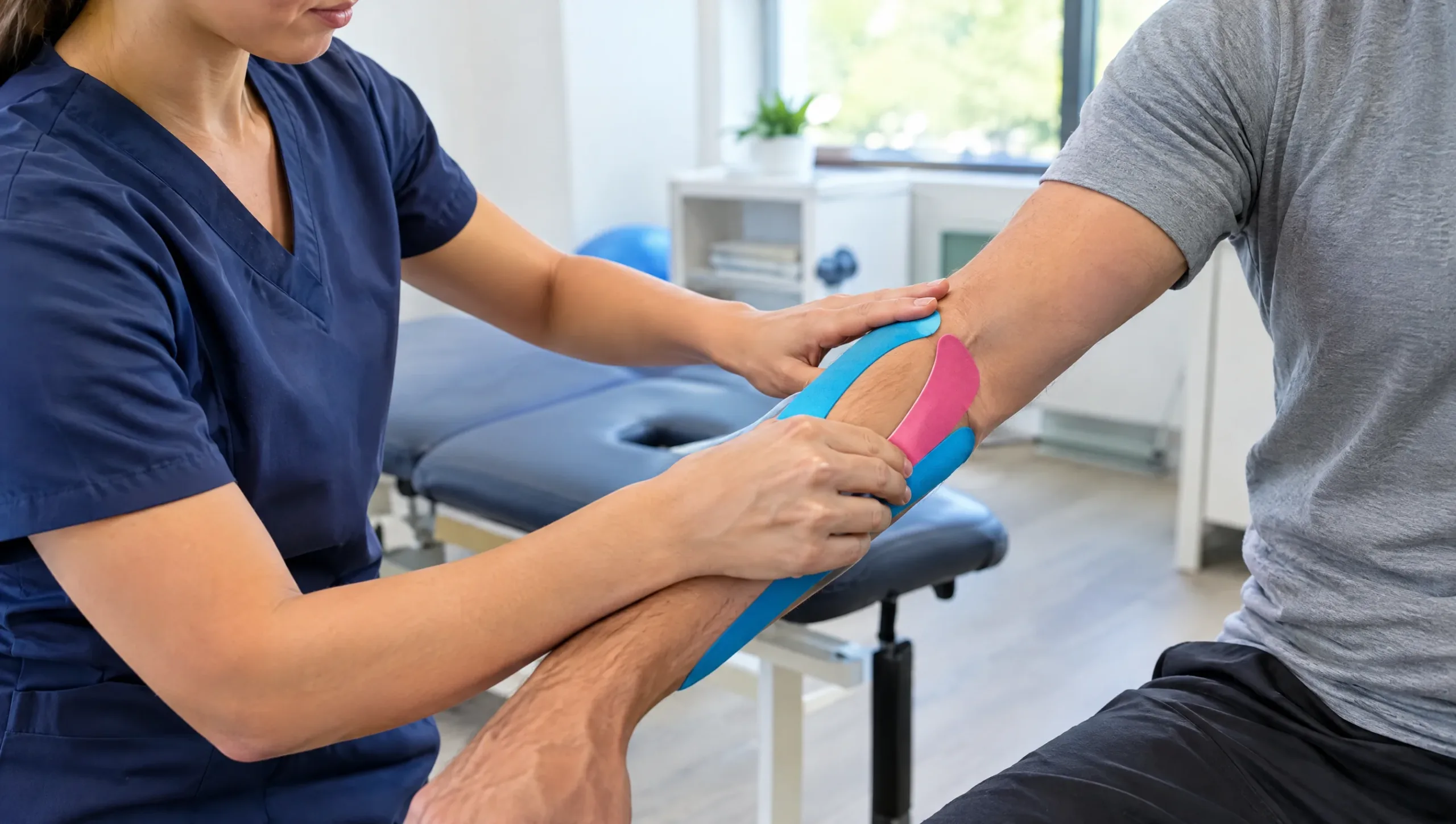
Tennis elbow physiotherapy exercises are the foundation of recovery, but several adjunct treatments can speed things along, particularly in the first few weeks when pain is highest. A counterforce brace worn just below the elbow redistributes load away from the irritated tendon during work or sport. Kinesiology taping can provide similar offloading and sensory feedback during daily activities.
Manual therapy techniques, including soft tissue mobilization and friction massage, are often used to improve local blood flow and tissue mobility around the tendon. Some patients also benefit from dry needling, a technique where a thin needle is inserted into tight or irritated muscle tissue to reduce pain and improve mobility — this can be a useful short-term adjunct, though it should always be combined with an active exercise program rather than used alone.
Shockwave therapy and ultrasound are sometimes used for stubborn, long-standing cases that haven’t responded well to tennis elbow physiotherapy exercises alone, usually after 6 or more weeks of exercise-based care.
Prevention and When to See a Physiotherapist for Elbow Pain

Once you’ve recovered, a few practical changes can significantly lower your risk of a repeat episode. If your job involves repetitive gripping or typing, take short micro-breaks every 30–45 minutes to stretch your wrists and forearms — the same desk-based strain that causes neck and shoulder tension often contributes to elbow overload too. Our guide on 5-minute desk stretches for office workers covers simple movements you can slot into a busy workday.
For IT professionals and anyone working long hours at a keyboard, check that your mouse and keyboard height keep your wrist in a neutral, straight position rather than bent upward or sideways, since poor ergonomics is one of the most common hidden contributors we see in clinic. Athletes and cricket players should ease into increased training volume gradually rather than jumping straight into intense practice after time off, and should make sure grip size and equipment are properly fitted.
Warming up the forearm muscles before activity and maintaining general grip and forearm strength year-round, not just after an injury, is one of the most effective long-term prevention strategies available. Many patients continue a lighter version of their tennis elbow physiotherapy exercises indefinitely as a preventive routine, even after symptoms are long gone.
On the treatment side, most cases of tennis elbow and golfer’s elbow respond well to conservative physiotherapy, but you should book an assessment sooner rather than later if pain has lasted more than two to three weeks, if it’s affecting your ability to work or sleep, or if you notice numbness or tingling into your fingers.
Early assessment generally means a faster, simpler recovery, while delayed treatment tends to require a longer rehabilitation timeline. This article is intended for general education and is not a substitute for an individual diagnosis — if your symptoms are severe, persistent, or unusual, please book an in-person assessment so a qualified physiotherapist can examine your elbow and tailor a treatment plan to your specific situation. You can find more general guidance on our physiotherapy FAQ page or browse detailed condition-specific answers on our expert physiotherapy FAQ answers page.
Frequently Asked Questions About Tennis Elbow and Golfer’s Elbow

Here are answers to a few questions patients often ask us about tennis elbow physiotherapy exercises and golfer’s elbow treatment.
Can tennis elbow heal on its own without physiotherapy?
Mild cases caught early sometimes improve with rest and activity modification alone, but most tendinopathies that have been present for more than a few weeks benefit significantly from structured physiotherapy. Without proper loading, the tendon can remain weak and prone to flare-ups even after pain temporarily settles, which is why so many people report the problem “keeps coming back.”
Is it okay to keep working or playing sport while being treated for golfer’s elbow?
In most cases, yes — complete rest is rarely necessary and can even slow recovery. Your physiotherapist will usually help you modify technique, grip, or workload rather than stop the activity altogether, since staying moderately active while avoiding painful extremes tends to produce better long-term outcomes than total rest.
How many physiotherapy sessions are usually needed for tennis elbow?
This varies by severity and how long symptoms have been present, but many patients attend weekly or biweekly sessions for 6 to 8 weeks while performing daily home exercises between visits, with progress reassessed regularly so your tennis elbow physiotherapy exercises can be adjusted as grip strength and pain levels improve.
What is the difference between a brace and taping for elbow pain?
A counterforce brace is a reusable strap worn just below the elbow that mechanically offloads the tendon during activity and is convenient for repeated daily use, while kinesiology tape is applied directly to the skin and tends to be used for shorter periods, often during sport or specific aggravating tasks, providing both mechanical support and sensory feedback that can reduce pain during movement.
If elbow pain is limiting your grip, your work, or the activities you enjoy, don’t wait for it to get worse. Dr. Iqra Kiran, DPT, and the team at Physio Rehab Solution in Rawalpindi offer thorough assessments and individualized tennis elbow physiotherapy exercises and treatment programs for golfer’s elbow and other musculoskeletal conditions. Book an appointment at our Rawalpindi clinic today by calling +92 321 4287773 and take the first step toward a pain-free grip.