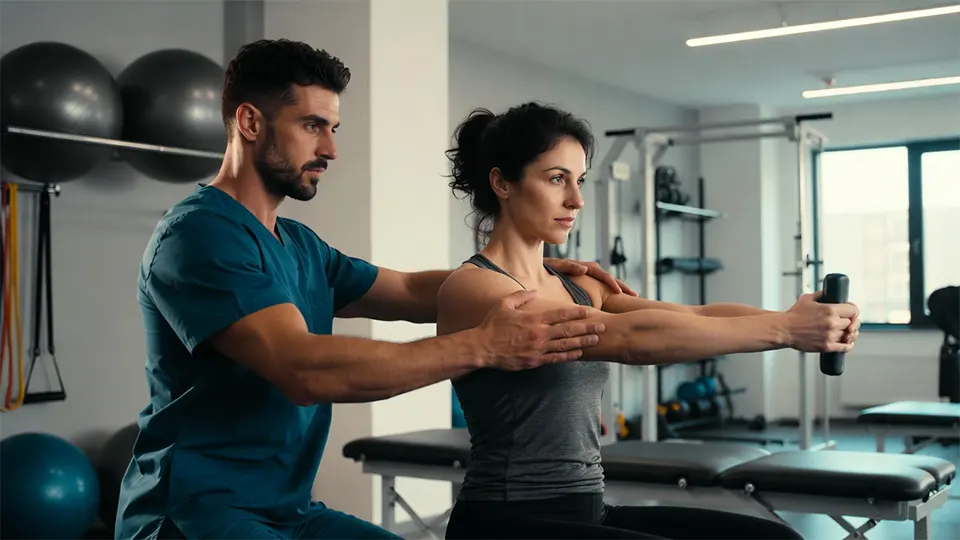
Becoming a new mother changes almost everything about your days — including, for many women, the health of your wrists and thumbs. If lifting your baby has started to feel genuinely painful, especially along the thumb side of your wrist, you may be dealing with De Quervain’s tenosynovitis, sometimes nicknamed “new mom wrist pain” or “mommy thumb.” It is one of the most common overuse injuries we see in postpartum physiotherapy, and the encouraging news is that it responds very well to the right treatment. In this guide, we explain what De Quervain’s tenosynovitis actually is, why new mothers are especially vulnerable to it, and exactly how physiotherapy treats it — usually without medication or surgery.
Table of Contents
- What Is De Quervain’s Tenosynovitis?
- Why New Mothers Are at High Risk
- Signs and Symptoms: Is It De Quervain’s or Just Sore Wrists?
- How Physiotherapists Diagnose De Quervain’s Tenosynovitis
- Physiotherapy Treatment: What Actually Works
- Daily Habits and Baby-Carrying Techniques That Protect Your Wrists
- When to Consider Splinting, Injections, or Surgery
- Frequently Asked Questions
What Is De Quervain’s Tenosynovitis?
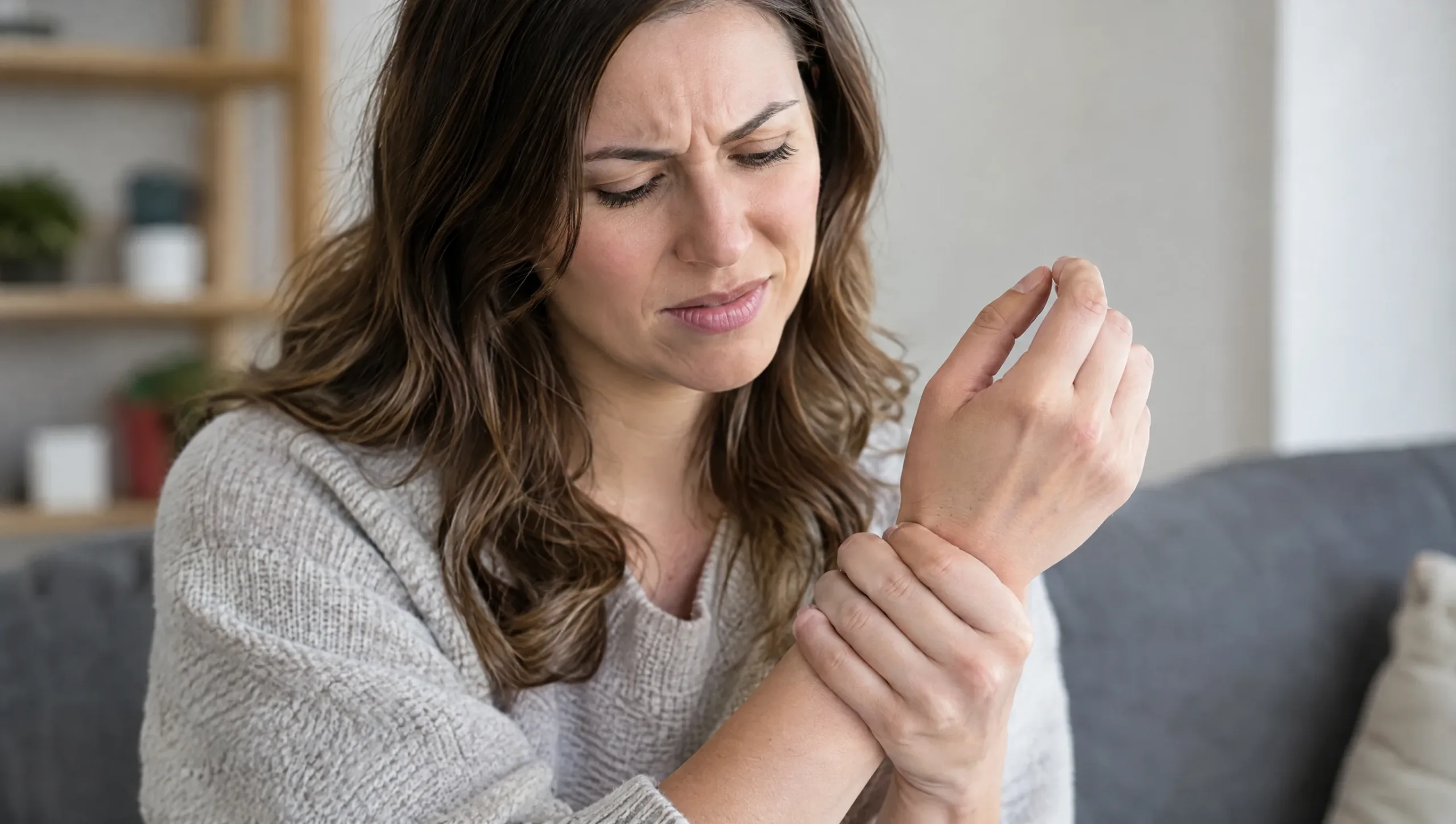
De Quervain’s tenosynovitis is an inflammation of the two tendons that run along the thumb side of your wrist — the abductor pollicis longus and extensor pollicis brevis. These tendons glide through a narrow tunnel-like sheath on their way from the forearm to the base of the thumb. When that sheath becomes irritated and swollen, every movement that involves gripping, pinching, or twisting the wrist becomes painful, because the tendons can no longer slide smoothly through the tunnel.
The condition is sometimes called “mommy thumb” because it shows up so frequently in the first few months after childbirth, but it is really a repetitive-strain injury. Anyone who repeats the same wrist and thumb motion often enough — texting, knitting, racket sports, or lifting a baby dozens of times a day — can develop it. For new mothers specifically, the combination of a new, repetitive physical task and a recovering body creates close to a perfect setup for this injury.
It is worth distinguishing De Quervain’s tenosynovitis from the general, diffuse wrist fatigue that almost every new parent feels. Ordinary fatigue tends to ease with a short rest and does not localize to one specific spot. De Quervain’s tenosynovitis, by contrast, produces a consistent, localized tenderness right over the tendon sheath at the base of the thumb, and it tends to worsen rather than improve with continued repetitive use, which is exactly why it needs a specific treatment plan rather than just “toughing it out.”
Why New Mothers Are at High Risk

Several factors stack up against a new mother’s wrists at exactly the same time:
- Repetitive lifting under load. Picking a baby up from a crib or changing table usually means gripping under the armpits with the wrists bent and the thumbs doing most of the stabilizing work — dozens of times every day.
- Hormonal changes. Pregnancy and the postpartum period involve elevated relaxin and estrogen, hormones that loosen ligaments and connective tissue throughout the body, including the tendon sheaths in the wrist. Looser, softer tissue is more prone to irritation under repeated load.
- Feeding positions. Breastfeeding or bottle-feeding for long stretches, often with the wrist bent to support the baby’s head, keeps the thumb tendons under sustained, awkward tension.
- Sleep deprivation. Tissue needs rest to recover from daily strain. New parents are chronically short on it, so minor irritation doesn’t get the chance to settle down before the next day’s lifting begins.
None of this means something was done “wrong.” It simply means the wrist is being asked to do a new, physically demanding job at a time when the body’s connective tissue is least equipped to handle repetitive strain.
Signs and Symptoms: Is It De Quervain’s or Just Sore Wrists?
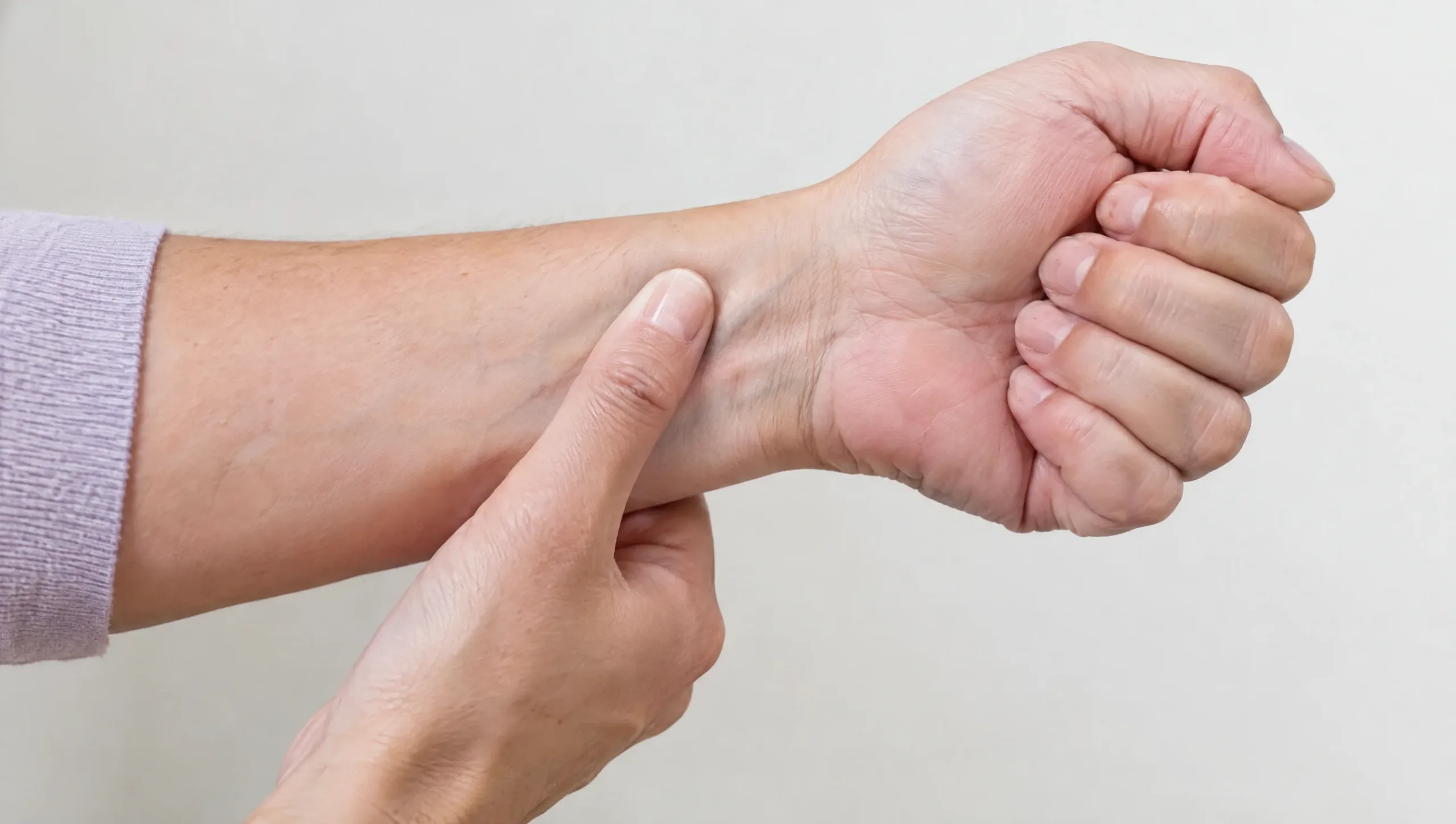
Ordinary new-parent fatigue causes general wrist tiredness. De Quervain’s tenosynovitis feels different, and tends to include:
- A sharp or aching pain directly over the bony bump at the thumb side of the wrist, which can spread up the forearm.
- Swelling or a visible puffiness along that same area.
- A “catching” or “sticking” sensation when moving the thumb.
- Pain that spikes sharply when gripping, twisting a doorknob, wringing out a cloth, or lifting the baby with a bent wrist.
- Difficulty making a fist around the thumb without pain.
A simple self-check many clinicians describe is the Finkelstein test: make a fist with the thumb tucked inside the fingers, then gently bend the wrist toward the little finger. A sharp increase in pain at the thumb side of the wrist is a strong indicator of De Quervain’s tenosynovitis. This is a useful screening sign, not a diagnosis — we always recommend an in-person assessment before assuming any self-test result, since wrist pain can also come from arthritis, a ganglion cyst, or nerve compression that needs a different treatment plan.
How Physiotherapists Diagnose De Quervain’s Tenosynovitis

Diagnosis is almost always clinical, meaning it is made through a hands-on physical examination rather than scans. During your assessment, your physiotherapist will typically:
- Take a history of when the pain started, what makes it worse, and your daily lifting or feeding patterns.
- Palpate the tendon sheath at the base of the thumb to check for tenderness, swelling, or thickening.
- Perform the Finkelstein test and compare both wrists.
- Rule out other common postpartum hand and wrist conditions, particularly carpal tunnel syndrome, which causes numbness and tingling rather than pain centered at the thumb base, and trigger finger.
Imaging such as ultrasound or an X-ray is rarely needed and is usually reserved for cases that do not respond to initial treatment, or when the diagnosis is unclear.
Physiotherapy Treatment: What Actually Works
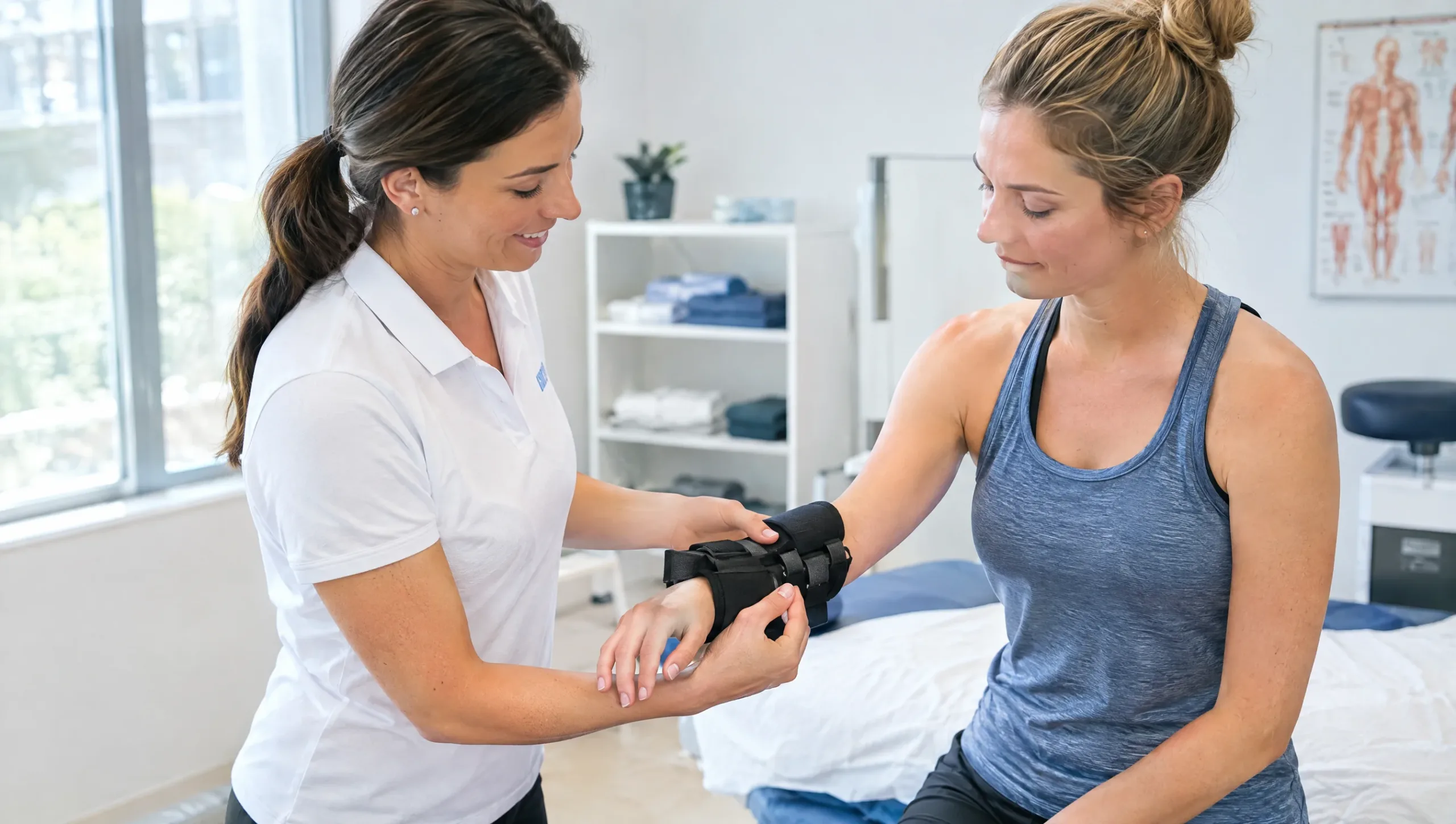
The great majority of De Quervain’s tenosynovitis cases improve significantly with a structured physiotherapy program, without needing medication or surgery. A typical plan combines several elements:
- Activity modification. Short-term changes to how you lift and hold your baby — covered in detail in the next section — take repetitive strain off the irritated tendons while they heal.
- Thumb spica splinting. A brace that holds the thumb and wrist in a neutral, supported position reduces tendon irritation during daily activities and especially at night.
- Manual therapy and soft tissue work. Gentle friction massage and mobilization of the tendon sheath can reduce local swelling and improve how smoothly the tendons glide.
- Ice and modalities. Ice application and, in clinic, modalities such as therapeutic ultrasound can calm acute inflammation.
- Progressive stretching and eccentric loading. Once acute pain settles, a graded program of thumb and wrist stretches followed by eccentric strengthening rebuilds the tendon’s tolerance to load, which is what actually prevents the pain from returning.
- Ergonomic coaching. Your physiotherapist will look specifically at how you lift, carry, and feed your baby, and adjust those patterns to protect the healing tendon.
According to patient education from the Mayo Clinic, most people recover well with conservative, non-surgical treatment like this when it is started early, which is exactly why addressing the pain in its first few weeks — rather than “pushing through it” — matters so much.
Daily Habits and Baby-Carrying Techniques That Protect Your Wrists

Small adjustments to daily movement patterns make a real difference while your tendons heal, and afterward to prevent a repeat flare-up:
- Lift with flat palms, not pinched thumbs. Scoop your baby up with both palms spread flat under the body or armpits, instead of pinching with your thumbs and fingers.
- Use your whole forearm for support. Rest your baby’s weight along your forearm rather than gripping tightly with your hand whenever you are carrying them for more than a few seconds.
- Vary your feeding position. Switch sides and supporting arms regularly during feeds, and consider a nursing pillow to take load off your wrists.
- Take short breaks. Put the baby down in a safe space for a minute every so often rather than holding continuously through a long task.
- Ice after activity-heavy days. A short ice application in the evening after a day of heavy lifting helps keep inflammation from building up.
- Consider a supportive baby carrier. A well-fitted carrier distributes your baby’s weight across your body instead of concentrating it through your wrists and thumbs.
These changes are not permanent lifestyle restrictions — they are temporary load management while the tendon sheath settles down, paired with the strengthening work from your physiotherapy program.
It also helps to involve your partner or another caregiver in sharing the heavier lifting tasks during the weeks you are actively healing, such as transferring the baby in and out of a car seat or a deep crib. Reducing the total number of repetitive lifts per day — even temporarily — often speeds up recovery more than any single exercise or stretch on its own.
When to Consider Splinting, Injections, or Surgery

Most new mothers improve within four to six weeks of consistent physiotherapy, splinting, and activity modification. When pain persists beyond that window, there are further options your physiotherapist or doctor may discuss with you:
- Extended splinting. A longer period of thumb spica bracing, sometimes combined with a more intensive therapy schedule.
- Corticosteroid injection. A steroid injection into the tendon sheath can significantly reduce inflammation and is often effective when combined with continued physiotherapy, though it does not replace the need to address the underlying movement patterns.
- Surgery. In the small minority of cases that do not respond to conservative care or injections, a short surgical procedure to release the tight tendon sheath (first dorsal compartment release) can resolve the condition. This is considered a last resort, not a first-line option.
We always recommend an in-person assessment before deciding between these options, since the right next step depends on how long symptoms have lasted, how severe they are, and how you have responded to treatment so far.
Frequently Asked Questions

How long does De Quervain’s tenosynovitis take to heal with physiotherapy?
Most new mothers notice meaningful improvement within two to three weeks of starting splinting, activity modification, and physiotherapy, with fuller recovery by four to six weeks. Healing time varies depending on how long the tendon was irritated before treatment began and how consistently activity modifications are followed.
Can I keep carrying and breastfeeding my baby while being treated?
Yes, in almost all cases. Treatment is built around your real daily routine, not around avoiding your baby. Your physiotherapist will teach you modified lifting and feeding positions so you can keep caring for your baby while the irritated tendons settle down.
Is De Quervain’s tenosynovitis the same thing as carpal tunnel syndrome?
No, although both are common after childbirth and both affect the hand and wrist. De Quervain’s tenosynovitis involves tendon inflammation at the thumb side of the wrist and causes pain with thumb and wrist movement. Carpal tunnel syndrome involves nerve compression and typically causes numbness, tingling, or a “pins and needles” feeling, often worse at night. A physiotherapist can tell the two apart in a single assessment — read more in our dedicated guide to carpal tunnel syndrome.
Will De Quervain’s tenosynovitis come back with a future pregnancy?
It can, since the same risk factors — hormonal changes, repetitive lifting, and sleep deprivation — return with each new baby. The good news is that once you have learned the correct lifting mechanics, splinting routine, and early warning signs, most mothers are able to catch and manage a recurrence much faster the second time around.
De Quervain’s tenosynovitis is extremely common, very treatable, and not a sign that you are doing anything wrong as a new parent. With the right combination of splinting, hands-on physiotherapy, and small adjustments to how you lift and carry your baby, most mothers return to pain-free movement within a matter of weeks. The key is addressing it early, rather than waiting for the pain to resolve on its own.
If your wrist or thumb pain has lasted more than a week or two, or is interfering with your ability to care for your baby, don’t wait it out. Book an in-person physiotherapy assessment with Dr. Iqra Kiran, DPT, at Physio Rehab Solution in Rawalpindi, and get a hands-on evaluation and a personalized recovery plan. Call or WhatsApp us at +92 321 4287773 to schedule your appointment, or browse more answers on our Physiotherapy FAQ page and general FAQ. You can also learn more about our full range of services on our homepage.