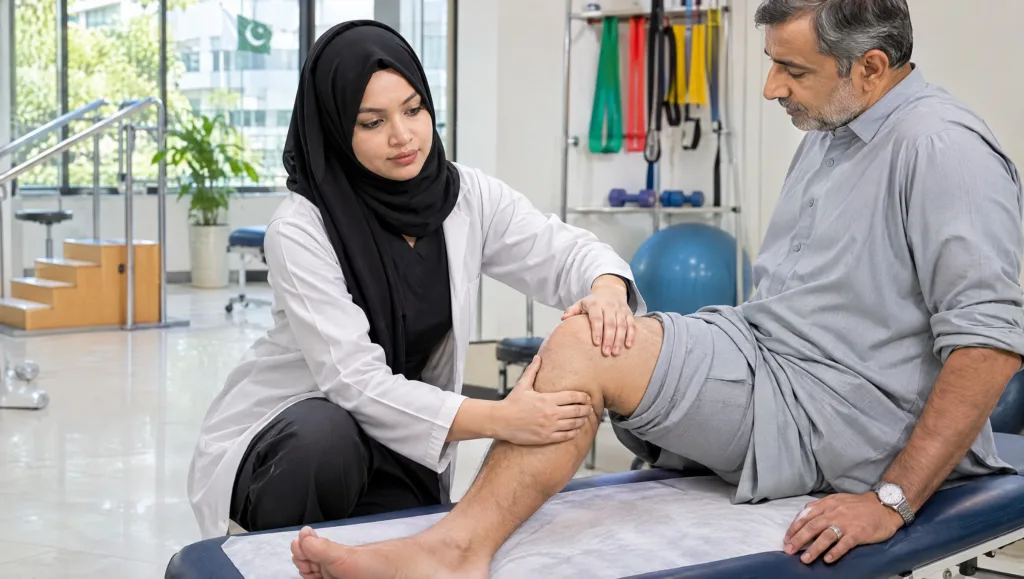
If you’ve been told your knee pain is “just arthritis” and nothing can be done except surgery, you’ve been given incomplete information. Knee osteoarthritis physiotherapy treatment Rawalpindi patients receive at Physio Rehab Solution focuses on reducing pain, restoring strength, and protecting the joint for years without an operation. In this guide, Dr. Iqra Kiran explains exactly how that non-surgical approach works, what a real treatment plan looks like, and when surgery genuinely is the right next step.
Table of Contents
- What Is Knee Osteoarthritis and Why Does It Happen?
- Signs and Symptoms You Shouldn’t Ignore
- Why Physiotherapy Is the First-Line Treatment for Knee OA
- Our Physiotherapy Treatment Approach in Rawalpindi
- Exercises That Help Strengthen and Protect Your Knee
- Lifestyle Changes That Support Long-Term Knee Health
- When Is Surgery Still Necessary?
- Frequently Asked Questions About Knee Osteoarthritis
What Is Knee Osteoarthritis and Why Does It Happen?
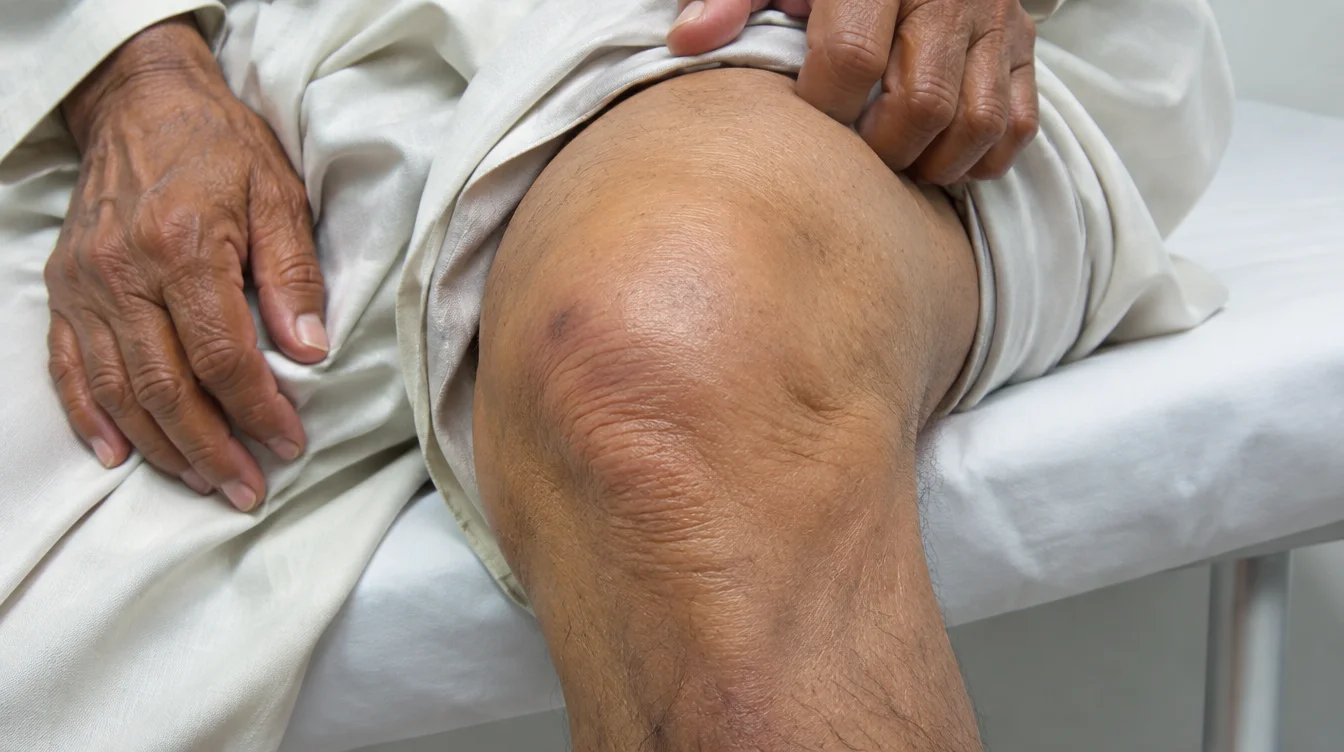
Knee osteoarthritis (OA) is the gradual breakdown of the cartilage that cushions your knee joint. As that cartilage thins, the bones underneath begin to move with less protection, which leads to stiffness, swelling, and pain, especially with weight-bearing activities like walking or climbing stairs.
It is the most common form of arthritis in Pakistan’s aging population, but it is not exclusive to older adults. We regularly see patients in their 40s, particularly those with a history of knee injury, excess body weight, or physically demanding jobs that involve a lot of squatting or kneeling.
Unlike a fracture or a torn ligament, osteoarthritis develops slowly over months or years. This is actually good news: it gives physiotherapy a long window to intervene before the joint deteriorates to the point where surgery becomes the only option.
Doctors usually describe knee osteoarthritis in grades, from mild (grade 1, minor wear with few symptoms) through to severe (grade 4, where very little cartilage remains and bone-on-bone contact is common). Knowing your grade matters because it shapes what physiotherapy can realistically achieve: a grade 1 or 2 knee often responds dramatically to the right exercise program, while a grade 4 knee may need physiotherapy alongside other treatments to get the same relief.
Common risk factors we ask about during assessment include a family history of arthritis, previous meniscus or ligament injuries, occupations that involve repetitive kneeling or heavy lifting, and long periods of being less physically active, which weakens the very muscles that are supposed to protect the joint.
Signs and Symptoms You Shouldn’t Ignore
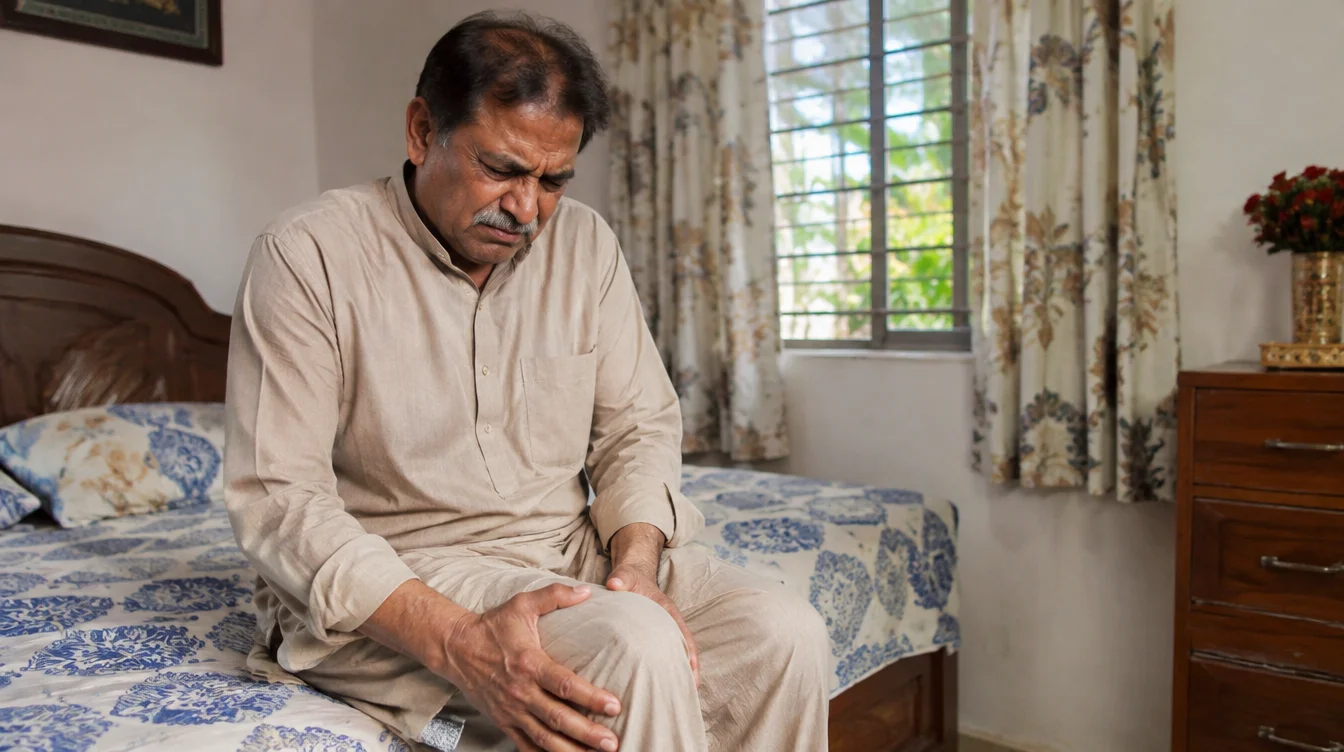
Many patients wait far too long before seeking treatment because they assume knee pain is just a normal part of aging. The earlier we see you, the more treatment options remain on the table.
Watch for these common signs of knee osteoarthritis:
- A dull ache or stiffness in the knee, especially first thing in the morning or after sitting for a long time
- A grinding, clicking, or crunching sensation when bending or straightening the knee (known as crepitus)
- Swelling around the joint after activity or at the end of the day
- Pain that worsens with stairs, squatting, or getting up from low chairs
- A feeling that the knee is “giving way” or losing stability
- Reduced range of motion compared to a few years ago
If several of these sound familiar, an in-person assessment is important before starting any exercise program on your own, since the wrong movements can sometimes aggravate an already irritated joint.
During your first visit, we typically evaluate how your knee moves through its full range, test the strength of the surrounding muscles, check your walking pattern for compensations, and ask about your daily activities and goals, whether that’s walking to the mosque comfortably, playing with grandchildren, or returning to a favorite sport. We may also review any X-rays or MRI reports you already have, though imaging alone rarely tells the whole story; how your knee actually functions matters just as much as what a scan shows.
Why Physiotherapy Is the First-Line Treatment for Knee OA
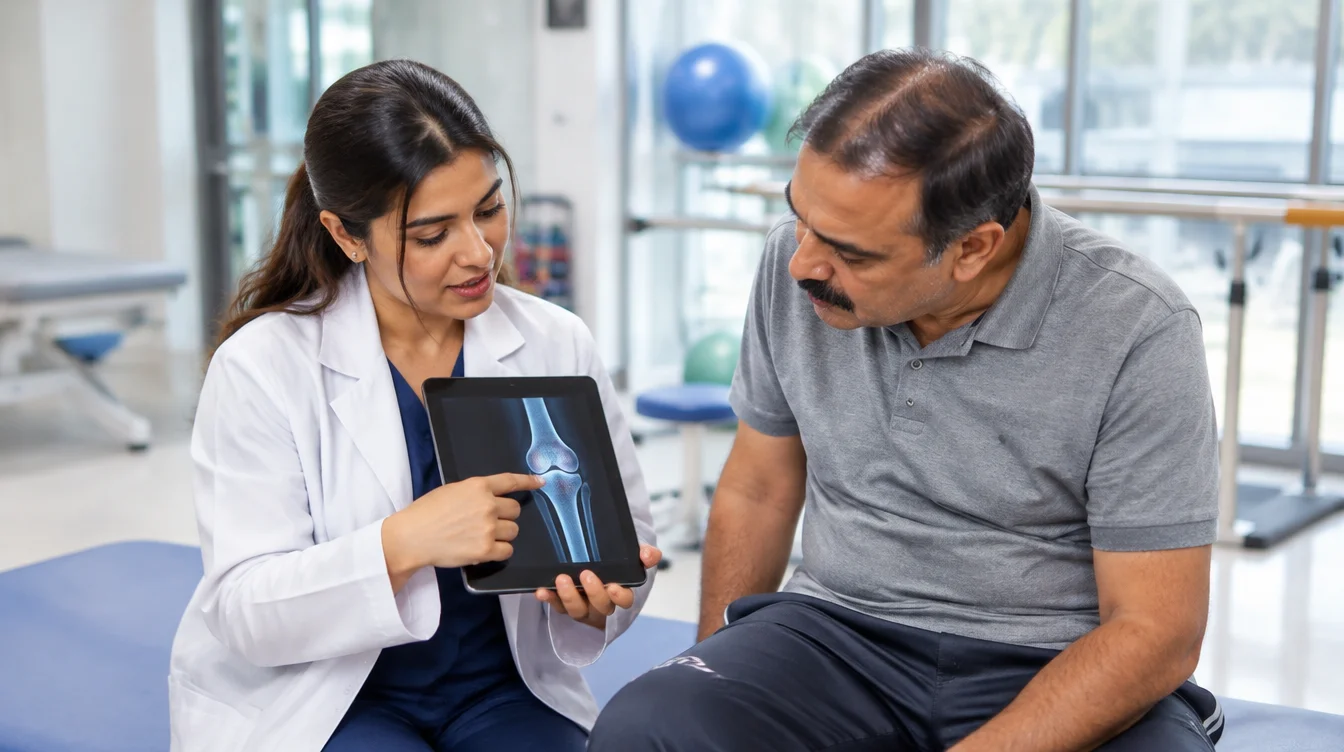
Major clinical guidelines, including those referenced by the National Institute of Arthritis and Musculoskeletal and Skin Diseases, consistently recommend physiotherapy and structured exercise as the first-line treatment for knee osteoarthritis, ahead of injections or surgery, for the majority of patients.
Here’s why it works: osteoarthritis pain is driven as much by weak, unstable muscles around the joint as it is by the cartilage itself. When the quadriceps, hamstrings, and hip muscles are strong and well-coordinated, they absorb a large share of the load that would otherwise fall directly on the damaged cartilage.
Physiotherapy also addresses the compensations that build up over months of favoring a painful knee, things like a shortened stride, a weak glute on one side, or a stiff ankle, all of which quietly make the knee work harder than it should.
In short, physiotherapy doesn’t regrow cartilage, but it changes how much stress that cartilage has to absorb every single day, and that is often enough to dramatically reduce pain.
There’s also a psychological benefit that’s easy to overlook. Patients who understand their condition and feel in control of managing it tend to report less pain and anxiety around movement than those who were simply told to “rest and avoid stairs.” Education is, quietly, one of the most powerful tools in a physiotherapist’s kit.
Our Physiotherapy Treatment Approach in Rawalpindi
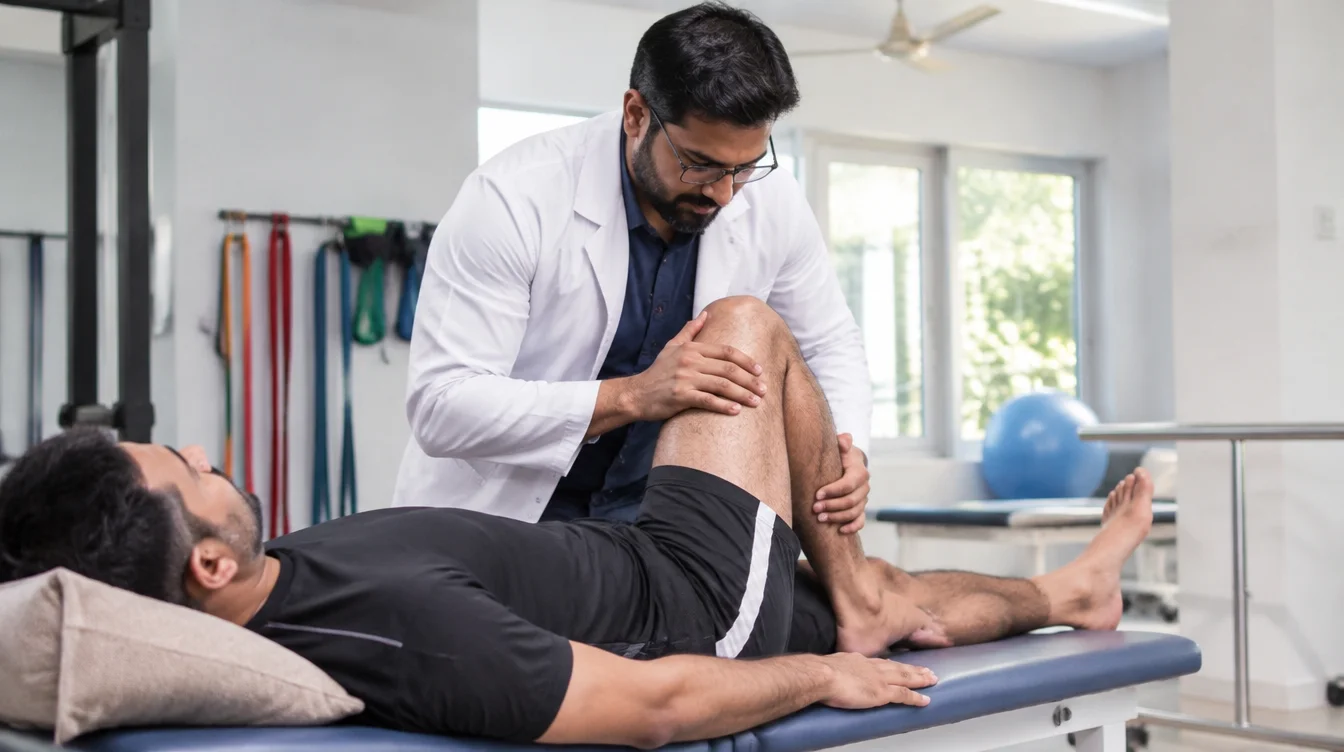
Every knee osteoarthritis physiotherapy treatment Rawalpindi plan at our clinic starts with a thorough assessment: how you walk, how your knee bends and straightens, which muscles have weakened, and which daily activities trigger your pain.
From there, a typical plan combines several elements:
- Manual therapy to improve joint mobility and reduce stiffness in the surrounding soft tissue
- Targeted strengthening for the quadriceps, hamstrings, and hip muscles that support the knee
- Gait and movement retraining to correct compensations that overload the joint
- Pain-relief modalities such as therapeutic ultrasound or taping for short-term symptom control
- Bracing or footwear advice where appropriate, to improve joint alignment
- A progressive home exercise program so improvements continue between sessions
We also compare notes with patients who’ve already been through similar journeys. If general knee pain is also part of your history, our guide to knee pain physiotherapy in Rawalpindi covers related non-surgical strategies that often overlap with osteoarthritis care.
Most patients come in for sessions two to three times a week initially, tapering down as symptoms improve and the home program takes over more of the workload. We reassess regularly, usually every few weeks, to confirm the plan is actually working rather than simply assuming it is. If progress stalls, we adjust the approach rather than repeating the same exercises indefinitely.
Exercises That Help Strengthen and Protect Your Knee
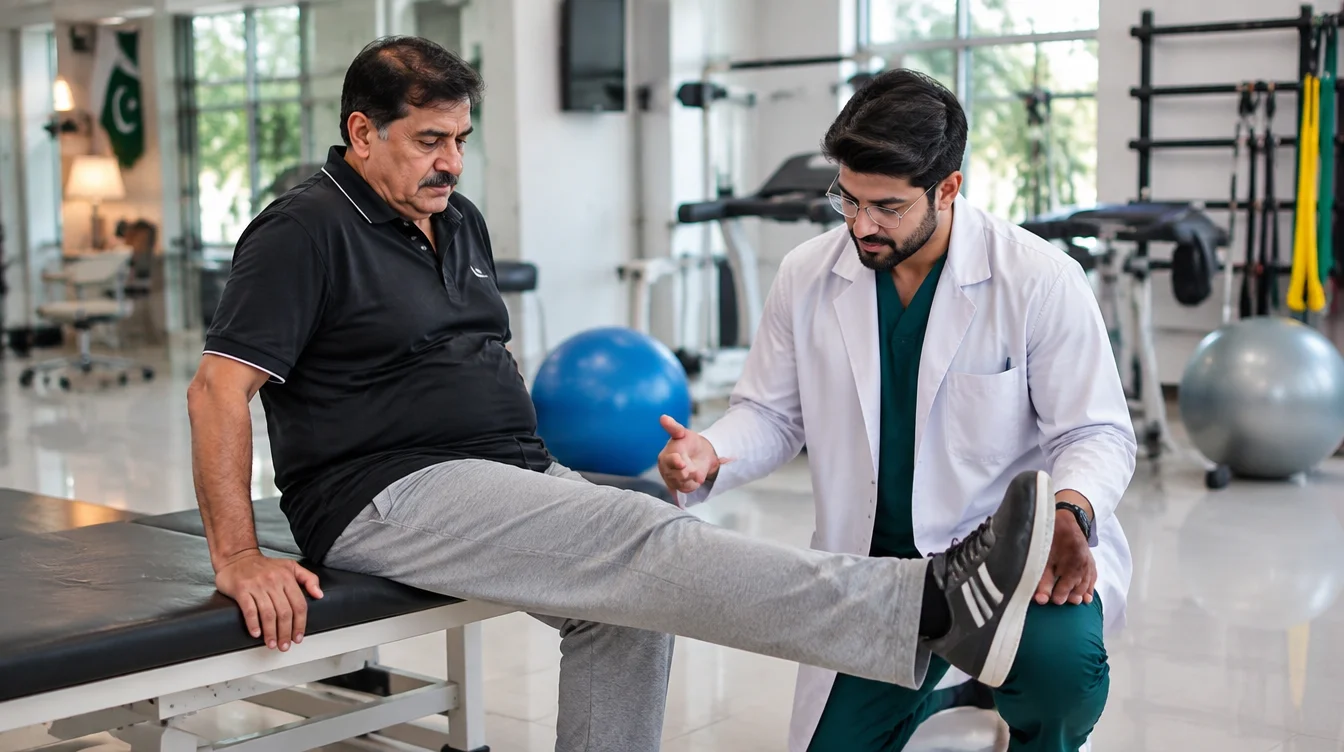
While a supervised program is always safer, these are the categories of exercise we commonly build into an osteoarthritis plan, introduced gradually and adjusted to your pain levels:
- Straight leg raises to activate the quadriceps without bending the painful joint
- Mini squats or wall slides within a pain-free range to build functional strength
- Step-ups on a low step to train the muscles used for stairs and daily movement
- Stationary cycling at low resistance, which is gentle on the joint while still building endurance
- Hip abductor and glute bridge exercises to improve overall leg alignment
- Gentle stretching of the hamstrings and calves to maintain range of motion
The biggest mistake we see patients make is either avoiding movement entirely out of fear, or pushing through sharp pain because they read that “exercise is good for arthritis.” Both extremes can slow your progress. The right dose of the right exercise, prescribed for your specific knee, is what actually moves the needle.
A good general rule: mild discomfort during exercise that settles within an hour afterward is usually acceptable, but sharp pain, pain that lingers for days, or noticeable swelling the next morning means the exercise, the load, or the number of repetitions needs to be adjusted. This is exactly the kind of judgment call a supervised program helps you make safely, rather than guessing from a generic workout found online.
Lifestyle Changes That Support Long-Term Knee Health
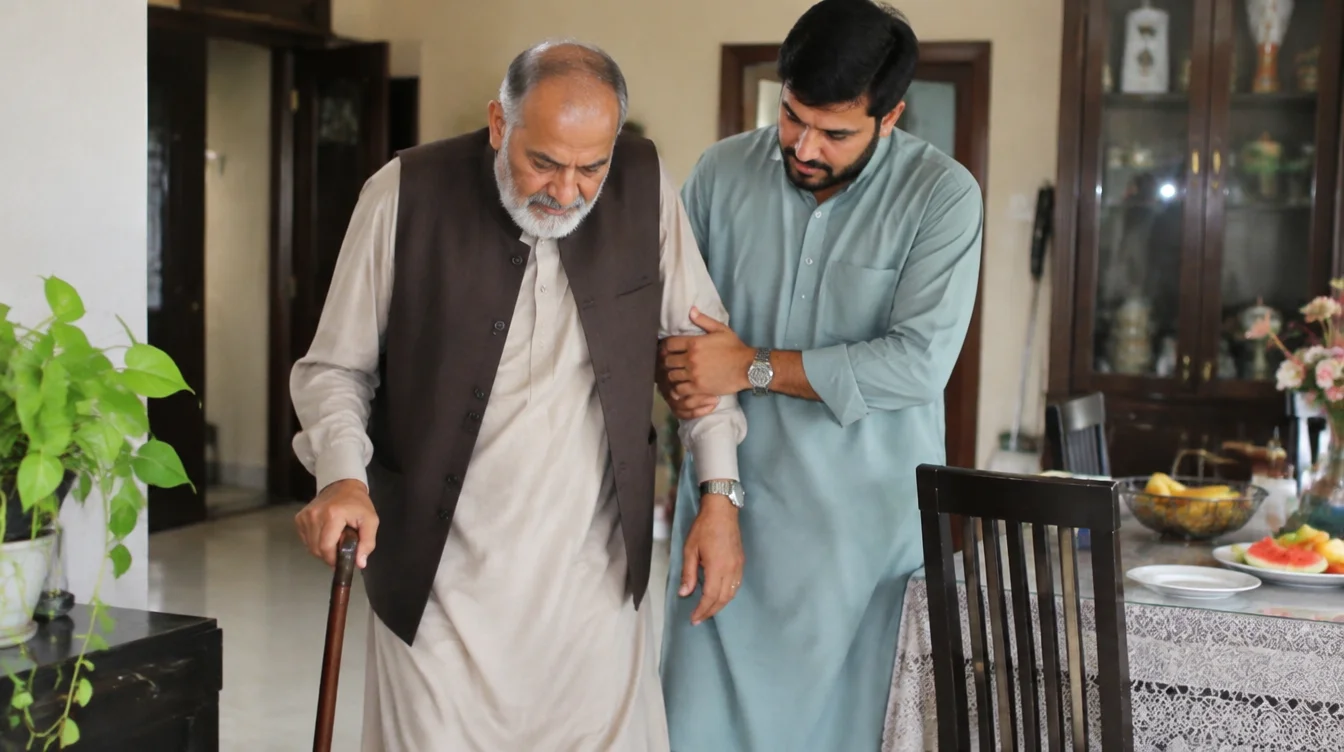
Physiotherapy works best alongside a few sustainable lifestyle habits:
- Gradual weight management, since every extra kilogram adds multiple kilograms of pressure through the knee with each step
- Supportive, well-cushioned footwear, especially if you spend long hours on your feet
- Pacing your activity rather than doing everything in one long session followed by days of rest
- Using stairs and low seating mindfully, or using a handrail when your knee is particularly irritated
- Staying consistent with your home exercise program even once pain improves, since strength fades quickly without maintenance
None of these habits need to be perfect overnight. Small, consistent changes compound over months and often matter as much as the in-clinic sessions themselves.
Diet also plays a supporting role. While no food “cures” osteoarthritis, an anti-inflammatory eating pattern rich in vegetables, fruit, oily fish, and healthy fats, alongside adequate hydration, can help manage overall inflammation levels in the body and support steady, sustainable weight loss where that’s a goal.
When Is Surgery Still Necessary?
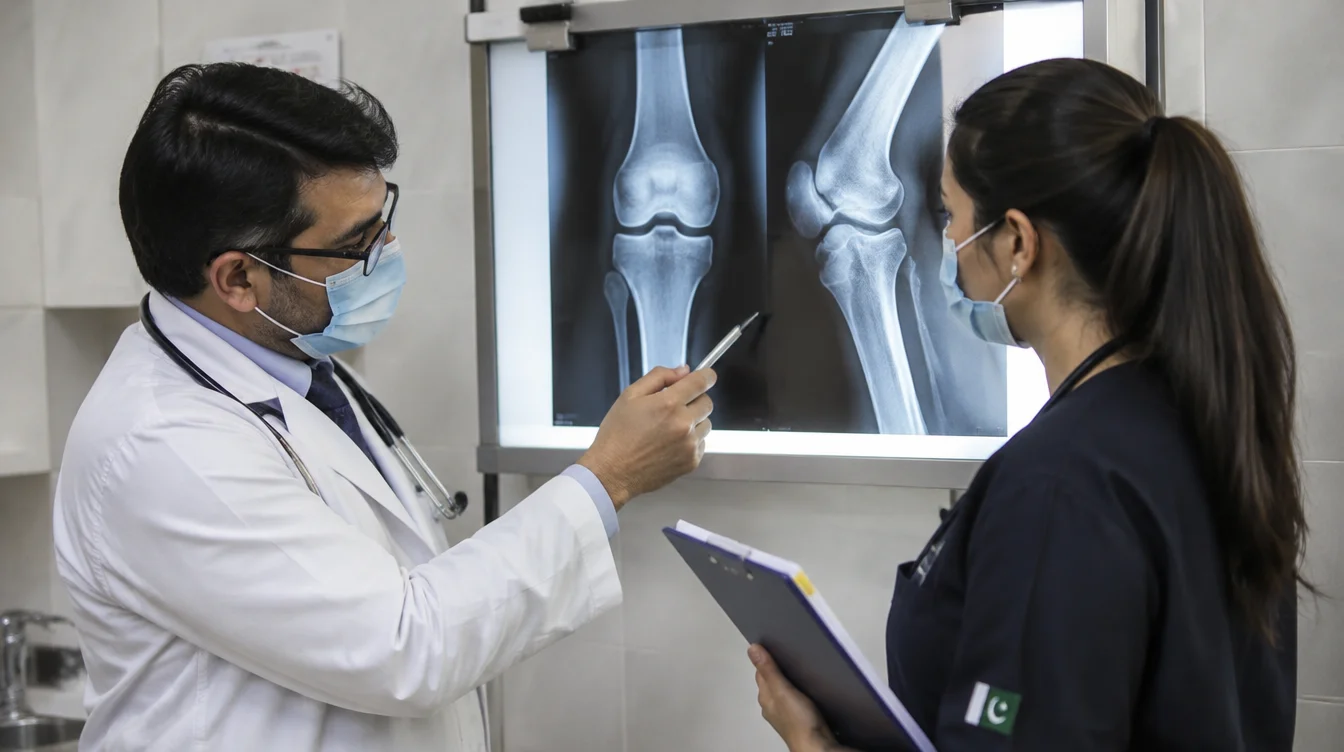
We want to be honest with you: physiotherapy helps the majority of knee osteoarthritis patients avoid or delay surgery, but it is not a guarantee for every single case.
Surgery, such as a partial or total knee replacement, tends to become the better option when the cartilage loss is severe (often visible as significant joint space narrowing on X-ray), when pain persists despite months of properly supervised physiotherapy and other conservative care, or when the joint is mechanically unstable enough to affect basic daily function like walking or sleeping.
Even when surgery is eventually needed, physiotherapy still plays an important role, both before the operation to strengthen the muscles around the joint, and afterward to restore movement and function. This is why we always recommend a proper in-person assessment rather than deciding on surgery, or ruling it out, based on guesswork alone.
As a general timeline, patients who commit to a structured, supervised physiotherapy program often notice reduced stiffness within two to three weeks, measurable strength gains by six to eight weeks, and a meaningful shift in daily function, less pain on stairs, easier mornings, more confidence walking, within two to three months. Results vary with the severity of the arthritis and how consistently the home program is followed, but this general progression is what we see most often in our Rawalpindi clinic.
Frequently Asked Questions About Knee Osteoarthritis

Can knee osteoarthritis be reversed with physiotherapy?
No, physiotherapy cannot regenerate lost cartilage. What it can do is significantly reduce the load and stress on the remaining cartilage by strengthening the surrounding muscles, which often leads to major pain reduction and improved function even though the joint itself hasn’t “healed” in a structural sense.
How many physiotherapy sessions are usually needed for knee osteoarthritis?
This varies by severity, but many patients notice meaningful improvement within 4 to 6 weeks of consistent, supervised sessions combined with home exercises. Long-term management, however, is an ongoing habit rather than a fixed number of visits.
Is walking good or bad for knee osteoarthritis?
In general, walking is beneficial and is often encouraged as part of treatment, since it maintains joint mobility and circulation. The key is pacing: shorter, more frequent walks on supportive footwear are usually better tolerated than one long walk that leaves the knee swollen the next day.
Can young people get knee osteoarthritis, or is it only for the elderly?
While it’s more common after age 50, we see knee osteoarthritis in younger adults too, particularly after a previous knee injury, following years of high-impact sport, or in people carrying significant extra body weight. Age is a risk factor, not a requirement.
Do I need an X-ray before starting physiotherapy for knee osteoarthritis?
Not necessarily. A skilled physiotherapist can identify osteoarthritis-related patterns through a clinical assessment and begin treatment immediately. An X-ray or MRI is useful for confirming severity or ruling out other causes of knee pain, but it is not always a prerequisite for starting a safe, effective exercise program.
If you’re dealing with ongoing knee pain and want a clear, honest assessment of your options, we’re here to help. You can also browse our physiotherapy FAQ or general clinic FAQs for more answers, or visit our homepage to learn more about our services.
Ready to take the first step toward a stronger, more stable knee? Book an in-person assessment with Dr. Iqra Kiran at Physio Rehab Solution in Rawalpindi. Call or WhatsApp us at +92 321 4287773 to schedule your appointment today.