When a stroke happens, every family in Rawalpindi asks the same urgent question: how much movement, speech, and independence can be regained? The honest answer is that stroke rehabilitation physiotherapy in Rawalpindi is the single biggest factor in how well a survivor recovers — more than the medication alone, and often more than the severity of the stroke itself. The brain’s ability to rewire healthy tissue to take over lost functions, a process called neuroplasticity, depends almost entirely on structured, repetitive, well-timed physiotherapy.
This guide is written for the families we see every week at Physio Rehab Solution — spouses, adult children, and caregivers who are suddenly responsible for a loved one’s recovery and have no roadmap for what comes next. We will walk through when rehabilitation should start, what each recovery phase actually looks like, the specific techniques we use, and how to support a stroke survivor safely at home in Rawalpindi or Islamabad.
Table of Contents
- Understanding Stroke and Why Rehabilitation Matters
- How Soon Should Stroke Rehabilitation Physiotherapy Start?
- The Stages of Stroke Recovery: What to Expect at Each Phase
- Core Physiotherapy Techniques Used in Stroke Rehabilitation
- Regaining Balance, Walking & Mobility After a Stroke
- Rebuilding Arm and Hand Function After Stroke
- Supporting a Stroke Survivor at Home: A Caregiver’s Guide
- Common Setbacks in Stroke Recovery and How to Overcome Them
- Frequently Asked Questions
Understanding Stroke and Why Rehabilitation Matters
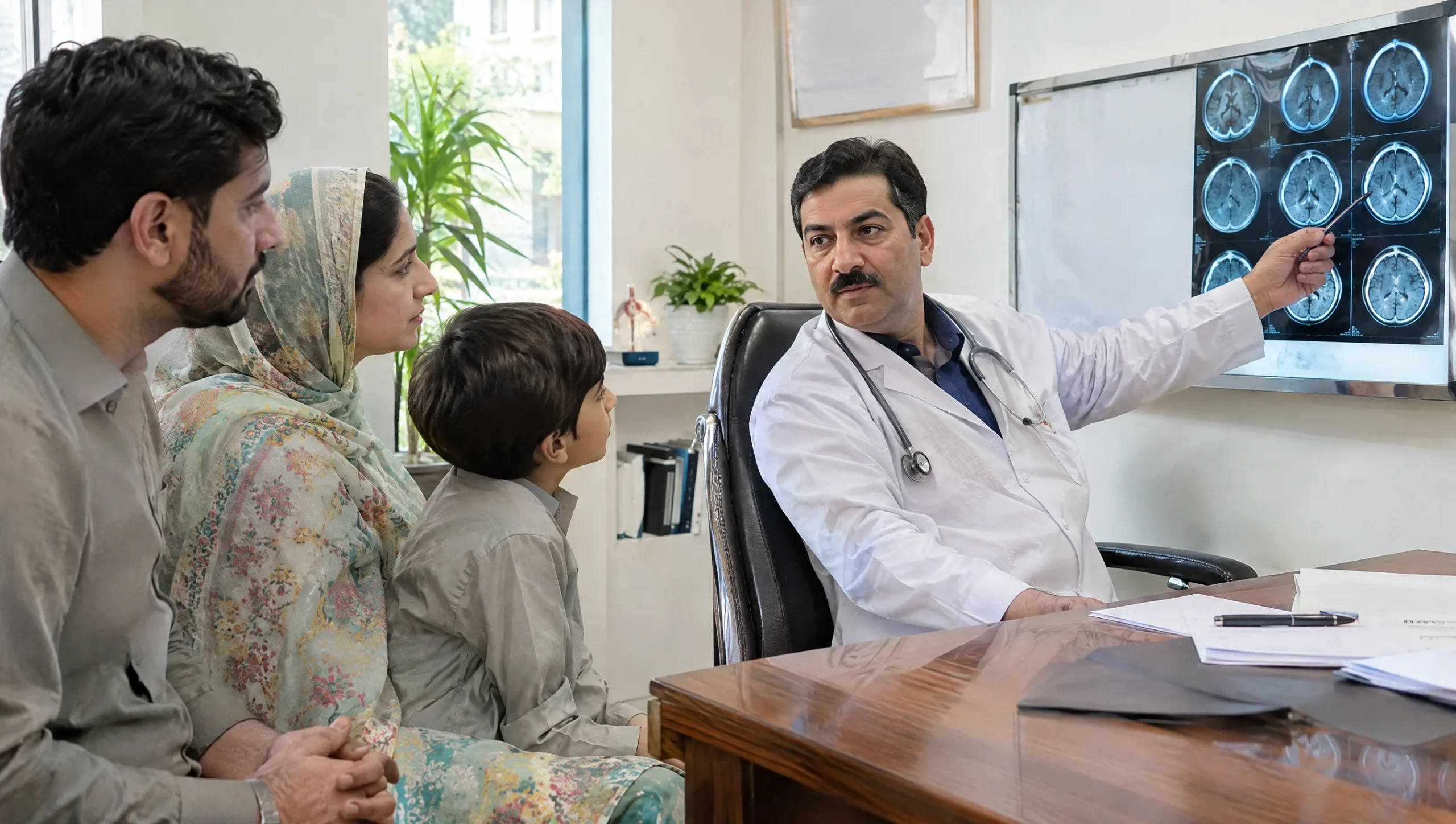
A stroke occurs when blood supply to part of the brain is cut off, either by a clot (ischemic stroke, the most common type) or a burst blood vessel (hemorrhagic stroke). Brain cells in the affected area begin to die within minutes, and depending on which region is involved, the result can be weakness or paralysis on one side of the body, slurred speech, difficulty swallowing, balance problems, or changes in memory and thinking.
Here is the part most families are not told clearly enough: the brain damage itself is largely permanent, but the brain is not finished adapting. Surrounding, undamaged brain tissue can gradually take over some of the lost functions through repeated, task-specific practice. This is neuroplasticity, and it is the entire scientific basis for physiotherapy after stroke. Without structured rehabilitation, a weak arm often stays weak and a shuffling gait often stays unsafe. With it, many patients walk independently again, return to self-feeding, and in a meaningful number of cases go back to light work or household roles.
Recovery is not identical for every patient. The size and location of the stroke, how quickly treatment was received, the patient’s age and general health, and — critically — how early and how consistently physiotherapy begins all shape the outcome. This is why we always tell families in Rawalpindi: don’t wait to “see how things go” before starting rehab. Time lost in the first weeks is very difficult to make up later.
How Soon Should Stroke Rehabilitation Physiotherapy Start?
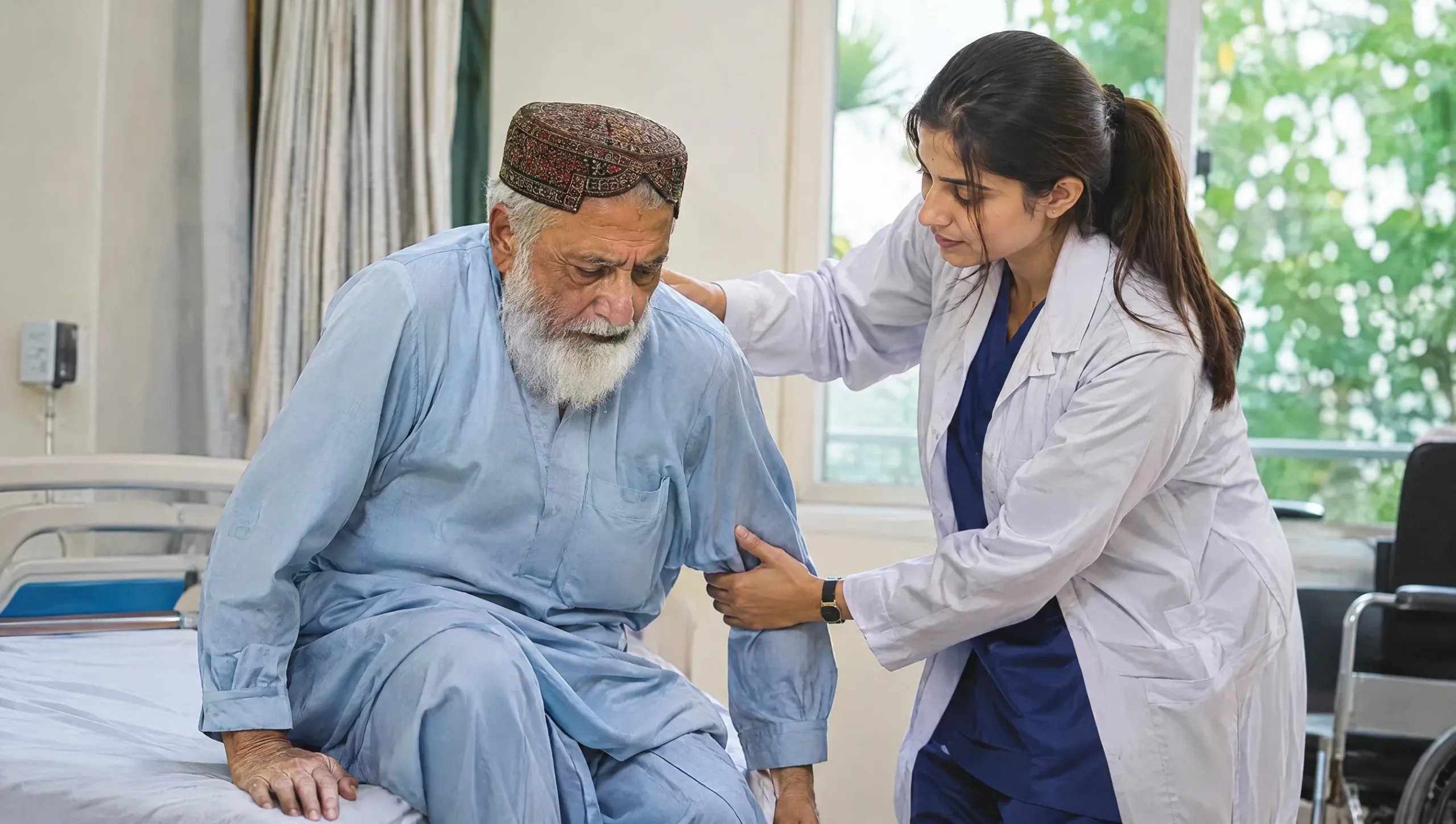
As soon as the patient is medically stable, usually within 24 to 48 hours of admission. International stroke guidelines, including those referenced by the Mayo Clinic’s stroke rehabilitation guidance, consistently point to early mobilization as a major predictor of better long-term function. Early does not mean aggressive — in the first days, physiotherapy might simply be gentle positioning in bed, assisted sitting, and passive movement of the affected limbs to prevent stiffness and pressure sores.
In our experience treating stroke patients across Rawalpindi and Islamabad, the families who search for “stroke rehabilitation physiotherapy” or arrange a home visit within the first one to two weeks after hospital discharge consistently see faster, more complete recovery than those who wait a month or more. The brain’s window for rapid neuroplastic change is widest in the first three to six months, though meaningful gains are still possible well beyond a year with the right program.
If your loved one has just been discharged and has not yet started physiotherapy, the single most useful thing you can do today is book an assessment — not wait for a “better time.”
The Stages of Stroke Recovery: What to Expect at Each Phase
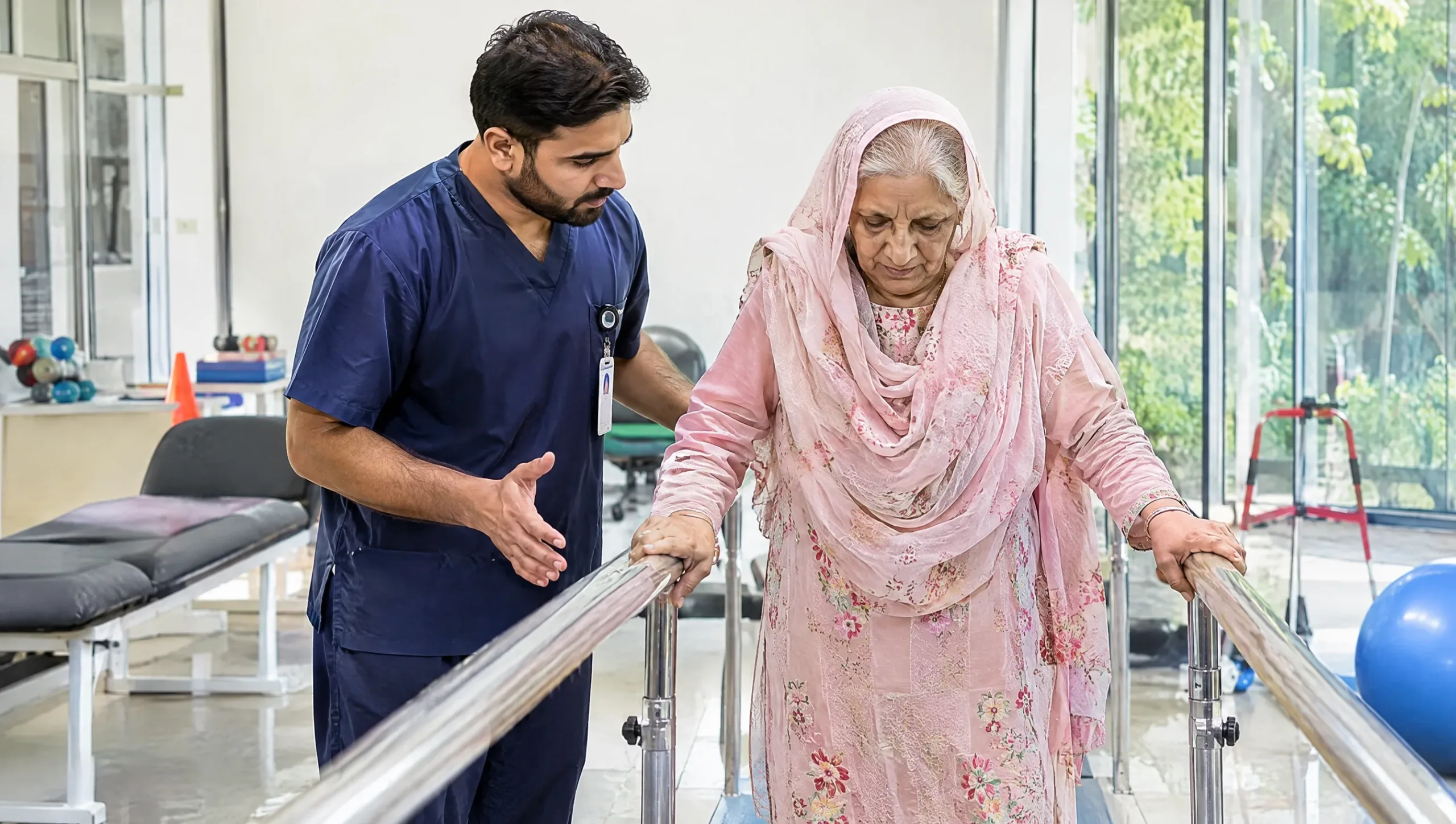
Understanding the general timeline helps families set realistic expectations and recognize genuine progress, even when it feels slow.
Acute phase (first 1–2 weeks): Focus is on medical stability, preventing complications like blood clots and pressure sores, gentle positioning, and early sitting or standing with support where safe.
Early sub-acute phase (2 weeks–3 months): This is usually the most active rehabilitation window. Patients work on regaining basic movement patterns, standing balance, assisted walking, and starting to use the affected arm again. Progress is often fastest here.
Late sub-acute phase (3–6 months): Gains continue but at a slower pace. Therapy shifts toward refining walking quality, hand dexterity, and tackling specific goals like climbing stairs or walking outdoors on uneven ground.
Chronic phase (6 months onward): Recovery does not stop here, despite what many patients are told. Progress is slower and requires more targeted, intensive practice, but continued physiotherapy — especially task-specific training — can still produce real functional gains years after a stroke.
Every patient moves through these phases at a different pace, and some skip stages entirely depending on severity. What matters most is that therapy is adjusted to the current phase rather than applying one generic plan throughout.
Core Physiotherapy Techniques Used in Stroke Rehabilitation
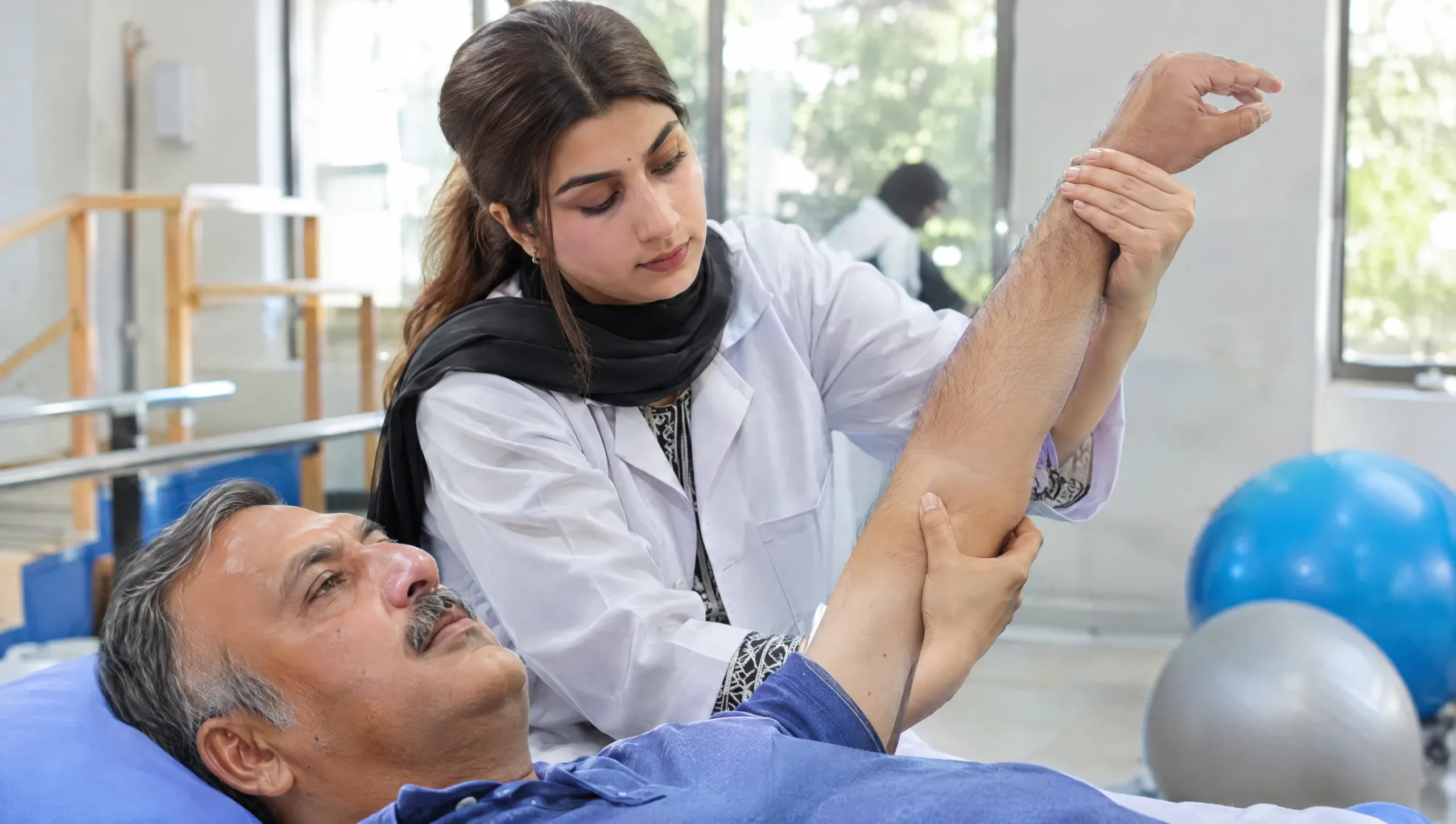
Stroke rehabilitation physiotherapy is not a single exercise routine — it is a combination of specific, evidence-based techniques matched to the patient’s stage and deficits.
Task-specific training: Practicing the actual real-world movement the patient needs — standing from a chair, reaching for a cup, climbing a step — rather than generic exercises, because the brain relearns tasks it is directly practicing.
Neurodevelopmental techniques (NDT/Bobath approach): Hands-on guidance that normalizes abnormal muscle tone (either too stiff or too floppy) and encourages correct movement patterns on the affected side.
Constraint-induced movement therapy: For patients who have some movement in an affected arm but default to using the stronger side, briefly restricting the unaffected arm forces the brain to re-engage the weaker one.
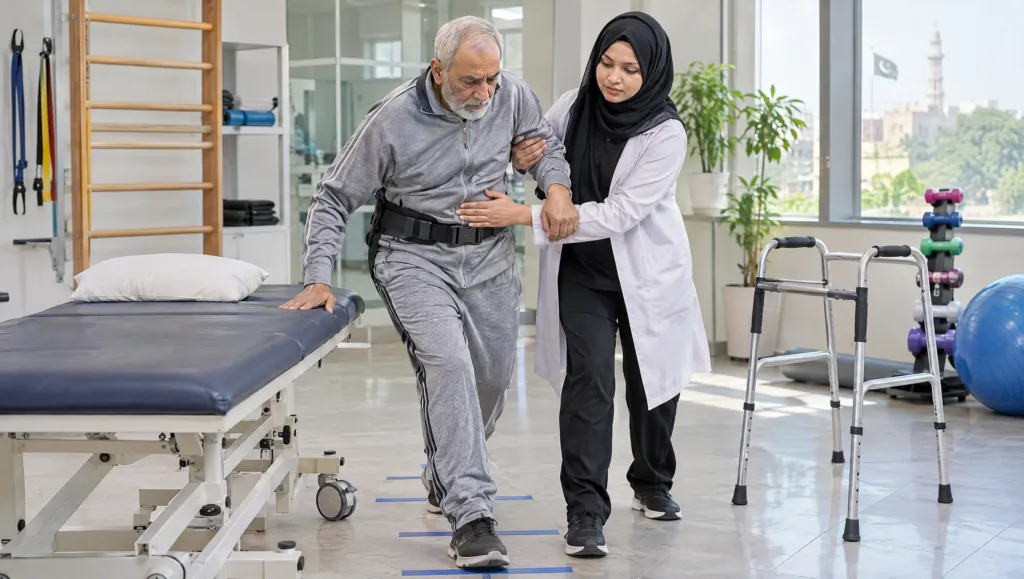
Gait training with support: Using parallel bars, a walker, or a therapist’s guided support to rebuild a safe, efficient walking pattern, progressing gradually toward independent walking.
Electrical stimulation and biofeedback: Light electrical stimulation can help “wake up” a weak muscle and give the patient visual or tactile feedback to re-learn muscle activation.
Balance and proprioception training: Structured exercises that retrain the brain’s sense of body position in space, essential for preventing falls (we cover this in depth in our guide to balance physiotherapy and fall prevention for seniors).
A good physiotherapist blends these approaches and adjusts them weekly based on measurable progress, not a fixed template.
Regaining Balance, Walking & Mobility After a Stroke
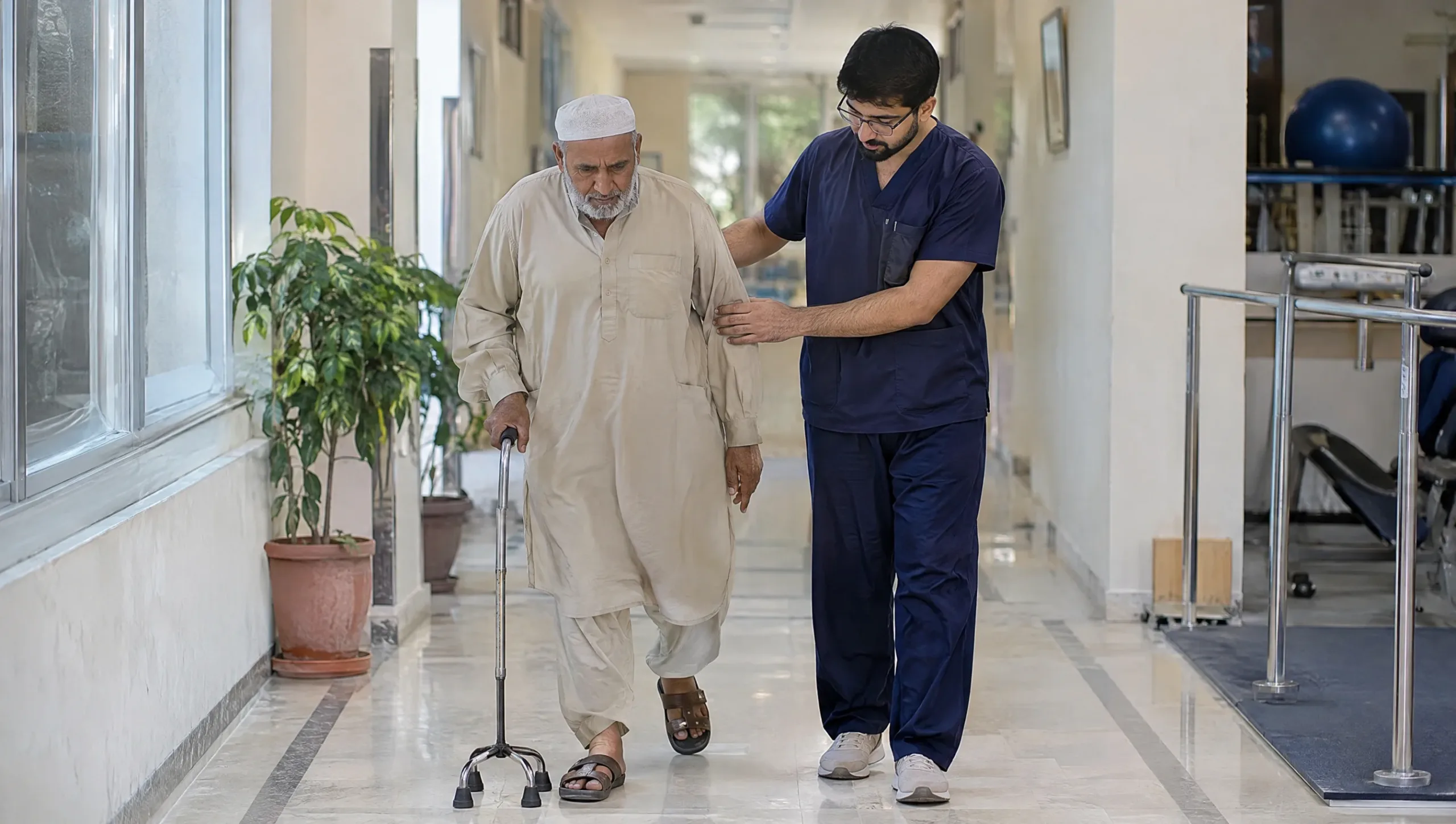
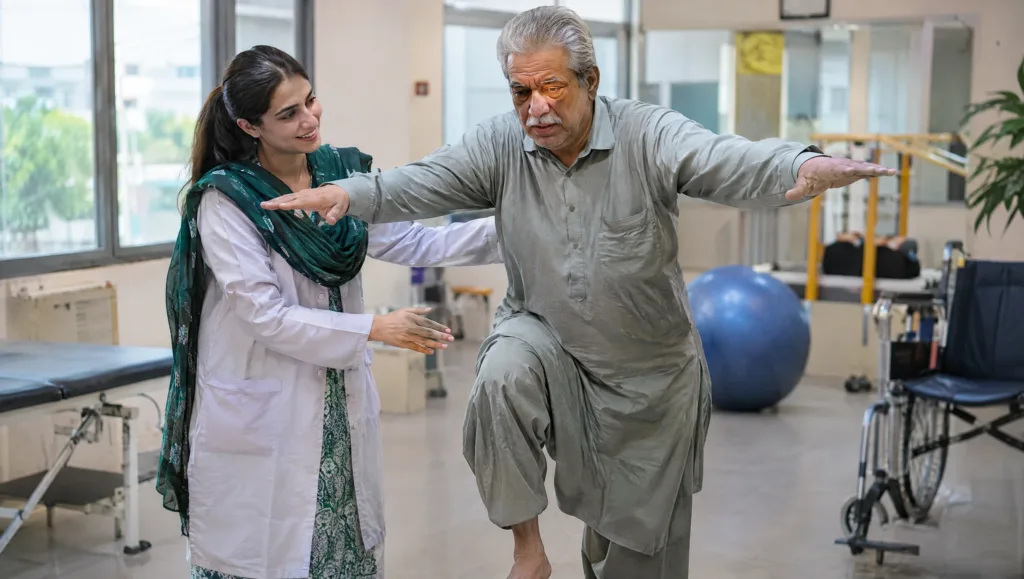
Falls are one of the most common and most dangerous complications after a stroke, often undoing weeks of progress through a fracture or head injury. Balance training therefore starts early and continues throughout rehabilitation, even after a patient is walking independently.
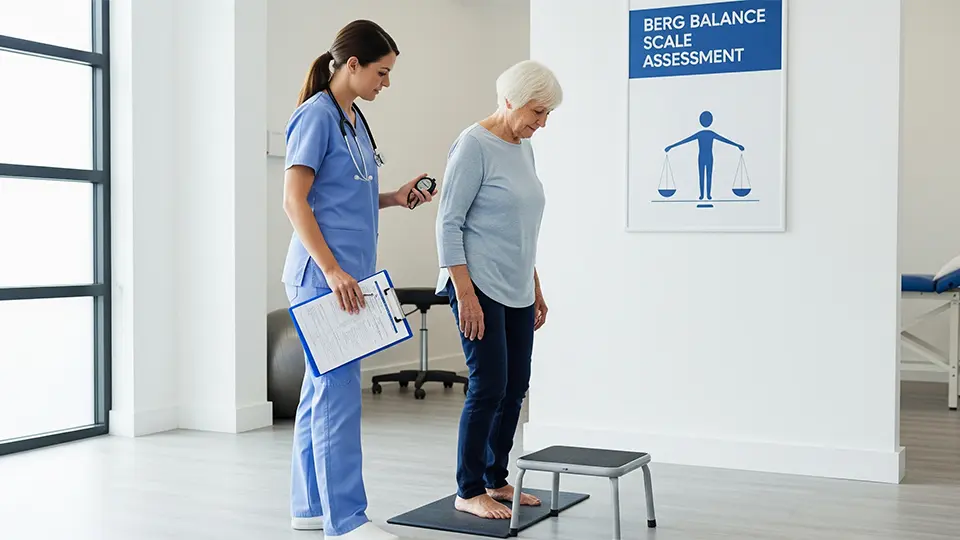
We typically progress patients through: supported sitting balance, supported standing balance, weight-shifting exercises, standing on varied surfaces, and finally dynamic balance tasks like turning, reaching, and stepping over obstacles. Objective scales such as the Berg Balance Scale are useful here, giving families a clear, numeric way to track real progress over time rather than relying on how a session “felt.”
Walking retraining (gait training) follows a similar staged approach — from parallel bars, to a four-point cane or walker, to unsupported walking indoors, and eventually walking outdoors on Rawalpindi’s uneven pavements and stairs, which require far more balance control than a flat clinic floor.
Patients and families often get discouraged by a shuffling or uneven gait early on. This is a normal, expected stage, not a sign that recovery has stalled — gait quality typically improves significantly with consistent practice over 8 to 12 weeks.
Rebuilding Arm and Hand Function After Stroke
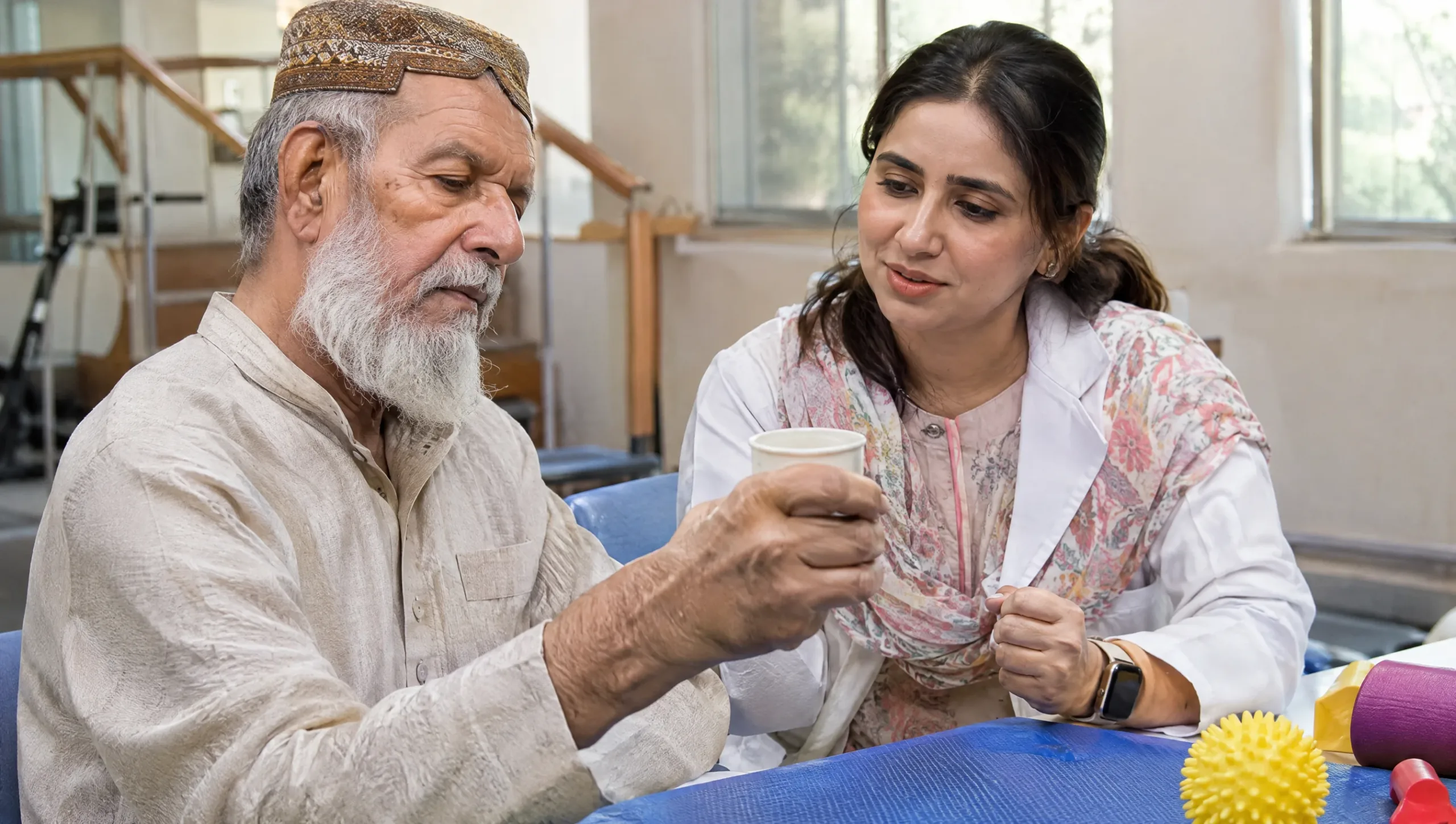
The arm and hand are often the slowest to recover after a stroke, and many patients are told, incorrectly, that if function hasn’t returned within six months it never will. In reality, with focused, high-repetition practice, meaningful hand and arm gains are possible well beyond that window.
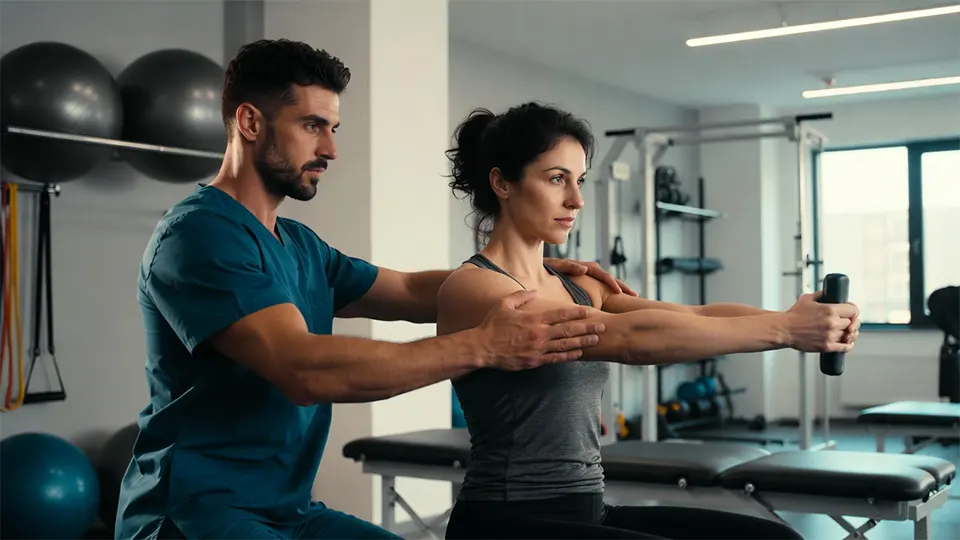
Early hand rehabilitation usually starts with passive range-of-motion exercises to prevent stiffness and shoulder pain (a very common and painful complication called hemiplegic shoulder, which is far easier to prevent than to treat). As some voluntary movement returns, therapy shifts to active-assisted exercises, grip and pinch training, and task-based practice like buttoning a shirt, holding a cup, or using a spoon.
For patients with only slight movement, mirror therapy and mental imagery exercises — where the patient watches their stronger hand in a mirror or mentally rehearses a movement — can help “prime” the brain’s motor pathways before real movement is possible. These techniques feel unusual to families at first, but they are well supported in stroke rehabilitation research and we use them routinely with our Rawalpindi patients who have more severe arm weakness.
Supporting a Stroke Survivor at Home: A Caregiver’s Guide
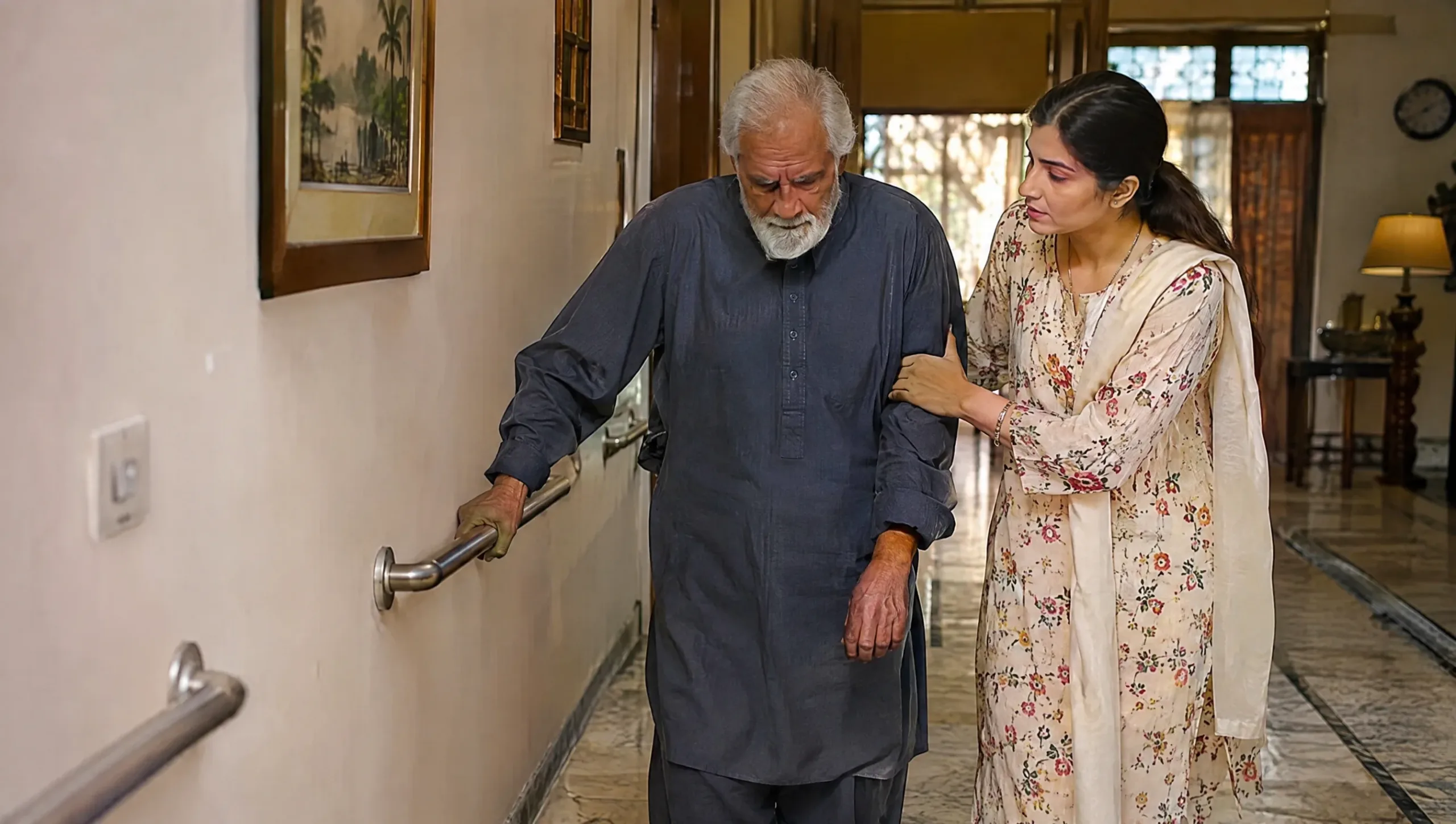
What happens between therapy sessions matters as much as the sessions themselves. A few practical steps make a real difference:
Make the home safer: Remove loose rugs, add grab bars near the toilet and shower, improve lighting in hallways, and keep frequently used items within easy reach on the unaffected side.
Encourage the affected side, don’t do everything for them: It is tempting to help with every task to save time, but this quietly discourages the brain from re-engaging the weaker arm or leg. Give extra time and let the patient attempt tasks with supervision instead.
Practice little and often: Short, correct practice sessions several times a day — five to ten minutes of hand exercises, a supervised short walk — build skill faster than one long session.
Watch mood as closely as movement: Post-stroke depression is extremely common and can quietly stall physical progress by reducing motivation and participation in therapy. If you notice persistent low mood, withdrawal, or loss of interest in rehabilitation, mention it to your treating team rather than assuming it will pass.
Keep a simple recovery log: Note down what the patient could and couldn’t do each week. It is the clearest way to see progress that otherwise feels invisible day to day.
If mobility makes clinic visits difficult, a home-based physiotherapy program can be arranged so sessions happen safely in the patient’s own environment in Rawalpindi.
Common Setbacks in Stroke Recovery and How to Overcome Them
Plateaus: Progress rarely moves in a straight line. A plateau often means the current exercises need to be made harder or more varied, not that recovery has ended. A good physiotherapist will reassess and adjust the program rather than repeating the same routine indefinitely.
Spasticity (muscle stiffness/tightness): As some patients recover, affected muscles become stiff and resistant to movement. Stretching, positioning, and in some cases medical treatment can manage this, and ignoring it typically makes the stiffness worse over time.
Shoulder pain: Very common on the affected side due to muscle weakness around the joint. Proper arm support and positioning from the earliest days of rehabilitation prevents most cases.
Fatigue: Post-stroke fatigue is physical and mental, not simple tiredness, and pushing through it aggressively usually backfires. Pacing therapy sessions with rest breaks produces better long-term results than forcing longer sessions.
Fear of falling: Understandable after one close call, but excessive fear leads to reduced activity, which weakens muscles further and increases real fall risk. Supervised, confidence-building balance practice is the way out of this cycle, not avoidance.
If you notice any of these patterns, it’s worth discussing them directly with your physiotherapist rather than waiting for the next scheduled review — small adjustments early often prevent bigger setbacks later. As with any neurological condition, persistent or worsening symptoms should always be assessed in person by a qualified professional rather than managed from general information alone.
Frequently Asked Questions
How long does physiotherapy take to show results after a stroke?
Most patients see noticeable improvement in basic movement and sitting balance within 2 to 4 weeks of starting consistent therapy, with more significant gains in walking and arm function building over 3 to 6 months. Recovery can continue, more slowly, well beyond the first year.
Can a stroke patient fully recover with physiotherapy alone?
Many patients regain a high level of independence with physiotherapy, especially when it starts early and continues consistently, but “full recovery” to the exact pre-stroke state is not guaranteed and depends heavily on stroke severity and the areas of the brain affected. Physiotherapy maximizes the recovery that is biologically possible for that individual.
What is the best time of day for stroke rehabilitation exercises at home?
Mid-morning, after the patient has rested and eaten, generally works best, since fatigue tends to build through the day. Splitting exercises into two or three shorter sessions, rather than one long one, usually produces better focus and effort.
Does a patient’s age affect how well they recover with physiotherapy?
Age can influence the pace of recovery, but it is far less important than how early rehabilitation starts and how consistently it is followed. We regularly see older patients in Rawalpindi make strong functional gains when therapy begins promptly and is practiced daily at home.
If you are caring for a stroke survivor in Rawalpindi or Islamabad and want a clear, honest assessment of what recovery is realistically possible, our team at Physio Rehab Solution can help you build the right plan from day one. For more general questions, our physiotherapy FAQ and clinic FAQ page cover additional common concerns.
Book a stroke rehabilitation physiotherapy assessment today. Call or WhatsApp us at +92 321 4287773 to schedule a consultation at our Rawalpindi clinic or arrange a home visit.