
If one of your fingers has started catching, popping, or locking in a bent position before you can force it straight again, you may be dealing with trigger finger. The right trigger finger physiotherapy treatment, started early, can often resolve the problem without ever needing an operation. In this guide, Dr. Iqra Kiran, DPT, explains why trigger finger happens, how we diagnose it at Physio Rehab Solution in Rawalpindi, and exactly which splints, stretches, and hands-on techniques help an irritated tendon glide smoothly through its pulley again.
Table of Contents
- What Is Trigger Finger (Stenosing Tenosynovitis)?
- Why Does Trigger Finger Happen? Causes and Risk Factors
- Signs and Symptoms: How to Know If You Have Trigger Finger
- How We Diagnose Trigger Finger at Physio Rehab Solution
- Trigger Finger Physiotherapy Treatment: What Actually Works
- Splinting, Stretches, and Home Exercises You Can Start Today
- When Does Trigger Finger Need Surgery? Non-Surgical vs Surgical Options
- Recovery Timeline: What to Expect Week by Week
- Frequently Asked Questions
What Is Trigger Finger (Stenosing Tenosynovitis)?
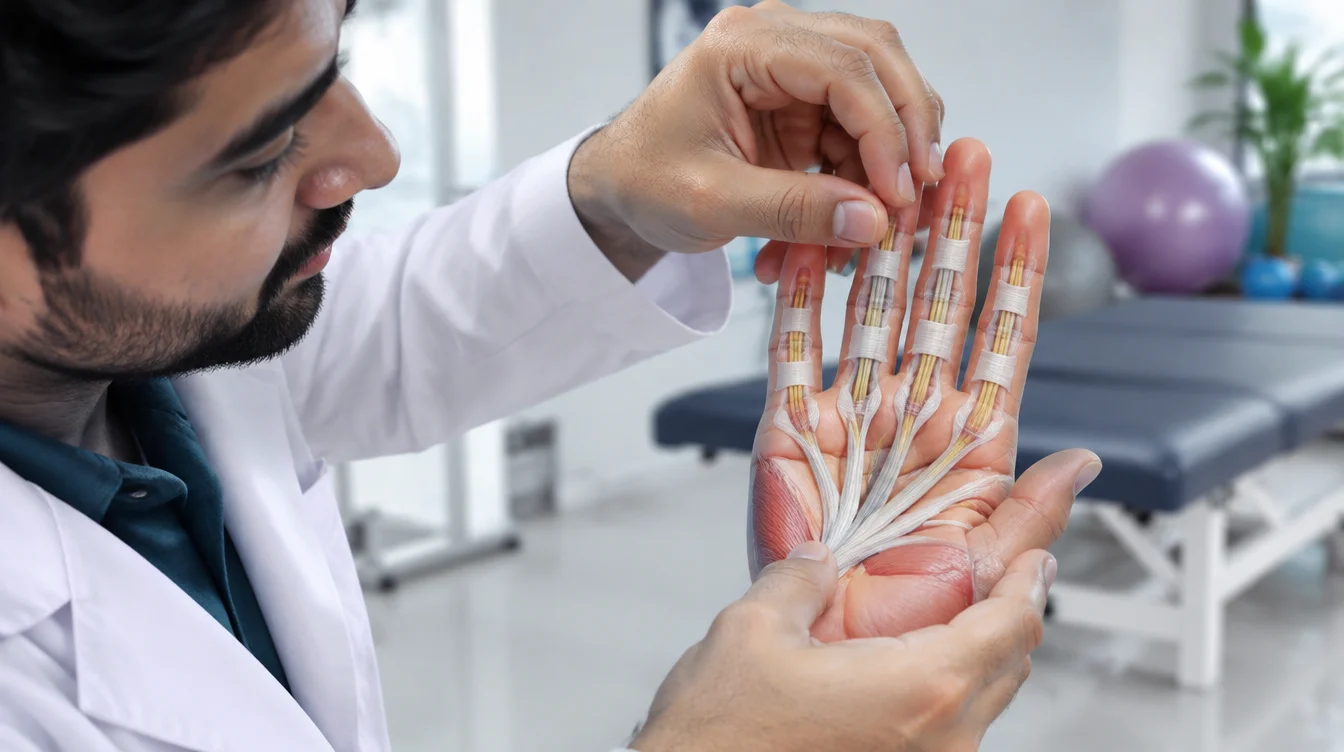
Each flexor tendon that bends your fingers runs through a narrow tunnel of fibrous bands called pulleys, which hold the tendon close to the bone so it can transmit force efficiently when you grip. The first and most important of these, the A1 pulley, sits right at the base of the finger in the palm.
When the tendon or its sheath becomes irritated and swells, or a small nodule forms on the tendon itself, it no longer slides smoothly under the A1 pulley. The tendon catches, then releases with a snap, giving the finger its characteristic “trigger” movement, a sensation similar to pulling and releasing a trigger on a gun, which is where the condition gets its name.
The medical term for this is stenosing tenosynovitis, literally meaning narrowing (stenosing) inflammation of the tendon sheath (tenosynovitis). It most commonly affects the ring finger and thumb, where it is called trigger thumb, though any finger can be involved, and more than one finger or both hands can be affected at the same time.
Why Does Trigger Finger Happen? Causes and Risk Factors
Trigger finger is usually linked to repeated, forceful gripping that places ongoing strain on the flexor tendons and the A1 pulley. We see it often in tailors, cooks, and craftsmen who grip tools or fabric for hours, as well as in farmers, assembly-line workers, and musicians who repeat the same hand motion all day.
It is more common in women than men, and most often appears between the ages of 40 and 60. Certain health conditions raise the risk significantly, including diabetes, rheumatoid arthritis, gout, and an underactive thyroid. People who already have carpal tunnel syndrome are also more likely to develop trigger finger, since both conditions involve irritation of structures that pass through tight spaces in the hand and wrist.
Diabetic patients deserve a special note here: trigger finger tends to be more stubborn and more likely to affect multiple fingers in people with diabetes, and it often responds less completely to splinting alone, so we usually recommend starting treatment sooner rather than waiting to see if it resolves on its own.
Interestingly, trigger finger is less strongly linked to light computer or phone use than many people assume. It is the sustained, forceful grip, think of clutching a steering wheel, kneading dough, or squeezing pliers, that irritates the pulley far more than typing does. If your work or daily routine in Rawalpindi or Islamabad involves this kind of repeated heavy gripping, building in short breaks and varying your hand position throughout the day is one of the simplest ways to lower your risk.

Signs and Symptoms: How to Know If You Have Trigger Finger
The symptoms usually build up gradually rather than appearing overnight. Most people first notice stiffness in one finger that is worse first thing in the morning and eases somewhat as the hand warms up and moves through the day.
As it progresses, you may feel or even hear a popping or clicking sensation as you bend and straighten the finger, along with tenderness or a small firm lump at the base of the finger on the palm side, directly over the A1 pulley. This nodule is often the clearest physical sign a physiotherapist looks for.
In more advanced cases, the finger can actually catch and lock in a bent position, and you may need to use your other hand to gently pry it straight. Occasionally the finger locks in extension instead. Swelling, reduced grip strength, and a general reluctance to use the affected hand for fine tasks like buttoning a shirt or holding a pen often follow.
How We Diagnose Trigger Finger at Physio Rehab Solution
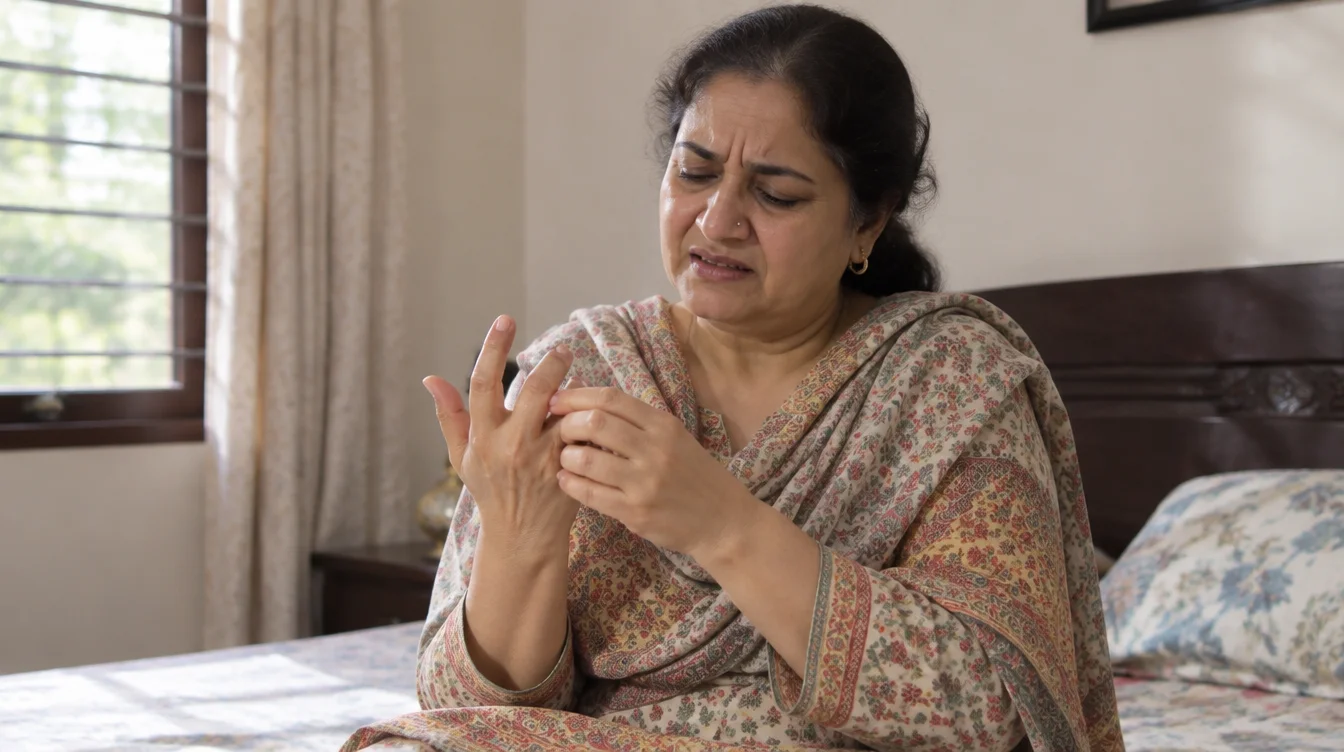
Trigger finger is almost always diagnosed through a hands-on clinical examination rather than X-rays or MRI. During your first visit, Dr. Iqra Kiran will ask about when the catching started, which activities make it worse, and whether you have any history of diabetes or joint conditions.
She will then gently palpate the palm at the base of the affected finger to feel for the characteristic nodule, and ask you to actively bend and straighten the finger several times to observe and feel the catching or locking. Severity is graded from mild triggering you can still control, up to a finger that is completely locked and needs to be passively straightened.
This assessment also helps rule out other causes of a stiff or bent finger, such as Dupuytren’s contracture or joint arthritis, which need a different treatment approach. If your finger is locked, markedly swollen, feverish, or you have numbness alongside the catching, we recommend an in-person assessment promptly rather than waiting, since these features occasionally point to something other than straightforward trigger finger.

Trigger Finger Physiotherapy Treatment: What Actually Works
For most mild-to-moderate cases, trigger finger physiotherapy treatment is the first and most effective line of defense, and it is far less invasive than surgery. The goal of treatment is simple: reduce the swelling around the tendon sheath, and restore smooth, pain-free gliding of the tendon through the A1 pulley.
At Physio Rehab Solution, this typically combines a custom or off-the-shelf splint that holds the base joint of the finger still, specific tendon-gliding exercises, gentle soft-tissue work over the nodule, and practical changes to how you grip tools, utensils, or your phone during the day. According to the Mayo Clinic, rest, splinting, and anti-inflammatory measures are the standard first step before more invasive options are considered, and research on splinting protocols generally supports this conservative approach for new or mild cases.
In some cases, your physiotherapist may coordinate with your physician about a corticosteroid injection into the tendon sheath, which can be combined with physiotherapy to speed up relief, particularly if swelling is significant. The injection itself is administered by a doctor, but the splinting and exercise program that follows it is what helps keep the improvement lasting.
Splinting, Stretches, and Home Exercises You Can Start Today
Consistency matters more than intensity with trigger finger, so the exercises we prescribe are gentle and meant to be done several times a day rather than as one long session.
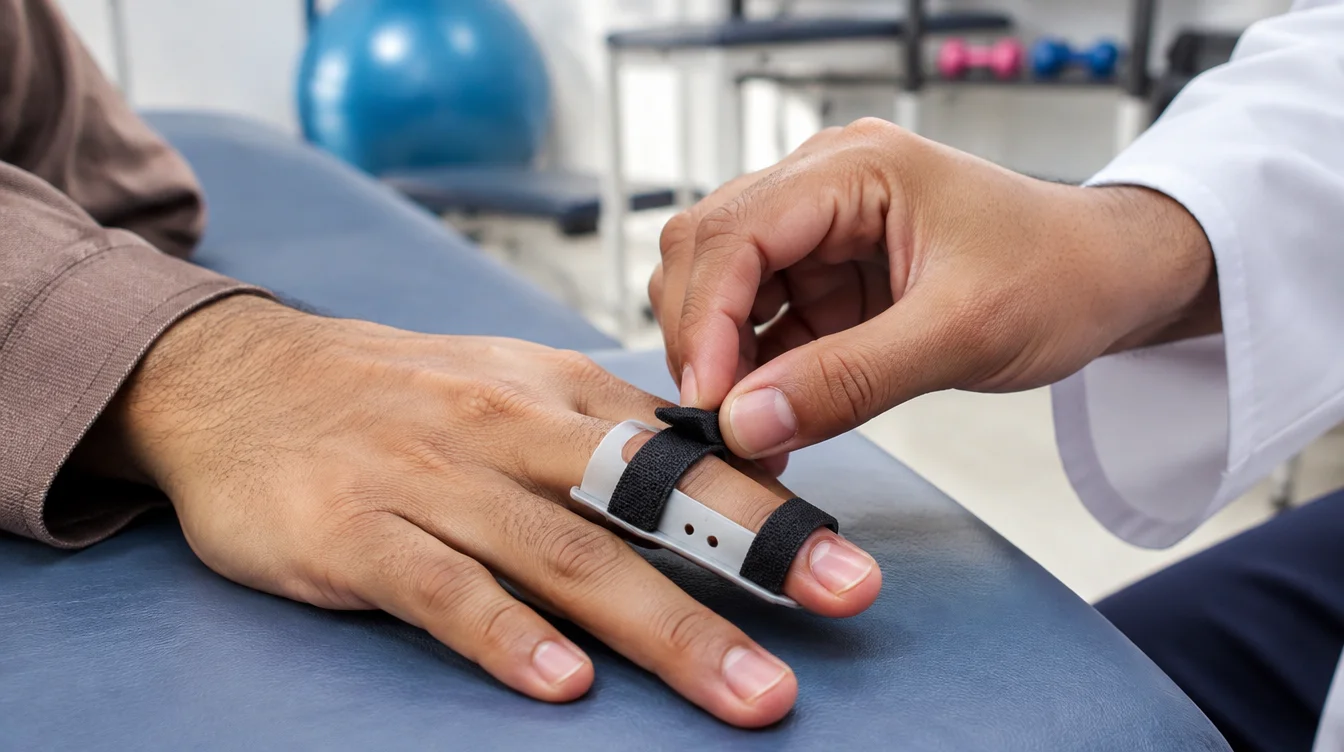
A typical splint holds the knuckle at the base of the finger, the MCP joint, in a slightly bent or straight position, usually worn at night and during quiet periods for six to eight weeks, while allowing the fingertip joints to move freely. This rests the A1 pulley without stiffening the whole hand.
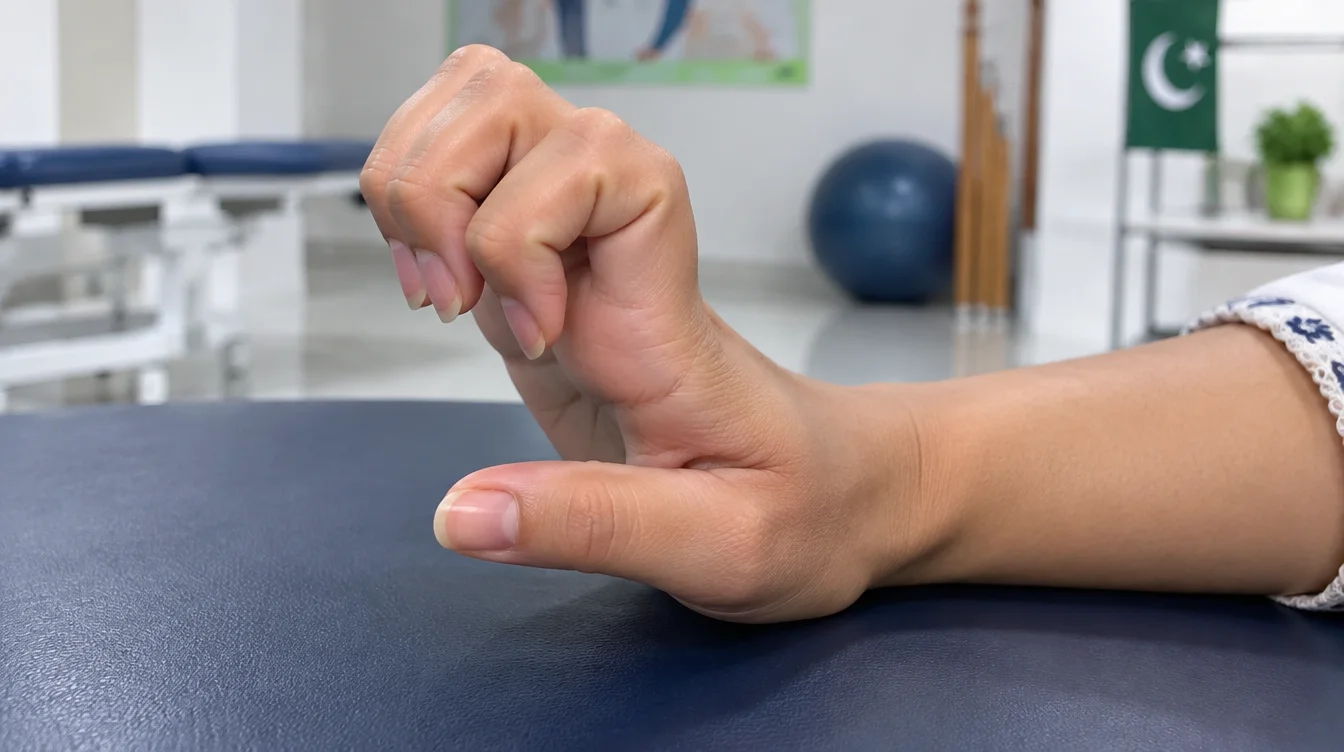
Tendon gliding exercises are the other pillar of home treatment. A simple sequence is to move through a hook fist, bending only the fingertip and middle joints, a straight fist, bending only at the knuckles, and a full fist, bending all the joints, holding each shape for a few seconds and repeating ten times, two to three times a day. Gently massaging the nodule at the base of the finger with light pressure, and soaking the hand in warm water before activity, can also ease the morning stiffness many people notice first.
If any exercise sharply increases pain, swelling, or the locking itself, stop and have your program reviewed rather than pushing through it, since a tailored plan from a physiotherapist works far better than a generic one.
Simple ergonomic adjustments go a long way alongside the splint and exercises. Wrapping the handles of frequently used kitchen tools, pens, or work equipment in soft foam padding reduces the pressure concentrated at the base of the finger, and switching hands periodically for repetitive tasks gives the irritated pulley a genuine break. Applying a cold pack for ten minutes after a flare-up of swelling, and gentle warmth before exercises, is a combination many patients find helpful alongside their prescribed program.
When Does Trigger Finger Need Surgery? Non-Surgical vs Surgical Options
The reassuring reality is that most people with trigger finger never need surgery. Mild and moderate cases caught early typically respond well to splinting, physiotherapy exercises, activity changes, and sometimes an injection, often within six to twelve weeks.
Surgery is usually reserved for fingers that remain locked despite several months of consistent conservative treatment, cases where the finger is fixed in a bent position and cannot be straightened at all, or situations where symptoms keep returning after repeated injections. This mirrors the approach we take with other hand and shoulder conditions, where treatment is generally tried before surgery whenever it is reasonably likely to work.
When surgery is necessary, it is usually a quick outpatient procedure called an A1 pulley release, done either percutaneously with a needle or through a small open incision, which widens the tunnel so the tendon can glide freely again. Recovery from the surgery itself is often faster than people expect, but physiotherapy still plays an important role afterward in restoring full movement and grip strength.

Recovery Timeline: What to Expect Week by Week
Every hand responds a little differently, but most people who commit to splinting and exercises follow a fairly predictable pattern.
In the first one to two weeks, the goal is simply adapting to the splint and reducing irritation, so expect mild, gradual easing of morning stiffness rather than a dramatic change. By three to six weeks, consistent tendon gliding and splint use usually bring noticeably less catching and a smoother range of motion, especially if the triggering was mild to begin with.
By six to eight weeks, many mild-to-moderate cases have resolved significantly or fully, and we begin weaning off the splint and focusing on strengthening and returning to normal grip-intensive activities. If little to no improvement is seen after eight to twelve weeks of a properly followed program, that is usually the point where we discuss an injection or a surgical opinion rather than continuing the same plan indefinitely.
Because every case is different, this is a general guide rather than a promise, and an in-person assessment lets us tell you where you realistically sit on that timeline.

Frequently Asked Questions
Below are answers to the questions patients most often ask us about trigger finger specifically. For broader questions about physiotherapy care at our clinic, see our general FAQ page and our expert-answered physiotherapy FAQ.
How long does trigger finger take to heal with physiotherapy?
Many mild-to-moderate cases improve within six to eight weeks of consistent splinting and tendon-gliding exercises, though stiffer or longer-standing cases can take three months or more to fully settle.
Can trigger finger come back after treatment?
Yes, especially if the repetitive gripping activity that caused it continues unchanged. Sticking with activity modification and occasional maintenance stretches after your symptoms resolve lowers the chance of it returning.
Is trigger finger the same as Dupuytren’s contracture?
No. Trigger finger affects the flexor tendon and its pulley, causing catching or locking during movement, while Dupuytren’s contracture is a thickening of tissue under the skin of the palm that gradually pulls a finger into a bent position without any catching. A physiotherapist can tell the two apart on examination.
Can I keep working or using my hands during treatment?
Usually yes, with some temporary changes. We typically recommend padded grips, shorter gripping sessions, and wearing your splint during rest or sleep, while a physiotherapist adjusts your specific work or hobby tasks to protect the healing tendon.

If a finger has started catching or locking on you, the sooner you address it, the easier it usually is to treat without surgery. Book an in-person assessment with Dr. Iqra Kiran at Physio Rehab Solution in Rawalpindi and get a hand therapy plan built around your specific grip, your job, and your finger. Call or WhatsApp +923214287773 to schedule your appointment today.