Sciatica during pregnancy is one of the most common reasons expecting mothers across Rawalpindi and Islamabad come to see us, usually somewhere between the second and third trimester. The sharp, shooting pain that travels from the lower back through the hip and down the leg can make it hard to walk, sit at a desk, or even sleep at night. The reassuring part is that targeted, pregnancy-safe physiotherapy can calm this pain significantly without medication, and most of our patients notice real relief within two to three sessions.
In this guide, Dr. Iqra Kiran, DPT, explains exactly why sciatica develops during pregnancy, which physiotherapy techniques are safe at each stage, and which warning signs mean you should see a doctor right away rather than wait for your next physiotherapy appointment.
Table of Contents
- What Is Sciatica During Pregnancy, and Why Does It Happen?
- How Common Is It, and Who Is at Higher Risk?
- Is Physiotherapy Safe for Sciatica During Pregnancy?
- How Physiotherapists Treat Pregnancy Sciatica
- Safe Trimester-by-Trimester Exercises
- Sleeping Positions, Posture, and Daily Habits
- Red Flags: When to Seek Urgent Medical Care
- Frequently Asked Questions
What Is Sciatica During Pregnancy, and Why Does It Happen?
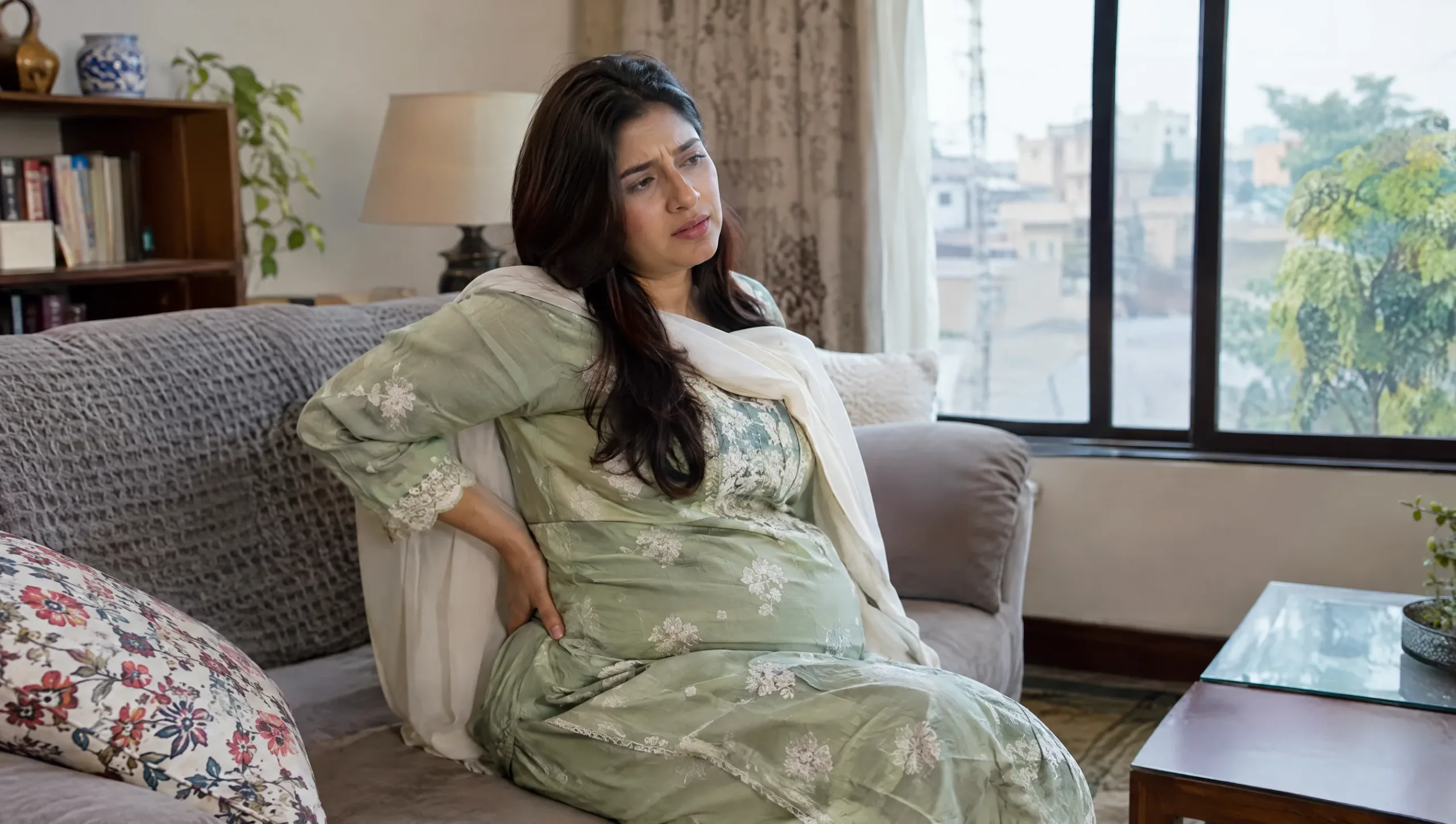
True sciatica happens when the sciatic nerve, which runs from your lower spine through your hip and down the back of each leg, gets compressed or irritated. During pregnancy, several things conspire to make this more likely. As your uterus grows, it shifts your centre of gravity forward, which increases the curve in your lower back and changes how load passes through your spine and pelvis.
Your body also releases a hormone called relaxin, which loosens the ligaments around your pelvis to prepare for childbirth. That same looseness can make your pelvic joints less stable, so muscles like the piriformis (a small muscle deep in the buttock) tighten up to compensate. A tight, overworked piriformis can press directly on the sciatic nerve, producing pain that feels identical to a herniated disc even when your spine itself is completely fine.
This is why sciatica during pregnancy is sometimes called “pseudo-sciatica” or pregnancy-related pelvic girdle pain — the nerve irritation is real, but the cause is mechanical and muscular rather than a spinal problem, which is exactly why physiotherapy works so well for it.
It is worth noting that true sciatica from a herniated disc can also occur during pregnancy, though it is less common than the muscular, pelvic-girdle type described above. A physiotherapist can usually tell the difference through a short physical examination: disc-related sciatica often comes with specific nerve-tension signs and a clear history of back injury, while pregnancy-related sciatica tends to be more closely linked to posture, time of day, and how long you have been sitting or standing.
How Common Is It, and Who Is at Higher Risk?

Lower back and pelvic pain are extremely common in pregnancy, and a meaningful share of pregnant women experience sciatic-type nerve pain specifically, especially from the second trimester onward. According to the American College of Obstetricians and Gynecologists (ACOG), back and pelvic pain affect a large proportion of pregnant women, and the risk tends to rise as pregnancy progresses.
A few factors make sciatica more likely or more severe during pregnancy:
A history of lower back pain or sciatica before pregnancy, carrying twins or a larger baby, significant weight gain in a short period, weak core and gluteal muscles, long hours of sitting at a desk job (common among our patients in Islamabad’s IT and corporate offices), and poor posture while standing or lifting.
If any of these apply to you, it is worth starting gentle, physiotherapist-guided prevention early rather than waiting for the pain to become severe.
Prevalence figures vary between studies, but most research agrees that pelvic girdle pain and sciatic-type symptoms become noticeably more common as pregnancy advances, with the highest rates typically reported in the third trimester. This is simply because the combined effect of ligament laxity, weight gain, and postural changes builds up over time, which is also why starting preventive physiotherapy early in pregnancy, rather than waiting until the pain is severe, tends to produce the best outcomes.
Is Physiotherapy Safe for Sciatica During Pregnancy?

Yes — physiotherapy is one of the first-line, evidence-based approaches recommended for pregnancy-related sciatica, precisely because it avoids medication. Many common painkillers are either restricted or best avoided during pregnancy, so hands-on, movement-based treatment becomes even more valuable.
That said, “safe” does not mean “one-size-fits-all.” A pregnancy-trained physiotherapist will adapt every technique to your trimester, avoid certain positions (such as lying flat on your back for long periods later in pregnancy), and screen you for conditions where physiotherapy is not appropriate, such as signs of preterm labour or placental complications.
This is exactly why we recommend a proper in-person assessment before starting any new exercise or treatment plan during pregnancy, rather than following generic exercises from a video. You can read more about how we approach care across pregnancy and the postpartum period in our detailed guide to pregnancy and postpartum physiotherapy.
There are also a few things a trained physiotherapist will deliberately avoid during pregnancy, such as high-velocity spinal manipulation, deep abdominal work, and any technique that requires lying flat on your back for a prolonged period in later pregnancy. If a practitioner does not ask about your pregnancy stage and any complications before treating you, that is a sign to seek a different, pregnancy-trained provider.
How Physiotherapists Treat Pregnancy Sciatica
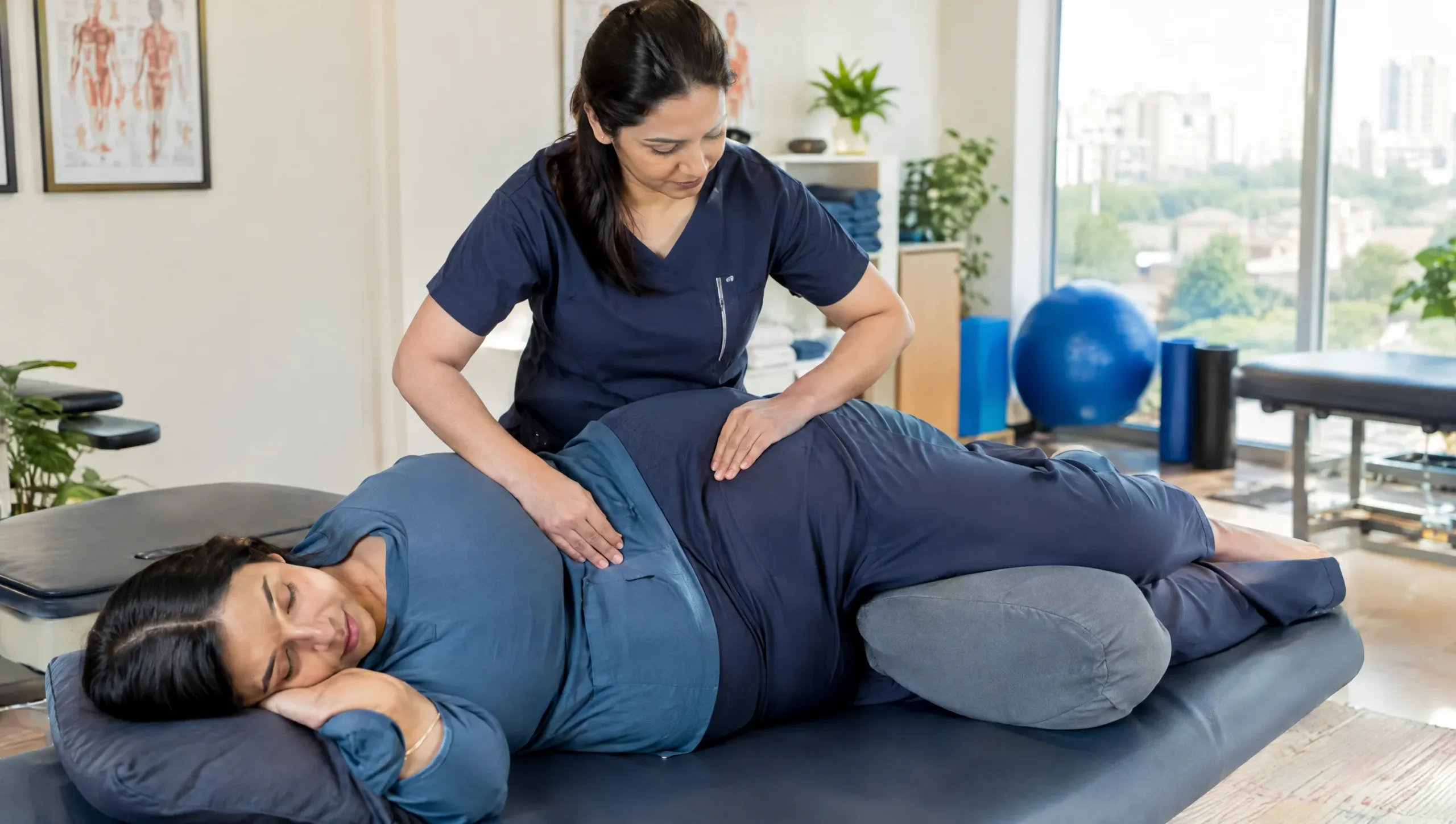
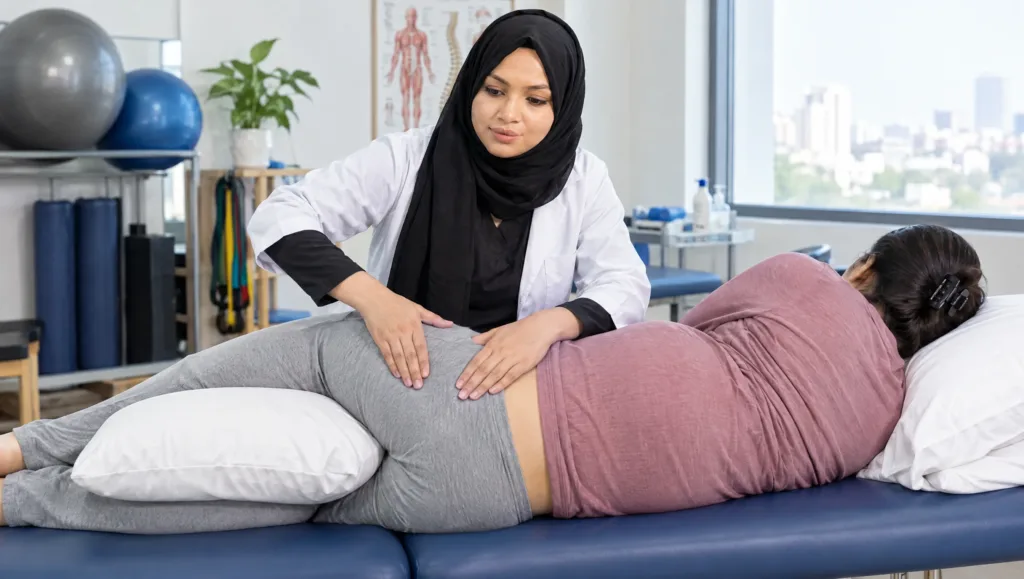
At Physio Rehab Solution, treatment for sciatica during pregnancy physiotherapy sessions typically combines several gentle, pregnancy-safe techniques rather than relying on just one:
Soft tissue and myofascial release of the piriformis, glutes, and lower back muscles to reduce the direct pressure on the sciatic nerve. Gentle joint mobilisation of the pelvis and lower spine, well within pregnancy-safe ranges. Pregnancy support belt guidance to offload the pelvic joints during standing and walking. Posture and movement re-education so that everyday tasks like getting out of bed, lifting a toddler, or sitting at a desk put less strain on the nerve. TENS (transcutaneous electrical nerve stimulation), which is considered safe for back and leg pain when applied away from the abdomen.
If you are also recovering from a previous delivery or caring for a newborn while pregnant again, our guide on post-C-section physiotherapy recovery may also be useful background reading.
Every treatment plan should be individualised rather than copied from a generic template. Some patients respond best to manual therapy alone, while others need a combination of manual work, a structured home exercise programme, and ergonomic changes at work or home before the pain settles. Where available, gentle hydrotherapy (exercise in warm water) can also be a comfortable option in later pregnancy, since the buoyancy takes weight off the pelvis and spine.
Safe Trimester-by-Trimester Exercises
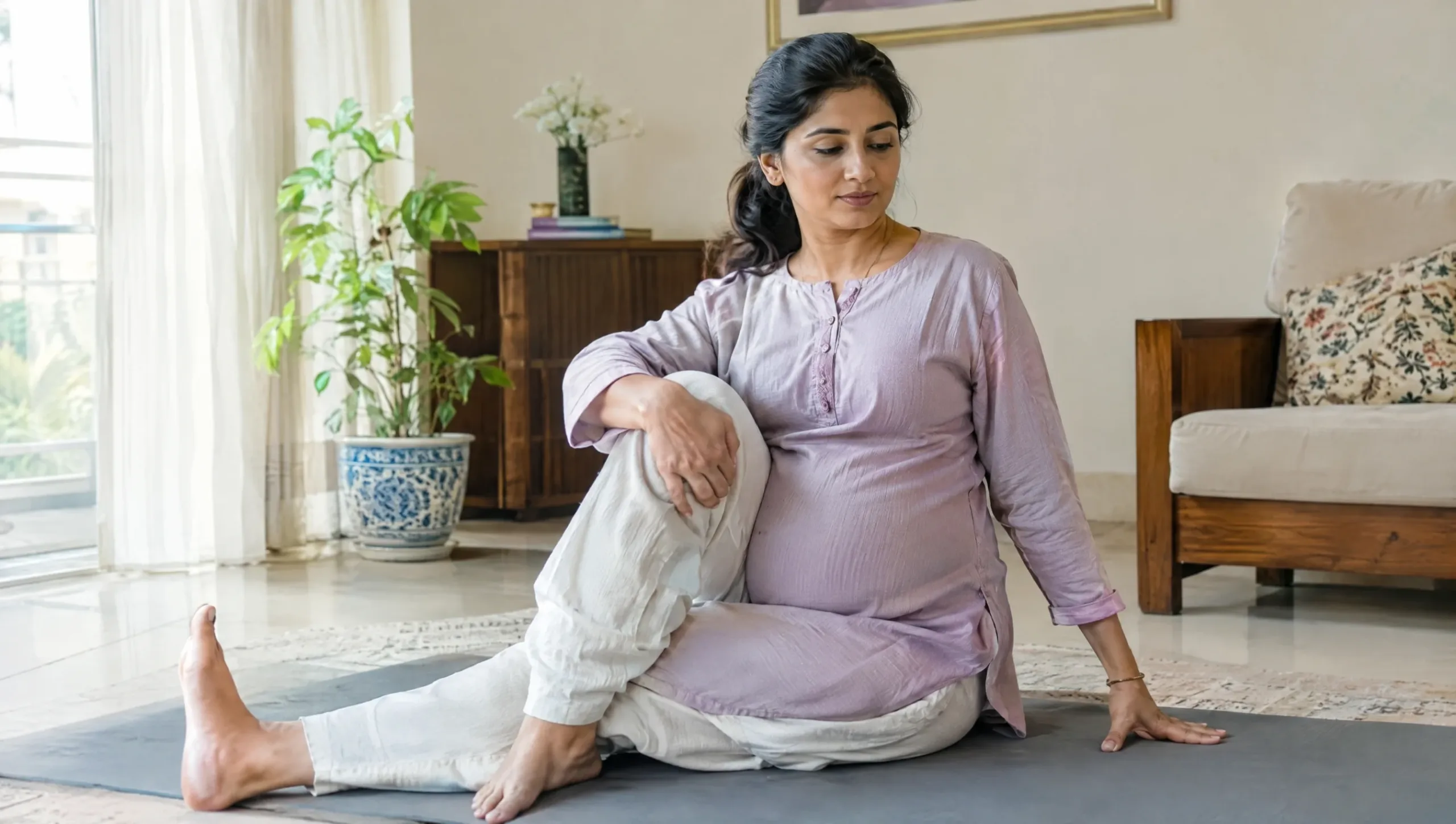
These are general guidelines. Always have a physiotherapist check your specific case before starting, especially if you have any pregnancy complications.
First trimester: Gentle pelvic tilts, modified cat-cow on hands and knees, and regular short walks to keep the hips and lower back mobile without strain.
Second trimester: Side-lying clamshells to strengthen the glutes (which support the pelvis and take pressure off the piriformis), modified glute bridges with a smaller range of motion, and a side-lying piriformis stretch.
Third trimester: Seated piriformis stretch (crossing one ankle over the opposite knee while seated, hinging gently forward), slow pelvic circles on a birthing or exercise ball, and figure-four stretches against a wall for support. Avoid lying flat on your back for extended periods from around 20 weeks onward; your physiotherapist can show you supported side-lying alternatives for every exercise.
Consistency matters more than intensity. Doing 10-15 minutes of your prescribed stretches daily, rather than one long session once a week, tends to produce noticeably better and faster relief from sciatic pain. Stop any exercise that sharpens your pain rather than easing it, and let your physiotherapist know at your next session so the plan can be adjusted.
Sleeping Positions, Posture, and Daily Habits
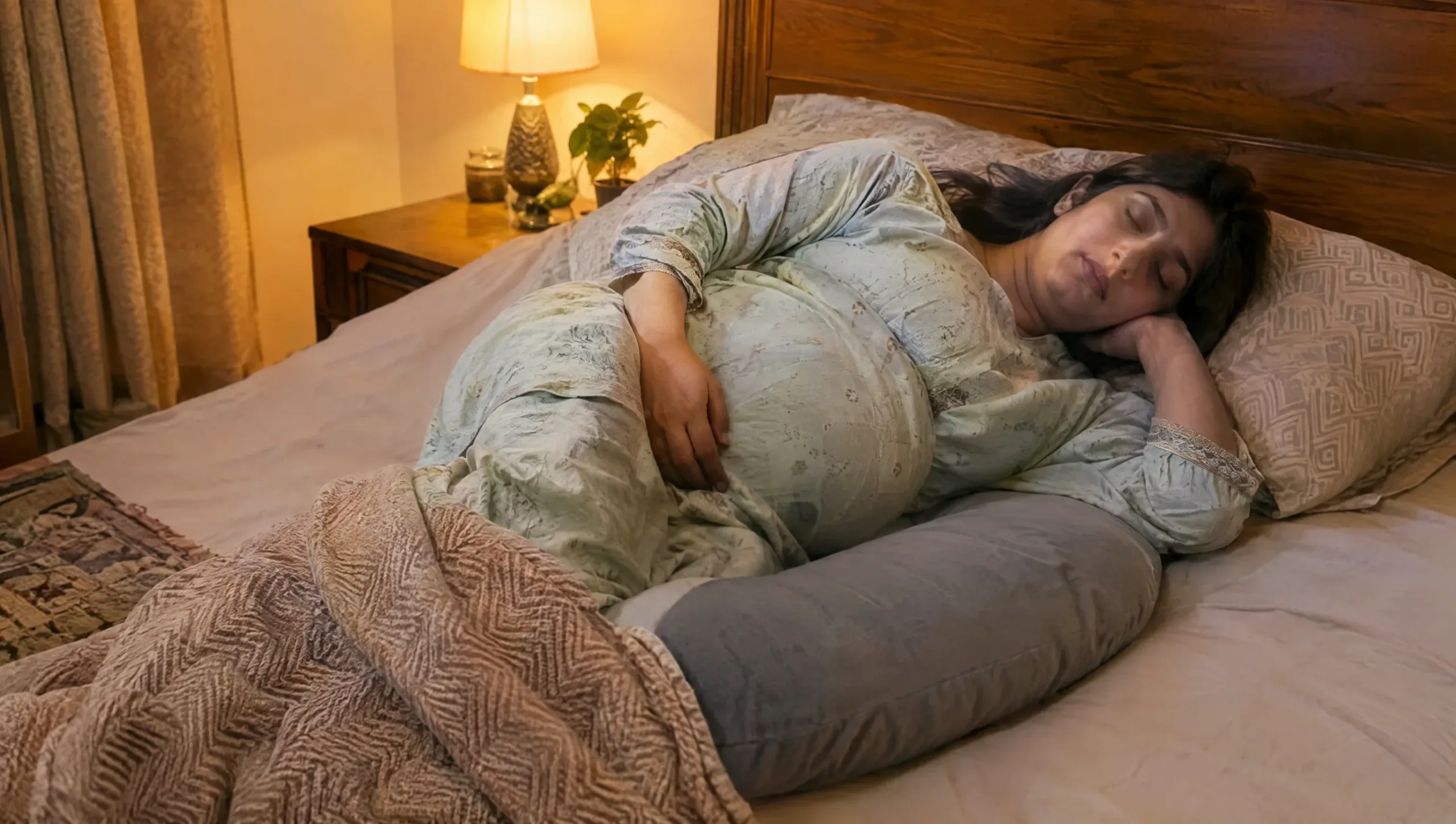
Small changes to how you sleep, sit, and move through your day can make a noticeable difference to sciatic pain.
Sleep on your left side with a pillow between your knees and, if needed, another supporting your bump — this keeps your pelvis level and takes pressure off the nerve. Avoid sitting for more than 30-40 minutes at a stretch; stand, walk a few steps, or gently shift position, especially important for our patients working desk jobs across Rawalpindi and Islamabad. Get out of bed and cars by rolling onto your side first, then pushing up with your arms rather than twisting your spine. Wear supportive, low-heeled footwear to reduce the forward tilt of your pelvis. Use a firm cushion with good lower-back support at your desk or sofa.
None of these habits replace hands-on treatment, but they help the gains from each physiotherapy session last longer between visits.
A properly fitted maternity support belt, worn for a few hours during the day rather than continuously, can also reduce strain on the pelvic joints for many women. If you work a desk job in Rawalpindi or Islamabad, pairing these habits with good workstation setup makes a real difference — our article on office ergonomics for back pain covers chair height, monitor position, and break timing in more detail.
Red Flags: When to Seek Urgent Medical Care
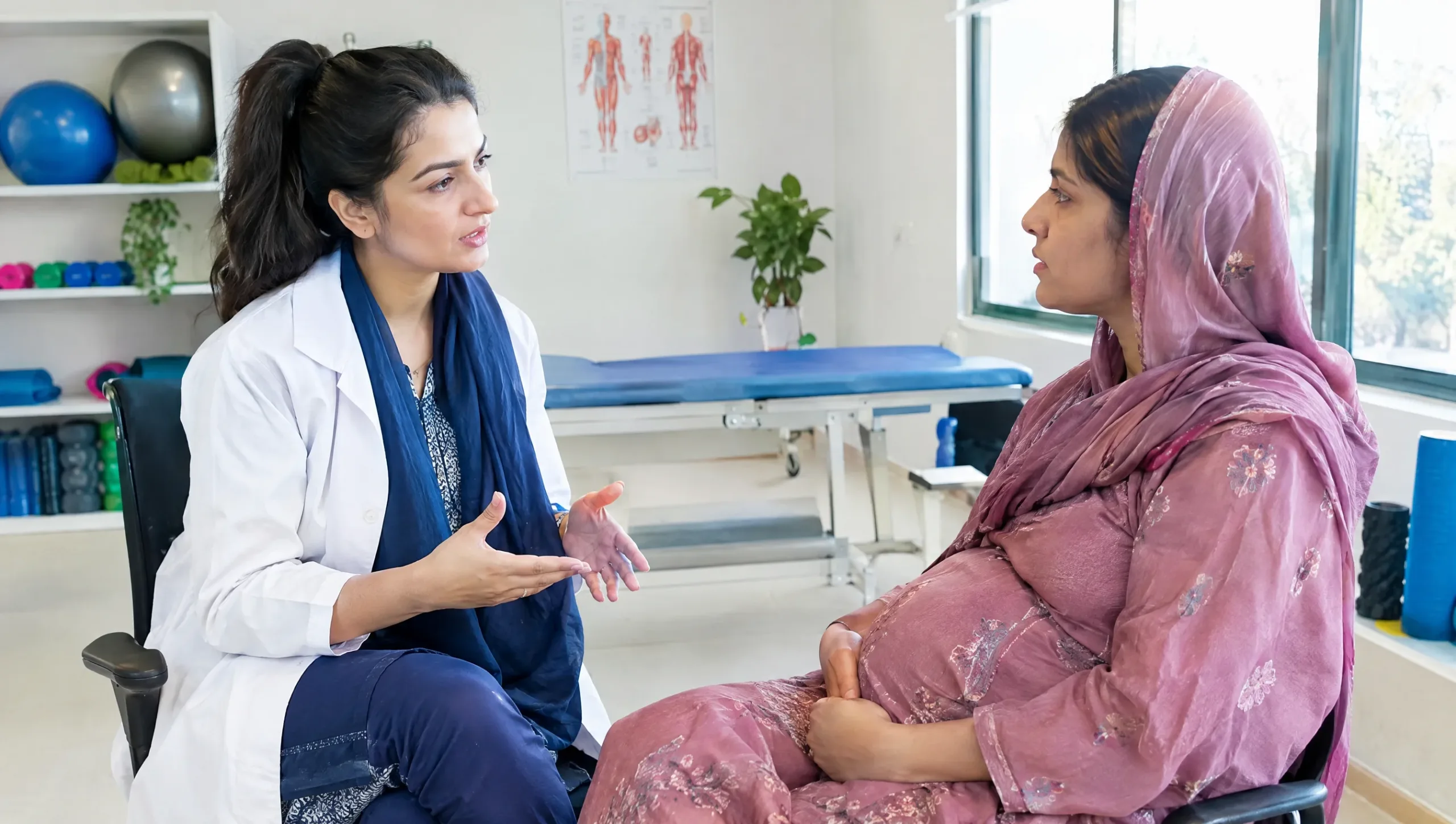
Most pregnancy-related sciatica is uncomfortable but not dangerous, and it responds well to physiotherapy. However, a small number of symptoms need immediate medical attention rather than a physiotherapy appointment, because they can signal a more serious nerve or spinal issue (such as cauda equina syndrome) or an obstetric emergency.
Contact your doctor or go to the emergency room immediately if you notice: loss of bladder or bowel control, numbness affecting both legs or the area between your legs (saddle numbness), sudden severe weakness in one or both legs, fever with back pain, or pain so severe and constant that no position brings any relief.
If you only have one-sided leg pain that changes with position and eases with rest, that pattern is far more typical of ordinary pregnancy sciatica, and we would recommend booking an in-person assessment with a physiotherapist or your obstetrician so the exact cause can be confirmed before starting treatment.
Frequently Asked Questions

Can I do physiotherapy for sciatica while pregnant, or is it risky?
Yes, physiotherapy is considered one of the safest and most effective treatments for sciatica during pregnancy when it is delivered by a therapist trained in prenatal care. Techniques are adapted for each trimester, and you should always have an assessment before starting any new exercise programme.
What is the fastest way to relieve sciatic nerve pain during pregnancy at home?
Lying on your side with a pillow between your knees, applying a warm compress to the buttock or lower back, and gently stretching the piriformis muscle usually bring the fastest short-term relief. For lasting results, these home measures work best alongside hands-on physiotherapy.
Will pregnancy-related sciatica go away after delivery, or do I need treatment?
For most women, sciatic pain eases significantly within weeks of delivery as hormone levels and posture return to normal. However, treating it during pregnancy with physiotherapy reduces how much pain you experience in the meantime and helps prevent it from lingering into the postpartum period.
Can I still exercise if sciatica pain is severe during the third trimester?
You can usually continue gentle, modified movement even with significant pain, but the exercises need to be adjusted and closely supervised at this stage. Book an in-person physiotherapy assessment so a plan can be built around your specific pain pattern and pregnancy stage rather than following generic online exercises.
If you are not finding your question answered here, our physiotherapy FAQ: expert answers page covers many more general questions about sessions, cost, and what to expect, or you can check our general clinic FAQ.
If sciatica during pregnancy is affecting your daily life, you do not have to simply wait it out. Dr. Iqra Kiran and the team at Physio Rehab Solution in Rawalpindi offer pregnancy-safe physiotherapy assessments tailored to your trimester and symptoms. Book an appointment with Physio Rehab Solution or call us directly at +92 321 4287773 to schedule your visit.