A C-section is major abdominal surgery, not just a different delivery method — yet many new mothers in Rawalpindi and Islamabad go home with little more than a scar-care leaflet. Post-C-section physiotherapy recovery is the missing piece: a structured plan that rebuilds your core, protects your pelvic floor, and gets you back to lifting your baby, walking comfortably, and returning to daily life without pain. This guide walks through what actually happens to your body during a C-section, a realistic week-by-week recovery timeline, and the specific core and pelvic floor exercises that are safe at each stage, so you are not guessing, and you are not recovering alone.
Cesarean delivery rates have risen steadily across hospitals in Rawalpindi and Islamabad over the past decade, yet structured postpartum physiotherapy referral is still inconsistent in routine obstetric care here. In practice, that means most new mothers in this region need to actively seek out post-C-section physiotherapy recovery support themselves rather than wait for it to be offered, which is exactly why a clear, practical guide matters.
Table of Contents
- What Happens to Your Core and Pelvic Floor During a C-Section
- Why Post-C-Section Physiotherapy Recovery Matters
- The Recovery Timeline, Week by Week
- Core Rehabilitation Exercises After a C-Section
- Pelvic Floor Recovery After a C-Section
- Common Mistakes That Slow Down Recovery
- When to See a Physiotherapist: Red Flags
- Frequently Asked Questions
What Happens to Your Core and Pelvic Floor During a C-Section
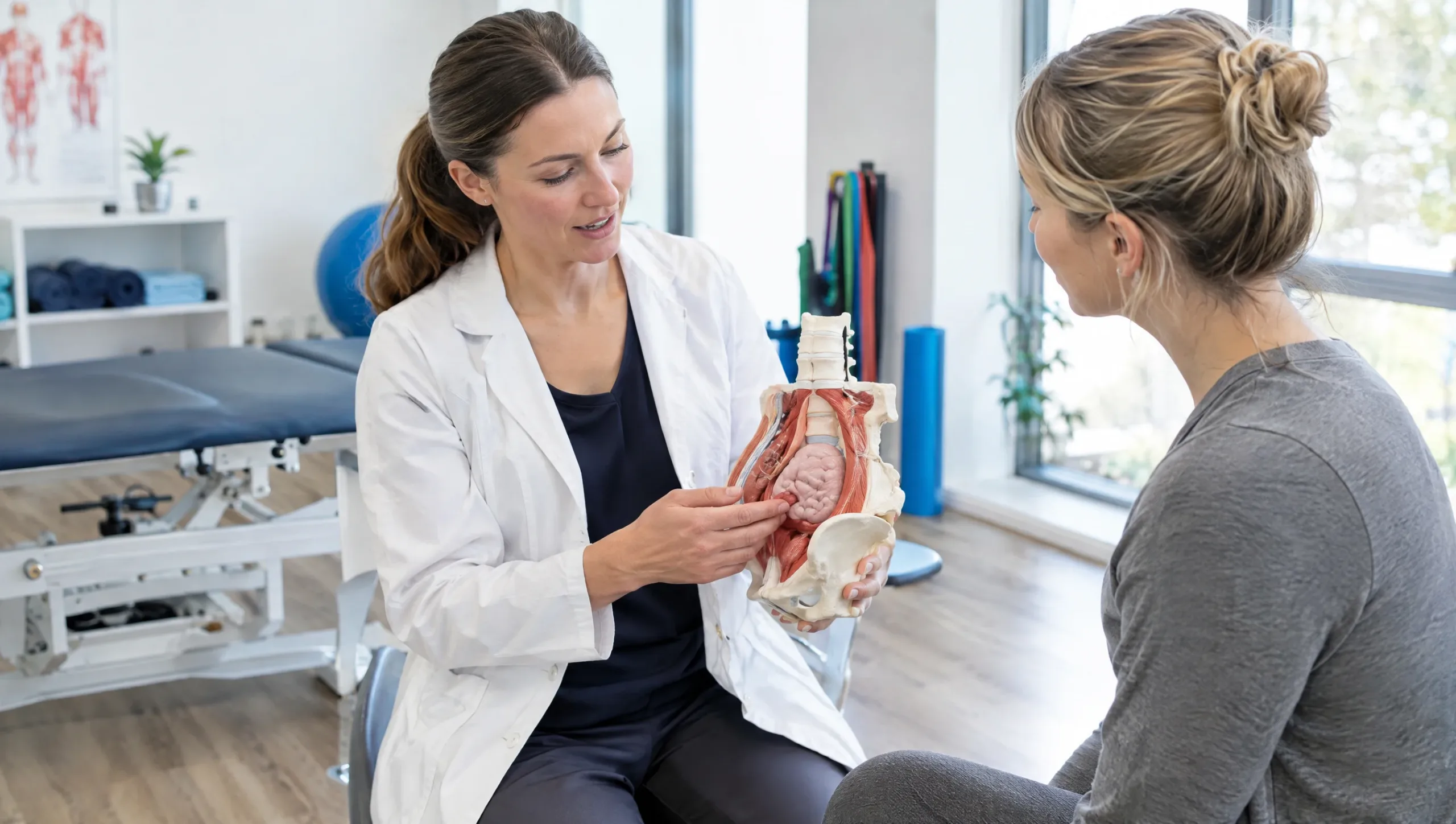
During a C-section, a surgeon cuts through skin, fat, the fascia covering your abdominal muscles, and often separates (rather than cuts) the rectus abdominis muscles to reach the uterus. The linea alba, the connective tissue running down the midline of your abdomen, has already been stretched thin by nine months of pregnancy, and surgery adds a fresh layer of scar tissue on top of that stretch. This combination is a major reason diastasis recti (abdominal separation) is just as common after a C-section as after a vaginal birth.
Your pelvic floor does not escape this either. It carried the full weight of your pregnancy for nine months regardless of how your baby was delivered, so it can still be weak, over-tightened, or poorly coordinated even though it was never stretched during delivery itself. Add scar adhesions that can restrict how your deep core muscles slide and glide, plus temporary numbness around the incision from cut nerve endings, and you can see why a cesarean birth needs its own, deliberate recovery plan rather than a generic “new mum” routine.
If this is your second or third C-section, recovery is not automatically harder, but scar tissue from previous surgeries can make the area stiffer and slightly more prone to adhesions, which is worth mentioning to your physiotherapist so scar mobilisation can be prioritised earlier.
Why Post-C-Section Physiotherapy Recovery Matters (Not Just Scar Healing)
It is tempting to assume that once the incision closes, recovery is finished. Physiotherapists see the opposite: the surface heals in a few weeks, but the deeper core and pelvic floor system often stays dysfunctional for months if nobody actively retrains it. Left unaddressed, this shows up later as chronic lower back pain from a core that can no longer stabilise the spine properly, a diastasis recti gap that never fully closes, pelvic organ prolapse symptoms (heaviness or bulging), and poor posture from months of hunching over a newborn.
Structured postpartum rehabilitation is now a standard part of recovery guidance from major health authorities, not an optional extra. The Mayo Clinic’s guidance on C-section recovery is clear that gradually rebuilding activity and strength under guidance, rather than guessing on your own, meaningfully lowers the risk of complications. A structured post-C-section physiotherapy recovery programme is what turns “the scar looks fine” into “my body actually works properly again.”
The Recovery Timeline, Week by Week
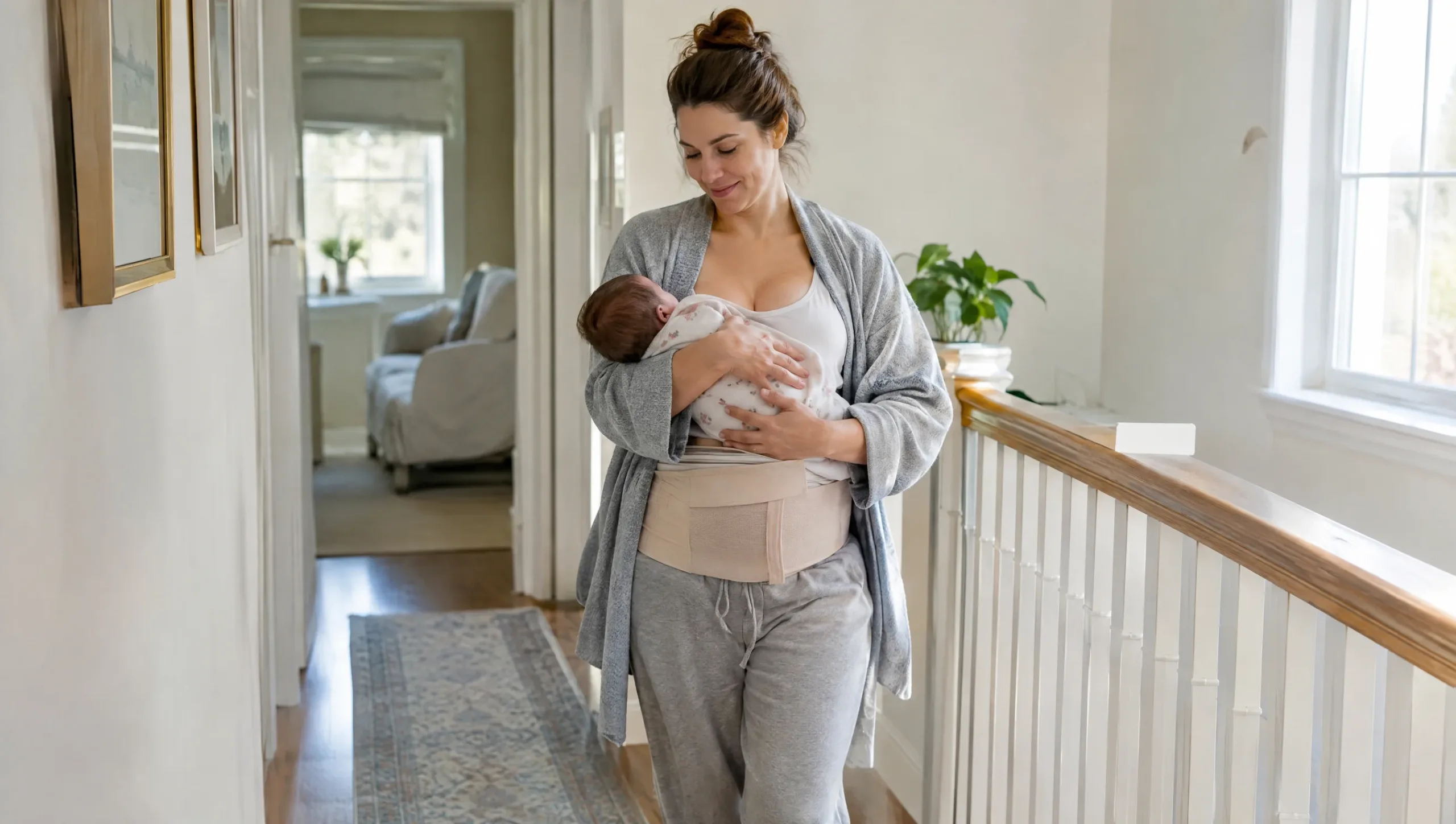
Every body heals at its own pace, and this timeline is a general guide, not a strict schedule — always follow your surgeon’s clearance before progressing. In general, a healthy post-C-section physiotherapy recovery timeline looks like this:
Days 1–14: Protecting the Incision and Restarting Breath
Focus is on gentle walking around the house, supported coughing and laughing (a pillow pressed over the incision helps), diaphragmatic breathing, and simple ankle pumps to support circulation. No lifting heavier than your baby, no abdominal crunches, no driving until your doctor clears you.
Weeks 3–6: Gentle Core Reconnection
Once your doctor confirms the incision is healing well, light scar desensitisation, pelvic tilts, and very gentle transverse abdominis activation can usually begin. This is also when a physiotherapist can start assessing diastasis recti and pelvic floor function in person.
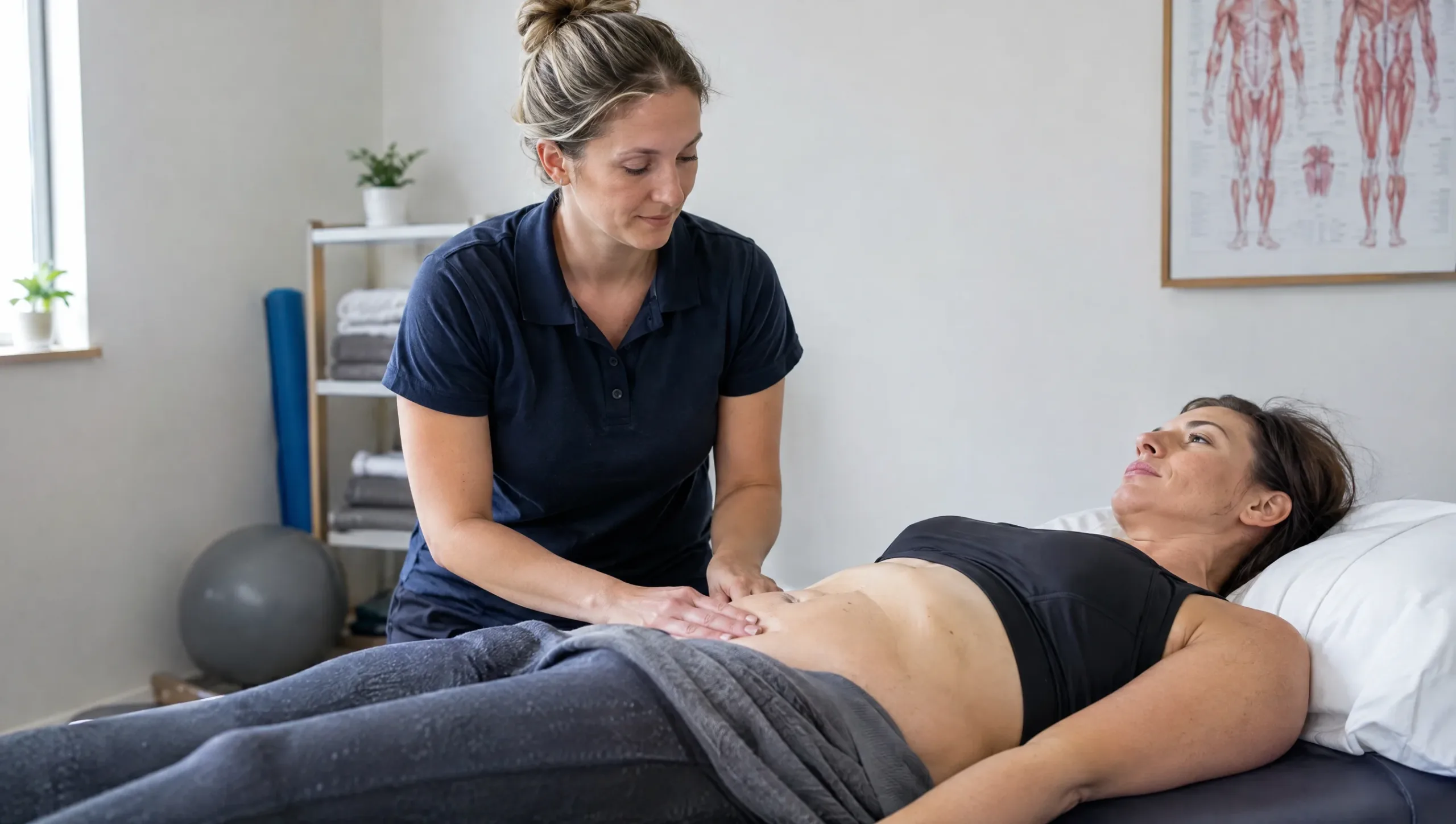
Once your doctor confirms the incision has fully closed, gentle scar massage in small circular motions, a few minutes a day, can reduce tightness and help the layers of tissue move independently again rather than healing as one stuck-together block. This is a simple habit that costs nothing and pays off for years.
Weeks 6–12: Progressive Core and Pelvic Floor Strengthening
With clearance at your six-week check-up, progressive loading begins: bridging, bird-dog, modified planks, and structured pelvic floor retraining. Walking distance increases gradually, and scar mobilisation becomes more active if adhesions are limiting movement.
3–6 Months and Beyond: Return to Exercise and Lifting
Return to running, heavier gym work, or high-impact activity should be guided by how well your core and pelvic floor perform under load, not by the calendar alone. Many mothers are ready sooner, some need longer, and that is completely normal.
Core Rehabilitation Exercises After a C-Section
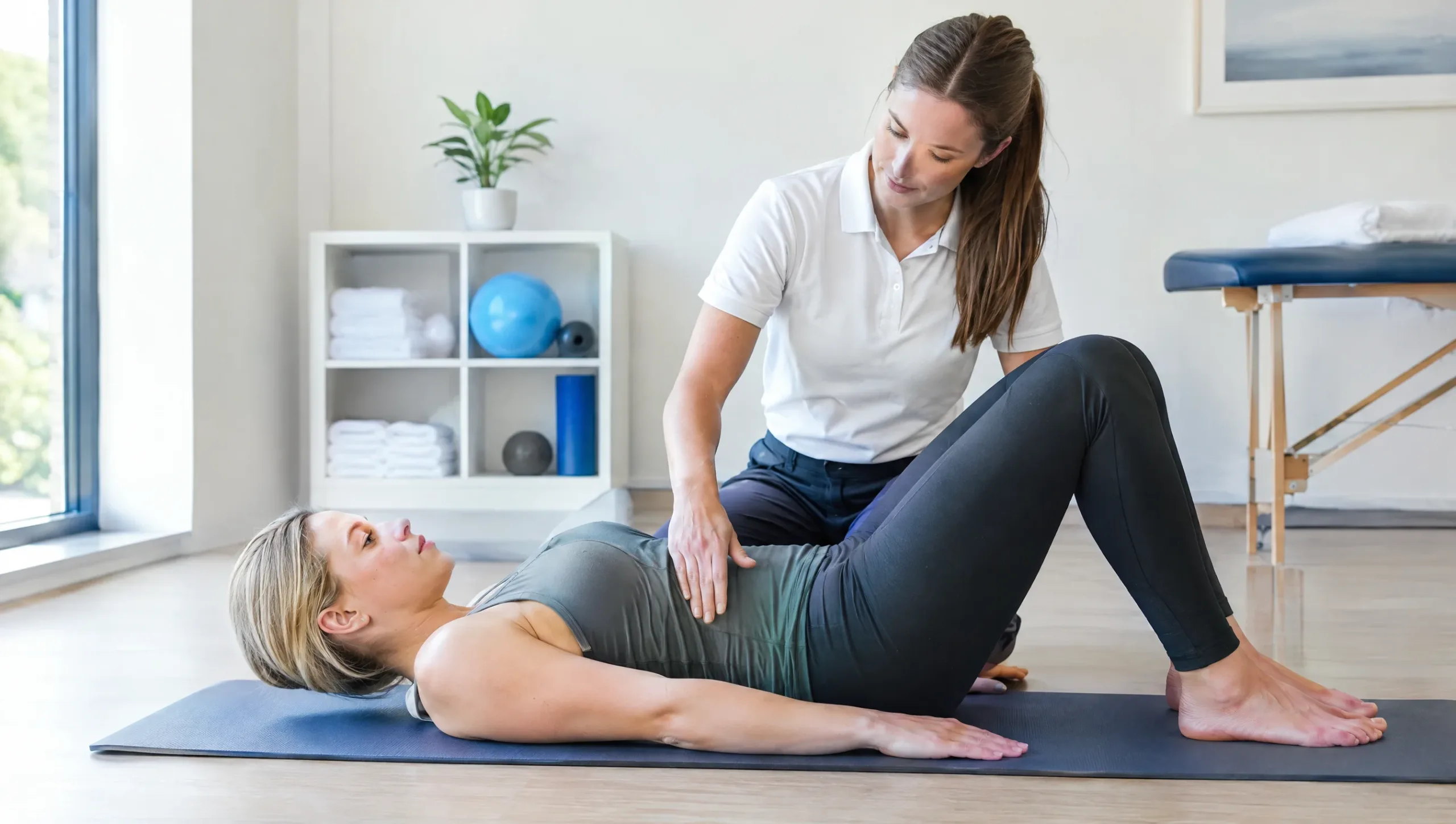
These are introduced in phases, and should feel like gentle effort, never pain or pulling at the incision:
- Diaphragmatic breathing — lying down, breathe into your ribs and belly, exhale slowly while gently drawing your navel inward. This is the foundation everything else builds on.
- Pelvic tilts — lying on your back, knees bent, gently flatten and release your lower back against the bed.
- Transverse abdominis (TVA) bracing — a gentle, low-level “hugging in” of the deep abdominal corset, held for a few seconds without holding your breath.
- Heel slides and bridging — introduced once bracing feels controlled, to reintroduce load without straining the midline.
- Bird-dog and modified side planks — added later, once a physiotherapist confirms your diastasis recti and pelvic floor can handle the extra demand.
Avoid traditional sit-ups, crunches, and full planks until a physiotherapist has assessed and cleared you — done too early, these increase intra-abdominal pressure and can worsen diastasis recti or cause a pelvic floor bulge. If you noticed a visible gap or bulge along your midline in pregnancy, it is worth reading our dedicated guide to diastasis recti recovery alongside this timeline.
Pelvic Floor Recovery After a C-Section

“I had a C-section, so my pelvic floor is fine” is one of the most common misconceptions new mothers bring to their first physiotherapy session. Because the pelvic floor supports your growing uterus for the full nine months regardless of delivery method, it can still be weak, or paradoxically, too tight and unable to relax properly, which causes its own set of problems.
Watch for leaking urine with coughing or sneezing, a feeling of heaviness or dragging in the pelvis, pain during intercourse once you have resumed intimacy, or difficulty fully emptying your bladder or bowel. A women’s health physiotherapist can perform an internal or external pelvic floor assessment, then build a programme combining gentle Kegel activation, full relaxation training, and breath coordination so the pelvic floor and deep core work together again. If you are pregnant again or still working through general postpartum changes, our broader guide on pregnancy and postpartum physiotherapy covers this in more depth.
There is also an emotional side to this timeline that deserves acknowledgement. Recovering from major surgery while caring for a newborn, often with disrupted sleep and new breastfeeding demands, is genuinely demanding, and feeling frustrated with a body that will not cooperate on your schedule is completely normal. A realistic, physiotherapist-guided timeline tends to reduce this frustration simply by replacing guesswork with a clear plan.
Posture during feeding deserves its own mention. Many mothers spend six to eight hours a day in a hunched, rounded position while nursing or bottle-feeding, and this posture pulls directly against a healing core and upper back. A supportive chair with armrests, a pillow under the baby to bring them to breast height rather than you bending down, and periodically rolling your shoulders back all reduce the load your recovering core has to fight against throughout the day.
Common Mistakes That Slow Down Recovery

- Ignoring pain as a signal. Pain during an exercise means stop, not push through.
- Starting ab exercises too soon. Crunches and planks before your core is reconnected can widen a diastasis recti gap.
- Doing nothing out of fear. Total inactivity slows circulation, healing, and mood recovery just as much as doing too much, too soon.
- Slouching through every feed. Hours of hunched feeding posture strains a healing core and upper back.
- Lifting heavier than your baby too early. Car seats, toddlers, and grocery bags put real strain on an unhealed midline.
- Neglecting the scar itself. An untreated scar can tether to deeper tissue, limiting core activation for years if never mobilised.
When to See a Physiotherapist: Red Flags

Book an assessment sooner rather than later if you notice any of the following:
- A visible bulge or widening gap along your midline, especially when you lift your head or strain.
- A feeling of heaviness, dragging, or an actual bulge in the vaginal area.
- Leaking urine or stool, or difficulty controlling gas.
- Sharp, burning, or worsening pain anywhere around the incision after the first couple of weeks.
- Redness, swelling, discharge, or fever near the incision — these need urgent medical review, not physiotherapy, so contact your doctor immediately.
- Persistent diastasis recti or back pain that has not improved three months after delivery.
None of this is a substitute for a hands-on assessment. If anything above sounds familiar, the safest next step is an in-person evaluation with a qualified physiotherapist rather than guessing from a blog post, however detailed.
It also helps to involve your partner or a family member in this timeline, especially in the first six weeks. Simple support, like someone else handling the stairs with the baby, or taking over heavier lifting around the house, gives your core and incision the quiet time they need to heal properly without you having to explain why you are moving slowly.
Frequently Asked Questions

A few more questions we hear often in clinic — for general physiotherapy questions beyond C-section recovery, our expert physiotherapy FAQ page covers a wider range of topics.
How soon after a C-section can I start physiotherapy?
Gentle breathing and walking can usually start within the first couple of days, as tolerated. Hands-on physiotherapy assessment typically begins around weeks 3–6, once your surgical incision is stable and your doctor has given initial clearance.
Can I just start normal exercise again, or do I need physiotherapy first?
Many mothers can return to general fitness eventually without formal physiotherapy, but a short course of post-C-section physiotherapy recovery sessions significantly lowers the risk of pushing an unhealed core or pelvic floor too hard, too soon, especially if you plan to return to running, weight training, or high-impact sport.
Is it normal to still have ab separation (diastasis recti) months after a C-section?
Some gap at 6–8 weeks is common and often closes with targeted core rehabilitation. A gap that remains wide, deep, or is still causing back pain or a visible bulge beyond three months is worth a physiotherapy assessment rather than waiting it out.
Does post-C-section physiotherapy help with numbness around the scar?
Yes. Scar desensitisation and mobilisation techniques, started once the incision is fully closed, often reduce numbness and the tight, pulling sensation many women describe months after surgery.
Recovering from a C-section is not something you have to figure out alone, and it should not take a year of guessing to feel normal in your own body again. If you are in Rawalpindi or Islamabad and want a proper, hands-on assessment of your core and pelvic floor, book an appointment with Dr. Iqra Kiran at Physio Rehab Solution in Rawalpindi, or call +92 321 4287773 to get a personalised post-C-section physiotherapy recovery plan started.