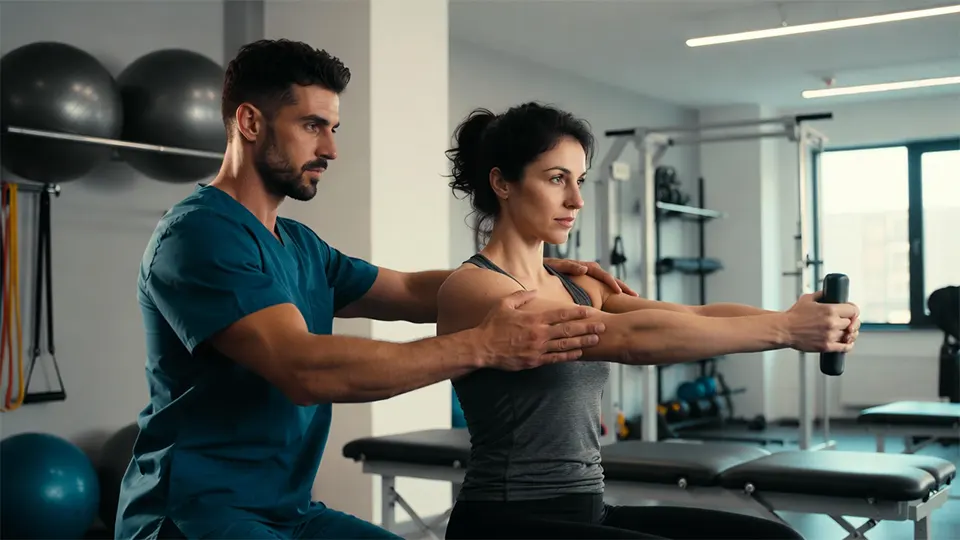

If you’ve felt a sharp catch in your shoulder when reaching for a shelf, or a dull ache that keeps you up at night, a rotator cuff tear could be the reason. The good news is that rotator cuff tear physiotherapy is the first and often the only treatment most people need — surgery is not automatically the next step, even when imaging shows a genuine tear. This guide walks through what a rotator cuff tear actually is, how it’s diagnosed, why a structured physiotherapy program should almost always be tried first, and the specific signs that mean surgery is the safer choice.
Table of Contents
- What Is a Rotator Cuff Tear?
- What Causes a Rotator Cuff Tear?
- Signs and Symptoms You Shouldn’t Ignore
- How Rotator Cuff Tears Are Diagnosed
- Why Physiotherapy Should Come Before Surgery
- What a Rotator Cuff Tear Physiotherapy Plan Actually Looks Like
- Exercises Physiotherapists Commonly Use During Rotator Cuff Rehab
- When Surgery Is the Right Choice
- Frequently Asked Questions
What Is a Rotator Cuff Tear?

The rotator cuff is a group of four muscles and their tendons — supraspinatus, infraspinatus, teres minor, and subscapularis — that wrap around the head of the upper arm bone and hold it snugly inside the shoulder socket. Together they let you lift, rotate, and reach overhead while keeping the joint stable.
A “tear” means one or more of these tendons has been partially or completely torn away from the bone, or has frayed internally. Tears are usually described as partial-thickness (the tendon is damaged but still intact) or full-thickness (the tendon is completely separated). Size matters too: small and medium tears respond very differently to treatment than large or massive tears involving more than one tendon.
It’s worth knowing that rotator cuff damage is extremely common and often silent. Studies using MRI on people with no shoulder pain at all still find partial tears in a meaningful percentage of people over 50. That single fact is central to why physiotherapy is the sensible starting point: a tear showing up on a scan does not automatically mean it is the cause of your pain, or that it needs to be surgically repaired.
What Causes a Rotator Cuff Tear?
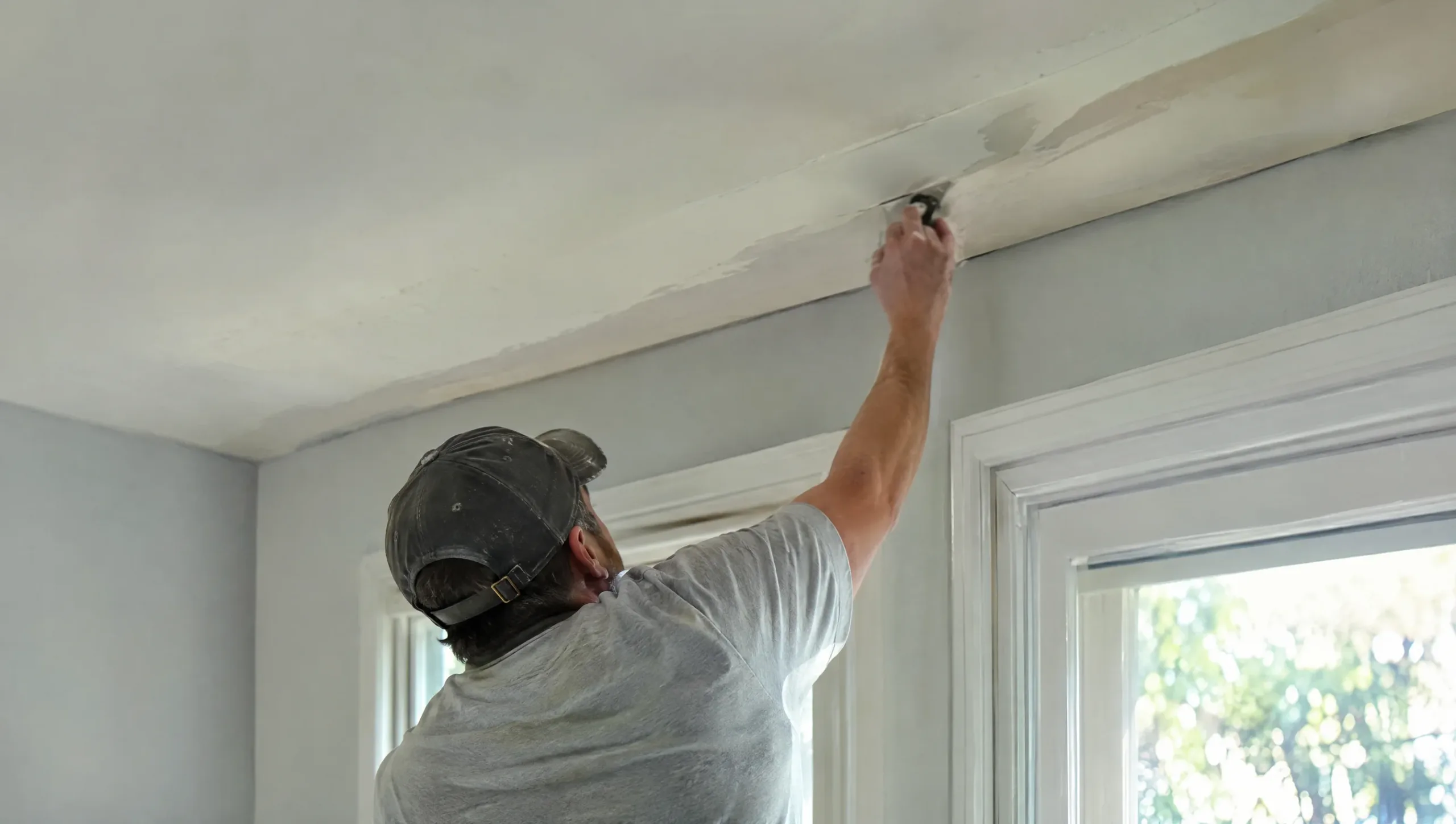
Rotator cuff tears fall into two broad categories, and knowing which type you have changes the treatment conversation.
Degenerative (wear-and-tear) tears develop slowly over years. Repetitive overhead work, reduced blood supply to the tendon with age, and the natural narrowing of the space the tendon slides through all contribute. These are the most common rotator cuff tears seen in people over 40, and they frequently exist for a long time before any pain appears.
Acute (traumatic) tears happen suddenly — a fall onto an outstretched arm, lifting something unexpectedly heavy, or a forceful pulling motion. These tears are more likely to be large, more likely to involve a previously healthy tendon, and are the category where a surgical opinion is sought earlier, especially in younger, more active patients.
Other contributing factors include smoking (which reduces tendon blood supply), poor posture that narrows the subacromial space, previous shoulder dislocations, and jobs or sports involving repeated overhead reaching — painters, electricians, swimmers, and overhead throwing athletes are all at higher risk.
Signs and Symptoms You Shouldn’t Ignore

Rotator cuff tears don’t always announce themselves clearly, which is part of why they’re so often mismanaged. Common symptoms include:
A dull, deep ache in the outer shoulder and upper arm that worsens at night, particularly when lying on the affected side. Weakness when lifting the arm away from the body or rotating it outward. A catching, clicking, or grinding sensation during certain movements, especially reaching overhead. Difficulty with everyday tasks like reaching behind your back to fasten a bra, combing hair, or reaching into a high cupboard. In some full-thickness tears, an inability to lift the arm away from the side at all without using the other arm to help (“the arm drop”).
None of these signs alone confirms a tear — frozen shoulder, impingement, and arthritis can all mimic them. That’s exactly why a proper assessment matters more than guessing from symptoms alone, and why anyone with shoulder pain lasting more than two to three weeks, or any sudden loss of strength after an injury, should book an in-person evaluation rather than self-diagnosing from an article.
How Rotator Cuff Tears Are Diagnosed
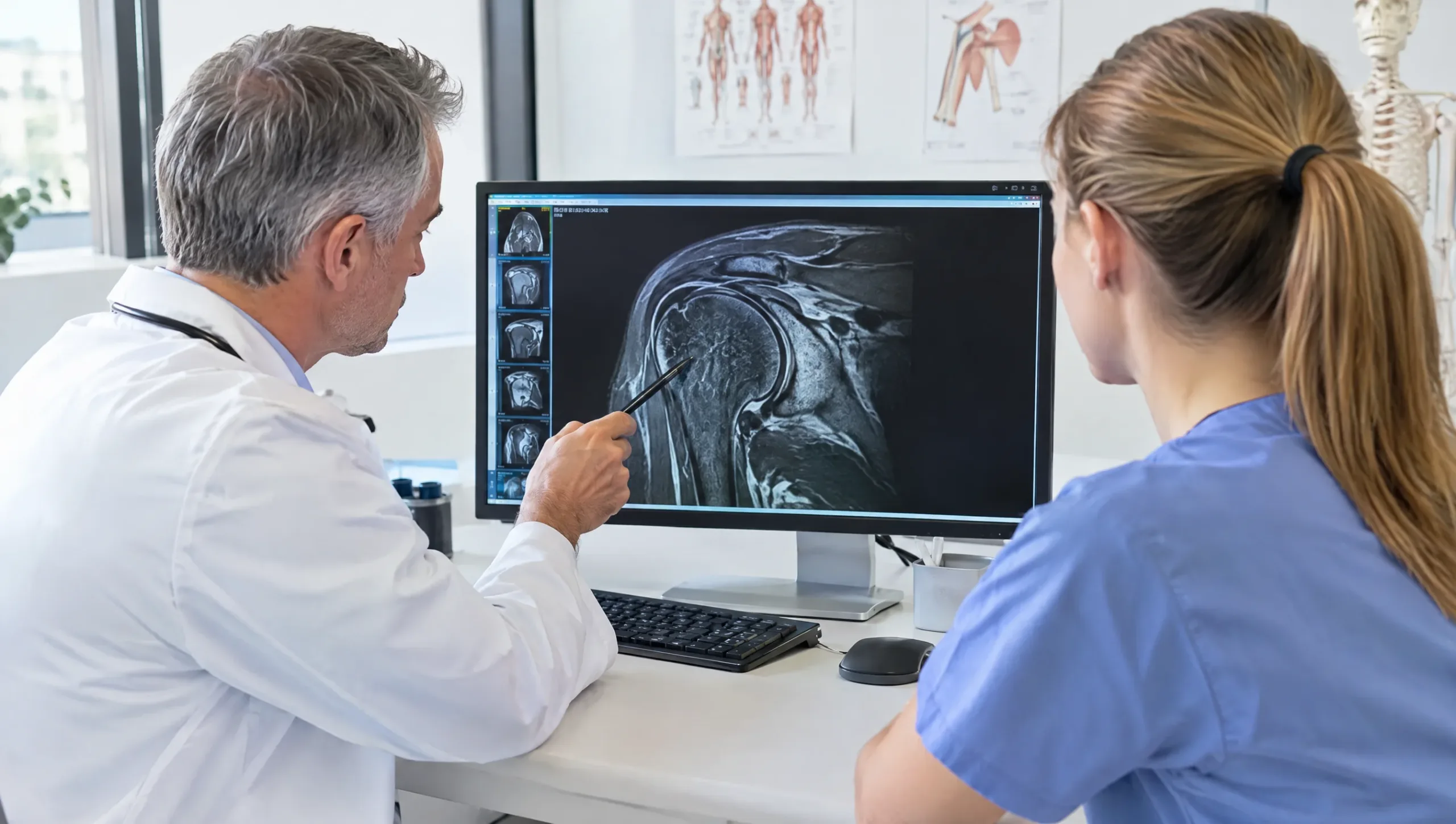
Diagnosis starts with a clinical examination. A physiotherapist or orthopedic doctor will check your range of motion, test the strength of each of the four rotator cuff muscles individually, and run specific orthopedic tests (such as the empty can test, lift-off test, and Hawkins-Kennedy test) designed to stress particular tendons and reproduce your symptoms.
Imaging is used to confirm what the clinical exam suggests, not to replace it. Ultrasound is quick, inexpensive, and good at spotting full-thickness tears. MRI gives the most detailed picture of tear size, tendon retraction, and muscle quality, which matters most when surgery is being seriously considered. X-rays don’t show the tendons themselves but can rule out arthritis or bone spurs contributing to the problem.
The key point clinicians stress again and again: treatment decisions should be based on how a patient functions and responds to therapy, not on the scan result in isolation. Two people with an identical MRI finding can have completely different outcomes depending on tear size, age, activity demands, and how their body responds to a structured rehab program.
Why Physiotherapy Should Come Before Surgery

For the majority of rotator cuff tears — particularly partial tears and smaller degenerative full-thickness tears — current clinical guidance favors a structured course of physiotherapy before any discussion of surgery. There are several reasons this approach has become the standard first step rather than the fallback option.
First, outcome research comparing physiotherapy to surgical repair for many degenerative tears has repeatedly found similar pain and function scores at one and two years, meaning a large share of patients get just as good a result without the risks of surgery and anesthesia. Second, the shoulder’s remaining muscles — particularly the deltoid and the other three cuff muscles — can often be trained to compensate for a partially torn tendon, restoring strength and motion even though the tear itself hasn’t closed. Third, surgery carries real risks: stiffness, re-tear rates that climb with tear size and age, a lengthy recovery (commonly four to six months before full return to overhead activity), and the simple fact that surgery cannot be undone if the outcome is disappointing — whereas a physiotherapy program that isn’t working can be escalated to surgery later with nothing lost.
This isn’t a universal rule — some tears genuinely need a surgeon’s involvement, and we cover exactly which ones further down. But for most people walking into a clinic with shoulder pain and a tear on their scan, a focused 6-to-12-week physiotherapy trial is the responsible first move, not a delay tactic.
What a Rotator Cuff Tear Physiotherapy Plan Actually Looks Like

A well-run rotator cuff program is not just “a few shoulder exercises.” It typically progresses through distinct phases, each with its own goals.
Phase 1 — Calming things down (roughly weeks 1-2). The priority here is reducing pain and protecting irritated tissue: gentle pendulum swings, pain-free passive range of motion, posture correction, and activity modification. Manual therapy and modalities like ice or targeted soft-tissue work can help symptoms settle enough to tolerate exercise.
Phase 2 — Restoring motion and control (roughly weeks 2-6). As pain eases, the focus shifts to regaining full, pain-free range of motion and re-educating the shoulder blade muscles that stabilize the whole joint. Scapular setting exercises, assisted range-of-motion work, and light isometric holds for the cuff muscles are introduced here.
Phase 3 — Building strength (roughly weeks 6-12). This is where real strengthening happens — resistance band external and internal rotation, progressive loading of the supraspinatus and deltoid, and closed-chain stability work. Dosage and progression are individualized; this is also the phase where most patients notice the clearest improvement in daily function.
Phase 4 — Returning to full activity. For patients returning to sport, manual labor, or overhead work, the final phase rebuilds power, endurance, and movement patterns specific to the demands they’ll face, with a graded return-to-activity plan rather than an abrupt jump back in.
Throughout all four phases, a physiotherapist is continuously reassessing: if strength and function aren’t improving on schedule, that’s valuable information, not a failure, and it’s exactly the signal that should trigger a conversation about surgical options.
Exercises Physiotherapists Commonly Use During Rotator Cuff Rehab

Every program should be individualized to the specific tendon involved, tear size, and the patient’s goals, but several exercise categories appear in nearly every evidence-based rotator cuff protocol:
Pendulum swings for gentle, pain-free mobility in the early phase. Scapular retraction and setting exercises to restore the shoulder blade’s control over arm movement. External rotation with a resistance band, elbow tucked at the side, to strengthen the infraspinatus and teres minor. Isometric holds in multiple directions when movement is still too painful to load through a range. Sidelying external rotation and prone horizontal abduction as strength improves. Wall slides and scapular push-ups to integrate shoulder blade and cuff control together.
A word of caution: doing the “right” exercises in the wrong order, with too much load too soon, is one of the most common reasons home exercise programs stall out or flare up pain. This is exactly why these exercises work best under the guidance of a physiotherapist who can adjust load, tempo, and range based on how your shoulder is actually responding — rather than following a generic list found online. If you’re in the Rawalpindi or Islamabad area and want this tailored to your specific tear and daily demands, that individualized assessment is where Physio Rehab Solution starts every rotator cuff case.
When Surgery Is the Right Choice

Physiotherapy first does not mean physiotherapy always. Certain situations genuinely call for a surgical opinion earlier rather than later:
A large or massive full-thickness tear, especially in a younger or highly active patient, where waiting risks further tendon retraction and muscle quality loss that makes later repair harder. A sudden, traumatic tear with significant weakness — especially the inability to lift the arm away from the body — rather than a slow-onset degenerative tear. Failure to improve after a genuine, well-supervised 8-to-12-week physiotherapy trial, with persistent weakness or pain limiting daily function. A physically demanding job or sport that requires full overhead strength and can’t tolerate a partial recovery. Associated damage such as a biceps tendon tear or significant labral injury found on imaging.
Even when surgery is the right call, physiotherapy doesn’t disappear — pre-surgical “prehab” to maximize strength and motion beforehand, and structured post-surgical rehab afterward, both strongly influence how well the repair holds up and how quickly function returns. For anything beyond mild, short-lived shoulder discomfort, the safest path is a proper in-person assessment rather than guessing between these categories yourself — a physiotherapist or orthopedic specialist can tell you within one visit which track you’re on.
For a wider look at how structured rehab prevents shoulder problems from becoming repeat visitors, our guide on why shoulder pain keeps coming back is a useful next read, as is our breakdown of frozen shoulder exercises if stiffness rather than a tear turns out to be the bigger issue. According to the Mayo Clinic’s overview of rotator cuff injury, treatment decisions depend heavily on tear severity, age, and activity level — which is exactly the individualized approach a good physiotherapy assessment is built to provide.
Frequently Asked Questions
Can a rotator cuff tear heal without surgery through physiotherapy alone?
Partial tears and many smaller full-thickness tears can become pain-free and functional through physiotherapy without the tendon ever fully “closing” on a scan. The muscles around it compensate for the gap, which is often enough to restore normal use of the shoulder. Larger tears are less likely to resolve this way, which is why an individual assessment matters more than a general rule.
How long does rotator cuff physiotherapy take to show results?
Most patients notice reduced pain within two to four weeks and meaningful strength gains by six to eight weeks, with a full program typically running eight to twelve weeks. Larger tears or longstanding cases can take longer, and consistency with the home exercise portion of the program makes a significant difference in how fast progress happens.
What happens if a rotator cuff tear is left completely untreated?
Untreated tears can gradually enlarge, and the surrounding muscle can weaken and develop fatty changes that make the tendon harder to repair successfully later if surgery eventually becomes necessary. Pain and weakness also tend to limit daily activities more over time rather than resolving on their own, which is why early assessment — even if the answer turns out to be “just physiotherapy” — is worth doing promptly.
Can I still exercise or work out with a rotator cuff tear?
Many people can keep training through a rotator cuff tear with modifications — avoiding movements that reproduce sharp pain, adjusting overhead lifting, and substituting exercises that load the shoulder safely. A physiotherapist can usually map out exactly which movements to keep, modify, or temporarily pause based on your specific tear, rather than requiring a blanket stop to all activity.
If shoulder pain or weakness is holding you back from reaching, lifting, or sleeping comfortably, don’t wait for it to become a bigger problem. Book an in-person assessment with Dr. Iqra Kiran, DPT, at Physio Rehab Solution in Rawalpindi, and get a treatment plan built around your specific tear, not a generic exercise sheet. Call or WhatsApp +92 321 4287773 to schedule your appointment today.