Osteoporosis quietly weakens bone density in millions of older adults, and in a city like Rawalpindi — where many seniors stay active within large, multi-generational households — a fragility fracture can mean a sudden loss of independence. The good news is that safe osteoporosis exercises for elderly patients, when prescribed and supervised correctly, are one of the most effective tools we have to protect bone strength, preserve balance, and keep people moving through their later years safely. At Physio Rehab Solution in Rawalpindi, we see patients every week who assume a low bone density scan means they should move less. In reality, the opposite is usually true: the right kind of movement, done the right way, is what keeps bones — and the person living in them — strong.
Table of Contents
- Understanding Osteoporosis and Why It Matters for Aging Adults in Rawalpindi
- How Physiotherapy Helps You Manage Osteoporosis
- Safe Osteoporosis Exercises for Elderly Patients
- Exercises and Movements to Avoid If You Have Osteoporosis
- Fall Prevention, Home Safety and Everyday Bone-Health Habits
- When Should You See a Physiotherapist for Osteoporosis?
- Frequently Asked Questions
Understanding Osteoporosis and Why It Matters for Aging Adults in Rawalpindi
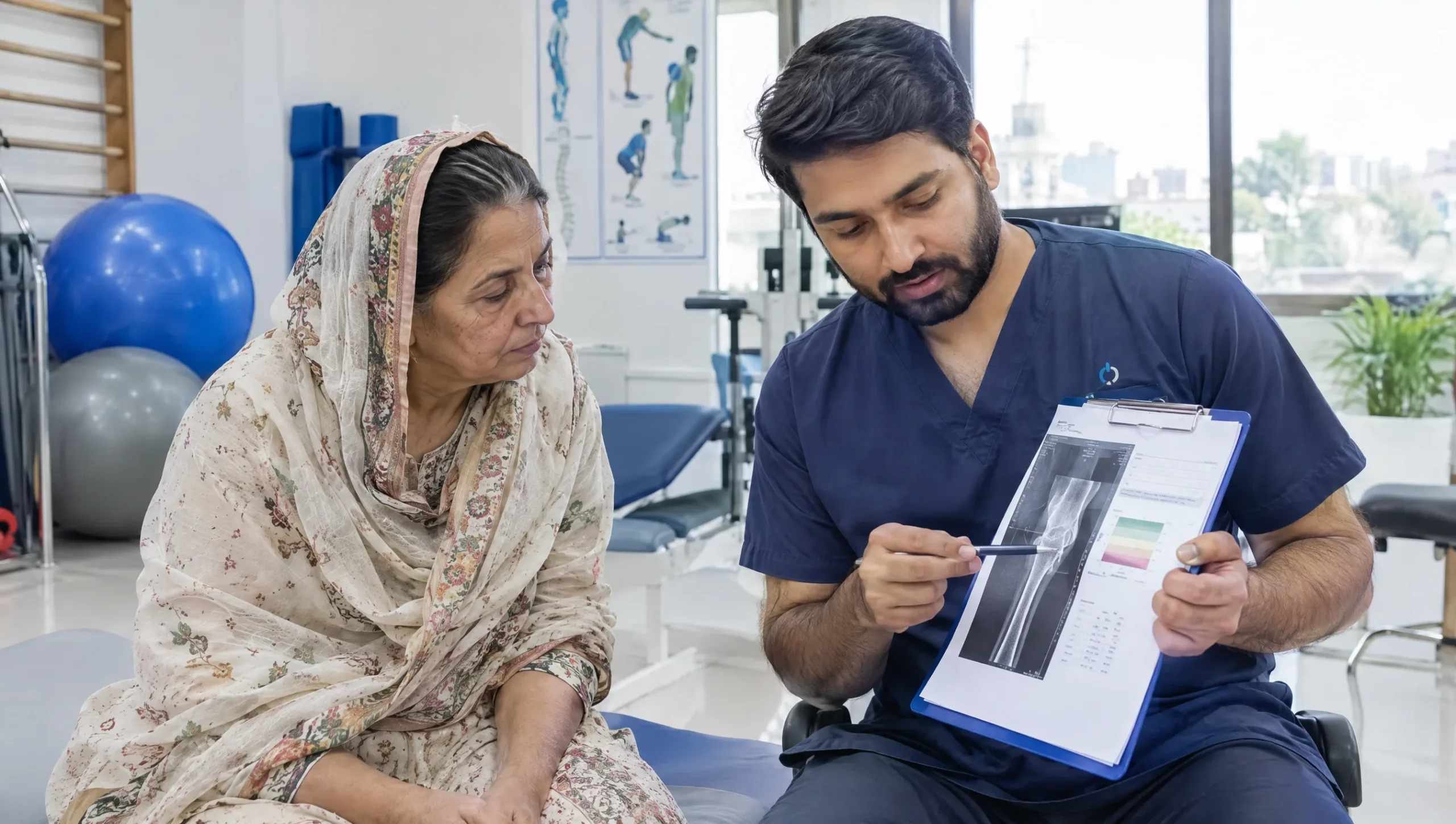
Osteoporosis is a condition in which bones lose density and become thinner and more fragile than they should be, making them more likely to fracture from a fall, a bump, or sometimes even a hard cough or sneeze. It develops silently over years — most people only discover it after a DEXA (bone density) scan, or after an unexpected fracture, because there is usually no pain until a bone actually breaks.
A DEXA scan reports a T-score: a score between -1.0 and -2.5 indicates osteopenia (early bone thinning), while -2.5 or lower confirms osteoporosis. Knowing exactly where you fall on this scale helps us calibrate how much load your exercise program can safely include — one more reason a physiotherapy assessment, not a generic workout video, is the safer starting point.
Several factors make osteoporosis particularly common among older adults in Rawalpindi and Islamabad. Many women experience a sharp drop in bone-protective estrogen after menopause. Conservative dress and largely indoor daily routines can mean lower sun exposure, which lowers natural vitamin D production — vitamin D is essential for calcium absorption. Add a diet that may be lower in dairy and calcium-rich foods than ideal, along with sedentary habits that creep in as mobility becomes harder, and the risk compounds year after year.
The biggest concern isn’t the diagnosis itself — it’s what can happen after a fracture. A hip fracture in an older adult is one of the most common reasons for a sudden, permanent loss of independence, and the recovery period carries real risks of complications. According to the Mayo Clinic, regular weight-bearing and muscle-strengthening exercise is one of the most well-supported ways to slow bone loss and reduce fracture risk — which is exactly why physiotherapy plays such a central role in osteoporosis care, not just fracture recovery.
How Physiotherapy Helps You Manage Osteoporosis
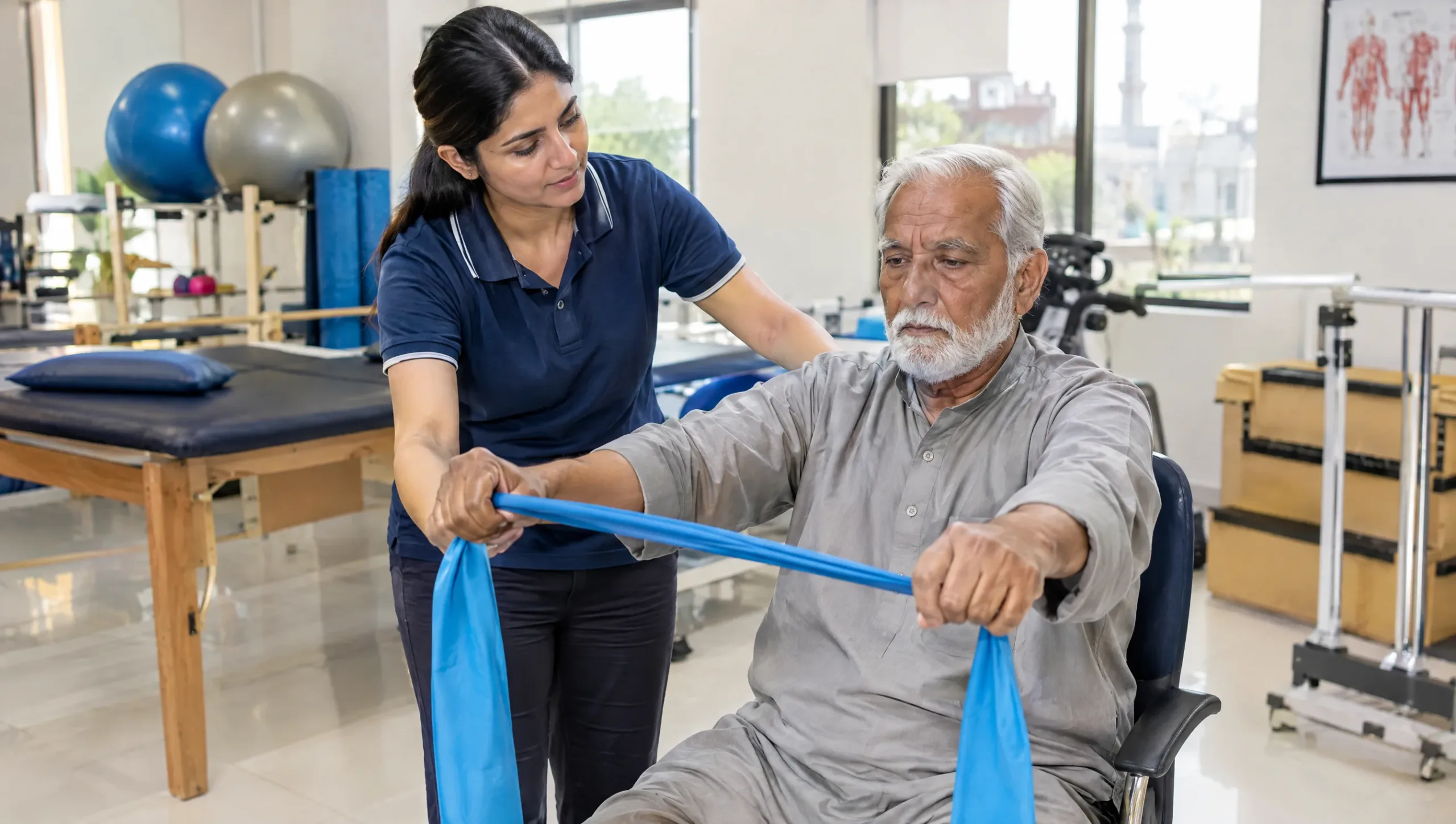
Bone is living tissue, and like muscle, it responds to the forces placed on it. This is the simple principle — often called Wolff’s Law — behind why targeted exercise can slow, and sometimes partially offset, bone loss: when a bone is loaded in a safe, controlled way, it adapts by laying down more bone mineral along the lines of stress.
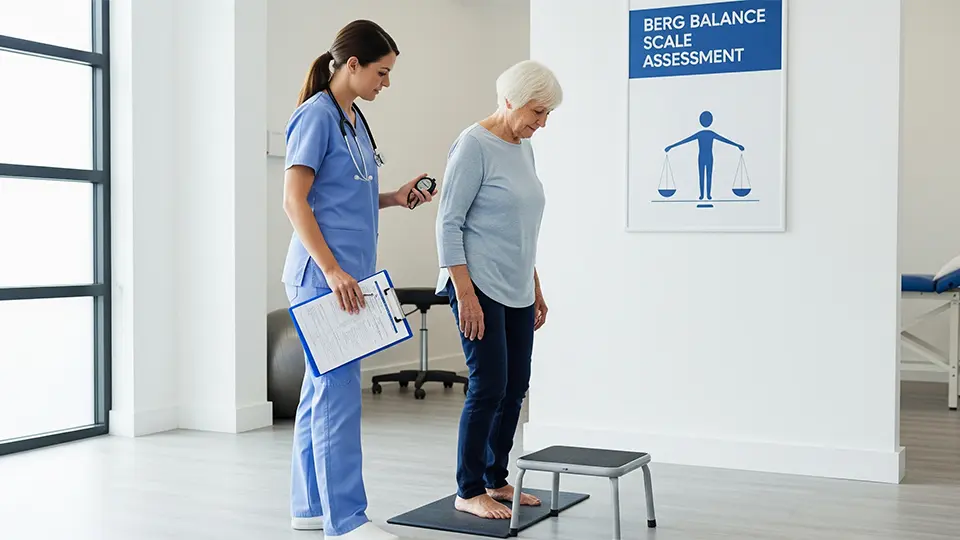
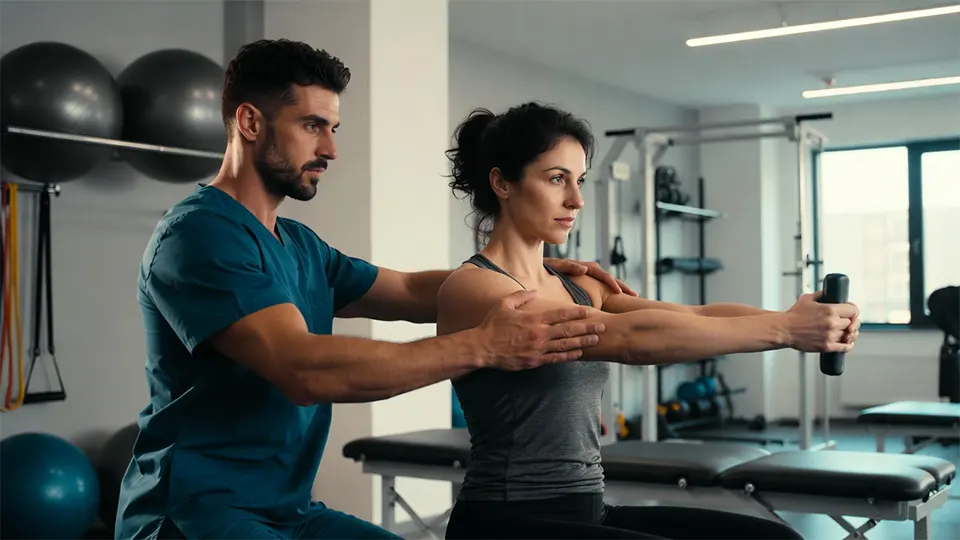
A physiotherapist’s job is to apply that principle safely. Before we design a program, we assess your current bone density results if available, your fracture history, your balance, your muscle strength, your posture, and any other conditions — diabetes, arthritis, a previous stroke — that might change what’s appropriate for you. From there we build a program around three pillars: weight-bearing exercise to stimulate the long bones of the legs and spine, resistance training to build the muscle that protects joints and bones during daily movement, and balance and posture training to reduce the single biggest cause of fractures — falls.
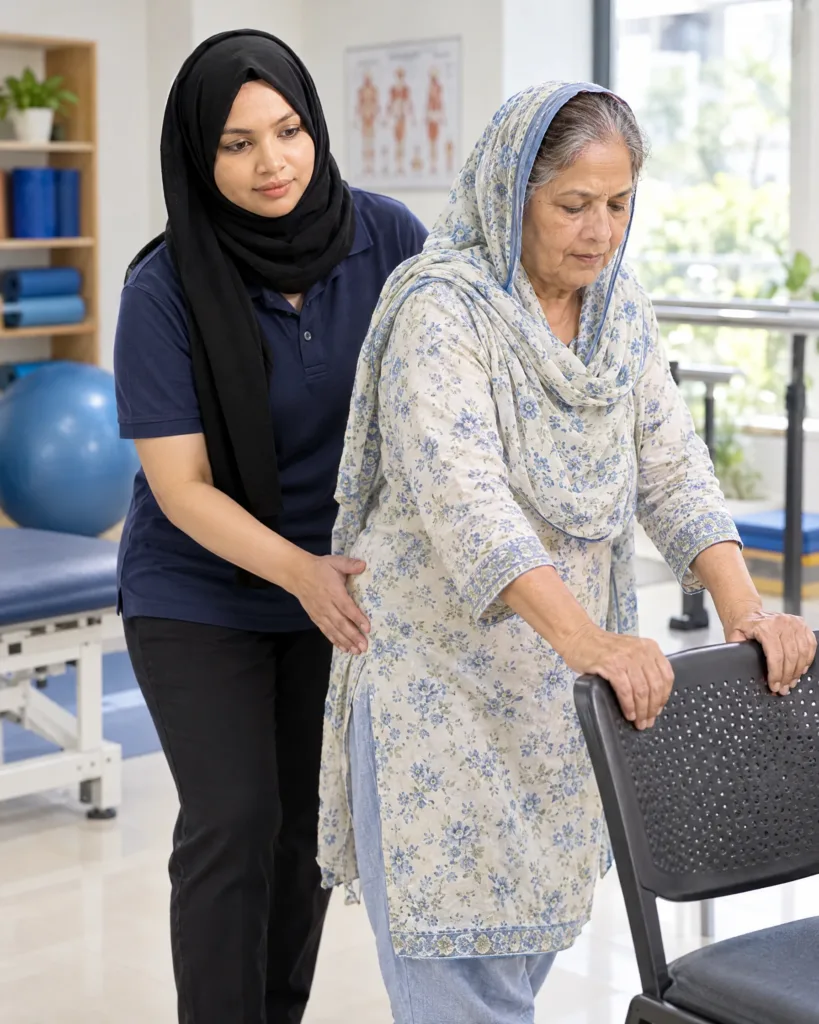
This is also where supervision matters most. Osteoporosis exercise is not “more is better.” Certain movements that are perfectly safe for someone with normal bone density can put dangerous pressure on a spine that has already lost density, which is why we always start with a hands-on assessment rather than a generic exercise sheet.
Safe Osteoporosis Exercises for Elderly Patients
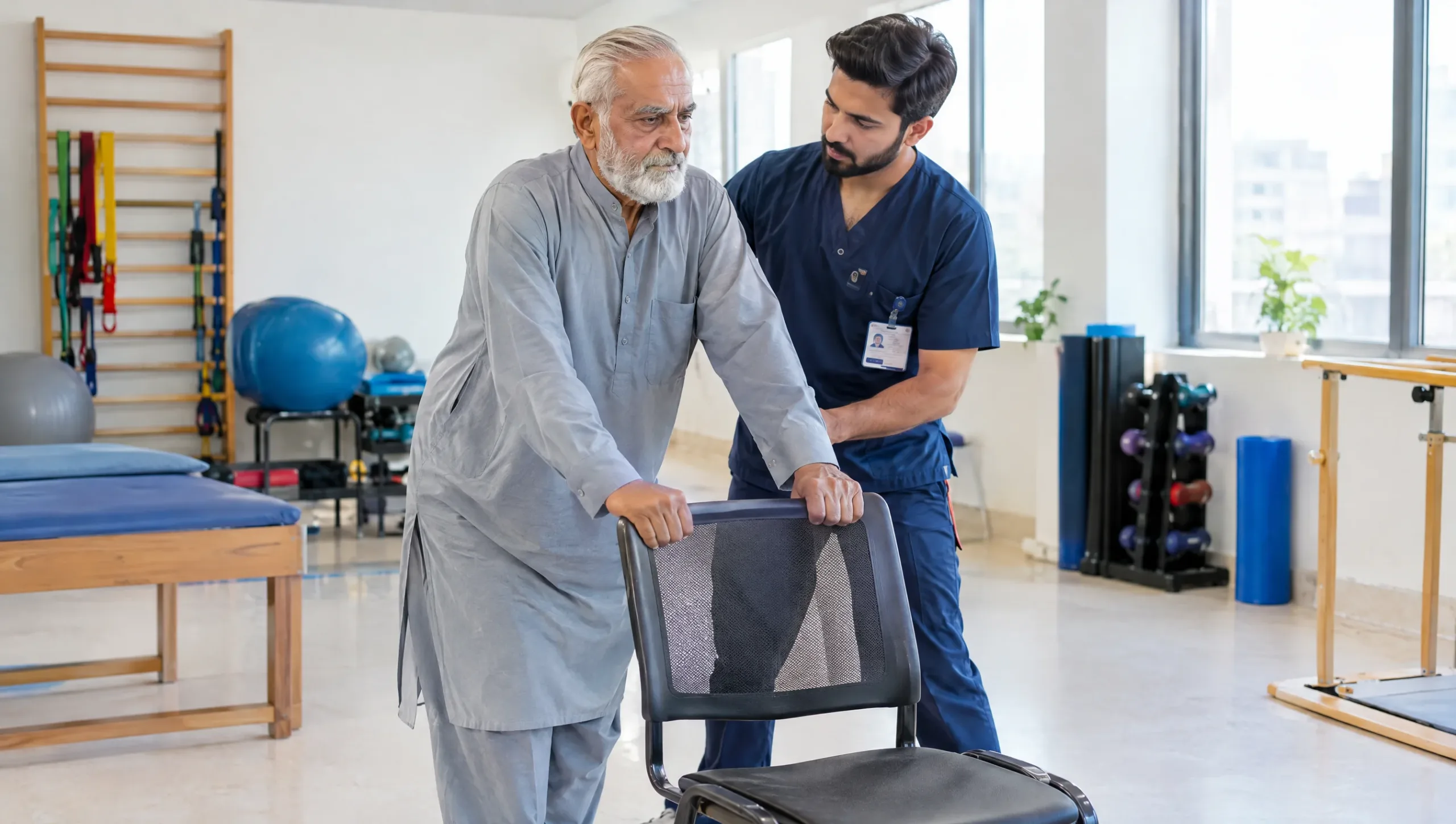
The exact program always depends on your individual bone density, fracture history, and fitness level — this is general education, not a substitute for an in-person assessment — but most safe, physiotherapist-guided osteoporosis exercises for elderly patients fall into four categories:
- Weight-bearing aerobic exercise. Brisk walking, stair climbing, and supported treadmill walking keep the legs and spine loaded through your own body weight. Aim for most days of the week, starting with 10–15 minutes and building up gradually.
- Resistance and strengthening exercise. Light resistance bands, bodyweight exercises like supported sit-to-stand from a chair, and low-weight functional strength work build the muscle that protects your spine and hips during everyday movement. Two to three sessions a week is a common starting point.
- Posture and spinal extension exercises. Gentle seated or standing exercises that draw the shoulder blades back and lightly extend the upper back help counter the forward-stooped posture (kyphosis) that often develops with vertebral bone loss.
- Balance and coordination training. Slow, controlled movements — single-leg stands near a wall, heel-to-toe walking, tai-chi-inspired sequences — retrain the reflexes that prevent a stumble from becoming a fall.
For patients with more advanced bone loss or a recent fracture, we often start in a supported or seated position, or in water, where buoyancy reduces load on the joints while still allowing muscles to work. As a general guide, most patients progress from supported, low-repetition exercises in the first few weeks to more independent, slightly higher-resistance versions of the same movements by week six to eight — always reassessed in person rather than on a fixed schedule, since everyone’s bone health and recovery pace is different.
Exercises and Movements to Avoid If You Have Osteoporosis
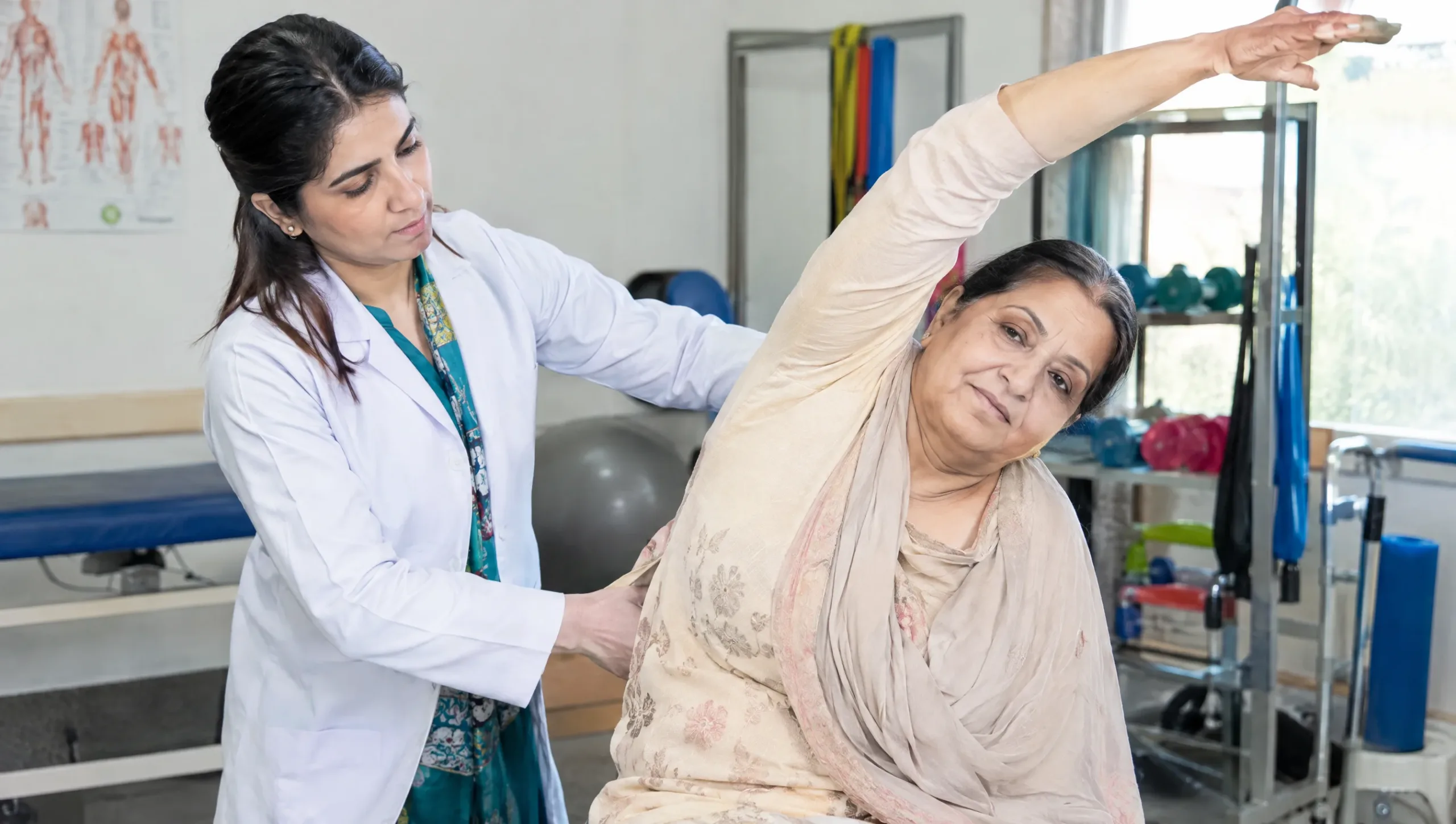
Just as important as knowing what to do is knowing what to avoid. If you have been diagnosed with osteoporosis or osteopenia, a few categories of movement carry a meaningfully higher fracture risk and should only be attempted under direct physiotherapist guidance, if at all:
- High-impact or jumping movements — running, jumping jacks, or high-impact aerobics place sudden, concentrated force through the spine and hips.
- Forward spinal flexion — traditional sit-ups, toe touches, and rounding the back to lift something from the floor compress the front of the vertebrae, which is exactly where osteoporotic fractures tend to occur.
- Spinal twisting combined with bending — think swinging a golf club or twisting while lifting a heavy bag of groceries.
- Heavy, unsupervised lifting — anything that requires straining or holding your breath sharply raises pressure on the spine.
- Exercise on an unstable or slippery surface without support nearby, where a stumble could end in a fall.
None of this means you should stop moving — inactivity is, if anything, riskier for bone health long-term. It simply means the exercises above should be modified or replaced with the safer alternatives your physiotherapist recommends.
Fall Prevention, Home Safety and Everyday Bone-Health Habits
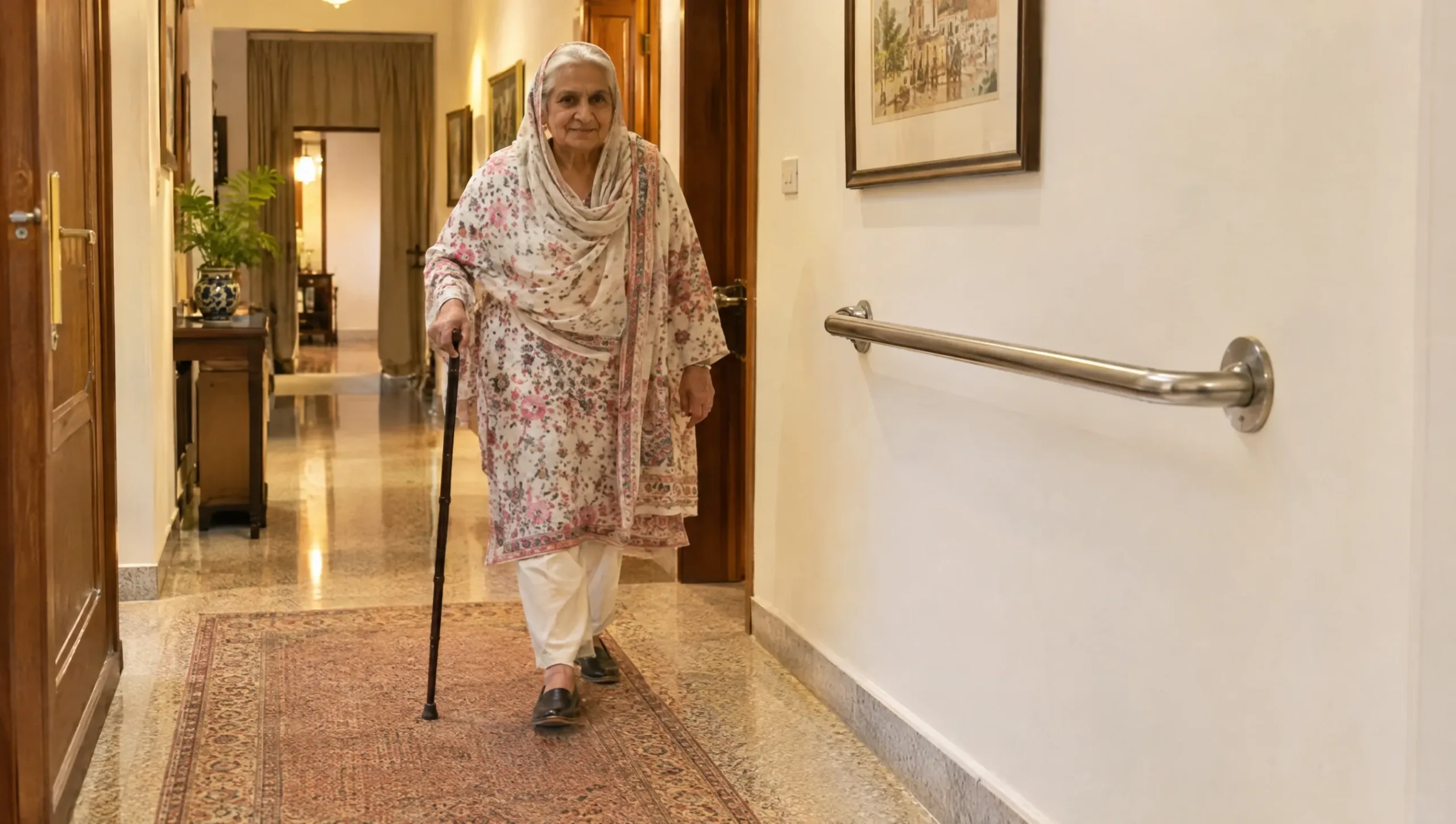
Because a fall is the event that most often turns osteoporosis into a fracture, reducing fall risk at home is just as important as the exercise program itself. A few changes make a disproportionate difference:
- Secure or remove loose rugs and mats, especially on marble or tiled floors common in Rawalpindi homes, which become slippery when damp.
- Install grab bars in the bathroom near the toilet and shower, and use a non-slip mat inside the shower.
- Improve lighting on staircases and hallways, and keep a lamp or torch within reach of the bed for nighttime trips to the bathroom.
- Wear supportive, closed-back shoes indoors rather than loose slippers.
- Have vision checked regularly — uncorrected vision changes are a common, overlooked fall risk.
Alongside exercise and home safety, everyday nutrition supports the same goal. Adequate calcium (from dairy, leafy greens, and fortified foods) and vitamin D (from safe sun exposure and, often, a supplement recommended by your doctor) give your body the raw materials bone-building exercise needs to actually work. We regularly coordinate with patients’ physicians on this side of care, since exercise and nutrition work best together, not as substitutes for one another.
If balance and fall risk are your primary concern rather than bone density itself, our dedicated guide on balance physiotherapy for seniors goes deeper into fall-prevention exercises specifically.
When Should You See a Physiotherapist for Osteoporosis?
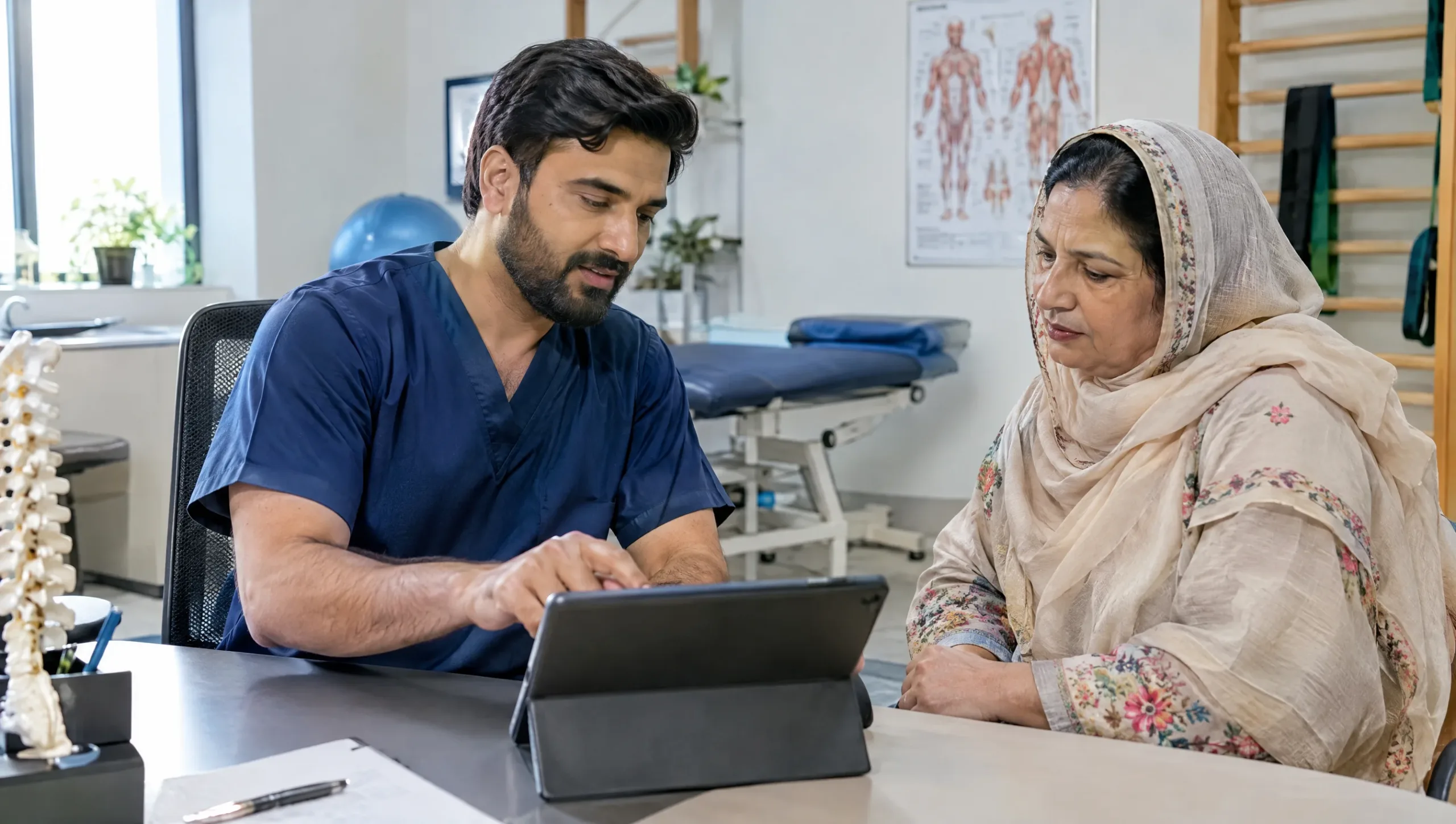
You don’t need to wait for a fracture to benefit from physiotherapy. It’s worth booking an assessment if any of the following apply to you or an aging parent:
- You’ve been diagnosed with osteoporosis or osteopenia on a DEXA scan.
- You’ve had a fracture from a minor fall or bump — a classic sign of fragility fracture.
- You’ve noticed a gradual stoop or loss of height over the years.
- You feel unsteady on your feet or have had a near-fall or fall in the last year.
- You have a family history of osteoporosis or hip fracture.
At your first visit, we’ll review your medical and fracture history, assess your strength, balance, and posture, and — working alongside your bone density results if you have them — build a program that’s realistic for your current fitness level and progresses safely over time. Many patients are surprised to find that after a few weeks of guided exercise, everyday tasks like climbing stairs or getting up from a low chair feel noticeably easier. This is general education and not a diagnosis — anyone with a new or worsening symptom should still get an in-person assessment before starting a new exercise routine.
Frequently Asked Questions
Can walking alone manage my osteoporosis, or do I need a formal exercise program?
Walking is an excellent weight-bearing habit and a great foundation, but on its own it mainly benefits the hips and legs — it does little for the spine or for the muscle strength that protects you from falls. Most physiotherapists recommend pairing regular walking with resistance and balance training for a more complete, bone- and fall-risk-focused program.
Is yoga safe for someone with osteoporosis?
Some yoga poses are genuinely beneficial, but many traditional poses involve forward spinal flexion or deep twisting that we generally advise against for weakened bone. Rather than avoiding yoga entirely, ask your physiotherapist to help you modify your practice — swapping flexion-based poses for extension-based and standing-balance poses.
How soon can I expect results from osteoporosis physiotherapy?
Most patients notice improvements in balance, confidence, and day-to-day strength within 4–6 weeks of consistent sessions. Measurable changes in bone density take longer — typically assessed on a repeat DEXA scan after 12 months or more — but the fall-prevention and strength benefits start accumulating from the very first few weeks.
I already had a fracture — is it too late to start exercising?
No. In fact, this is often when physiotherapy matters most. After a fracture has healed enough for safe movement, a carefully progressed program helps rebuild strength and confidence and meaningfully lowers the risk of a second fracture, which is unfortunately common without rehabilitation.
For more general physiotherapy questions, browse our full FAQ page or our expert answers guide.
If you or an elderly family member has been told to “be careful” about exercise because of osteoporosis, don’t let that caution turn into complete inactivity — it usually does more harm than good. At Physio Rehab Solution in Rawalpindi, our physiotherapists design individualized, closely supervised osteoporosis exercise programs that build strength and balance without risking a fracture. Book an in-person assessment at our Rawalpindi clinic or call us at +923214287773 to get a program built around your bone density results, fracture history, and daily life — not a one-size-fits-all handout.
\n