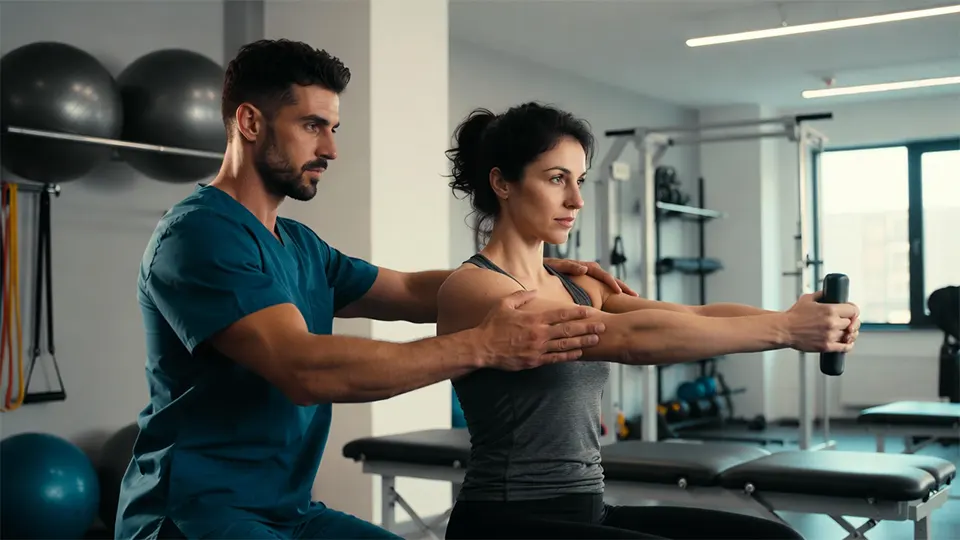
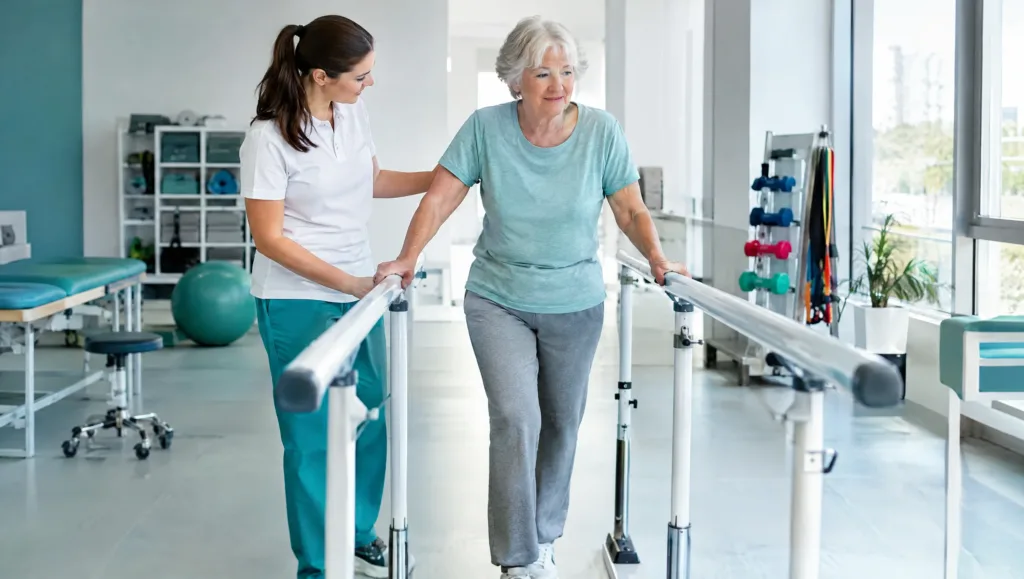
A fall doesn’t just cause a bruise in older adults — it’s one of the most common reasons seniors in Rawalpindi end up in hospital, lose their independence, or develop a lasting fear of moving freely around their own home. The encouraging part is that most falls aren’t random bad luck. Balance physiotherapy seniors fall prevention programs specifically target the strength, reflexes, and confidence that prevent falls before they happen, rather than only treating injuries after the fact.
Table of Contents
- Why Balance Declines With Age
- How Physiotherapists Assess Fall Risk
- What a Fall-Prevention Physiotherapy Program Includes
- Home Hazards That Undo Physiotherapy Progress
- Exercises Physiotherapists Commonly Prescribe
- Warning Signs Families Shouldn’t Ignore
- Getting Fall-Prevention Physiotherapy in Rawalpindi
- Frequently Asked Questions About Balance Physiotherapy for Seniors
At Physio Rehab Solution in Rawalpindi, we work with older adults and their families who want a practical, proactive plan rather than waiting for a fall to force the issue. This guide covers why balance declines with age, what a fall-prevention physiotherapy program actually involves, and the warning signs families shouldn’t ignore.
Why Balance Declines With Age

Balance isn’t one single system — it’s the brain constantly combining information from the inner ear (vestibular system), the eyes, and sensors in the muscles and joints (proprioception) to keep the body upright. With age, all three can decline: inner-ear sensitivity reduces, vision changes (including reduced depth perception and contrast sensitivity), and proprioception in the feet and ankles becomes less precise. On top of this, muscle mass and reaction speed naturally decrease, meaning that even when a stumble is detected, the body may react a fraction of a second too slowly to correct it.
None of this means falls are inevitable. It means the systems that prevent falls can be specifically trained and strengthened, which is exactly what balance physiotherapy focuses on. Muscle strength, particularly in the hips, thighs, and ankles, is one of the most trainable factors in fall risk at any age — studies on older adults consistently show that targeted strength and balance training reduces fall rates, which is a meaningfully different message from “falls are just part of getting old.”
It’s worth separating two related but distinct ideas: balance (the moment-to-moment ability to stay upright) and mobility (the broader ability to move around safely, including walking distance and stair climbing). A person can have reasonably good balance while standing still but still be at fall risk during transitions — getting up from a low chair, turning quickly, or stepping over a threshold. A thorough physiotherapy assessment looks at both, not just static standing balance, because most real-world falls happen during movement and transitions rather than while standing still.
Chronic conditions common in later life — diabetes affecting sensation in the feet, arthritis limiting joint range of motion, or past strokes affecting one side of the body — can add further layers to fall risk. A good assessment accounts for these alongside pure age-related decline, since the right exercise approach can differ depending on what’s actually driving the balance problem. For example, diabetic nerve changes in the feet (peripheral neuropathy) reduce the sensory feedback balance relies on, so training in that case often leans more heavily on vision and strength compensation rather than feel-based foot proprioception alone.
How Physiotherapists Assess Fall Risk

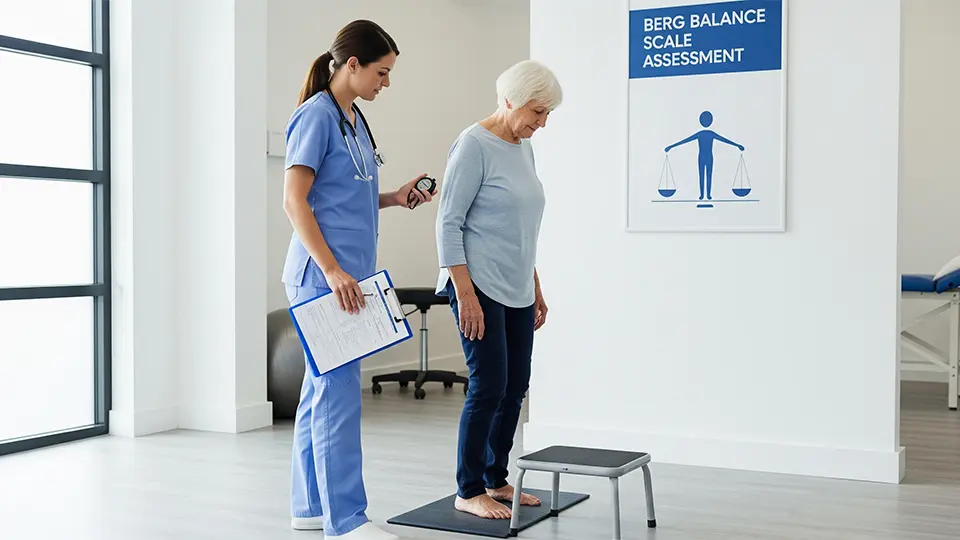
A proper fall-risk assessment goes well beyond asking “have you fallen recently?” Physiotherapists use standardised tests to measure specific aspects of balance and mobility: the Timed Up and Go (TUG) test measures how long it takes to stand from a chair, walk a short distance, turn, and sit back down, with slower times linked to higher fall risk. The Berg Balance Scale scores a series of balance tasks to give a numeric picture of overall stability. Gait speed, grip strength, and a review of medications that can affect balance (certain blood pressure, sedative, or multiple interacting medications) are also typically checked, since balance risk is rarely about one factor alone.
If you’d like to understand how one of these common tools is scored, our guide to the Berg Balance Scale walks through what the scores actually mean. A single low score on any one test is rarely used in isolation — physiotherapists typically combine two or three measures with a general mobility and strength exam before assigning an overall fall-risk category of low, moderate, or high.
What a Balance Physiotherapy Seniors Fall Prevention Program Includes
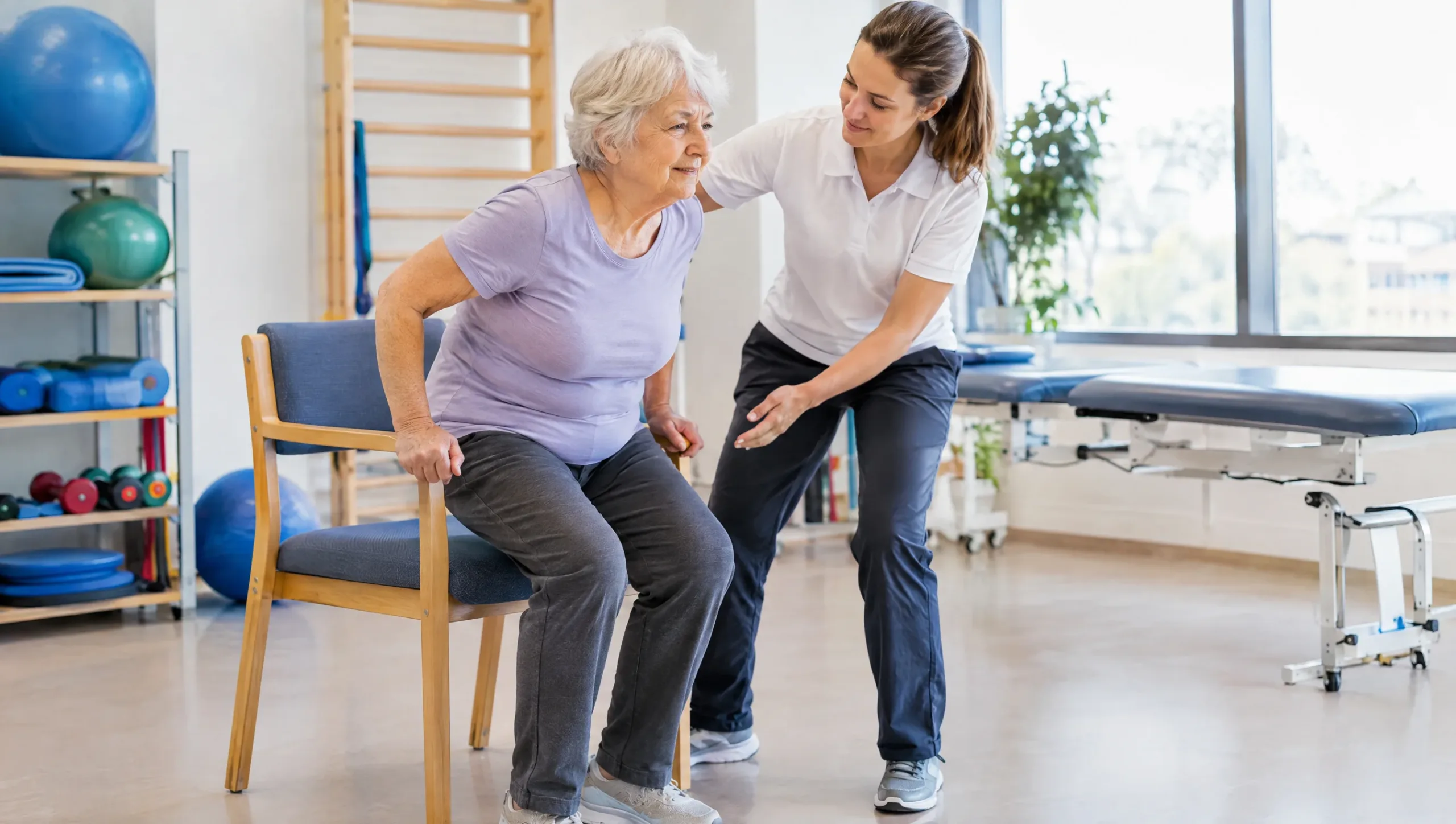
Once fall risk factors are identified, a program is built around the specific weaknesses found in assessment rather than a generic “senior exercise class.” Common components include lower-body strengthening (particularly hips and ankles, which are heavily involved in catching a stumble), static and dynamic balance training (standing on varied surfaces, weight shifting, controlled reaching), gait training to correct unsafe walking patterns, and reaction-time drills that rehearse the quick corrective steps needed when a trip actually happens.
Vision and vestibular screening is included when indicated, since a balance problem that looks purely muscular sometimes traces back to an inner-ear issue that needs a different treatment approach entirely. Programs are typically progressive: early sessions favour supported exercises near a wall or sturdy chair, moving toward less support and more dynamic, real-world movement challenges as confidence and strength build, always calibrated so the training itself doesn’t become a fall risk.
Home Hazards That Undo Physiotherapy Progress
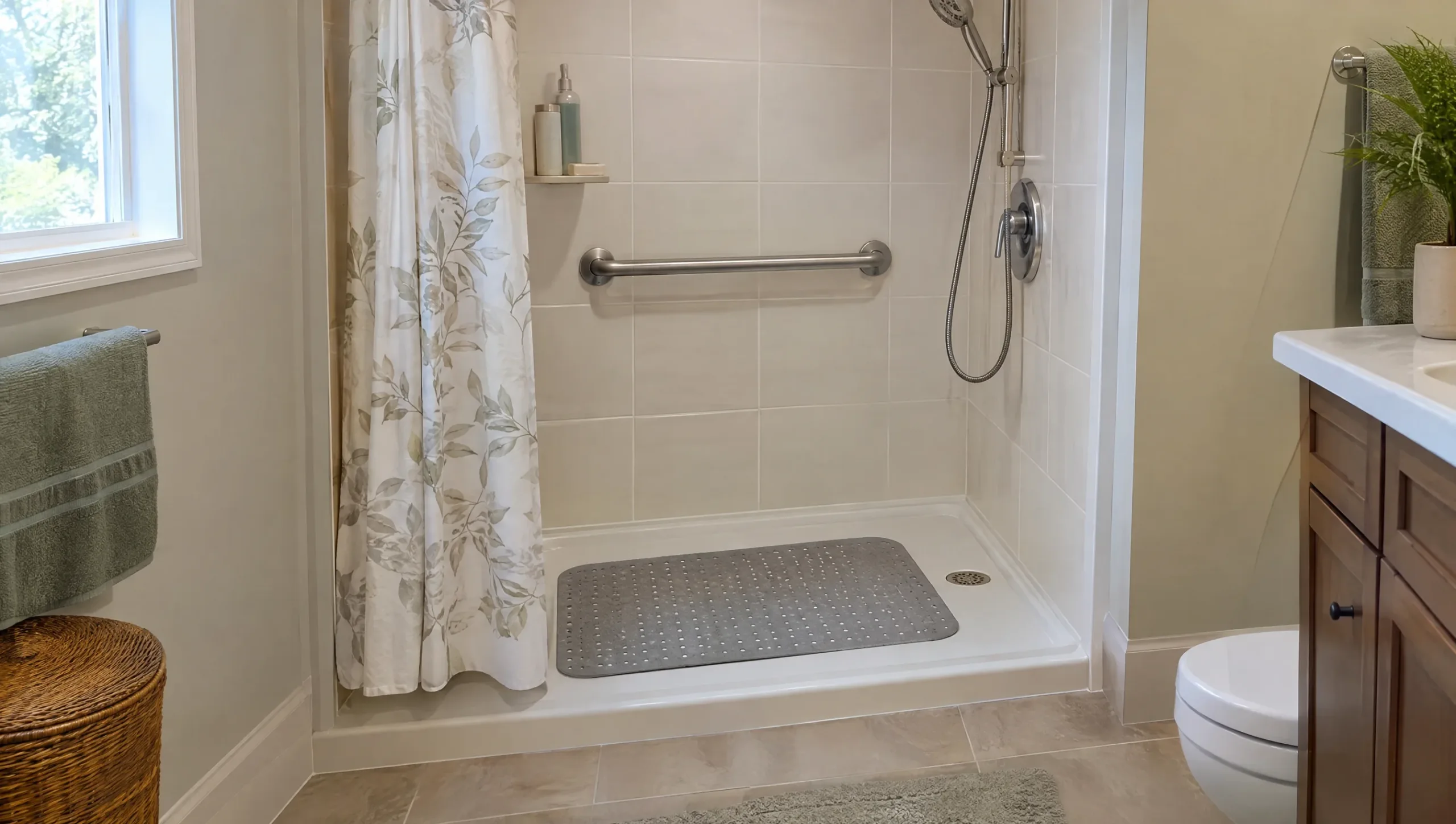
Clinic-based progress can be undone by a home environment that’s still full of fall risks. The most common hazards we flag during home-focused assessments are loose rugs or mats without non-slip backing, poor lighting on stairs and in hallways, especially for nighttime bathroom trips, a lack of grab bars in bathrooms, where a large share of serious falls happen, cluttered walkways and trailing cords, and unstable or missing handrails on stairs. Footwear matters too — loose slippers or socks on tiled floors, common in many Pakistani households, are a frequently overlooked hazard that’s simple to fix.
Addressing these alongside physiotherapy, rather than instead of it, is what actually reduces real-world fall risk. A physiotherapist can do a home walkthrough (in person or by asking detailed questions about the layout) specifically to flag these hazards, since most families don’t think to mention them unprompted during a clinic visit. Simple, low-cost fixes — removing a loose rug, adding a motion-sensor night light near the bed and bathroom, fitting a grab bar beside the toilet and shower — often reduce fall risk as much as weeks of exercise, which is why a combined approach gets better results than either strategy alone.
Exercises Physiotherapists Commonly Prescribe
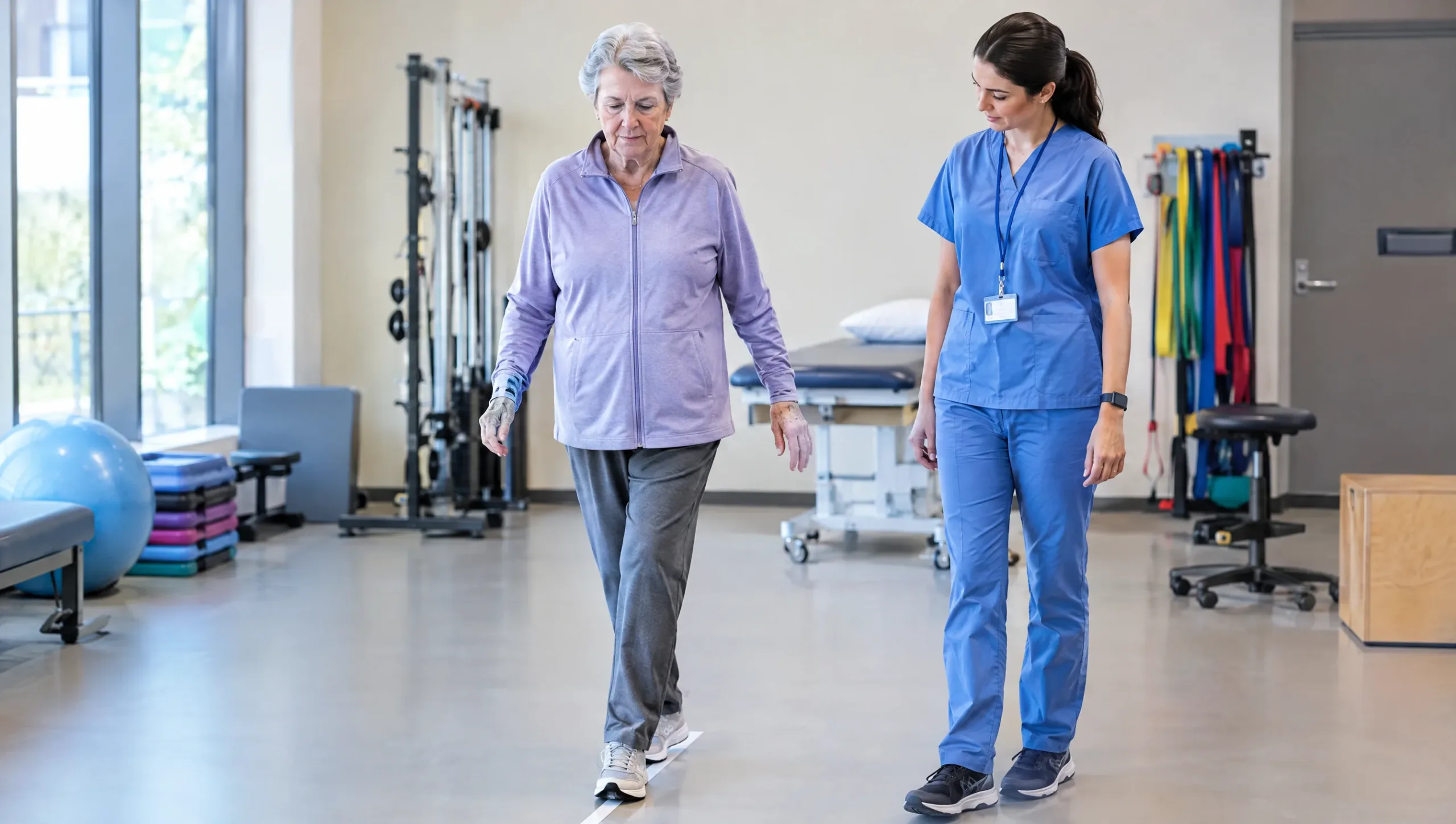
While any program should be individualised to the person’s specific deficits, common categories of exercise in senior balance training include sit-to-stand repetitions to build the leg strength needed for safe transfers, single-leg stance practice (with support nearby) to train static balance, heel-to-toe walking to challenge dynamic balance and gait, ankle strengthening with resistance bands, since ankle strength is heavily linked to fall-catching ability, and tai chi-based movement patterns, which have been studied specifically for fall-risk reduction in older adults.
Exercise intensity and progression should always be guided by a physiotherapist, since doing the right exercise in an unsafe way (for example, standing balance practice without something to hold onto nearby) can itself create a fall risk during training. Most programs ask for consistent practice three to five times a week, since balance and reaction-time improvements fade relatively quickly without ongoing use, unlike some strength gains that hold for longer once built. This is why many physiotherapists recommend thinking of balance training the way one might think of brushing teeth — a small, ongoing habit rather than a course of treatment with a fixed end date, especially once someone has already had a fall or a near-miss.
Warning Signs Families Shouldn’t Ignore
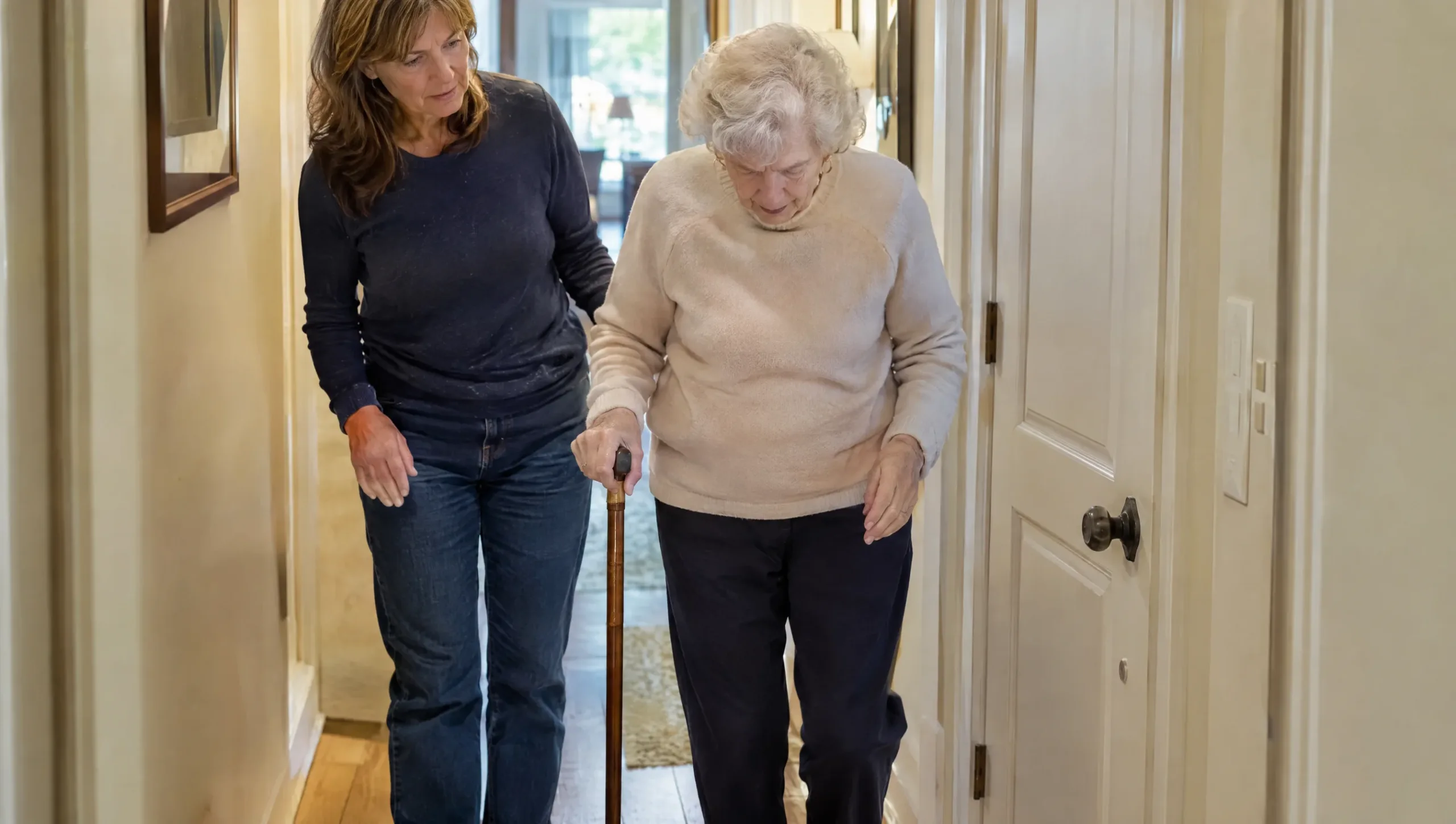
Certain signals suggest fall risk is already elevated and worth assessing promptly: holding onto furniture or walls while moving around the house, a noticeably slower or more hesitant walking pattern than a year ago, a “near miss” stumble that didn’t result in a fall but felt close, dizziness when standing up quickly, and a growing reluctance to go outside or climb stairs due to fear of falling. That last one matters more than families often realise — fear of falling itself leads to reduced activity, which then leads to further strength loss and, ironically, higher actual fall risk. Addressing the fear alongside the physical training is part of a well-run program.
Family members are often in the best position to notice these changes, since the person experiencing them may downplay or not fully register a gradual decline that’s been happening for months. Older adults sometimes avoid mentioning a stumble or near-fall out of concern it will lead to a loss of independence, which makes it worth asking directly and gently rather than waiting for them to volunteer it. If you’ve noticed any of the above in a parent or older relative, raising it directly and suggesting an assessment is worth the slightly awkward conversation.
Getting Fall-Prevention Physiotherapy in Rawalpindi

Fall prevention works best before a fall happens, not only after one. At Physio Rehab Solution in Rawalpindi, Dr. Iqra Kiran and our physiotherapy team run structured balance and fall-risk assessments for older adults, using standardised testing rather than guesswork, and build individualised strengthening and balance programs from the results. For families who prefer the assessment and early sessions to happen at home rather than in clinic, this is also worth discussing directly with our team, since a home-based first visit can reveal hazards a clinic visit never would.
If you’re also managing joint pain alongside balance concerns, our broader FAQ page and expert physiotherapy FAQ cover general questions about what to expect from physiotherapy care at our clinic, including cost and appointment logistics.
This article is for general education and isn’t a substitute for an individual assessment. If an older adult in your family has fallen, had a near-miss, or shows any of the warning signs above, please book an in-person evaluation rather than waiting for a more serious fall to force the issue.
Frequently Asked Questions About Balance Physiotherapy for Seniors

How many physiotherapy sessions does fall-prevention training usually take?
Most structured balance programs run for 8 to 12 weeks of regular sessions to build meaningful strength and balance improvements, followed by a home maintenance routine. Results vary by starting fitness level and any underlying conditions, which is why the plan is built around the individual’s assessment rather than a fixed number of sessions for everyone.
Can balance exercises help even after several falls have already happened?
Yes. A history of falls doesn’t mean it’s too late — it usually means there’s a specific, identifiable weakness or risk factor to address, and physiotherapy after a fall (or several) can meaningfully reduce the risk of the next one. The assessment after a fall often reveals exactly what to target.
Is balance training safe for someone who already uses a walker or cane?
Yes, balance and strengthening exercises are regularly adapted for people who use walking aids, often starting with seated or supported exercises before progressing. The goal isn’t to remove a necessary mobility aid, but to reduce overall fall risk and, where appropriate, work toward more independence over time.
Does poor eyesight or inner-ear trouble affect fall-prevention treatment?
Yes, both are commonly involved in balance problems and are checked during a thorough assessment. Vision changes may need an updated prescription or separate eye care, while inner-ear (vestibular) issues sometimes respond to specific vestibular rehabilitation techniques distinct from general strength and balance training, which is why a broad assessment matters before starting a program.
Should an older adult exercise alone at home or always with supervision?
Early in a program, supervised sessions are safer, since a physiotherapist can correct form and ensure the exercise is appropriately challenging without being risky. Once specific exercises have been learned and deemed safe to perform independently, a home routine is usually encouraged alongside clinic visits, since daily practice matters more for balance retention than occasional supervised sessions alone. The physiotherapist should clearly specify which exercises are safe to do unsupervised and which still need support nearby.
Worried about a fall risk in your family? Physio Rehab Solution is based in Rawalpindi and offers balance assessments and fall-prevention physiotherapy for older adults. Call +92 321 4287773 to book an in-person assessment.