
Parents often first notice something is off during a school screening, a swimming trip, or simply watching their teenager’s back while they bend forward to tie their shoes: one shoulder blade sits higher, the waistline looks uneven, or the ribs seem to bulge more on one side. The question that follows almost immediately is whether a scoliosis physiotherapy teenager program can actually fix the curve, or whether surgery is inevitable. The honest answer sits in between — and it depends heavily on how early the curve is caught and how consistently it’s managed.
Table of Contents
- What Is Scoliosis and Why It Matters in Teens
- Can Physiotherapy Actually Correct Scoliosis?
- The Schroth Method and Scoliosis-Specific Exercises
- Signs Parents Should Watch For
- When Bracing Is Needed Alongside Physiotherapy
- What a Scoliosis Physiotherapy Program Looks Like
- Common Mistakes Parents and Teens Make
- Getting Scoliosis Physiotherapy Care in Rawalpindi
- Frequently Asked Questions About Scoliosis Physiotherapy for Teens
At Physio Rehab Solution in Rawalpindi, we see a steady stream of teenagers referred for scoliosis screening and management. This guide explains what scoliosis actually is, what physiotherapy can and can’t do about it, and what a real treatment plan looks like.
What Is Scoliosis and Why It Matters in Teens
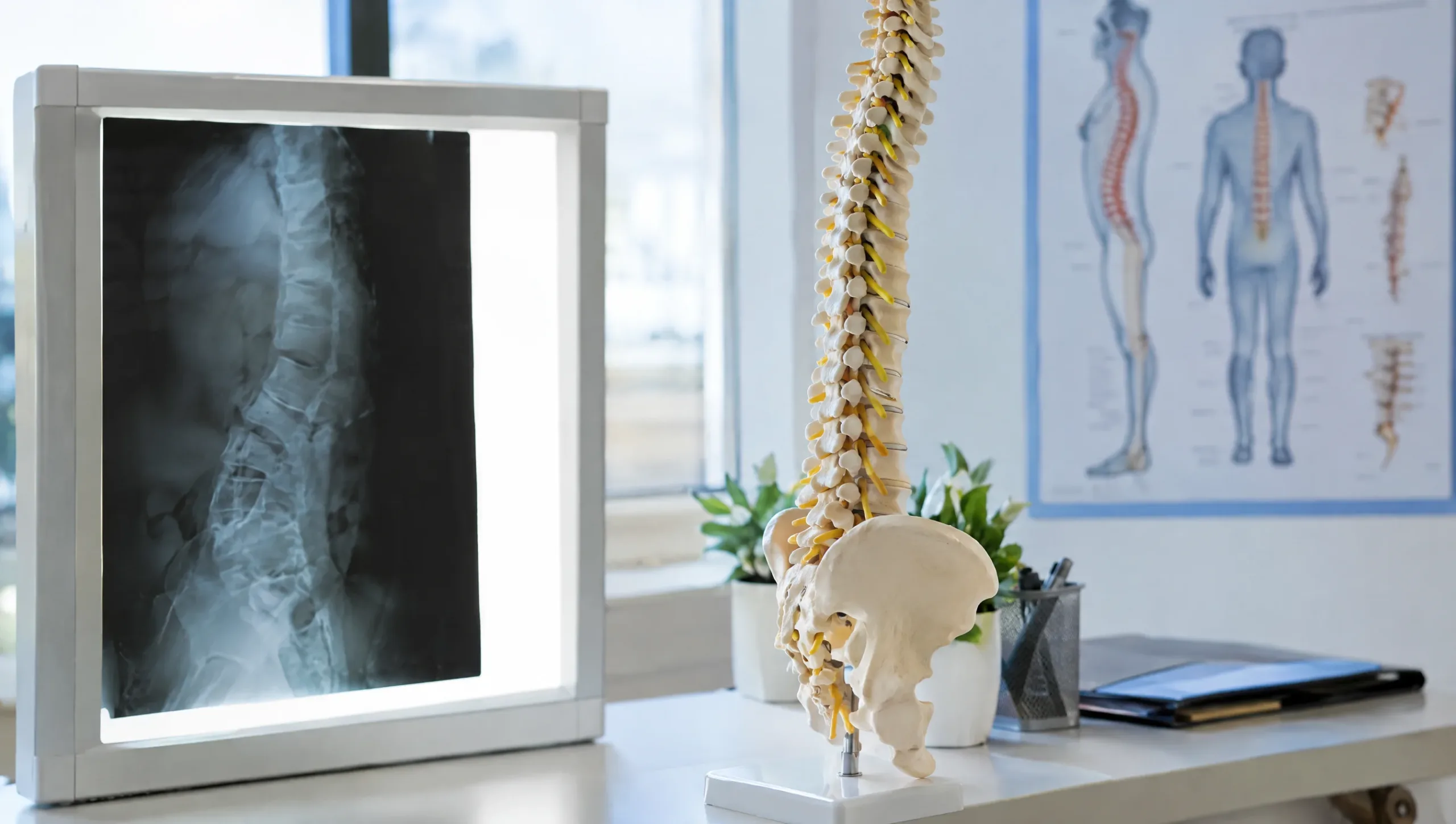
Scoliosis is a sideways curvature of the spine, usually accompanied by some rotation of the vertebrae. The most common form in teenagers is adolescent idiopathic scoliosis (AIS) — “idiopathic” simply means the exact cause isn’t fully understood, though genetics appear to play a role. It typically appears or worsens during the adolescent growth spurt, which is exactly why screening around puberty matters: a curve that seems mild at 11 can progress quickly over 12 to 18 months of rapid growth. Mayo Clinic notes that early detection and regular monitoring are key to managing scoliosis effectively during the growth years.
Not all scoliosis is the same type. Idiopathic scoliosis (the kind discussed throughout this article) is the most common in otherwise healthy teenagers and has no single identified cause. Congenital scoliosis is present from birth due to how the spine’s vertebrae formed. Neuromuscular scoliosis develops secondary to a condition affecting muscle control of the spine. The distinction matters because physiotherapy’s role and expected results differ across these types — this article focuses specifically on idiopathic scoliosis in teenagers, which is by far the most common presentation seen in a general physiotherapy clinic.
Curves are measured in degrees using a Cobb angle, taken from an X-ray. Mild curves (roughly under 20–25 degrees) are usually monitored and may respond well to physiotherapy. Moderate curves often need bracing alongside physiotherapy. Larger curves, generally above 45–50 degrees, are more likely to need a surgical opinion. These numbers are general reference points, not a diagnosis — only an X-ray and an in-person assessment can establish your teenager’s actual Cobb angle and risk of progression.
Can Physiotherapy Actually Correct Scoliosis?

This is the question every parent wants a straight answer to, so here it is: physiotherapy is very unlikely to make a structural curve disappear completely, but it can meaningfully slow or halt progression in mild-to-moderate curves, improve posture and muscle symmetry, reduce pain, and in some cases produce a measurable reduction in curve angle — especially when started early and combined with scoliosis-specific exercise approaches rather than generic stretching.
What physiotherapy reliably does is address the muscular and postural side of scoliosis: the asymmetric muscle tension, the altered breathing mechanics on the concave side of the curve, and the compensatory postural habits that develop around the curve. For a teenager with a mild curve who is still growing, consistent physiotherapy can be the difference between a curve that stays manageable and one that progresses into bracing or surgical territory.
Research on scoliosis-specific exercise approaches (including Schroth and similar methods) has generally shown benefit for curve stabilisation, posture, and quality of life in mild-to-moderate adolescent idiopathic scoliosis, particularly when started early and practiced consistently. The evidence is strongest for preventing progression and improving posture and pain rather than for reversing an established structural curve entirely, which is why we’re careful not to oversell what exercise alone can achieve for larger curves.
The Schroth Method and Scoliosis-Specific Exercises
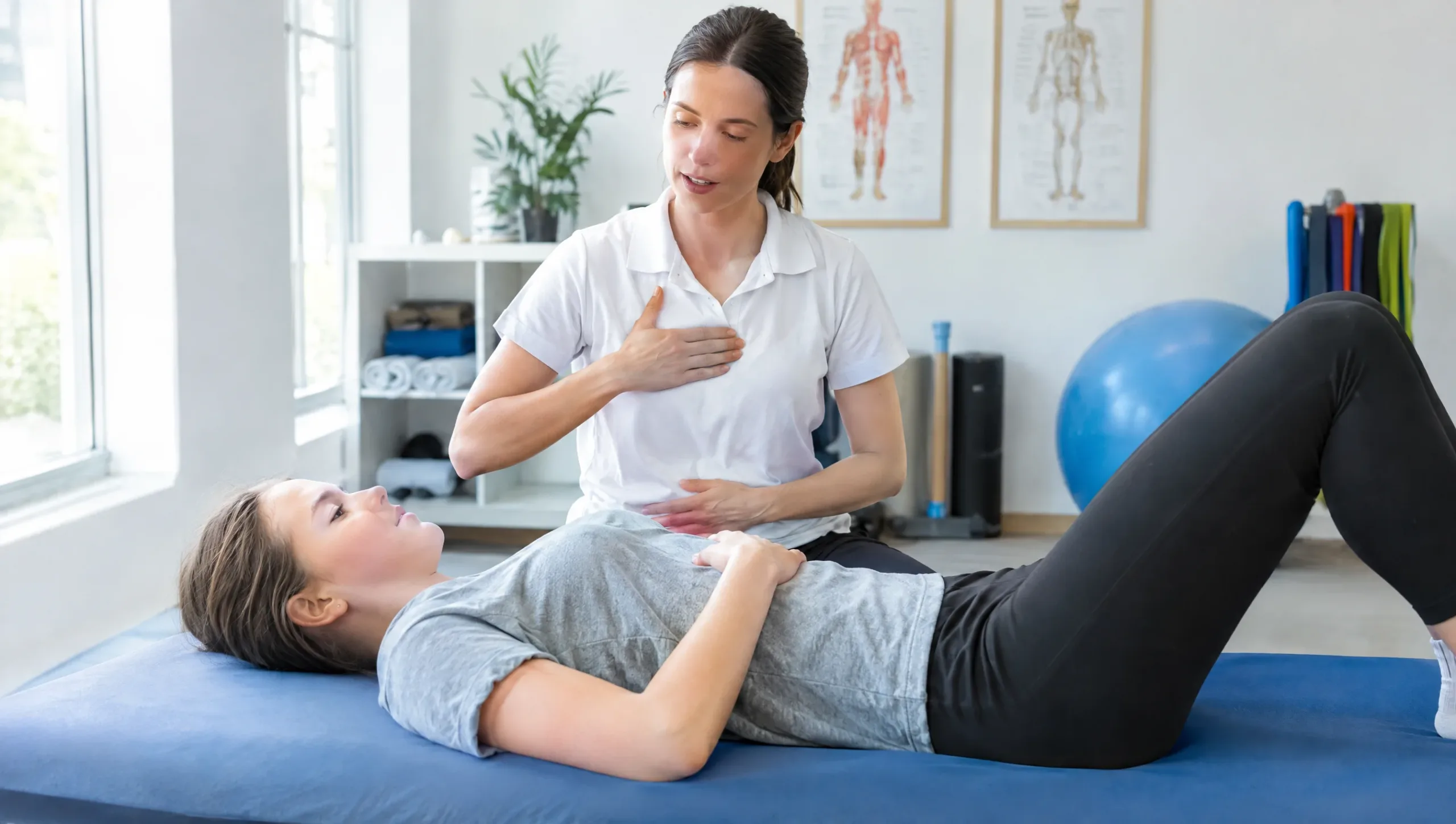
Generic core-strengthening exercises are not the same as scoliosis-specific physiotherapy, and this distinction matters more than most families realize. The Schroth method is the most widely recognised scoliosis-specific exercise approach: it uses asymmetric exercises tailored to the direction and pattern of the individual’s curve, combined with a breathing technique (rotational angular breathing) designed to expand the collapsed side of the rib cage. The goal isn’t a generic “strong core” — it’s correcting the specific three-dimensional pattern of that teenager’s curve.
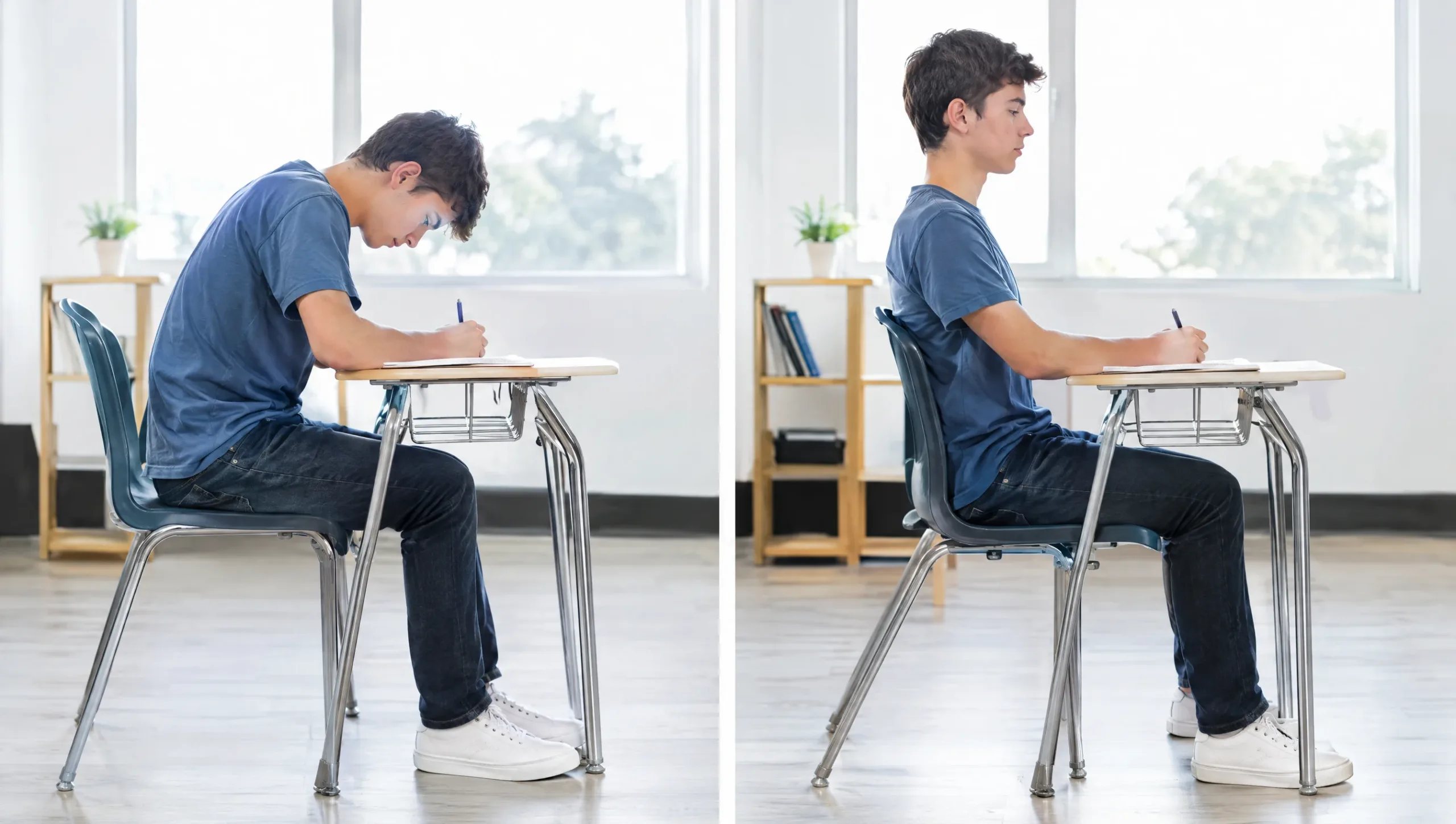
A physiotherapist trained in scoliosis-specific exercise will also teach postural awareness — how to sit, stand, and carry a school bag in ways that don’t reinforce the curve — since teenagers spend long hours at desks and on screens in postures that can aggravate an existing curve. It’s worth asking any physiotherapist you consult whether they have specific training in scoliosis-specific exercise approaches, since this is a distinct skill set from general orthopedic physiotherapy and makes a real difference to outcomes.
Signs Parents Should Watch For

Scoliosis can be subtle in its early stages, which is exactly why screening matters. Things worth paying attention to include one shoulder or shoulder blade sitting visibly higher than the other, uneven waistline or hip height, the body leaning noticeably to one side, one side of the rib cage appearing more prominent when your teenager bends forward (the classic school screening test, called the Adams forward bend test), and clothes or bag straps that seem to hang unevenly despite being adjusted correctly.
None of these signs alone confirm scoliosis, and some postural asymmetry is normal. But if you notice more than one of these together, it’s worth a physiotherapy or orthopedic assessment rather than waiting to “see if it gets worse,” since catching a curve during the growth spurt gives far more treatment options than catching it after growth has finished.
The forward bend test itself is simple: your teenager bends forward at the waist with arms hanging and knees straight, and an examiner looks along the spine from behind for any asymmetric rib or back prominence on one side. It’s a quick screening tool, not a diagnosis — a positive forward bend test is a reason to get an X-ray and proper assessment, not a confirmation of scoliosis on its own, since posture and muscle tightness can sometimes mimic the appearance of a curve.
When Bracing Is Needed Alongside Physiotherapy
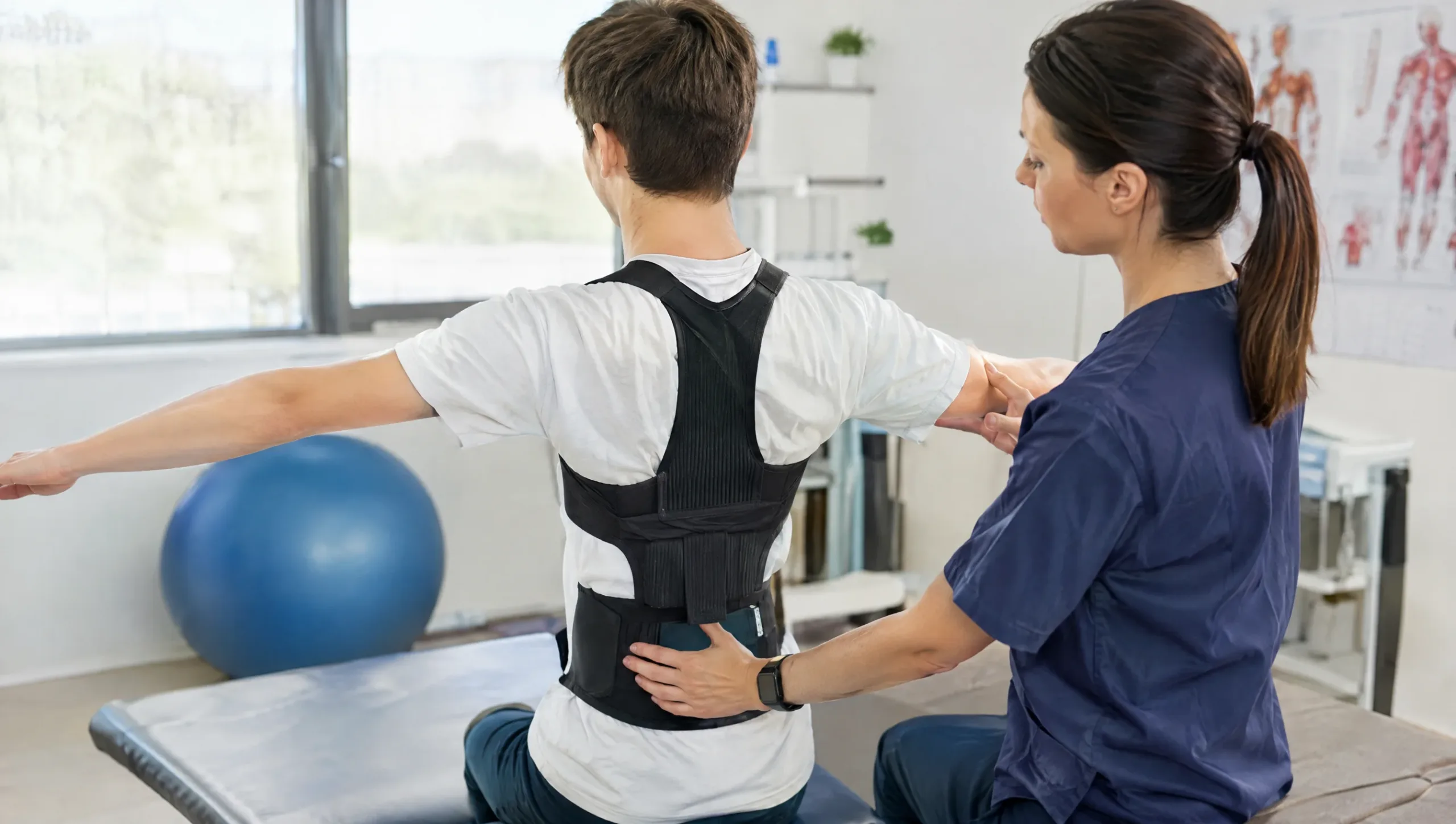
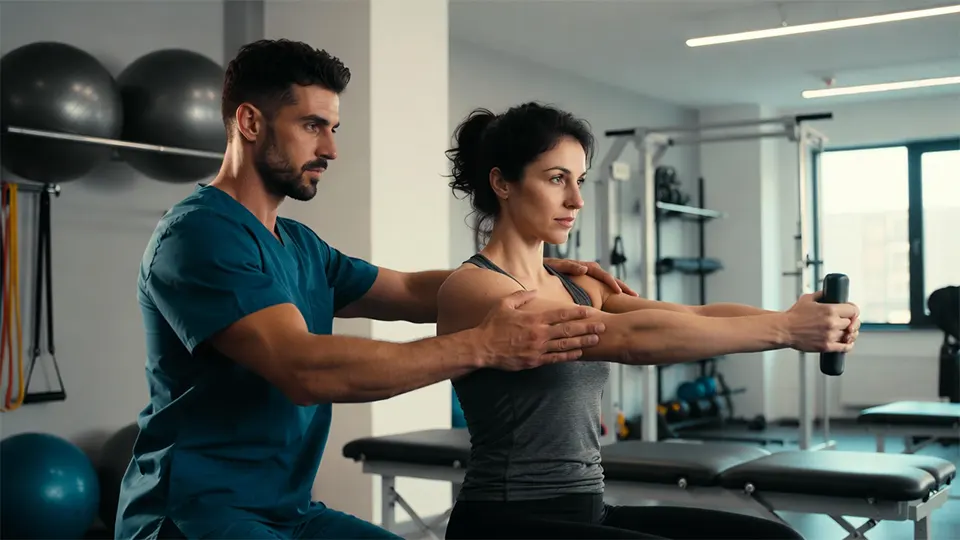
Bracing isn’t a failure of physiotherapy — the two are often used together. Braces work by applying external corrective force to limit curve progression during remaining growth, and they’re typically considered for moderate curves in a still-growing teenager. Physiotherapy during a bracing period focuses on preventing the muscle weakening that can come from reduced natural movement in a brace, maintaining the corrective exercises learned in scoliosis-specific training, and supporting breathing mechanics that the brace can restrict.
Brace-wearing schedules (how many hours per day) and duration are a medical decision made with an orthopedic specialist based on curve size, type, and remaining growth — physiotherapy supports that plan but doesn’t replace the orthopedic assessment that determines whether bracing is needed in the first place.
What a Scoliosis Physiotherapy Teenager Program Looks Like

A well-structured program usually starts with a detailed postural and movement assessment, ideally alongside imaging from an orthopedic referral to confirm the Cobb angle. From there, a physiotherapist builds a plan around the teenager’s specific curve pattern: corrective exercises matched to curve direction, breathing retraining, postural habit changes for school and daily life, and a home exercise routine the teenager can realistically stick to, since consistency over months (not a single session) is what actually influences curve behaviour.
Progress is tracked through periodic reassessment — postural photos, movement tests, and, when indicated, follow-up imaging — rather than guesswork, so the plan can be adjusted if the curve isn’t responding as expected.
Most scoliosis-specific physiotherapy programs run as weekly or twice-weekly guided sessions during the active treatment phase, paired with a daily home exercise routine that takes 15 to 30 minutes. This isn’t a short-term fix measured in weeks — meaningful change in curve behaviour is usually assessed over several months, aligned with the teenager’s growth curve, with reassessment roughly every three to six months during the fastest-growing years.
Common Mistakes Parents and Teens Make
A few patterns show up repeatedly in families who come to us after a slow or stalled scoliosis management plan elsewhere:
- Waiting to “see if it gets worse” instead of screening early. The growth spurt window is exactly when intervention has the most effect.
- Treating it with generic gym workouts. Non-specific strengthening doesn’t target the asymmetric pattern of a scoliotic curve the way scoliosis-specific exercise does.
- Inconsistent home exercise. A few sessions a month without daily home practice rarely changes curve behaviour.
- Stopping physiotherapy once a brace is fitted. The brace manages the curve mechanically; physiotherapy maintains the muscles and breathing mechanics around it.
- Skipping the orthopedic imaging step. Physiotherapy without a confirmed Cobb angle means decisions are being made without the number that actually guides treatment intensity.
The good news is that most adolescent idiopathic scoliosis is manageable with the right combination of early detection, consistent scoliosis-specific exercise, and bracing when indicated. The majority of teenagers diagnosed with mild-to-moderate curves go on to live active, normal lives without surgery — but that outcome is far more likely when the curve is caught and managed during the growth window rather than discovered and addressed only after growth has finished.
Getting Scoliosis Physiotherapy Care in Rawalpindi
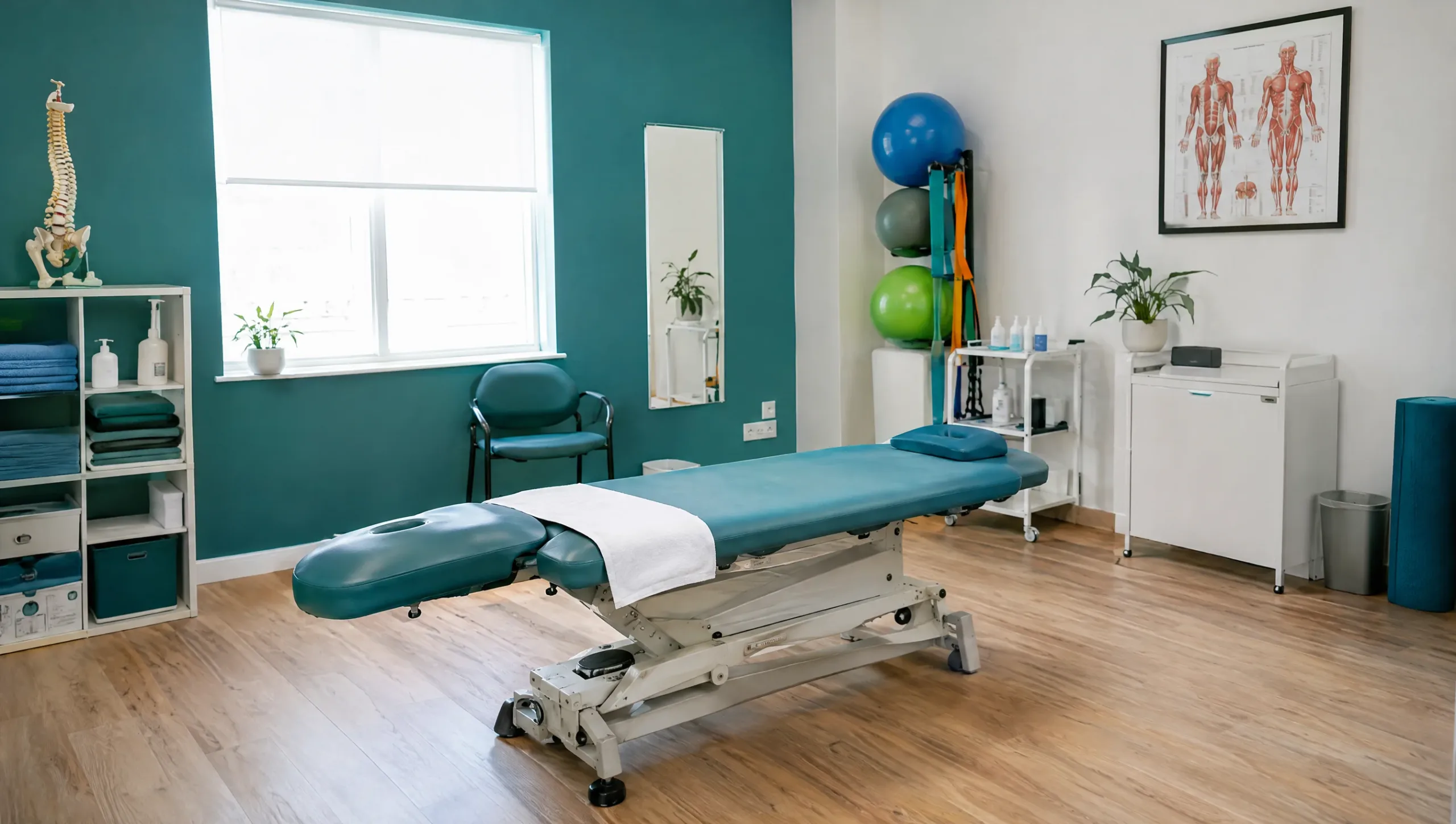
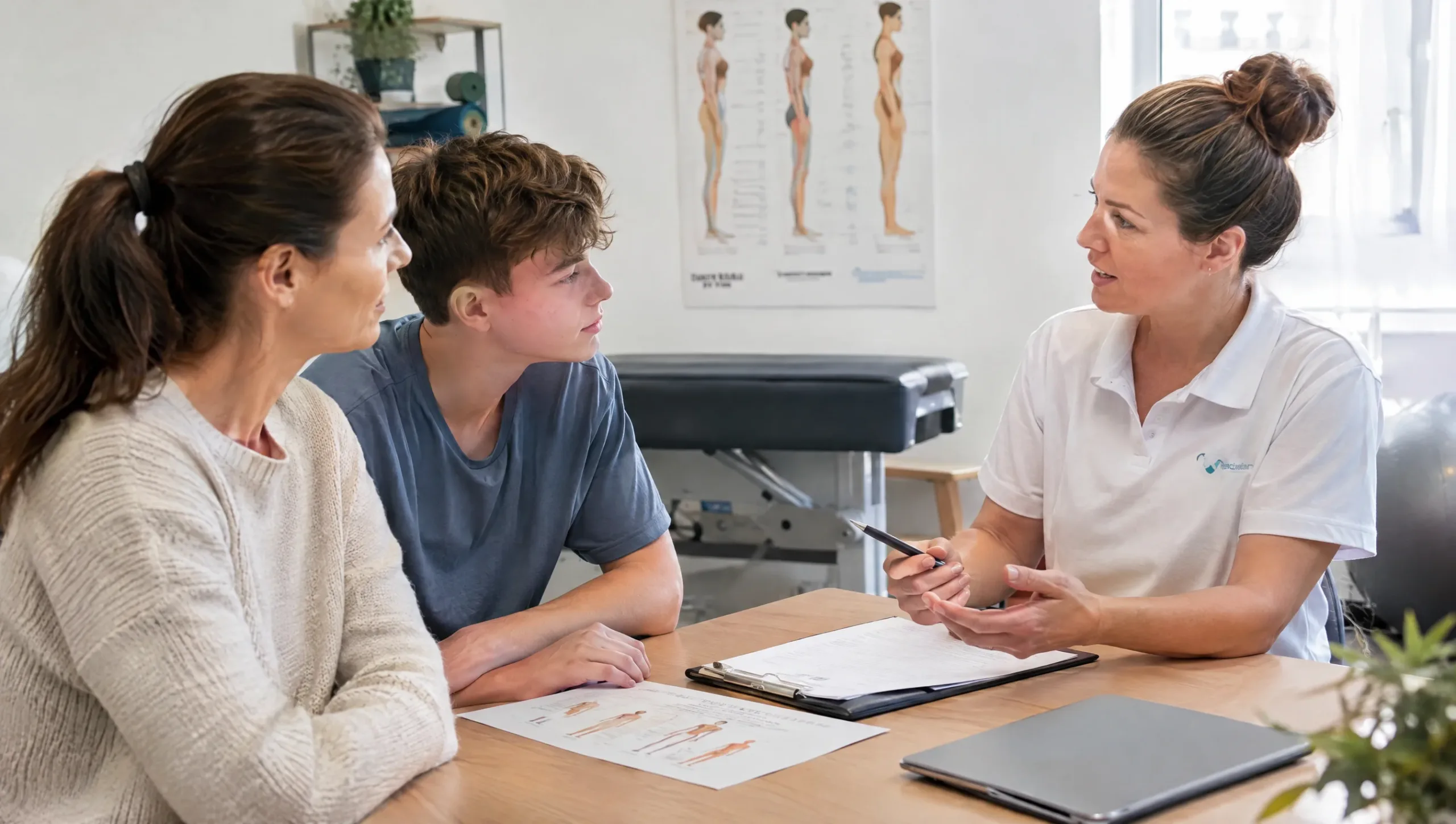
If you’ve noticed postural asymmetry in your teenager, or a school screening flagged a possible curve, the most useful next step is a proper assessment rather than waiting it out. At Physio Rehab Solution in Rawalpindi, Dr. Iqra Kiran and our physiotherapy team assess posture and movement patterns, coordinate with orthopedic imaging when needed, and build scoliosis-specific exercise programs rather than generic stretching routines. Because many schools in Rawalpindi and Islamabad don’t run routine scoliosis screening the way some countries do, parents are often the first and only line of detection — which makes paying attention to the signs above genuinely important rather than optional.
If your teenager’s posture concerns are more general — desk habits, screen time, or everyday back strain rather than a diagnosed curve — our guide on everyday habits that damage your spine covers the daily postural factors worth fixing regardless of whether scoliosis is involved.
This article is for general education and is not a diagnosis. If you suspect your teenager may have scoliosis, please book an in-person assessment so imaging and a tailored exercise plan can confirm what’s actually happening with their spine.
Frequently Asked Questions About Scoliosis Physiotherapy for Teens
At what age does scoliosis usually appear in teenagers?
Adolescent idiopathic scoliosis most commonly appears or becomes noticeable around the start of the growth spurt, often between ages 10 and 14, and tends to progress fastest during the most rapid growth period. This is why screening around this age window matters.
Does scoliosis get worse after a teenager stops growing?
Curve progression is strongly linked to remaining growth, so most structural curves slow down significantly once skeletal maturity is reached. However, some curves — particularly larger ones — can still progress slowly in adulthood, which is why monitoring doesn’t necessarily stop the day growth ends.
Can exercise alone fix a moderate scoliosis curve without a brace?
For moderate curves in a still-growing teenager, scoliosis-specific exercise is usually combined with bracing rather than used instead of it, since bracing addresses the mechanical progression risk that exercise alone doesn’t fully control. The right combination depends on curve size and growth remaining, which is a decision made with an orthopedic specialist, often reassessed every few months as the curve and the teenager’s growth are tracked together.
Is scoliosis physiotherapy painful?
Scoliosis-specific exercise is generally not painful when performed correctly and progressed appropriately. Some muscle fatigue or soreness after a new exercise is normal, similar to starting any new exercise routine, but sharp or worsening pain during sessions should be reported to your physiotherapist rather than pushed through, since it usually signals the exercise needs modifying rather than being a normal part of the process.
Worried about your teenager’s posture or a possible curve? Physio Rehab Solution is based in Rawalpindi and offers postural screening and scoliosis-specific physiotherapy for teens. Call +92 321 4287773 to book an in-person assessment.