If your knee starts aching after a few kilometres, flares up on stairs, or throbs the moment you sit through a long drive from Rawalpindi to Islamabad, you may be dealing with a very common overuse injury. Runner’s knee physiotherapy treatment is the most effective, evidence-based way to resolve this pain without stopping your training for months or jumping straight to medication. In this guide, Dr. Iqra Kiran, DPT, explains exactly what runner’s knee is, why it is so common among joggers and athletes in Rawalpindi and Islamabad, and how a structured physiotherapy plan gets you back to pain-free running.
Table of Contents
- What Is Runner’s Knee (Patellofemoral Pain Syndrome)?
- Why Runner’s Knee Is So Common Among Runners in Rawalpindi & Islamabad
- Signs Your Knee Pain Needs Physiotherapy, Not Just Rest
- How a Physiotherapist Diagnoses Runner’s Knee
- Runner’s Knee Physiotherapy Treatment: What Actually Works
- Best Exercises for Runner’s Knee Recovery
- Can You Keep Running While Recovering From Runner’s Knee?
- Frequently Asked Questions About Runner’s Knee Physiotherapy
What Is Runner’s Knee (Patellofemoral Pain Syndrome)?
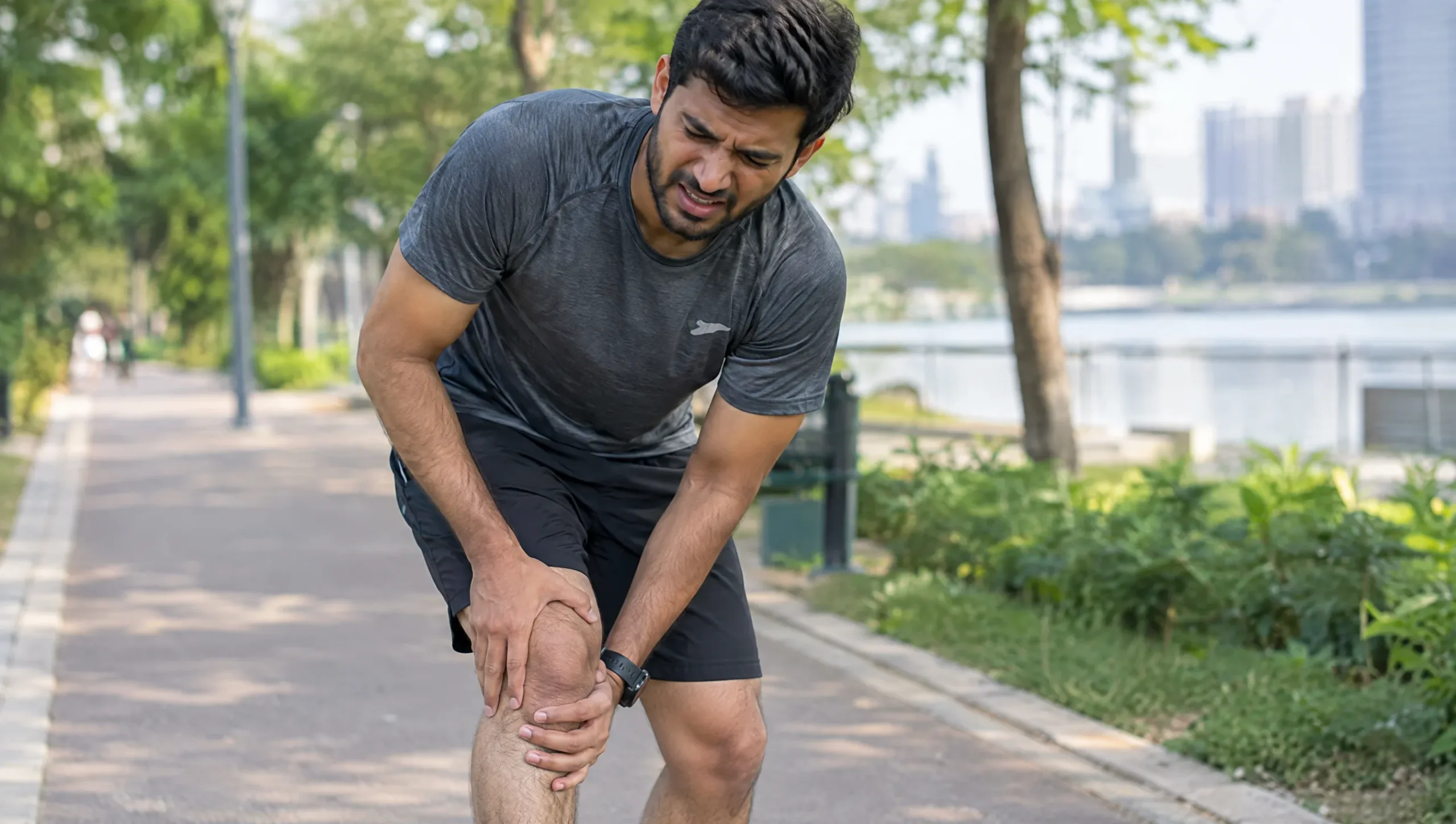
“Runner’s knee” is the everyday name for patellofemoral pain syndrome (PFPS) — a dull, aching pain felt around or just behind the kneecap. Despite the name, you do not need to be a marathon runner to get it. We see it in college students who suddenly started jogging around their neighbourhood, office workers who took up the stairs at their gym, and cricketers who sprint between wickets every weekend.
The pain happens because the kneecap (patella) is not gliding smoothly in its groove on the thigh bone (femur) as the knee bends and straightens. Instead of tracking straight up and down, it drifts slightly off-centre, rubbing against the surrounding cartilage and soft tissue. Over thousands of repetitive steps, that small amount of friction becomes a real problem.
Typical symptoms include:
Aching pain around or under the kneecap, pain that worsens going down stairs more than going up, stiffness after sitting for a long time with the knee bent (the “theatre sign”), a grinding or clicking sensation when bending the knee, and swelling that is usually mild rather than dramatic.
Why Runner’s Knee Is So Common Among Runners in Rawalpindi & Islamabad

We treat a steady stream of runner’s knee cases at our Rawalpindi clinic, and the pattern is usually the same. Many of our patients train on the hard, cambered roads around Liaquat Bagh, the sloped paths at F-9 Park, or the Margalla trail steps in Islamabad — all of which load the kneecap differently than a flat, cushioned track.
A few local factors make this injury especially common here:
Sudden mileage increases are common once the weather cools down after summer, with runners jumping from near-zero activity to 5-10km routes within a couple of weeks. Hard concrete and uneven pavements are the norm rather than rubberised tracks, which increases impact force through the knee with every stride. Worn-out or unsuitable running shoes are frequently a factor, since many recreational runners use general gym shoes rather than shoes matched to their foot type and gait. Hill and incline training around Islamabad’s sloped sectors places extra strain on the kneecap during both the uphill push and, especially, the downhill braking phase. Weak hip and glute muscles are an underappreciated cause — when the hip cannot control the thigh bone properly, the kneecap is pulled out of alignment with every step.
Understanding which of these factors applies to you is the first step your physiotherapist takes before building a treatment plan — because the exercises for “weak hips” look very different from the exercises for “hill overload.”
Signs Your Knee Pain Needs Physiotherapy, Not Just Rest
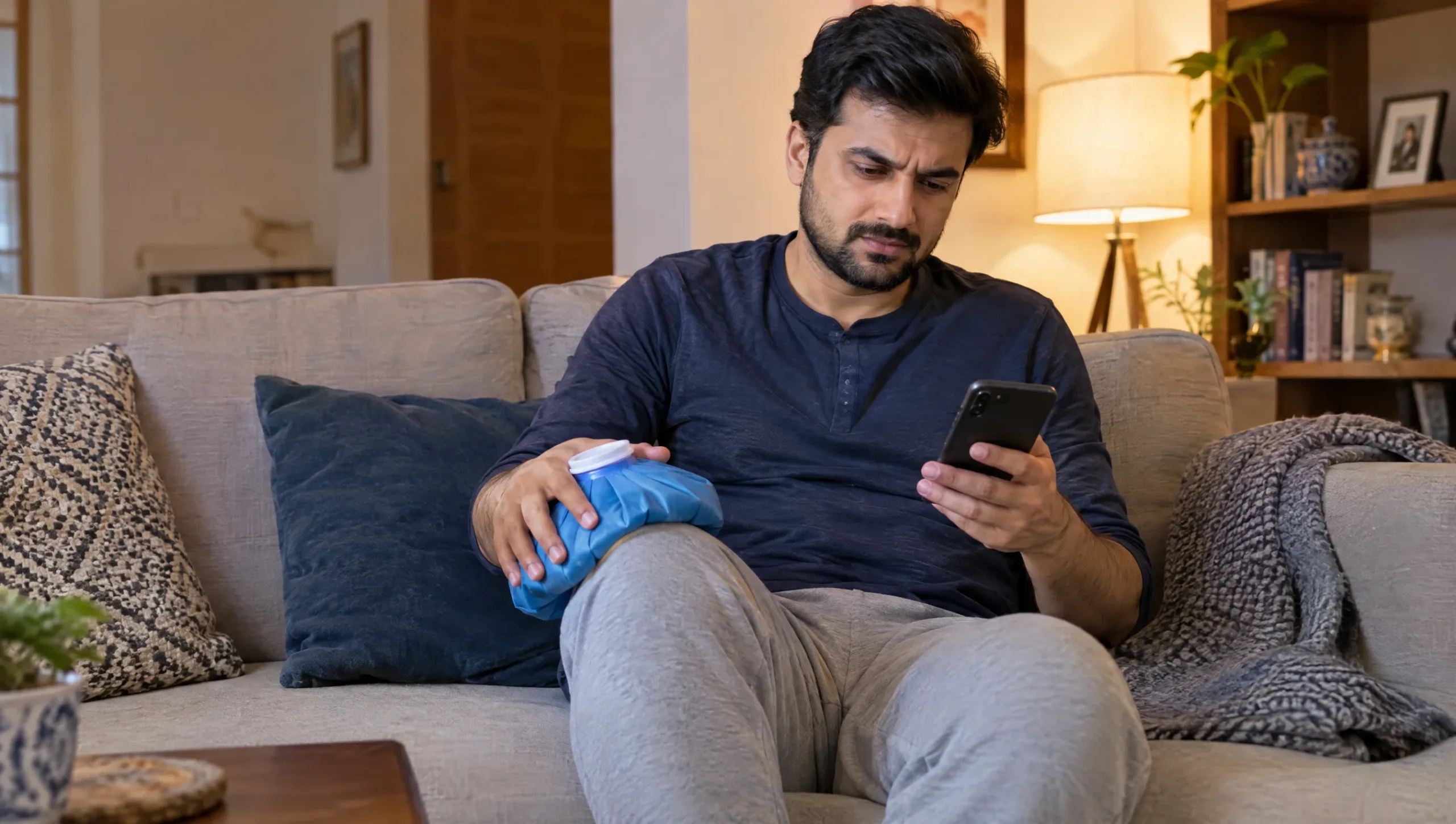
A lot of runners try to self-manage with rest, ice, and painkillers for a few weeks. Sometimes that is genuinely enough. But several signs tell us the knee needs professional physiotherapy assessment rather than just waiting it out.
Watch for pain that returns within days of restarting running, even at a shorter distance than before. Pain that has lasted longer than two to three weeks without clear improvement is another signal, as is pain that is now present during normal daily activities like climbing stairs at home or sitting in traffic with the knee bent. A noticeable difference in strength or control between your two legs, visible swelling around the kneecap, or a feeling that the knee is “giving way” or unstable all warrant a proper assessment rather than more rest.
Rest alone can quiet the pain temporarily, but if the underlying cause — weak hips, poor mechanics, overly aggressive training load — is never addressed, the pain almost always returns the moment you resume running. This is exactly why targeted runner’s knee physiotherapy treatment outperforms rest-and-hope in almost every long-term outcome study on patellofemoral pain.
How a Physiotherapist Diagnoses Runner’s Knee
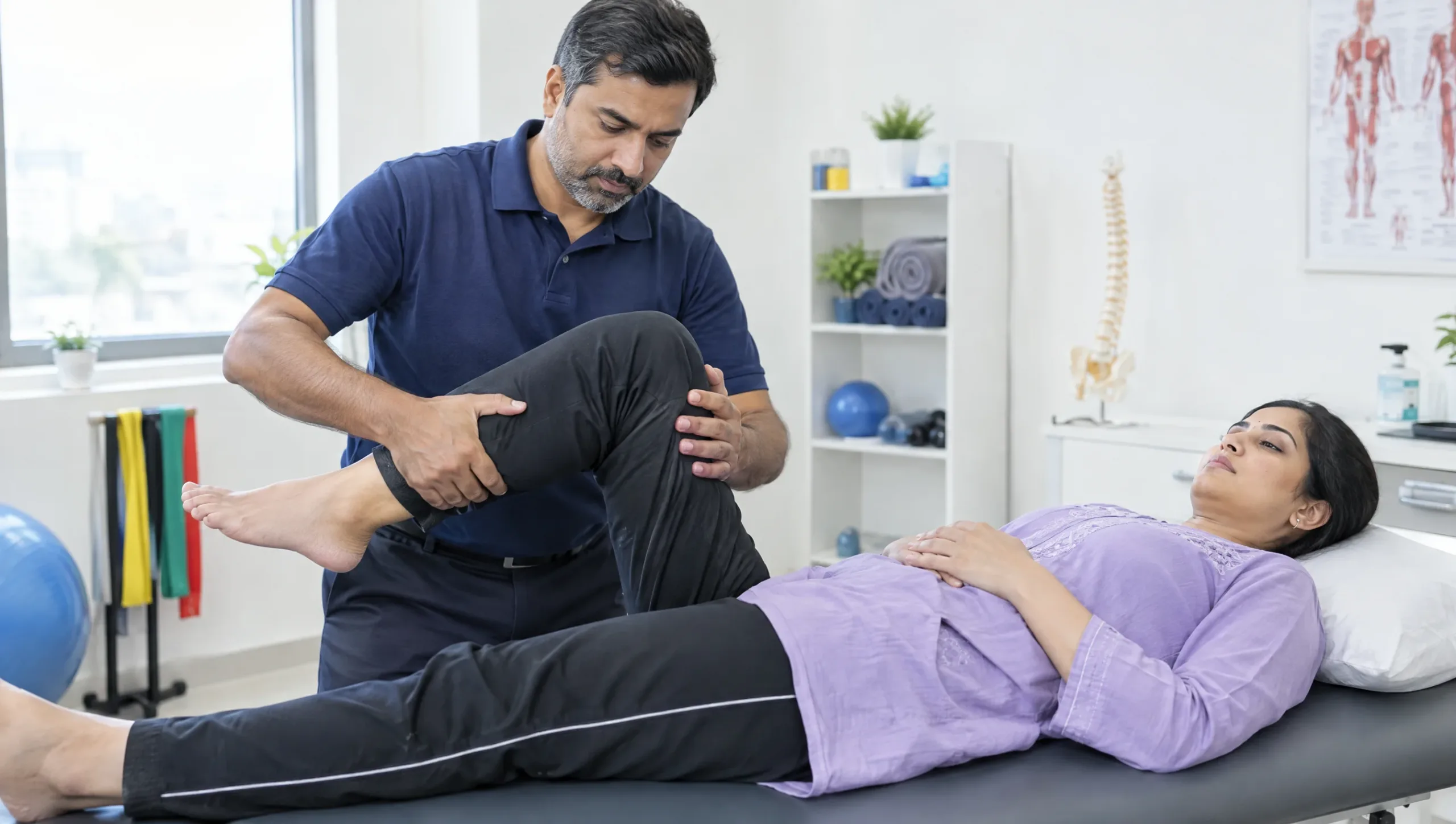
Diagnosis starts with a detailed conversation: when the pain started, your weekly running volume, recent changes in shoes or terrain, and any previous knee injuries. This history alone tells an experienced physiotherapist a great deal.
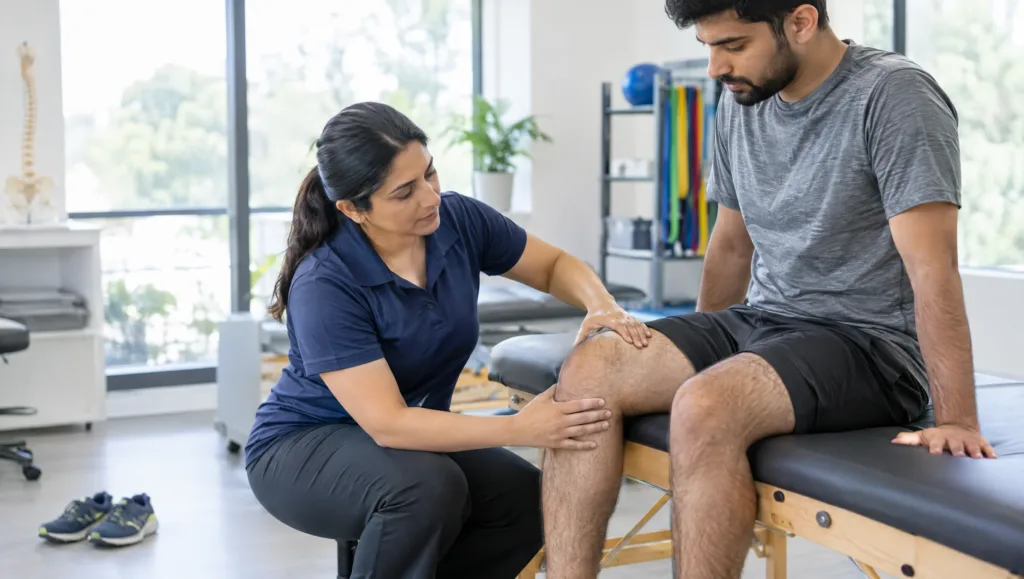
From there, a physical examination looks at several things in sequence. We assess how your kneecap tracks as you bend and straighten your knee, check for tenderness around specific points of the patella, and test the strength of your quadriceps, hips, and glutes individually, since a deficit in any one of these can quietly overload the knee. We also watch your walking and, where appropriate, your running pattern, sometimes recording it on video so we can slow it down and point out exactly what is happening at the moment your foot strikes the ground.
In the vast majority of runner’s knee cases, this clinical assessment is enough to build an effective plan — X-rays or MRI scans are usually reserved for cases that do not respond to a reasonable course of physiotherapy, or where the history suggests something else, like a meniscus or ligament problem, might be involved.
We also ask every patient about their footwear history and training surface during this assessment, since a pair of running shoes that has done 800-plus kilometres, or a sudden switch from treadmill training to outdoor concrete, can be just as important to the diagnosis as anything we find on physical examination.
Runner’s Knee Physiotherapy Treatment: What Actually Works
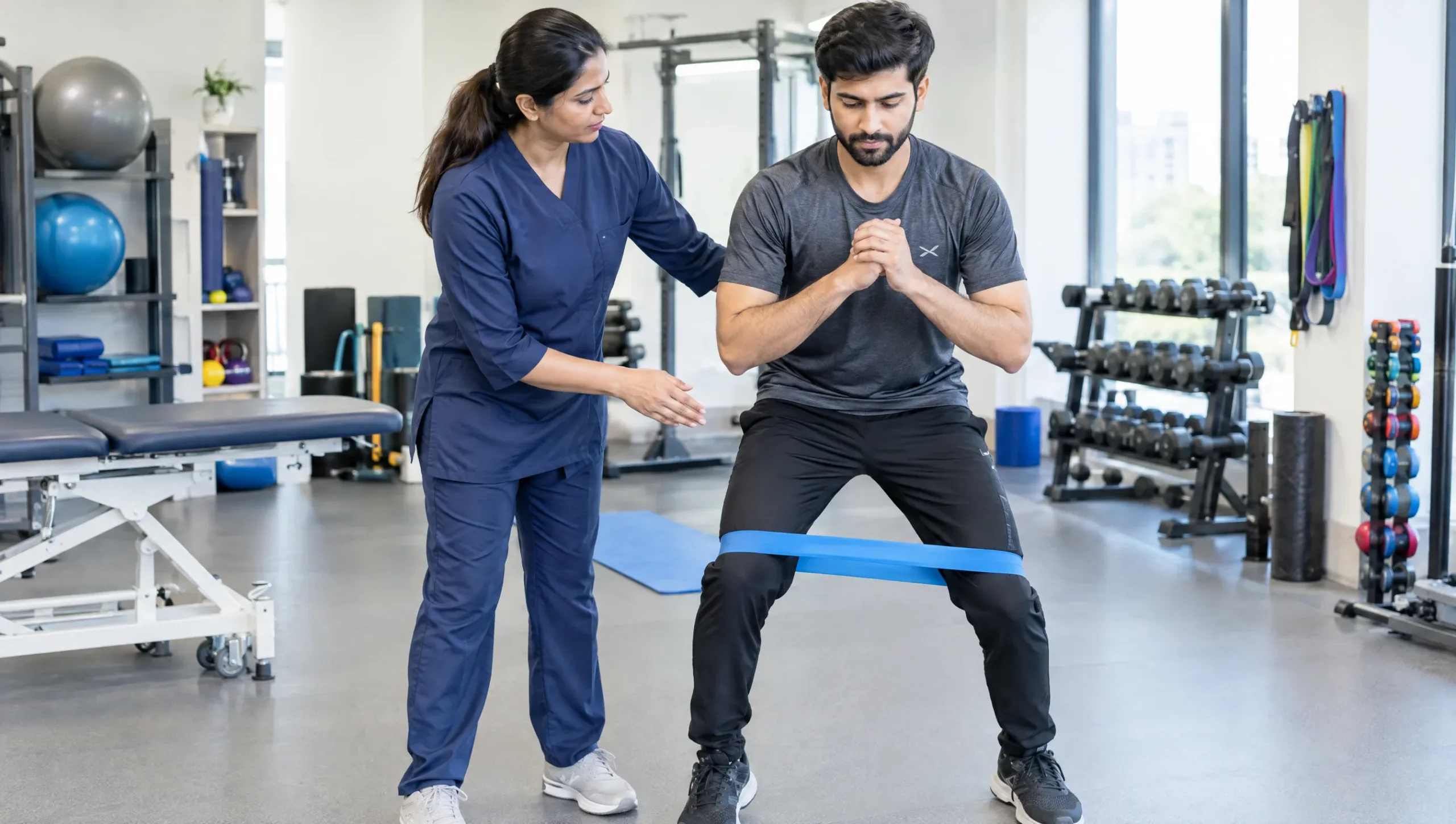
Effective runner’s knee physiotherapy treatment is rarely about the knee alone. Research consistently shows that hip and glute strengthening, combined with gradual load management, produces better and more lasting results than treatments that focus only on the kneecap itself. According to patient education materials published by the American Academy of Orthopaedic Surgeons (OrthoInfo), a structured rehabilitation program addressing muscle strength and flexibility around the knee is the recommended first-line treatment for patellofemoral pain, with surgery rarely indicated.
A well-built treatment plan typically includes a short period of relative load reduction rather than complete rest, manual therapy techniques to improve kneecap mobility and reduce tightness in the surrounding soft tissue, a progressive strengthening program that starts with the hips and glutes before loading the quadriceps directly, and gait or running-form coaching to correct mechanical faults that are driving the problem.
We also address the specific local factors we discussed earlier: if hard pavement is the main aggravator, we build a gradual return-to-surface plan; if shoes are worn out or mismatched to your foot type, we guide you toward the right replacement; and if training load jumped too quickly, we rebuild a sensible weekly mileage progression with you.
Taping or bracing techniques can offer short-term symptom relief in some patients, but they are a supplement to active treatment, not a replacement for strengthening and load correction.
Best Exercises for Runner’s Knee Recovery
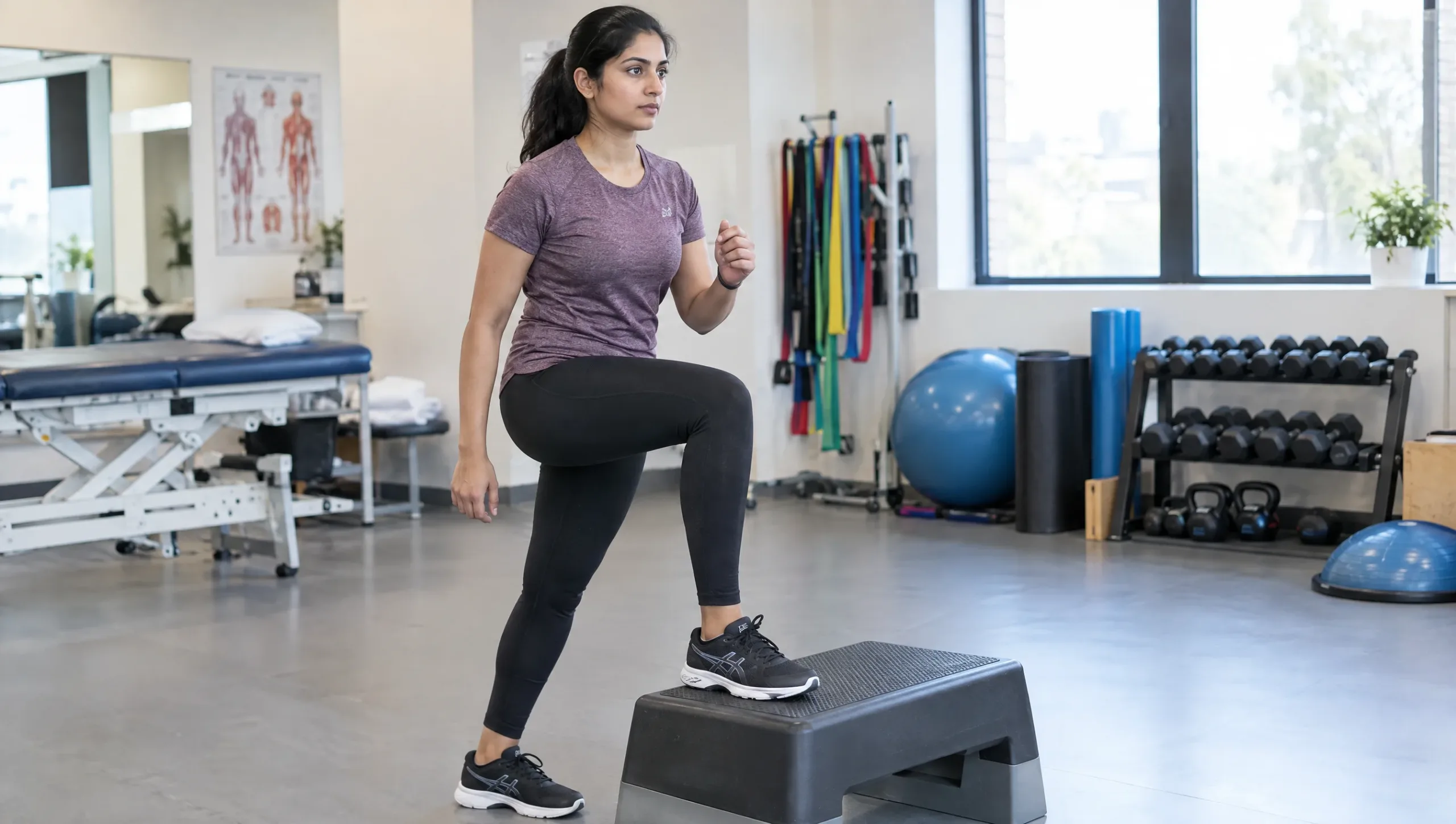
While every program should be tailored to your specific assessment findings, several exercises appear consistently in evidence-based runner’s knee rehabilitation. These are generally introduced in stages rather than all at once.
Early-stage exercises focus on pain-free activation: gentle quad sets, straight-leg raises, and clamshells to wake up the hip stabilisers without irritating the kneecap. Mid-stage exercises build real strength: step-ups, mini squats performed with correct knee alignment, side-lying hip abduction with resistance, and glute bridges. Late-stage exercises restore running-specific control: single-leg squats, lateral band walks, controlled step-downs, and eventually a supervised, gradual return to jogging on your usual routes.
A detail many runners get wrong is squat and lunge depth and knee alignment — letting the knee cave inward during these movements is one of the most common ways people accidentally reinforce the very pattern causing their pain. This is why the first few sessions of any strengthening program should be supervised and corrected in person rather than copied from a generic exercise sheet.
Consistency matters more than intensity here. Most patients see steadier progress doing these exercises three to four times a week at a moderate effort than doing them once intensely and then skipping several days out of soreness. We typically ask patients to track pain on a simple 0-to-10 scale before and after each session, which gives both of us an objective way to decide when it is safe to progress to the next stage rather than guessing.
Can You Keep Running While Recovering From Runner’s Knee?
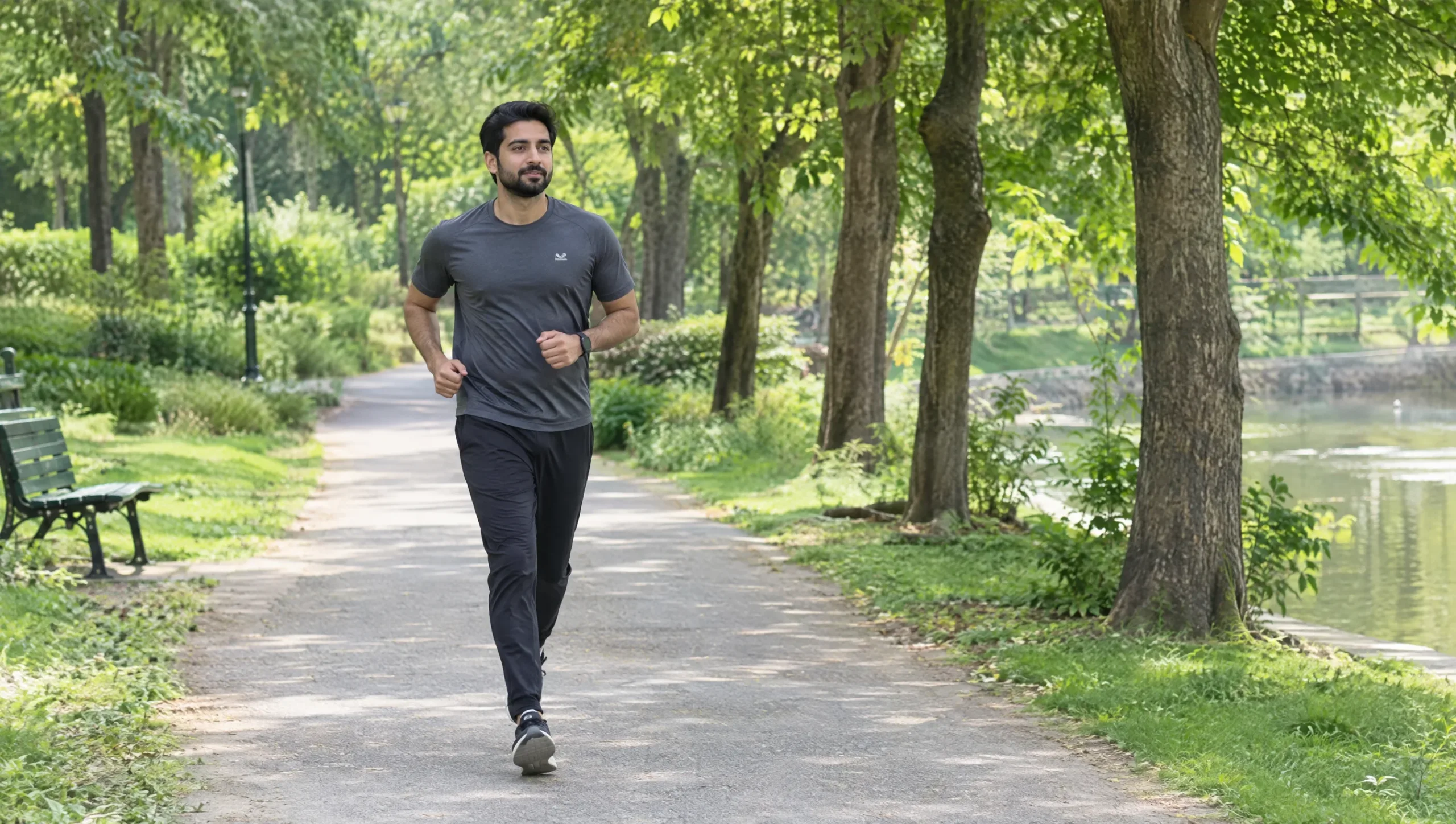
In most mild to moderate cases, yes — but with modification, not business as usual. The general rule we use with patients is the “pain should not exceed a mild, tolerable level during or after running, and it should settle within 24 hours.” If pain spikes sharply during a run or lingers for more than a day afterward, the current volume or intensity is too much for where your knee currently is in its healing process.
A sensible interim plan usually involves temporarily reducing total distance, avoiding downhill sections and hard pavement where possible, swapping some runs for low-impact cross-training like cycling or swimming, and resuming full training volume only once strength benchmarks are met rather than on a fixed calendar date. Pushing through sharp or worsening pain “to stay fit” is the single most common reason a straightforward case of runner’s knee turns into a frustrating, months-long problem.
If your pain is already severe, causing a limp, or accompanied by locking or giving way of the knee, stop running altogether and book an in-person assessment before continuing any training, since these can be signs of a more significant structural issue that needs a hands-on evaluation rather than general advice.
Frequently Asked Questions About Runner’s Knee Physiotherapy

How long does runner’s knee take to heal with physiotherapy?
Most patients who follow a structured physiotherapy program notice meaningful improvement within four to six weeks, with full return to normal running volume typically taking six to twelve weeks depending on how long the pain had been present before treatment started and how closely the strengthening program is followed.
Is it OK to walk with runner’s knee?
Generally yes. Normal walking on flat ground rarely aggravates patellofemoral pain the way running or stair descent does. If walking itself is painful, that usually indicates a higher level of irritation and is a good reason to book an assessment sooner rather than later.
Do I need an MRI for runner’s knee?
Not usually. The vast majority of runner’s knee cases are diagnosed accurately through clinical history and physical examination alone. Imaging is typically reserved for cases that fail to improve after a genuine course of physiotherapy or where the symptoms suggest a different diagnosis.
Can weak hips really cause knee pain?
Yes, and this surprises a lot of patients. Weak hip abductor and external rotator muscles allow the thigh bone to rotate and drift inward during running and stair climbing, which pulls the kneecap off its normal tracking path. This is why hip strengthening, not just knee exercises, is a core part of runner’s knee physiotherapy treatment.
Runner’s knee is frustrating because it rarely improves with willpower alone, and it rarely needs surgery either — it needs the right combination of load management and targeted strengthening. If you are dealing with persistent knee pain from running, walking, or climbing stairs in Rawalpindi, our team can assess exactly what is driving your symptoms and build a plan to get you back to pain-free movement. Book an in-person assessment with Physio Rehab Solution in Rawalpindi today, or call us directly at +923214287773 to schedule your appointment.
For more answers to common physiotherapy questions, see our general physiotherapy FAQ and our expert-answered physiotherapy FAQ page. If your pain is more generalised rather than running-specific, our guide on knee pain physiotherapy in Rawalpindi covers a broader range of causes and treatments.
This article is for general educational purposes and does not replace an in-person medical assessment. If your knee pain is severe, worsening, or accompanied by locking, giving way, or significant swelling, please book an in-person evaluation with a qualified physiotherapist before continuing any exercise program.