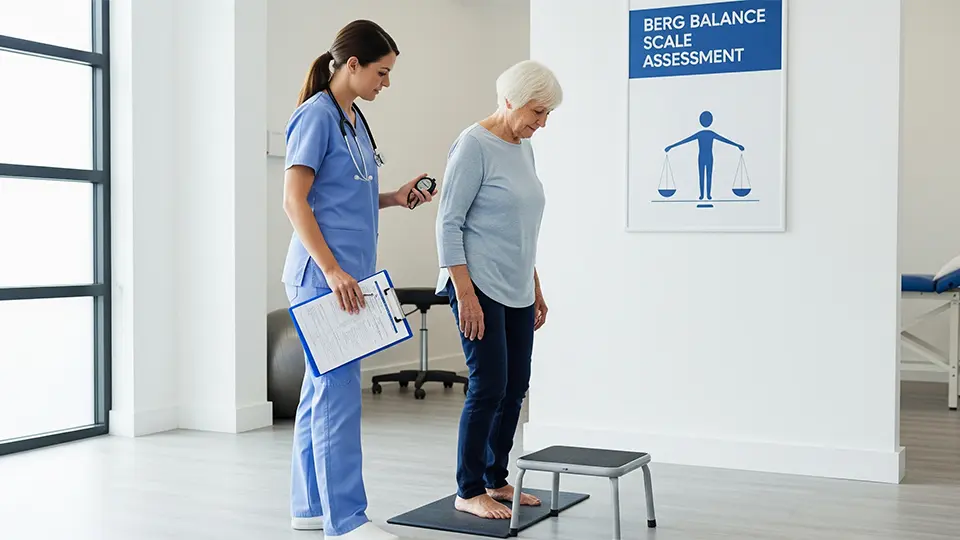
If you or a loved one is scheduled for, or recovering from, hip replacement surgery, the single biggest factor in how well that new joint performs over the next twenty years is not the surgeon’s skill alone — it is what happens in the weeks afterward. Physiotherapy after hip replacement surgery is what turns a technically successful operation into a hip that actually bends, bears weight, and lets you walk without a limp. Patients who follow a structured physiotherapy program after hip replacement surgery typically regain independent walking faster, report less pain at the three-month mark, and are far less likely to develop the stiffness and muscle weakness that quietly follow an unrehabilitated joint.
At Physio Rehab Solution in Rawalpindi, we see this pattern constantly: two patients with identical surgeries, identical implants, and very different outcomes six weeks later — and the difference is almost always physiotherapy. This guide walks through exactly what to expect, week by week, from the day after surgery through your return to normal life, so you know what “on track” actually looks like.
Table of Contents
- Why Physiotherapy After Hip Replacement Surgery Matters So Much
- Physiotherapy in the First 48 Hours: Before You Leave the Hospital
- Week 1–2: Early Recovery and Walking Again
- Week 3–4: Building Strength and Confidence
- Week 5–8: Restoring Normal Movement Patterns
- Months 2–3: Returning to Daily Life, Driving, and Light Activity
- Movements and Positions to Avoid After Hip Replacement
- Signs Your Recovery Needs Professional Attention
- Frequently Asked Questions
Why Physiotherapy After Hip Replacement Surgery Matters So Much
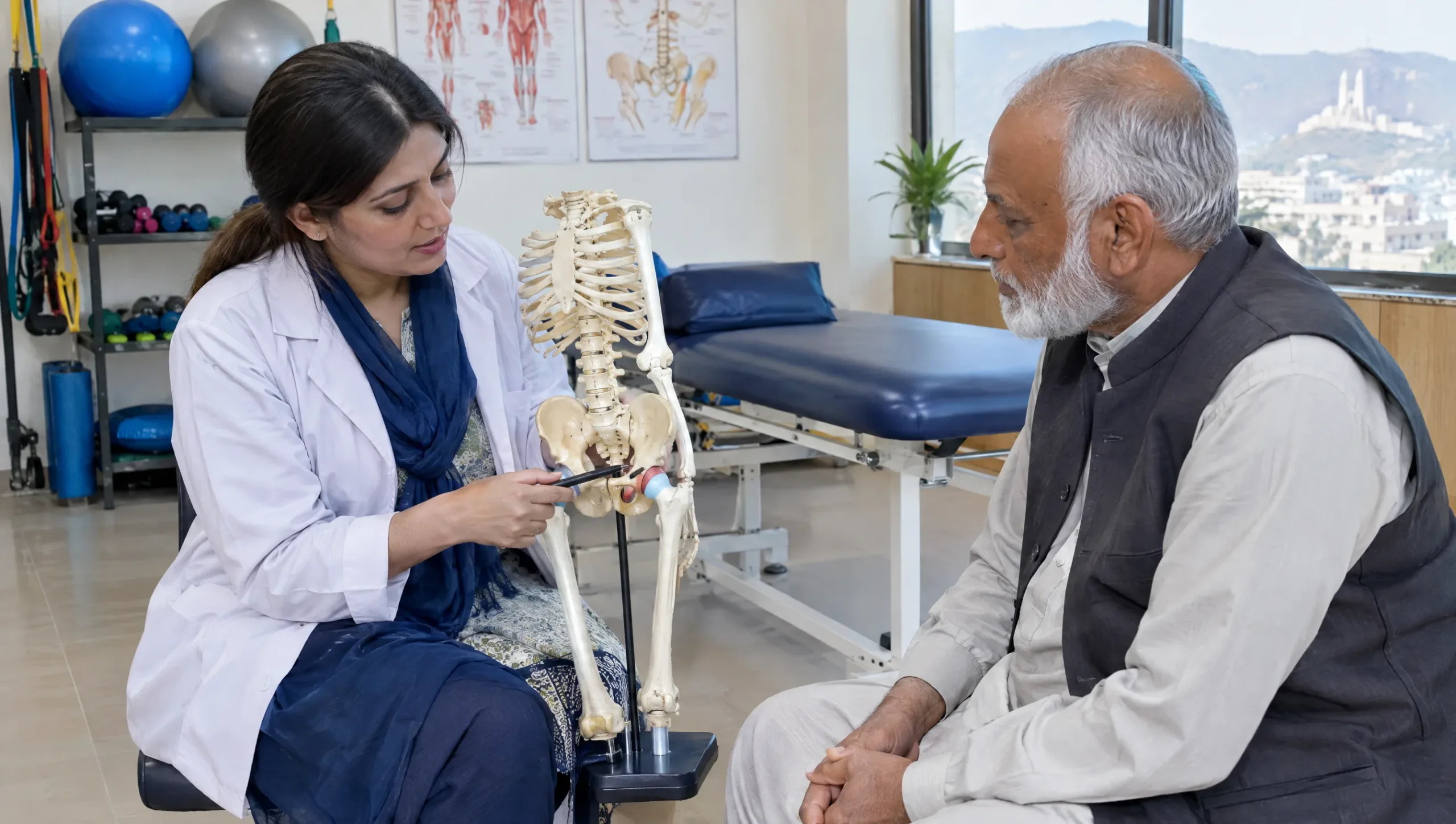
During hip replacement surgery, the surgeon cuts through several layers of muscle, including the hip abductors that keep your pelvis level while you walk. Those muscles do not simply switch back on once the incision heals — they have to be re-trained, re-strengthened, and re-taught to fire in the right sequence. This is exactly what a physiotherapist does.
Left to its own devices, a replaced hip tends to stiffen into a slightly flexed, slightly rotated position because that is the most comfortable resting posture after surgery. Without guided movement, that temporary comfort becomes a permanent limp. Structured physiotherapy prevents this by restoring range of motion early, rebuilding the abductor and extensor muscles in the correct order, and progressively loading the joint so the bone-implant interface becomes genuinely stable rather than just pain-free.
There is also a safety dimension. New hip replacement patients are statistically at their highest fall risk in the first six weeks, precisely when balance and proprioception around the new joint are weakest. A physiotherapist’s job during this window is as much about fall prevention as it is about strength.
Physiotherapy in the First 48 Hours: Before You Leave the Hospital
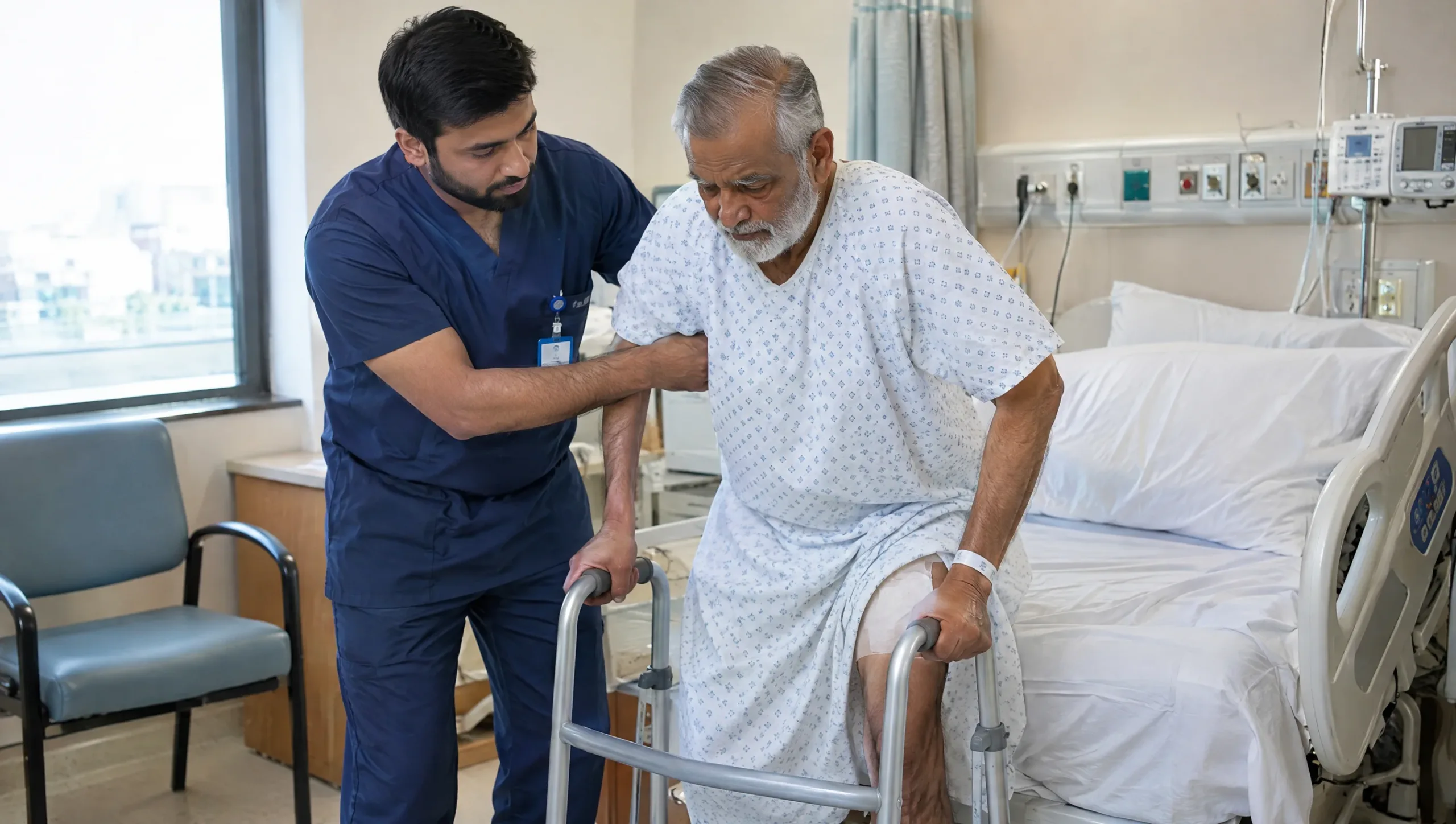
Most surgeons now want patients up and taking a few assisted steps within 12 to 24 hours of surgery — a practice often called “same-day mobilization.” This is not optional bravado; early movement reduces the risk of blood clots, pneumonia, and the deconditioning that comes from prolonged bed rest.
In this first window, a physiotherapist will typically teach you:
Ankle pumps and gentle quad sets while still in bed, to keep blood circulating and prevent clots. A safe technique for sliding to the edge of the bed and standing using a walker or frame, keeping weight distributed according to your surgeon’s precaution level (some implants allow full weight-bearing immediately, others require partial weight-bearing for a few weeks). The correct way to sit down and stand up from a chair without letting the operated leg cross the midline. Basic precautions — not crossing your legs, not bending the hip past roughly 90 degrees, and not twisting the operated leg inward — which protect the joint capsule while it heals.
By the time of hospital discharge, most patients can walk short distances with a frame or crutches and manage a few stairs with supervision.
Week 1–2: Early Recovery and Walking Again

The first two weeks at home are about consolidating what was started in the hospital. Swelling around the hip and thigh is normal and often peaks around day three to five before gradually settling — ice, elevation, and gentle ankle movement all help manage it.
Your physiotherapist will usually visit or see you in clinic two to three times this week to progress your walking distance, check your wound and gait pattern, and refine your home exercise program. Typical exercises at this stage include heel slides, seated knee extensions, standing hip abduction holding onto a stable surface, and gentle glute squeezes. None of these should reproduce sharp pain — a dull pulling sensation in the muscle is expected, a sharp catch in the joint is not.
Pain is usually best managed on a schedule rather than waiting for it to spike, since adequately controlled pain lets you move more and recover faster. By the end of week two, most patients have transitioned from a walker to a single cane or crutch for short distances indoors, though this varies with age, pre-surgery fitness, and the surgical approach used.
Week 3–4: Building Strength and Confidence
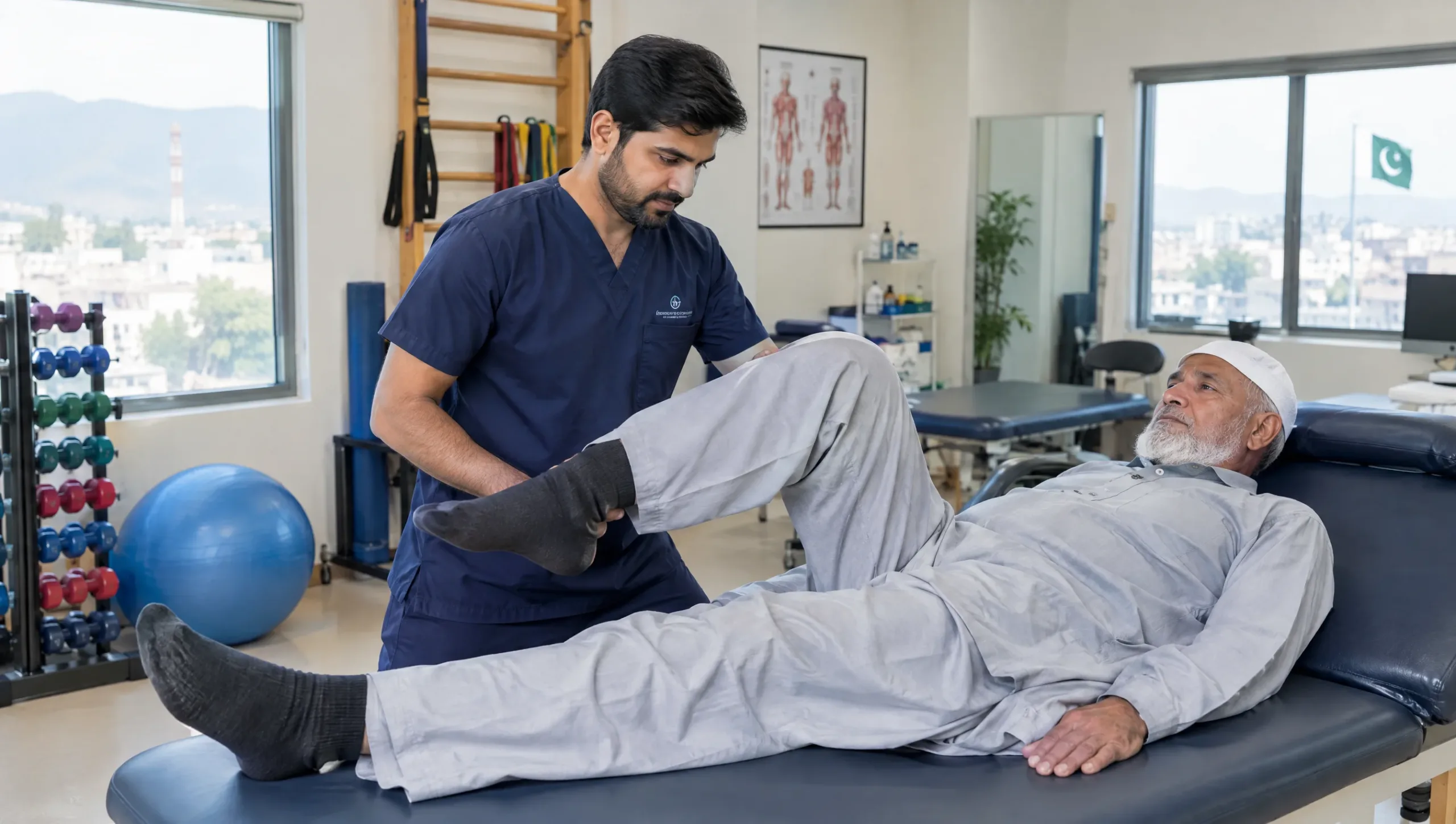
This is usually when patients start to feel like themselves again. Swelling has mostly resolved, the surgical wound is well healed, and the focus shifts firmly from protection to strengthening. Your physiotherapist will progress you to resisted exercises using a resistance band, light ankle weights, or a stationary cycle (with the seat raised to avoid excessive hip flexion), along with standing exercises like mini-squats and controlled step-ups on a low step.
Gait training becomes more detailed here too — correcting any lingering limp or Trendelenburg sign (a dip of the pelvis on the non-operated side caused by weak abductors) through targeted single-leg stance work and cueing. Many clinics also introduce balance challenges, such as standing on a slightly unstable surface with supervision, since balance confidence lags behind pure strength after hip surgery.
By four weeks, many patients can walk without any aid indoors for short distances, though an aid is often still recommended outdoors or for longer distances until strength and balance are more fully restored.
Week 5–8: Restoring Normal Movement Patterns
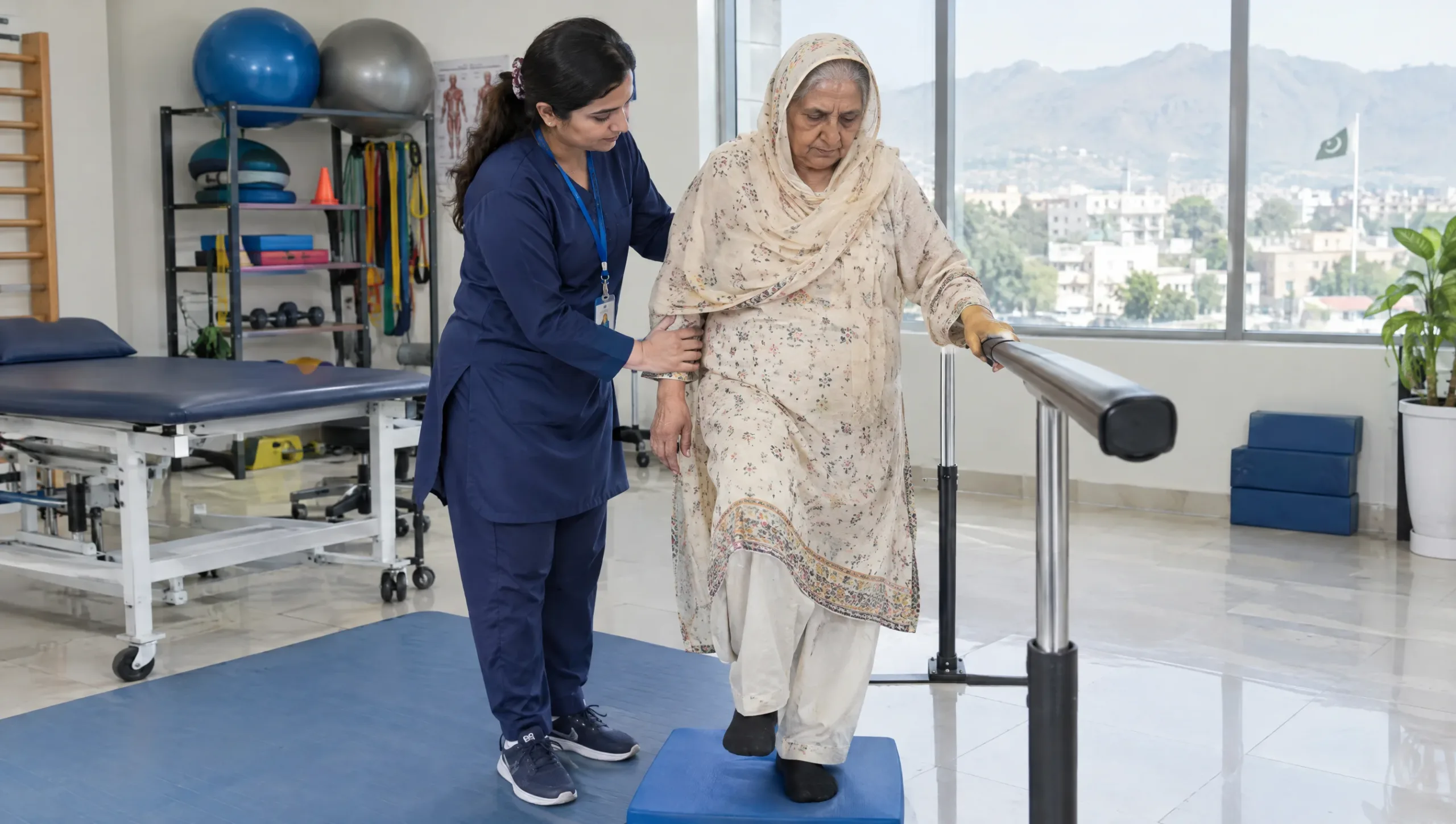
Weeks five through eight are where physiotherapy after hip replacement surgery shifts from “recovering” to “rebuilding.” Range of motion should be close to normal by now, so sessions focus on functional strength: climbing a full flight of stairs reciprocally (one foot per step rather than leading with the stronger leg), getting up from a low chair or car seat without using your arms, and walking longer distances at a normal pace without compensating.
Many physiotherapists introduce light functional training that mimics real household tasks during this phase — reaching into a cupboard, bending to pick something off the floor using a hip-hinge rather than the lower back, and carrying light loads while walking. This is also typically when most surgical precautions (no crossing legs, no extreme hip flexion) are gradually relaxed, though your surgeon and physiotherapist should confirm this based on your specific implant and progress rather than a generic calendar date.
Months 2–3: Returning to Daily Life, Driving, and Light Activity

By the second and third month, most patients are walking without an aid, managing stairs normally, and returning to light household and social activities. This is the stage where people typically resume driving — usually once reaction time, hip flexibility, and the ability to perform an emergency stop have been confirmed by a physiotherapist, and your surgeon has given clearance, since this varies by individual rather than a fixed date.
Low-impact activities such as walking longer distances, swimming (once the wound is fully healed), stationary cycling, and gentle gardening are usually encouraged. High-impact activities — running, jumping sports, or heavy twisting movements — are generally discouraged long-term for most hip replacement types, as they accelerate wear on the implant. Your physiotherapist can give you activity-specific guidance based on your implant type and surgical approach.
Strength continues to improve for up to a full year after surgery, so ongoing home exercise, even after formal physiotherapy sessions end, remains important for long-term implant longevity and function.
Movements and Positions to Avoid After Hip Replacement

Precautions vary by surgical approach (posterior, anterior, or lateral) and should always be confirmed with your own surgical team, but general guidance in the early weeks typically includes:
Avoid crossing the operated leg over the other leg, whether sitting or lying down. Avoid bending the hip past roughly 90 degrees — this means using a raised toilet seat, a firm high chair, and avoiding low sofas in the early weeks. Avoid twisting the operated leg inward (internal rotation) when turning in bed or getting up from a chair; pivot your whole body instead. Avoid sitting for long uninterrupted periods — get up and move every 45 to 60 minutes to prevent stiffness. Avoid sleeping on the operated side until your surgeon confirms it is safe, and use a pillow between the knees if sleeping on your back or non-operated side.
These precautions are usually relaxed in stages as the joint capsule heals, but the timeline differs between a posterior approach (which carries slightly higher dislocation precautions early on) and an anterior approach. Never assume a precaution has lifted without checking with your surgeon or physiotherapist first.
Signs Your Recovery Needs Professional Attention
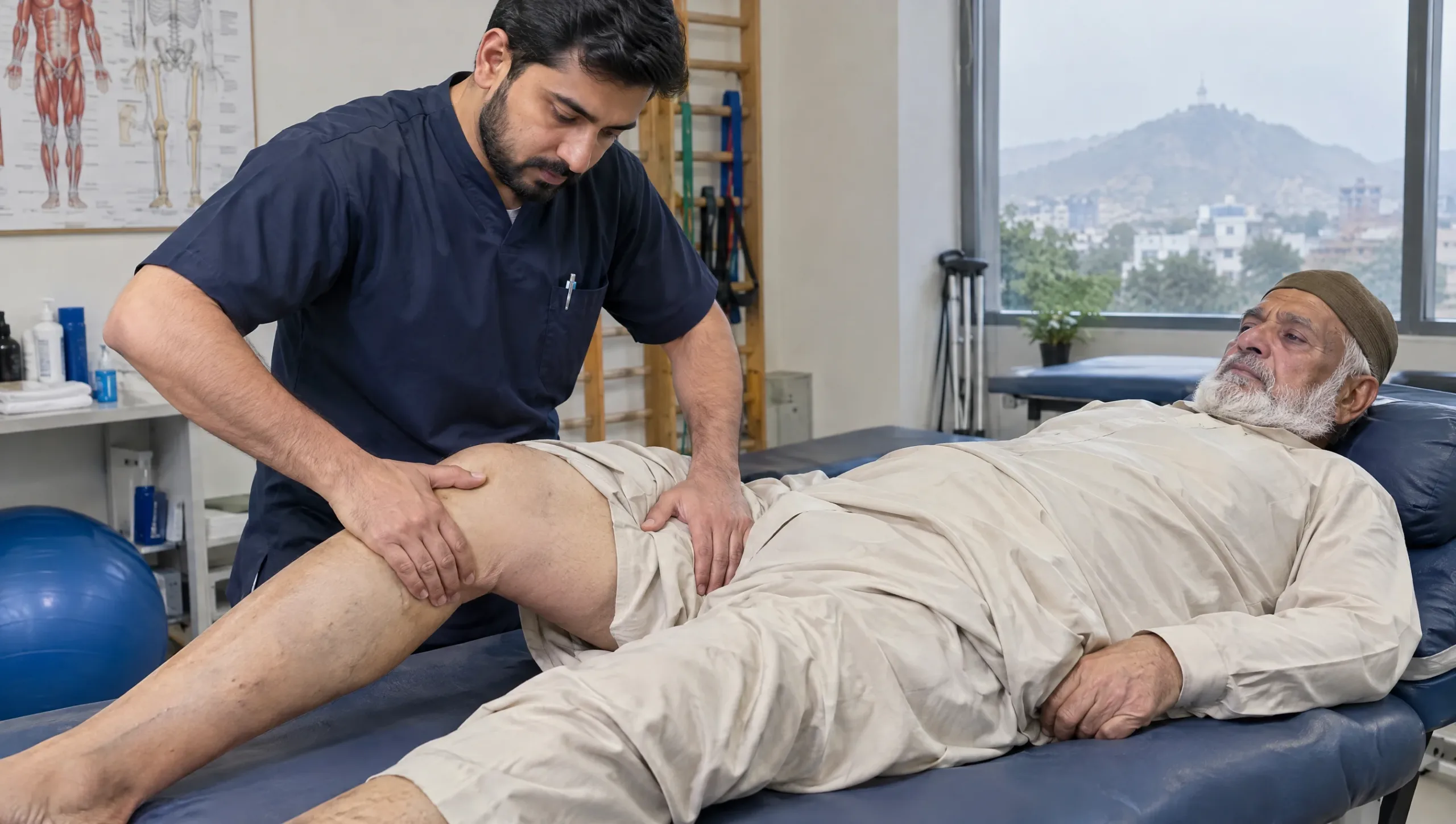
Most recoveries progress smoothly, but a few warning signs mean you should contact your surgeon or physiotherapist promptly rather than waiting for your next scheduled visit: sudden, severe calf pain or swelling (a possible blood clot), a fever above 38°C, increasing redness, warmth, or discharge from the incision, a sudden increase in pain after a fall or awkward movement, or a feeling that the hip is “giving way” or has shifted out of place.
None of this is intended as a diagnosis — if you notice any of these signs, an in-person assessment with your surgeon or a qualified physiotherapist is the right next step rather than guessing from general information online. According to the American Academy of Orthopaedic Surgeons, following a structured, professionally guided rehabilitation plan is one of the strongest predictors of a good long-term outcome after hip replacement, which is exactly why ongoing physiotherapy follow-up matters even once you are walking comfortably. You can read more detail on post-surgical activity guidelines directly from OrthoInfo by the American Academy of Orthopaedic Surgeons.
If you are earlier in your journey and want to understand what a first physiotherapy visit generally involves, our guide on what to expect during your first physiotherapy session walks through the assessment process in detail, and our piece on post-surgical recovery timelines follows a similar week-by-week structure for a different type of surgery if that context is helpful.
Frequently Asked Questions
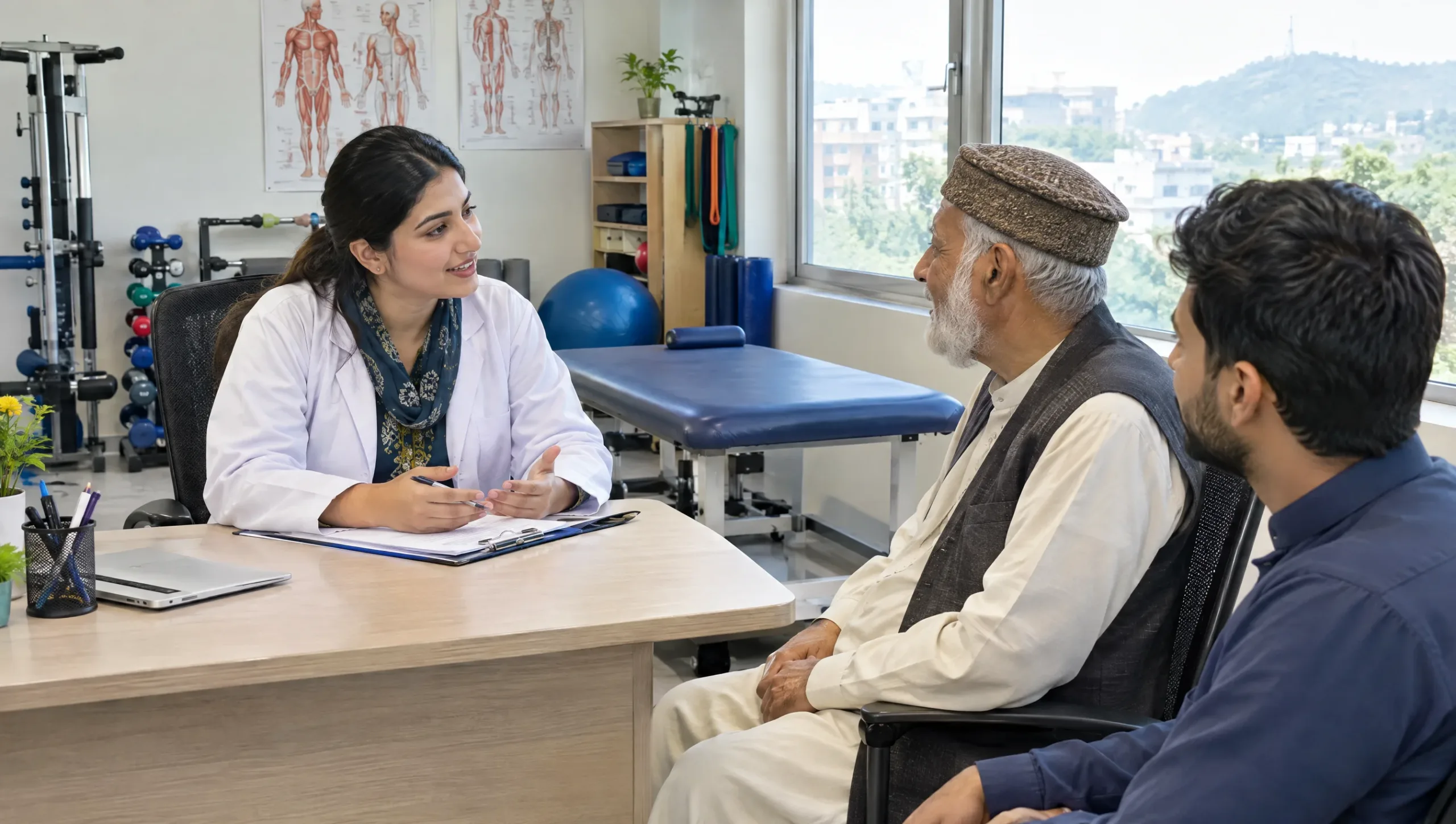
How soon after hip replacement surgery can I start physiotherapy?
Most patients begin gentle physiotherapy within the first 12 to 24 hours after surgery, often while still in the hospital. Early movement, even just a few assisted steps, is strongly associated with faster, smoother recovery and a lower risk of complications like blood clots.
What exercises should I avoid in the first six weeks after hip replacement?
Generally avoid deep squats, crossing your legs, twisting the operated leg inward, and any high-impact movement such as jogging or jumping. Your physiotherapist will tailor this list to your specific surgical approach, since posterior and anterior approaches carry slightly different early precautions.
When can I walk without a walking aid after hip replacement?
Many patients transition from a walker to a cane between two and four weeks, and from a cane to walking unaided indoors around four to six weeks, though this depends heavily on age, pre-surgery strength, and how consistently physiotherapy exercises are followed.
When is it safe to drive again after hip replacement surgery?
Most surgeons and physiotherapists clear driving somewhere between four and eight weeks, once you can perform a confident emergency stop and have adequate hip flexibility and reaction time, and only after your surgeon’s explicit sign-off — this is an individual decision, not a fixed date.
At Physio Rehab Solution in Rawalpindi, our physiotherapy programs for hip replacement recovery are built around exactly this kind of week-by-week progression, tailored to your implant type, surgical approach, and personal goals. If you or a family member is preparing for or recovering from hip replacement surgery, book an in-person assessment with our team in Rawalpindi — call +92 321 4287773 or visit our homepage to schedule a session. You can also browse our general FAQ page for more on what to expect when you book with us.