Table of Contents
- What Is Scoliosis and Why Does It Develop During the Teenage Years?
- How Is Scoliosis Diagnosed in Teenagers?
- Can Scoliosis Physiotherapy for Teenagers Actually Help?
- The Schroth Method: A Specialized Physiotherapy Approach for Scoliosis
- Bracing vs Physiotherapy: Do Teens Need Both?
- Safe Exercises and Habits Parents Can Encourage at Home
- When Does Teen Scoliosis Need Surgery Instead of Physiotherapy?
- What to Expect From a Scoliosis Physiotherapy Program in Rawalpindi
- Frequently Asked Questions
If your teenager was just told they have a curve in their spine, you probably have two questions on repeat: will it get worse, and can it be fixed without surgery. Scoliosis physiotherapy for teenagers is one of the most effective non-surgical tools we have for answering both — it will not erase a structural curve overnight, but in the right cases it can slow progression, correct posture, build core control, and spare a growing teen from a brace or an operating table. This guide walks through what scoliosis actually is, how it is diagnosed, what physiotherapy can and cannot do, and what a real treatment plan looks like for a teenager in Rawalpindi or Islamabad.
What Is Scoliosis and Why Does It Develop During the Teenage Years?
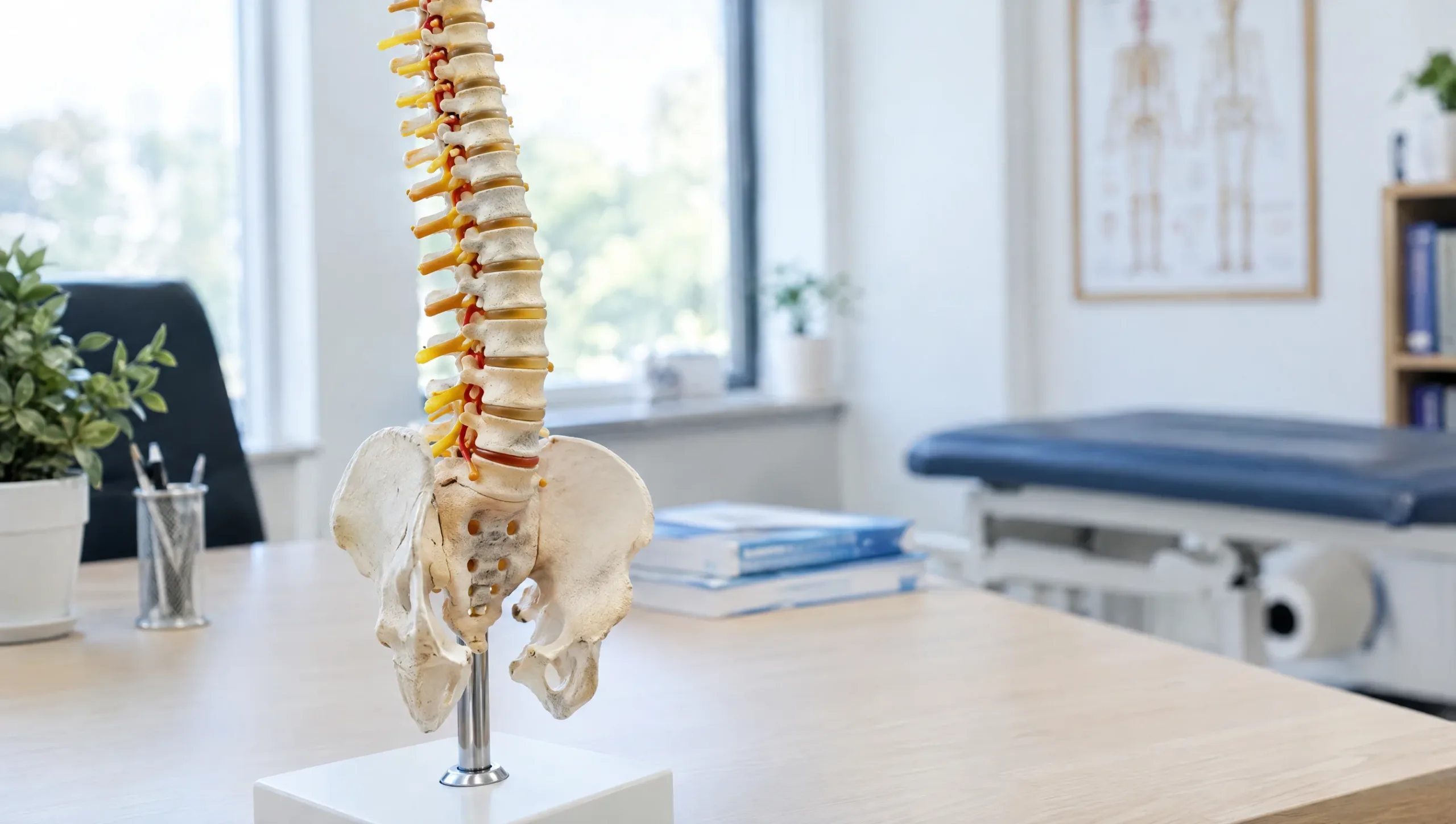
Scoliosis is a sideways curvature of the spine, usually appearing as an “S” or “C” shape when viewed on an X-ray from behind. A small natural curve is normal; scoliosis is diagnosed when the Cobb angle — the measurement doctors use to grade the curve — is 10 degrees or more.
The most common type in teenagers is Adolescent Idiopathic Scoliosis (AIS), which means the exact cause is unknown, though genetics, growth spurts, and connective tissue factors are believed to play a role. It typically appears or becomes noticeable between the ages of 10 and 16, right around the growth spurt that comes with puberty — which is also why it can progress quickly if left unmonitored: fast bone growth gives a mild curve more opportunity to worsen.
Other, less common causes include congenital scoliosis (spine bones that did not form typically before birth) and neuromuscular scoliosis (linked to conditions affecting muscle control). Each type is managed differently, which is why an accurate diagnosis always comes first.
How Is Scoliosis Diagnosed in Teenagers?
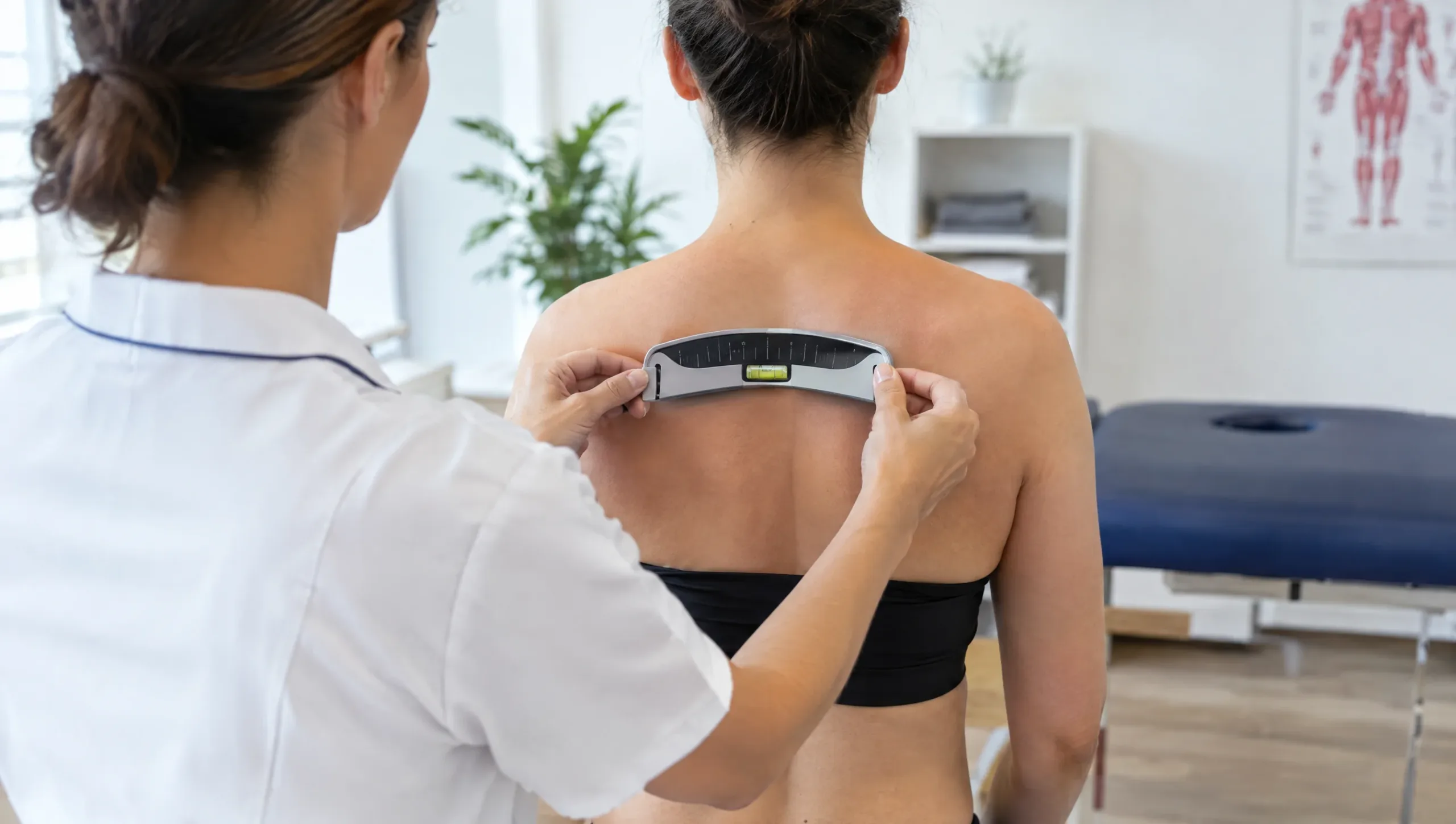
Many cases are first noticed by a parent, school nurse, or the teenager themselves — one shoulder sits higher than the other, one shoulder blade sticks out more, the waistline looks uneven, or clothes seem to hang differently on one side.
The Adam’s Forward Bend Test
This is the simple screening test most clinics start with. The teenager bends forward at the waist with arms hanging loosely, and the examiner looks across their back for any asymmetry or rib hump — a visible sign that one side of the rib cage is rotating more than the other.
X-Rays and the Cobb Angle
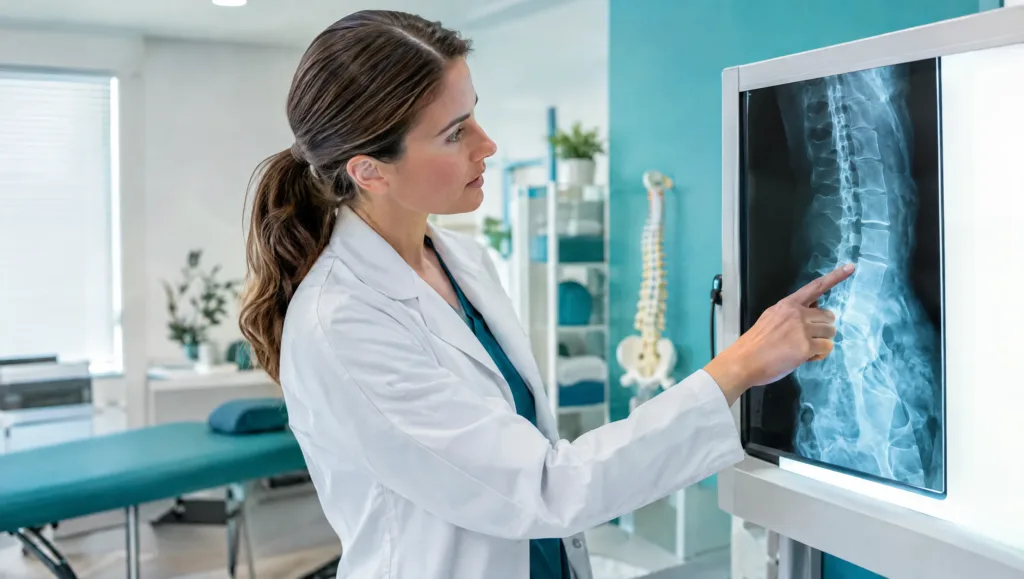
If the bend test raises a concern, a standing X-ray confirms the diagnosis and measures the Cobb angle, which determines the treatment pathway:
- 10–20 degrees: Mild — usually monitored, often alongside physiotherapy
- 20–40 degrees: Moderate — physiotherapy plus bracing is commonly recommended, especially if the teen still has significant growth remaining
- 40+ degrees: Severe — surgical consultation is usually advised, though physiotherapy still has a supporting role before and after
We always recommend a proper in-person assessment and imaging before starting any scoliosis-specific exercise program — self-diagnosing from a photo or a video online is not a substitute for a Cobb angle measurement from a qualified professional.
Regular screening matters because early curves are often painless. A teenager can have a 20-degree curve and feel completely fine day to day, which is exactly why parents, school health checks, and routine posture screening play such an important role — scoliosis is far easier to manage when it is caught at 15 degrees during a growth spurt than when it is first noticed at 35 degrees a year later.
Can Scoliosis Physiotherapy for Teenagers Actually Help?
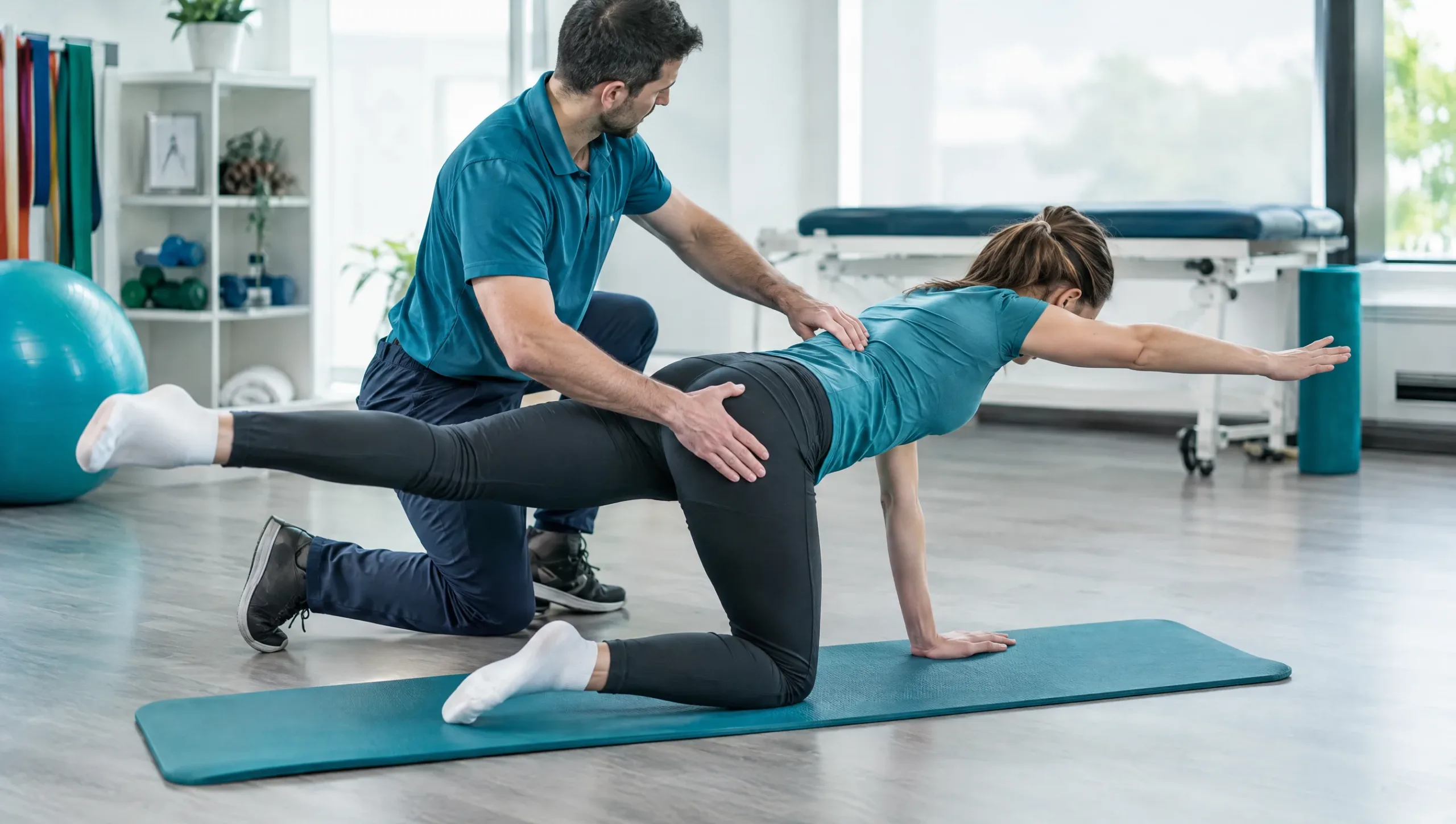
This is the honest answer, not the marketing one: physiotherapy cannot reverse a structural bony curve once it is fully formed, and no exercise program “cures” scoliosis in the way a cast fixes a broken bone. What a well-designed scoliosis physiotherapy program for teenagers can realistically do is:
- Slow or halt progression during the remaining growth years, which is often the single biggest win, since avoiding a 10-degree jump can be the difference between managing with exercise versus needing a brace or surgery later
- Improve posture, rib cage symmetry, and breathing mechanics, since a rotated spine often compresses one side of the lungs
- Reduce the back pain and muscle fatigue that come from the body compensating for an uneven spine
- Build the core, pelvic, and postural control needed to support the spine through daily activities, sports, and sitting at a desk for school
- Improve body confidence and movement quality, which matters enormously for teenagers who are self-conscious about how their back looks
The strongest evidence we have is for structured, scoliosis-specific exercise approaches rather than generic stretching or “posture correction” routines bought online. This is where methods like Schroth-based physiotherapy come in.
The Schroth Method: A Specialized Physiotherapy Approach for Scoliosis
The Schroth method is a physiotherapy system developed specifically for scoliosis, built around three ideas: elongating the trunk, de-rotating the rib cage, and retraining the teenager to breathe and hold posture in a more symmetrical pattern throughout the day — not just during a 45-minute session.
Rotational Breathing
Patients are taught to direct their breath into the concave (collapsed) side of the rib cage, which actively helps open up compressed lung space and gently encourages de-rotation of the ribs from the inside.
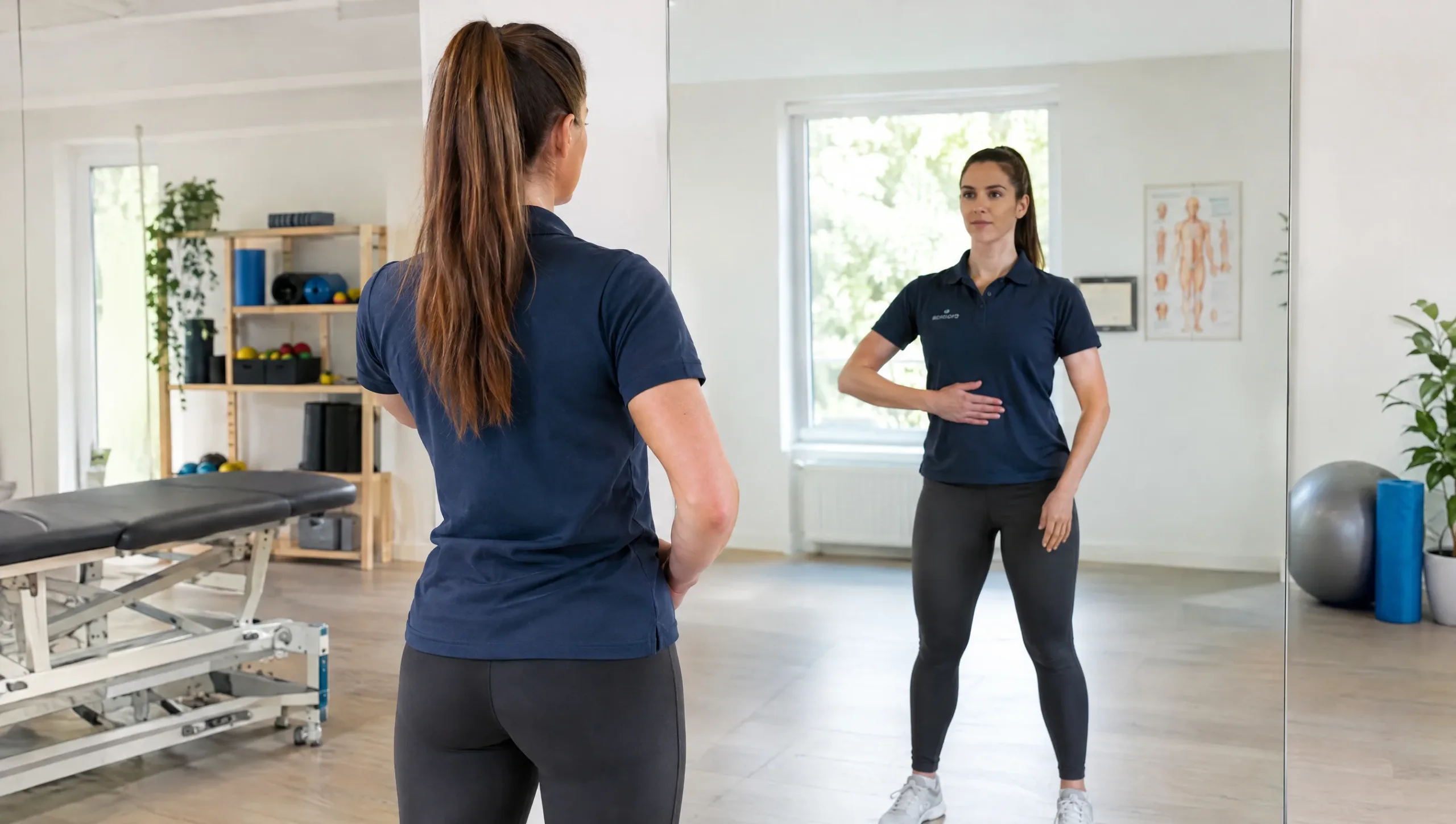
Postural Mirror Training
Because scoliosis distorts a person’s sense of what “straight” feels like, mirror feedback is used constantly in early sessions, so the brain relearns what a corrected posture actually looks and feels like.
Curve-Specific Exercise Patterns
Unlike generic back exercises, Schroth-based programs are customized to the exact curve pattern on the X-ray — a thoracic right curve is trained differently than a lumbar left curve, because pushing the wrong muscles in the wrong direction can do nothing or even aggravate the asymmetry.
Alongside Schroth principles, a comprehensive program typically layers in core stabilization work, hip and shoulder mobility correction, and functional strength training so the corrections translate into real life, not just the exercise mat.
Bracing vs Physiotherapy: Do Teens Need Both?
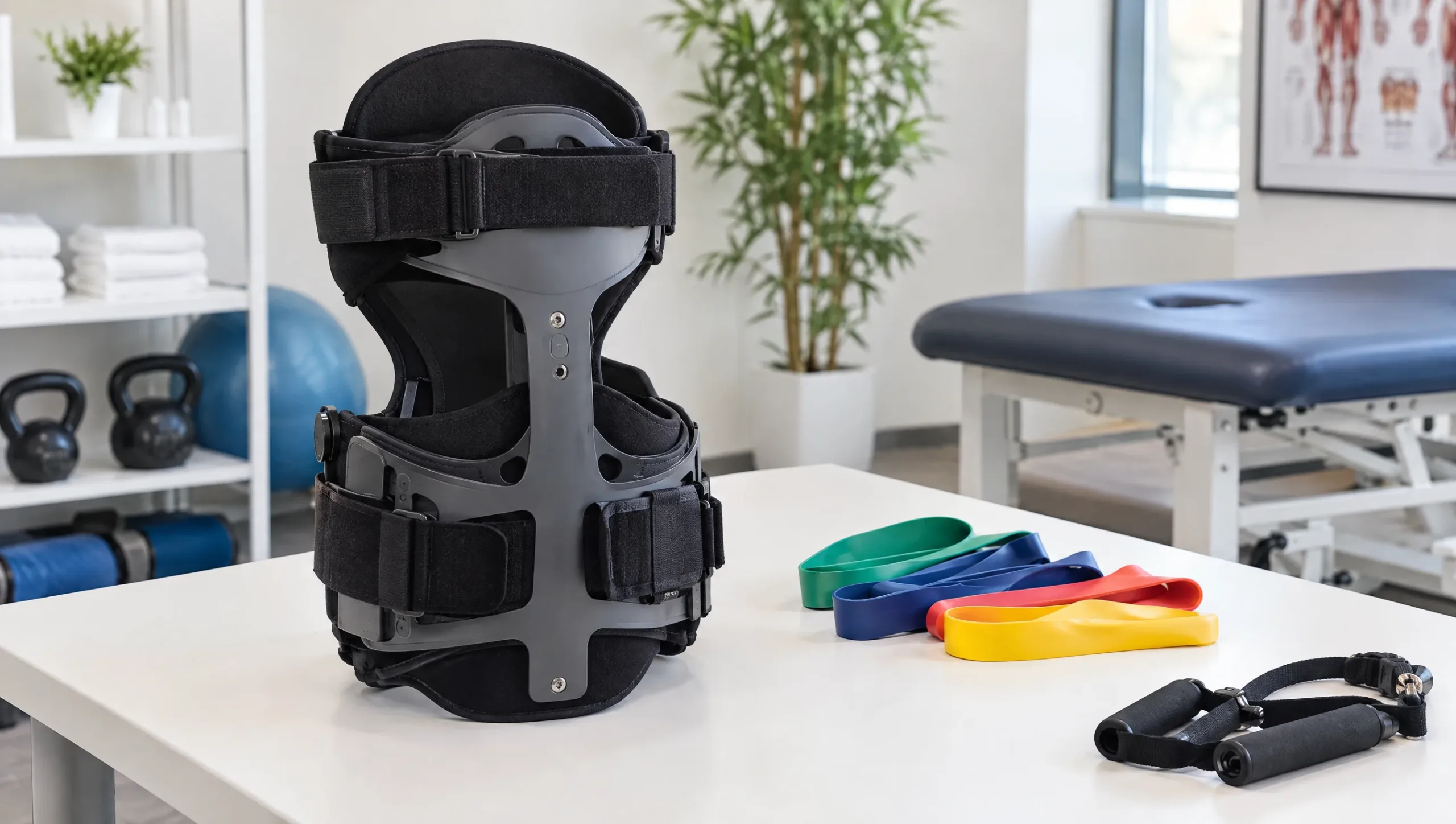
Parents often ask whether their teenager needs a brace, physiotherapy, or both. The honest answer depends almost entirely on the Cobb angle and how much skeletal growth remains.
For mild curves with growth mostly complete, physiotherapy alone is often sufficient, focused on preventing further progression and managing symptoms. For moderate curves in a teenager who still has significant growth ahead — which is common, since bone growth typically continues until around 14-16 in girls and a little later in boys — a rigid brace (commonly a Boston brace or similar TLSO) worn for a prescribed number of hours per day is often added, because bracing is the only intervention with strong evidence for actually controlling curve progression during active growth.
Physiotherapy and bracing are not competitors; they work best together. Physiotherapy keeps the muscles around the spine strong and the joints mobile despite hours spent in a rigid brace, and it gives the teenager exercises to do during the hours the brace is off. Several published scoliosis research programs even combine brace-wearing with Schroth-style exercise specifically because the two approaches reinforce each other.
Safe Exercises and Habits Parents Can Encourage at Home
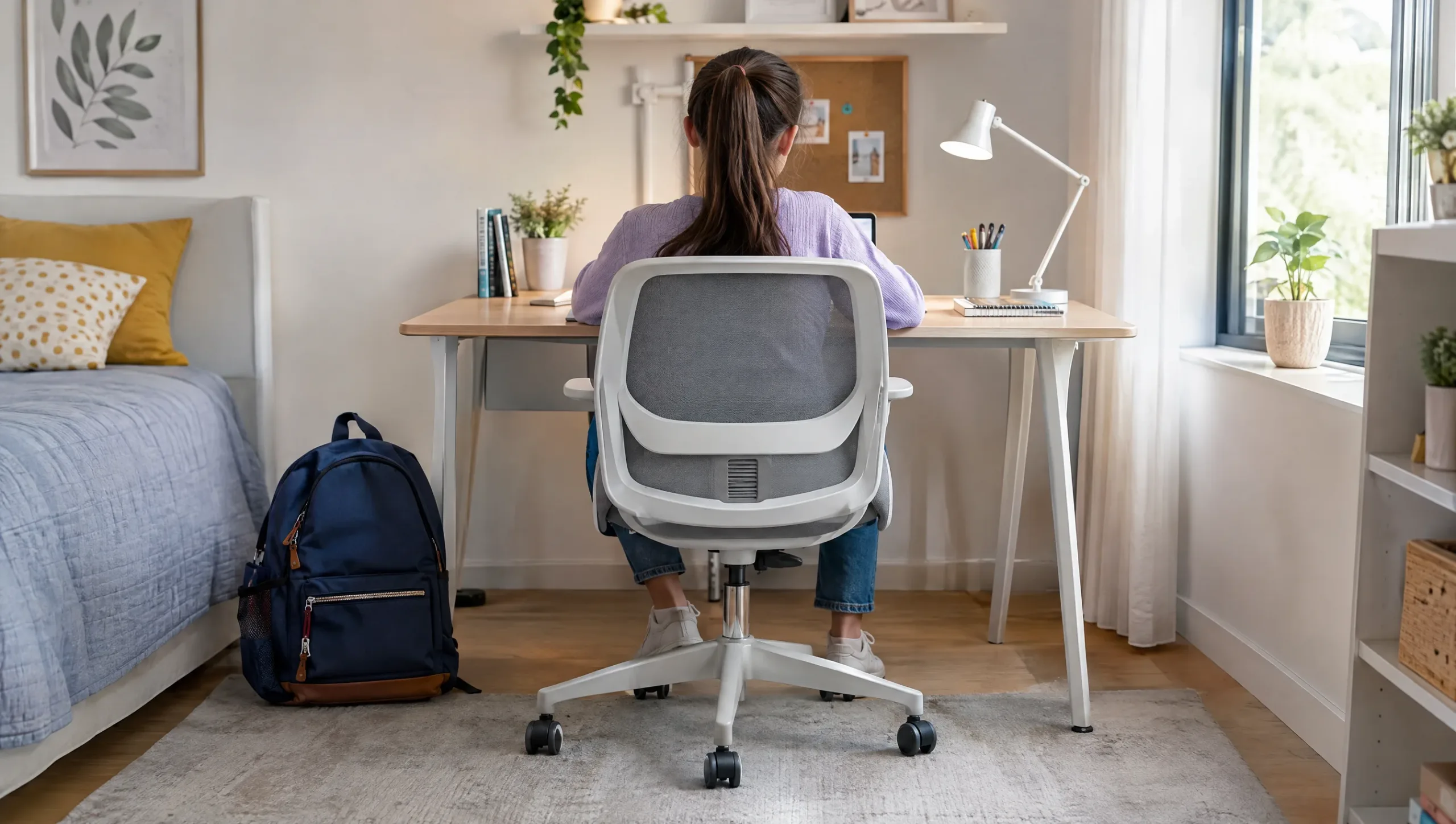
Home practice matters, but it has to be guided — doing the wrong exercises with enthusiasm can be worse than doing nothing. Once a physiotherapist has assessed the specific curve pattern, home routines generally include:
- Daily postural breathing drills — a few minutes of the rotational breathing pattern taught in clinic, repeated consistently rather than occasionally
- Core and pelvic floor activation — gentle, controlled core bracing exercises rather than high-intensity crunches, which can encourage the wrong movement pattern
- Symmetrical daily habits — alternating the shoulder used for school bags, avoiding always sleeping on the same side, and sitting with even weight on both hips while studying
- Low-impact activities like swimming and walking, which support general fitness without loading the spine asymmetrically the way some one-sided sports can
What we generally advise against without supervision: heavy one-sided sports training, uncontrolled gymnastics-style back bends, and copying generic “scoliosis exercise” videos online that are not matched to the teenager’s actual curve pattern. If in doubt, it is always worth a proper in-person assessment before building a home routine.
When Does Teen Scoliosis Need Surgery Instead of Physiotherapy?
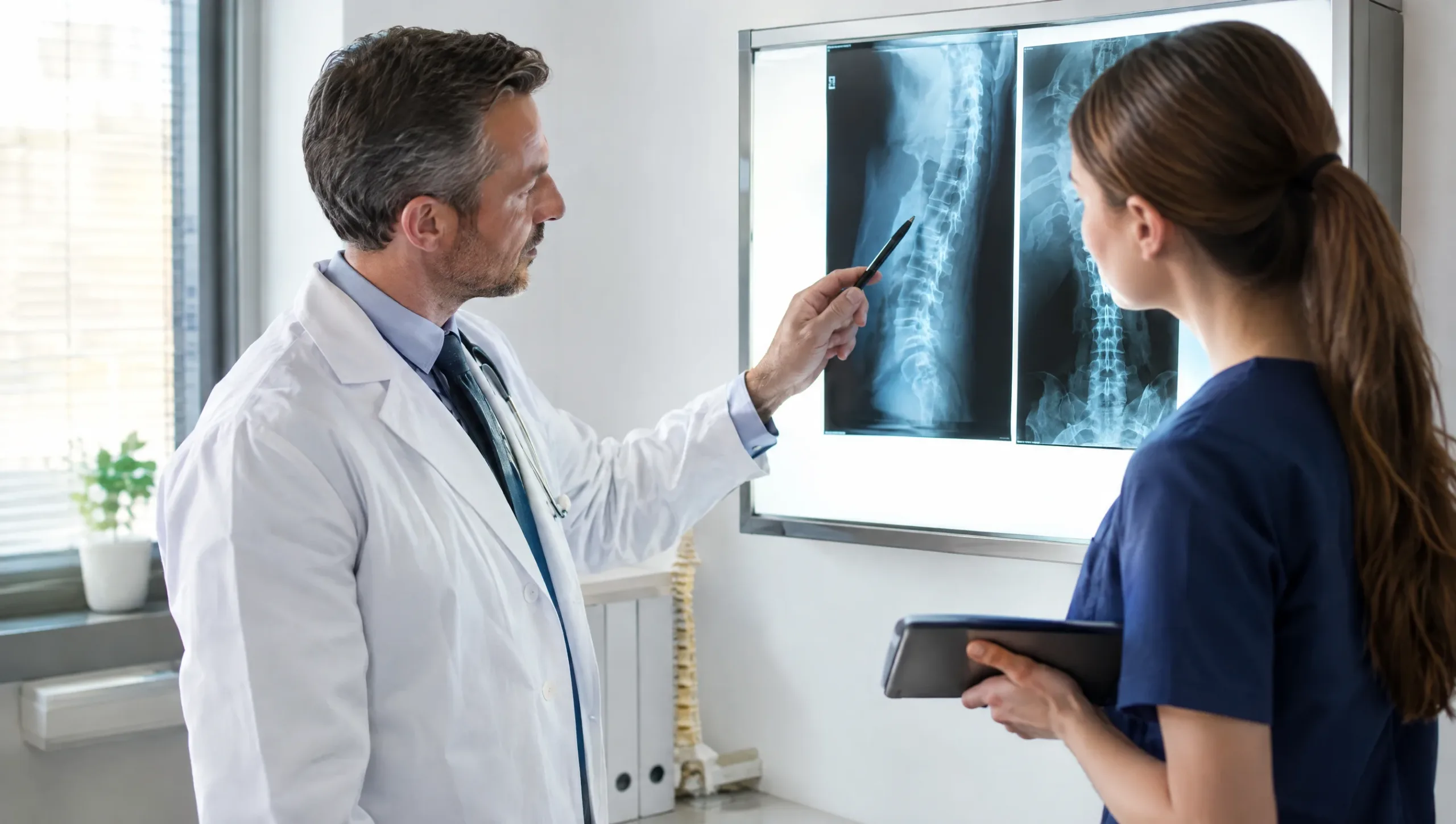
Surgery is not the first option, but it is sometimes the right one. Spinal fusion surgery is generally considered when the Cobb angle is above roughly 45-50 degrees, when the curve continues progressing rapidly despite bracing and physiotherapy, or when the curve is affecting breathing, heart function, or causing significant pain that is not responding to conservative care.
Even when surgery is recommended, physiotherapy still has an important role — pre-surgical conditioning to strengthen the body for recovery, and post-surgical rehabilitation to restore movement, walking patterns, and strength once healing allows. Surgery and physiotherapy are not an either/or decision in the same way bracing and physiotherapy aren’t; they are usually sequential parts of one care plan, decided by an orthopedic spine specialist in coordination with the physiotherapy team.
It is worth saying plainly to worried parents: the large majority of adolescent scoliosis cases never reach the surgical threshold. Most curves identified early and managed with a combination of monitoring, physiotherapy, and bracing when needed stay well within the range that is handled conservatively through the end of growth.
What to Expect From a Scoliosis Physiotherapy Program in Rawalpindi
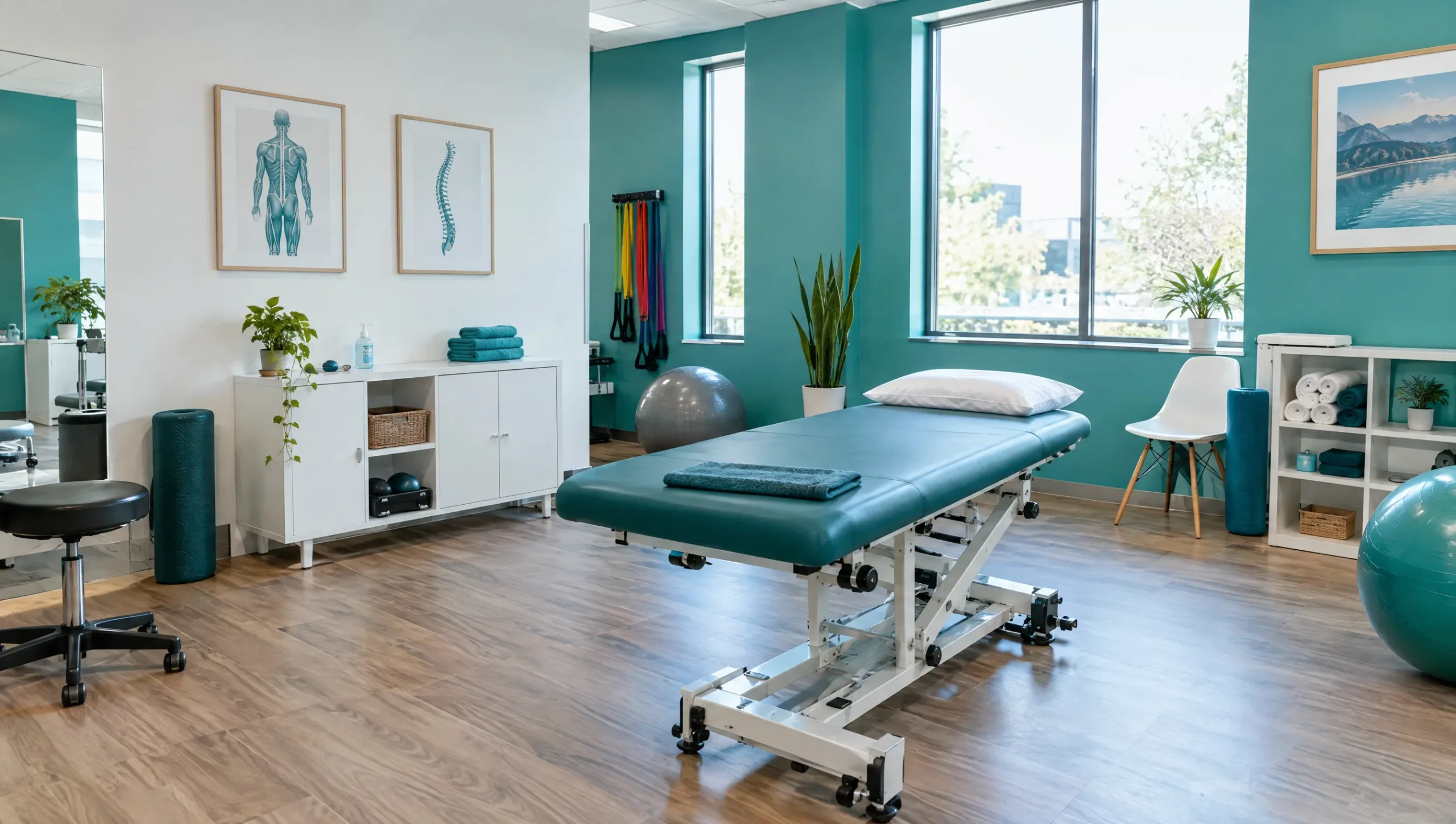
At Physio Rehab Solution, a scoliosis assessment for a teenager typically starts with a detailed history, a postural and movement screening, the Adam’s forward bend test, and a review of any existing X-rays or imaging — if imaging hasn’t been done yet, we coordinate with the right diagnostic center or orthopedic specialist first, because treatment decisions should never be based on observation alone.
From there, a treatment plan is built around the teenager’s specific curve type, severity, age, and remaining growth potential, usually combining Schroth-informed exercise, core and postural retraining, breathing work, and — where needed — close coordination with a bracing specialist or orthopedic surgeon. Sessions are scheduled consistently enough to build the habit of correct movement, and home programs are reviewed and progressed over time rather than handed over once and forgotten.
Just as importantly, we spend time with parents and teenagers on what to realistically expect: steady, patient management rather than a dramatic before-and-after. For families researching options, our physiotherapy FAQ page covers general questions about sessions, costs, and what a first visit involves, and our guide to everyday habits that damage the spine is a useful companion read for the whole family, since posture habits at home directly affect how scoliosis management progresses.
Frequently Asked Questions
Can scoliosis physiotherapy straighten my teenager’s spine completely?
No — physiotherapy cannot remove a structural curve once the spine has fully formed around it. What it can do is slow or stop further progression, correct posture and rib symmetry as much as the structure allows, and reduce pain and compensations. Think of it as curve management and prevention, not a cure.
At what age is scoliosis physiotherapy most effective for teenagers?
It is most effective when started as early as possible after diagnosis, ideally while the teenager still has significant growth remaining — generally before the growth spurt is complete. Starting early gives exercise and bracing more time to influence how the spine develops, which is why early screening matters so much.
Will my teenager need to do scoliosis exercises forever?
Not necessarily at the same intensity. Once growth is complete and the curve has stabilized, many teenagers transition to a lighter maintenance routine focused on general core strength and posture rather than intensive curve-specific sessions, though periodic reassessment is still a good idea.
Can sports make my teenager’s scoliosis worse?
Most recreational sports are safe and encouraged for general fitness and confidence. The concern is specifically with heavy, repetitive one-sided loading at a competitive level — for example intensive one-arm throwing sports or asymmetric gymnastics — which should be discussed with the treating physiotherapist so training can be adjusted rather than avoided altogether.
If your teenager has been told they have scoliosis, or you have noticed uneven shoulders, a tilted waistline, or an uneven gait, the most useful next step is a proper in-person assessment rather than guessing from home. Dr. Iqra Kiran, DPT, and the team at Physio Rehab Solution in Rawalpindi can evaluate your teenager’s posture and spine, coordinate imaging if needed, and build a scoliosis physiotherapy plan suited to their specific curve. Call +923214287773 to book an appointment, or visit our homepage to learn more about our services for growing families in Rawalpindi and Islamabad.