
If you spend eight or more hours a day at a desk — coding, taking calls, or managing spreadsheets — you have probably felt that dull ache settle into your lower back by mid-afternoon. As a physiotherapist treating professionals across Rawalpindi and Islamabad’s IT and corporate sectors, I see this pattern every week: desk-related lower back pain that starts as mild stiffness and, left unaddressed, turns into a persistent problem. The good news is that physiotherapy for lower back pain is one of the most effective, non-invasive ways to reverse this cycle — and it starts with understanding why sitting hurts your spine in the first place.
In this guide, I’ll walk through exactly why long sitting hours cause back pain, how to tell when it needs professional attention rather than more rest, what physiotherapy treatment actually involves, and what you can start doing at your desk today — whether your office is in Bahria Town, DHA, Saddar, or Blue Area.
Why Long Sitting Hours Cause Lower Back Pain

Sitting for extended periods puts up to 40% more pressure on your spinal discs than standing does. Add a forward-leaning “screen posture,” and that pressure shifts unevenly onto the front of your lumbar discs. Over weeks and months, three things typically happen together.
Your hip flexors (the muscles at the front of your hips) shorten and tighten from staying folded all day. Your glutes and deep core muscles, which should be stabilizing your spine, switch off from disuse — a phenomenon physiotherapists call “gluteal amnesia.” And your lower back muscles end up overworking to compensate for both, which is usually where the ache you feel is actually coming from — not the spine itself, but the muscles trying to do a job they were not built for.
The Compounding Effect of a Sedentary Commute
For many of my patients in Rawalpindi and Islamabad, the problem does not start or end at the office desk. A 30-45 minute car or rickshaw commute, more sitting through lunch, and an evening spent on the couch can add up to 10-12 hours of daily sitting. Each additional hour compounds the same postural load, which is why the pain often feels worse on days with back-to-back meetings or a longer-than-usual commute.
Common Desk Setup Mistakes We See in Rawalpindi Offices
A large share of the desk-related back pain I treat traces back to a handful of repeated setup mistakes. A chair with no adjustable lumbar support, often paired with a desk height that was never actually measured against the person using it. A laptop used directly on the desk without a stand, which forces the neck and upper back down and pulls the whole spine out of a neutral position. A keyboard and mouse positioned too far forward, which drags the shoulders and upper back into a rounded posture that the lower back then has to compensate for. None of these require an expensive office overhaul to fix — most can be corrected with a cushion, a stack of books, or repositioning what you already have.
Signs Your Back Pain Needs Physiotherapy, Not Just Rest

Mild, occasional stiffness that eases with movement is common and not usually a cause for alarm. But certain patterns tell us the issue needs a proper assessment rather than more rest.
Pain that has lasted more than two weeks despite stretching and rest is one sign. Stiffness in the morning that takes longer than 30 minutes to loosen up is another. Pain that radiates down one leg, or any numbness, tingling, or weakness in the leg or foot, is a third — and the most important one to act on. If you notice any of these, especially radiating leg pain or numbness, please do not self-manage it indefinitely. Book an in-person assessment so we can rule out nerve involvement and build a treatment plan suited to your specific case, rather than guessing based on generic advice from the internet.
How Physiotherapy Treats Desk-Related Lower Back Pain in Rawalpindi

At Physio Rehab Solution, physiotherapy for lower back pain caused by desk work follows a structured process, not a generic exercise sheet handed out on the first visit. Here is what that typically looks like.
Assessment and Postural Correction
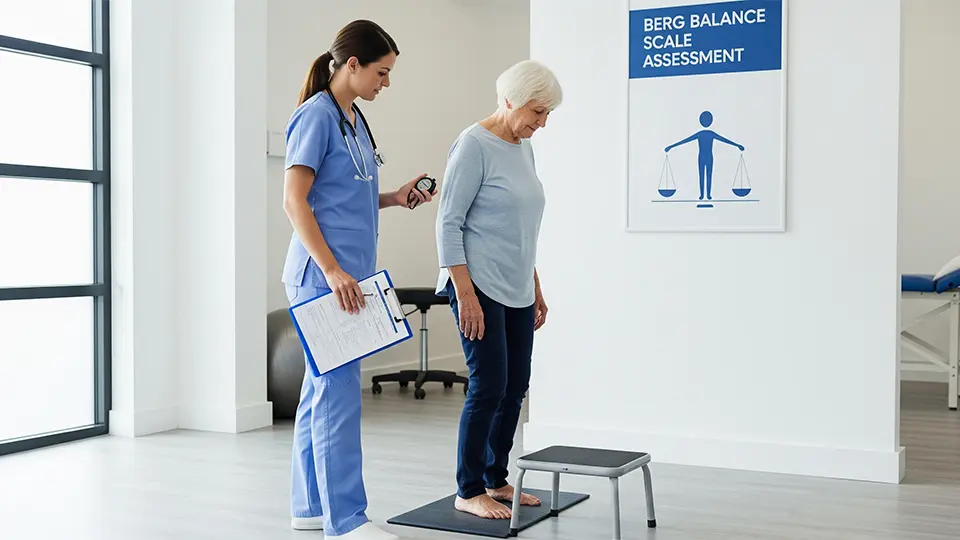
We start by assessing your posture, spinal movement, and muscle strength to identify exactly which structures are overloaded — because “lower back pain” from a software engineer who sits hunched forward and a receptionist who sits with poor lumbar support usually need different corrective approaches, even if the pain feels similar on the surface. This assessment also screens for red-flag signs that would need referral to a specialist rather than physiotherapy alone.
Manual Therapy and Targeted Exercise
Hands-on manual therapy helps release tight muscles and restore normal joint movement in the lower back and hips, giving you faster relief in the first few sessions. This is paired with a targeted exercise program — usually core stabilization, glute activation, and hip flexor mobility work — that addresses the root cause rather than just the symptom, so the pain is less likely to return once treatment ends. We progress this program gradually, in the same way a fitness trainer would progress a workout plan, rather than giving you the same three exercises for six weeks straight.
Ergonomic and Movement Coaching
Treatment that stays in the clinic and never reaches your actual workday will not hold up. We also coach you on practical desk ergonomics and movement habits, so what you gain in the clinic actually survives an eight-hour workday at your real desk, not just an ideal one. This often includes simple, low-cost fixes — a cushion, a monitor riser, a reminder app — rather than expensive ergonomic furniture you may not need.
What to Expect During Your First Physiotherapy Session

A lot of people delay booking simply because they are not sure what the first visit involves. Your first session at Physio Rehab Solution usually takes 45-60 minutes and starts with a conversation: when the pain started, what makes it better or worse, your work setup, and your general activity level. This is followed by a physical assessment of your spine, hip, and core movement and strength.
From there, we explain what we found in plain language — not just clinical terms — and outline a treatment plan with a realistic timeline, so you know what to expect before committing to a course of sessions. Most patients leave the first session with at least one or two things they can start doing immediately, alongside the fuller plan that follows.
5 Things You Can Do at Your Desk Today
While you work on booking a proper assessment, these small changes can genuinely help in the meantime.
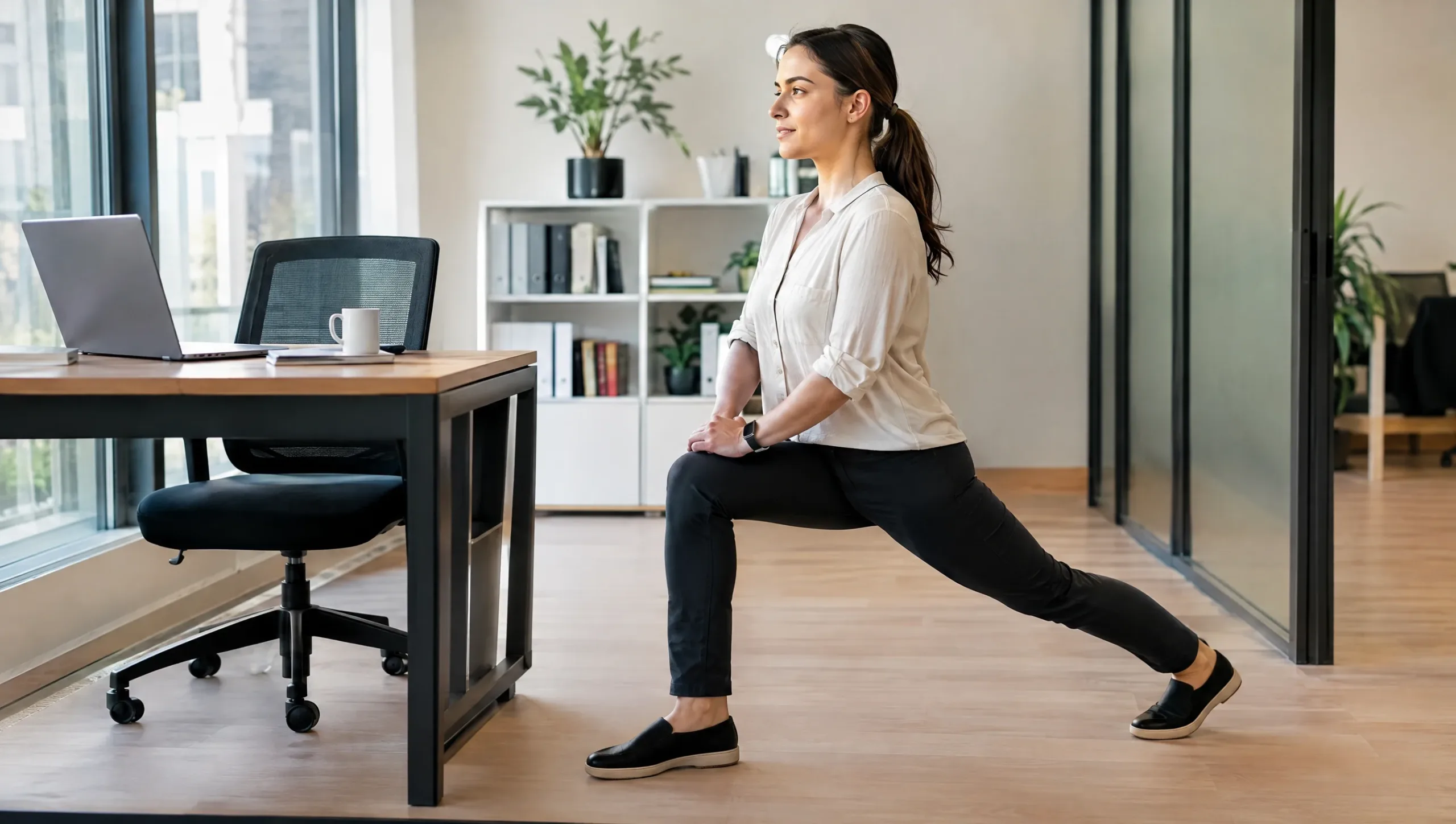
Stand up and move for two minutes every 30-40 minutes — set a phone reminder if you need to, since most people underestimate how long they have actually been sitting still. Support your lower back with a small cushion or rolled towel placed against the natural curve of your spine, rather than letting the chair’s backrest force you into a slouch. Do a 20-second hip flexor stretch by standing and stepping one leg back into a gentle lunge, repeated a few times through the day — this alone can noticeably reduce end-of-day stiffness for many desk workers. Actively engage your core, gently drawing your belly button in, whenever you notice your posture slipping; this is less about holding a perfect posture constantly and more about catching the slump before it sets in. Set your screen at eye level so you are not leaning forward to see it — a stack of books works fine if you do not have a monitor stand, and this one change often does more for neck and upper back strain than people expect.
These habits reduce strain, but they are supportive measures, not a substitute for treatment if pain is already established. Think of them as damage control while you get an actual plan in place.
Long-Term Prevention: Building a Back-Healthy Work Routine

Once your pain has settled, the goal shifts from treatment to prevention — and this is the part most people skip, which is why back pain tends to return within a year for those who stop at symptom relief. A back-healthy routine usually combines three things: continuing a simplified version of your core and glute exercises two to three times a week, keeping a movement break built into your work schedule rather than relying on willpower alone, and revisiting your desk setup whenever it changes, such as a new chair, a new office, or working from home part of the week.
General fitness matters here too. You do not need an intense gym routine — consistent walking, swimming, or a structured strength program all support spinal health by keeping the muscles around your back strong and your joints mobile. If you are unsure where to start, this is exactly the kind of thing worth discussing at a follow-up physiotherapy visit rather than guessing from a workout app.
Sleep and hydration also play a bigger role in spinal recovery than most people expect. Spinal discs rely on movement and hydration to stay nourished, and consistently poor sleep is linked with lower pain tolerance generally, which can make an existing back issue feel worse than it mechanically is. Neither of these replaces treatment, but ignoring them while doing everything else right often means slower progress than it should be.
Frequently Asked Questions

Can lower back pain from sitting go away on its own?
Mild, short-lived stiffness often does ease up with movement and better posture. But pain that persists beyond two weeks usually will not resolve fully on its own, because the underlying cause — weak stabilizing muscles and tight hip flexors — does not correct itself just because the pain temporarily fades. It tends to come back, often worse, unless the actual muscle imbalance is addressed.
How many physiotherapy sessions are usually needed for desk-related back pain?
This varies by how long the pain has been present and how it is affecting you, which is exactly why we assess in person rather than quote a number blind. Many desk-related cases improve meaningfully within a handful of sessions when paired with home exercises, though a more established or complex case may need a longer plan.
Is it safe to keep working out or exercising with lower back pain?
Often yes, but it depends on the type and severity of pain and the specific exercise. Gentle movement is usually better than complete rest, but certain exercises can aggravate an underlying issue if your form or the movement itself is not suited to your condition. This is worth checking with a physiotherapist rather than guessing, particularly if certain movements consistently trigger the pain.
Should I see a physiotherapist or get an X-ray or MRI first?
For most desk-related lower back pain without red-flag signs, a physiotherapy assessment is a reasonable first step, since imaging often shows age-related findings that are present in pain-free people too and does not always change the initial treatment plan. That said, if you have radiating leg pain, numbness, weakness, or the pain follows an injury, we will guide you on whether imaging or a specialist referral makes sense as part of the assessment.
If your back pain is not specifically tied to sitting or your desk setup, our broader guide on choosing the right back pain physical therapist covers what a full recovery plan looks like. For more general questions about what to expect, our FAQ page and expert answers page cover appointment booking, session length, and what your first visit looks like.
Book an Assessment in Rawalpindi
Desk-related lower back pain almost always responds well to the right combination of manual therapy, targeted exercise, and ergonomic coaching — but it needs an actual assessment to build the right plan for your specific posture and work setup, not a generic list of stretches. If you are based in Rawalpindi or Islamabad and this sounds familiar, get in touch with Physio Rehab Solution to book an in-person assessment, or call us directly at +92 321 4287773. Your back does not need to keep hurting through every workday — let’s fix the actual cause.